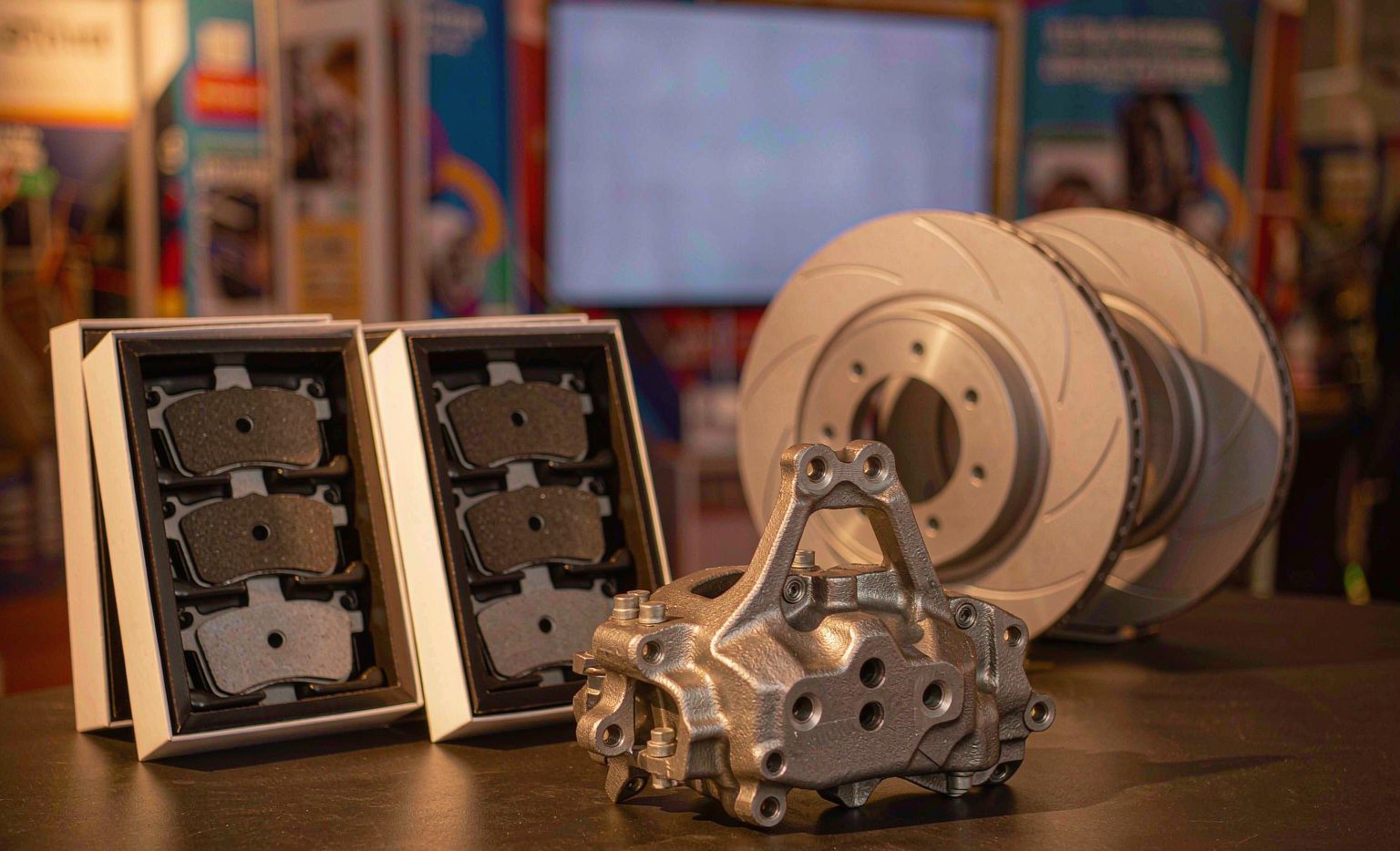
Brake parts filled more floor space at Phase 1 of the 140th Canton Fair than any vehicle category except the complete-vehicle assembly booths — and the fair's own numbers explain why: the organizer reported 189,000 overseas buyers from 214 countries and regions by the close on 19 October, up 13.3 percent on the previous session. If you source brake pads, rotors or calipers for Toyota, Hyundai or Kia applications, this is the one window each year where the supply chain stands in five halls along the Pearl River. This guide walks the brake aisle the way a working buyer should — from the halls to OE numbers, friction mixes, markings, FOB bands and MOQs.
Why Brake Parts Own the Phase 1 Floor
Phase 1, themed Advanced Manufacturing, covered 520,000 square meters with more than 25,000 booths and over 12,000 participating enterprises across 19 exhibition areas — and the vehicles-and-auto-parts sections sit inside that block. For a brake buyer the density matters more than the headline area: within one aisle you can compare a pad factory, a friction-mix blender, a rotor casting plant and a caliper machining shop.
The audience is there for the same reason. A record 189,000 overseas buyers attended Phase 1 in person, and the biggest contingencies came from the markets where brake parts move fastest: the Middle East, Africa, Southeast Asia and South America, where the vehicle parc is dominated by Corolla, Camry, Hilux, Elantra, Accent, Sportage and Cerato platforms running for a decade or more. Old fleets consume friction — that is the trade in one sentence.
One scheduling note that catches buyers each session: auto parts appear only in Phase 1. Phase 2 (23–27 October) shifts to consumer goods and building materials, and Phase 3 (31 October–4 November) covers textiles, toys and food. During the 20–22 October changeover break the halls are dark, but the suppliers are not, and the online platform stays open year-round. Our guide to the auto parts halls at Pazhou maps the brake sections for next session.
What the Brake Aisle Actually Carries
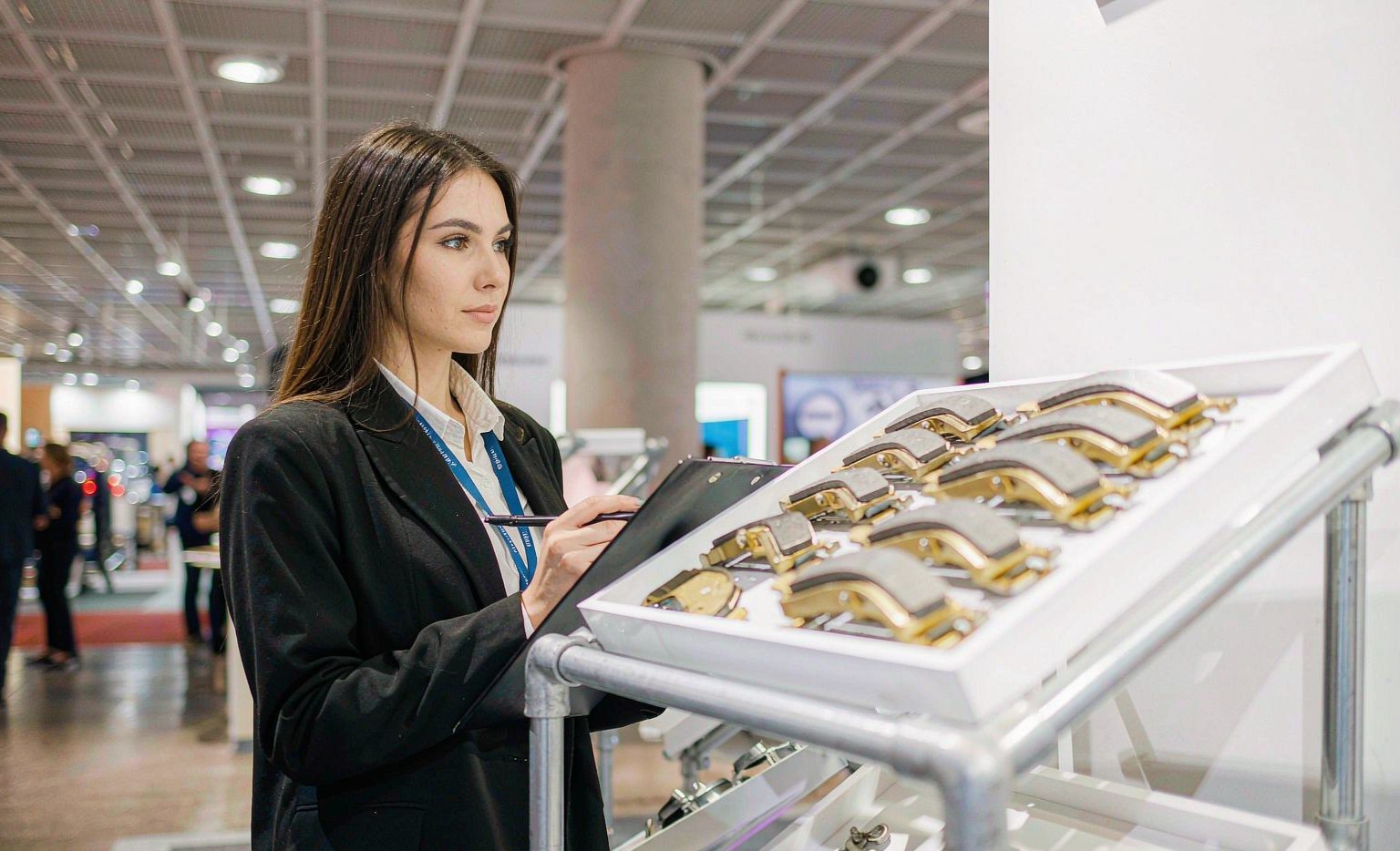
Walk the vehicle-parts sections and the brake offering sorts into four families, each rewarding a different inspection routine. A pad maker with its own friction formulation is not the same animal as a rotor machining house buying castings from a foundry — and the booth tells you which one you are facing.
| Product family | Booth display | What to inspect by hand | Typical MOQ |
|---|---|---|---|
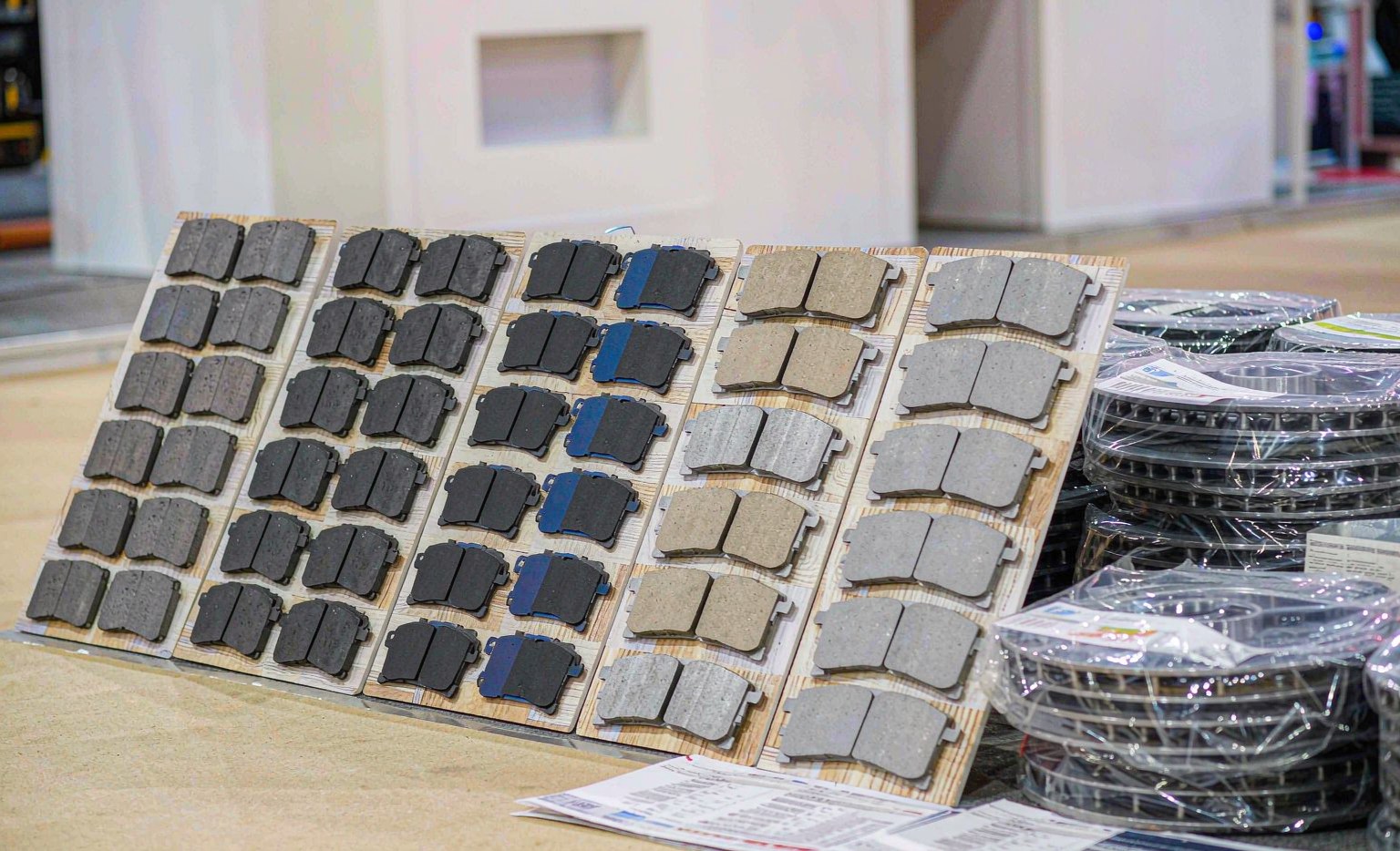
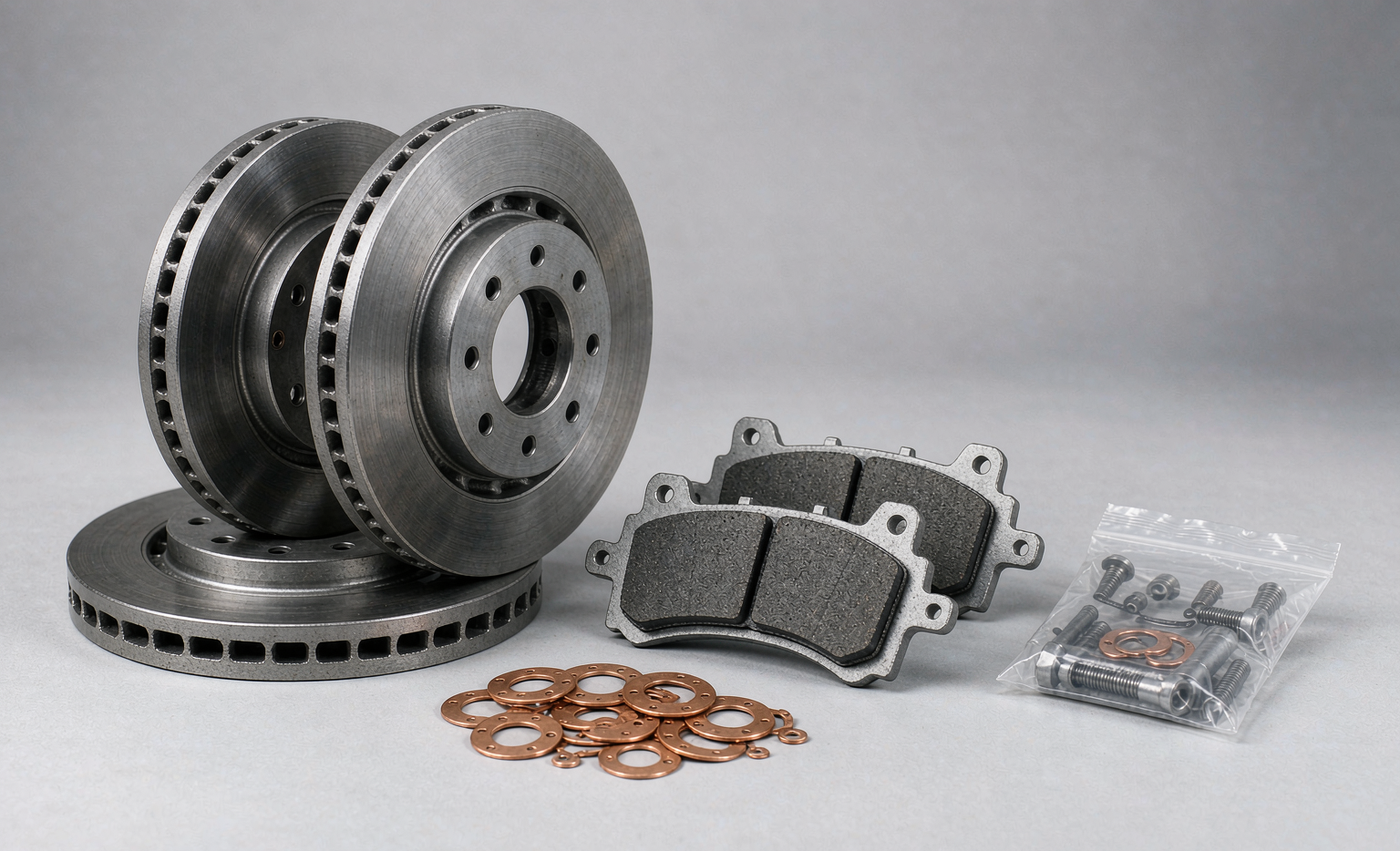
| Brake pads (disc friction) | Sample boards by application; stacked backing plates; friction-mix charts | Backing plate stamping, shim and wear-clip fitment, chamfer and slot consistency, edge markings | 100–500 sets per part number |
| Brake rotors and drums | Painted, coated and bare discs; vented and solid; drum stacks | Surface finish, balance drill marks, coating coverage, runout tolerance on the drawing | 100–300 pcs per part number |
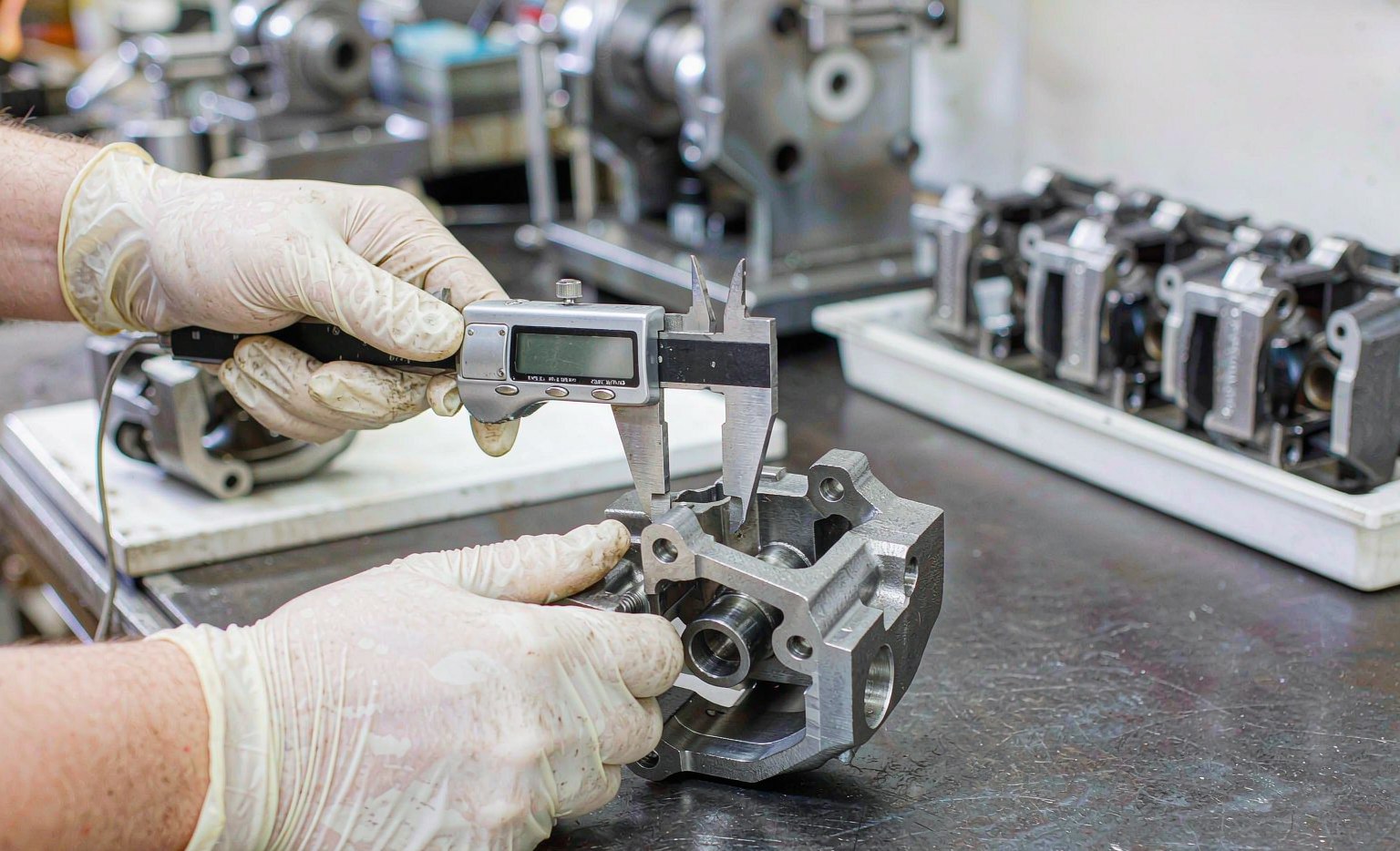
| Calipers and loaded calipers | Remanufactured and new units; pistons, seals and brackets separate | Piston bore finish, bleeder thread condition, bracket casting integrity | 50–200 pcs per part number |
| Hardware and sensors | Shim kits, guide pins, wear sensors in poly bags | Clip spring tension, sensor connector type for your market | 500–1,000 sets |
Notice what the MOQ column implies. A buyer building a mixed container across twenty applications hits factory minimums easily; one who wants six rotors for a niche Corolla variant cannot, not at factory pricing. This is why consolidation — mixing applications inside one supplier's range, or suppliers inside one container — is the real negotiation, long before anyone argues over unit price.
Friction Materials: Matching the Mix to Your Market
The first question a pad booth will ask is which friction material you want — a shrug costs you later in warranty claims. The three mainstream families trade noise, dust, fade resistance and cost against each other.
| Property | Semi-metallic | Ceramic | Low-metallic |
|---|---|---|---|
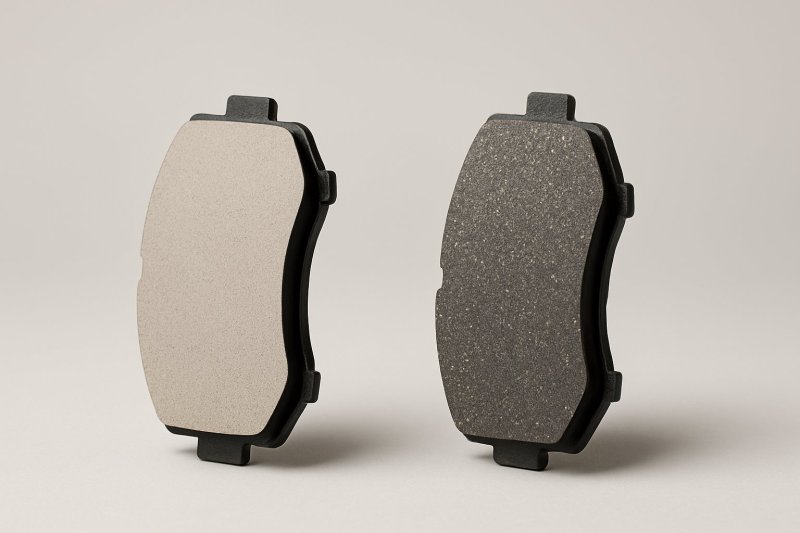
| Friction mix base | Steel wool and metal fibers, 30–65% metal content | Ceramic fibers, filler and bonding resins, little exposed metal | Organic mix with 10–30% metal additions |
| Noise and dust | Audible under light braking; visible dark dust | Quietest of the three; light-colored, low dust | Middle ground on both counts |
| Heat behavior | Handles sustained heat, firmer pedal when hot | Stable across a wide temperature band, gentle on rotors | Good cold bite; fade margin lower than semi-metallic |
| Typical fit | Hilux, Hiace, taxi and fleet duty, loaded vans | Elantra-class sedans, city fleets, premium retail boxes | Corolla, Accent, mixed-brand wholesale catalogues |
| FOB indication per set (front axle) | USD 2.2–4.0 | USD 3.5–6.5 | USD 2.5–4.8 |
Two market notes suppliers will confirm if pressed. In Gulf and Sahel markets, semi-metallic holds the volume because fleets replace pads on interval and dust is tolerated; ceramic sells at the retail counter where the end customer pays. Southeast Asian urban fleets are drifting toward ceramic for ride comfort. Run both mixes on your top three applications with a local installer before you commit a container.
Walk In With OE Numbers, Not Part Descriptions
Every booth keeps a catalogue indexed by OE reference number, not by the phrase "pads for a 2016 Corolla." A buyer who opens with OE numbers gets a different conversation: the salesperson checks stock, confirms the tooling, quotes a concrete price, and says within minutes whether the part ships from warehouse or needs a production run. A buyer who opens with a description gets a "please send the application list" and a three-day wait for an email that may never arrive.
The filter runs deeper than speed. A factory with real coverage on Toyota, Hyundai and Kia brake applications answers OE-number questions instantly, because those numbers are already in its mould list. A trading company reselling catalogues asks you to wait while it checks with "the engineer." That hesitation sorts the floor faster than any certificate on the wall. Our OE parts library carries reference numbers across Toyota, Hyundai and Kia brake applications, and our guide on verifying suppliers with certificates, OE numbers and factory audits shows how to turn a booth conversation into a documented answer.
Reading a Brake Quotation: FOB, MOQ and the Fine Print
The quotations that follow the fair are where value is won or lost, and brake quotations have their own hiding places.
| OE reference (sample) | Application | Product | FOB indication | MOQ |
|---|---|---|---|---|
| 04466-12130 | Toyota Corolla / Auris (E18) | Front brake pad set | USD 2.6–5.5 / set | 200 sets |
| 04465-06090 | Toyota Camry (V50 series and later) | Front brake pad set | USD 2.8–5.8 / set | 200 sets |
| 04465-26300 | Toyota Hiace (H200 series) | Front brake pad set | USD 3.0–6.2 / set | 100 sets |
| 51712-02100 | Hyundai / Kia applications | Brake disc, front | USD 6.5–13.5 / pc | 100 pcs |
| 28101-02A10 | Hyundai / Kia applications | Brake pad set | USD 2.4–5.2 / set | 200 sets |
Read the bands, not the points: the spread is where every real variable lives — friction mix, backing plate source, coating, packaging, and whether the quotation comes from a mould owner or a trader adding one margin. Before comparing any two numbers, ask four things: what Incoterm and port the price assumes, what packaging it includes, what the payment term is, and whether the price survives past the first order. A quotation that only holds for the first container is a promotion, not a price.
Volume arithmetic behaves differently for brake parts than for body panels. Pad sets are dense and small: a 20-foot container commonly absorbs 2,500–4,000 cartoned pad sets, so freight per set is modest. Calipers are the opposite — heavy, bulky, often better bought remanufactured locally. Rotors sit in between, and their weight makes the coating decision a freight decision too: coated costs more per piece but ships safer and retails cleaner.
Markings and Certificates: What R90 Actually Certifies
Brake friction is regulated in more markets than buyers assume, and the markings are checked at borders, not just by end customers. The one that matters most across Africa, the Middle East and Latin America is ECE R90 — the UNECE regulation governing replacement brake linings, drum brakes, discs and pads.
Here is what a booth conversation often gets wrong. An R90 approval is issued against a specific product test, on a specific friction formulation — not against a factory in general. A supplier showing one certificate for one pad family has not thereby certified the forty other applications on the sample board. When a booth claims R90 coverage, ask for the approval number, the test report behind it, and the list of applications it covers; then match your OE list against that list. Our supplier verification guide walks the document chain in detail.
Beyond R90, three documents separate a production factory from a packaging operation: a friction-material data sheet stating the mix classification and performance grade; batch traceability linking a carton code to a production date and mix batch; and, for discs and drums, a metallurgy and hardness report naming the foundry. How fast and how completely those documents arrive is itself a quality signal.
Quality Tiers: Where OEM-Grade Sits on the Shelf
Every supplier describes their product with positive adjectives; almost none volunteer where it sits in the market's own three-tier ladder. Ask directly.
| Tier | What it means in production terms | Price position (front pad set) | Who buys it |
|---|---|---|---|
| OEM-grade (OE-equivalent build) | Formulation and backing plate built to the vehicle maker's specification; full documentation; batch traceability | USD 4.5–6.5 | Dealer networks, insurance repair chains, government fleets |
| Certified aftermarket | Own-brand production with R90 approval where required; consistent mix; branded or neutral packaging | USD 2.8–4.5 | Distributors, parts stores, workshops with repeat customers |
| Economy line | Cost-optimized mix and hardware; limited documentation; bulk packaging | USD 1.8–2.8 | Price-driven retail, temporary fleets, secondary cities |
The mistake to avoid is buying tier two and reselling it as tier one — the claim that fails is not the friction but the paperwork, because a dealer-grade customer asks for a document chain you do not have. Kingmay Auto Parts, our parts operation in Guangzhou, works the OEM-grade and certified-aftermarket tiers for Hyundai, Kia and Toyota applications with verified suppliers, and the honest tier conversation is usually the fastest route to a workable order.
Toyota, Hyundai and Kia: Brand-Specific Checks at the Booth
Three brands, three different conversations, and a buyer who treats them identically leaves margin on the table.
Toyota. The parc is enormous and aging — Corolla, Camry, RAV4, Hilux and Hiace running ten to twenty years in most target markets — so application depth matters more than novelty. Ask how far back coverage goes, and confirm which axle variants exist per platform, because one Corolla generation can carry two front pad shapes depending on market and trim.
Hyundai. Korean-platform parts reward suppliers with real mould depth on Elantra, Accent and Tucson applications across a decade of production changes. The practical check is the wear sensor: markets differ on whether it is fitted, and a supplier who asks which sensor variant your market uses knows the product. Coated rotors also move faster in coastal markets, where uncoated discs arrive with surface rust that triggers retail returns.
Kia. Sportage, Cerato and Sorento applications overlap with Hyundai part numbers but not perfectly — several discs and pads share references across the two makes while others do not, and a supplier who claims "Kia same as Hyundai" without checking the crossover table will generate returns. Ask for the crossover list in writing. For calipers, remanufactured units with new seals dominate this side of the trade, and the seal supplier's name is worth knowing.
Samples, the Changeover Break and Factory Visits
Phase 1 closed on 19 October, and the 20–22 October changeover break is now the most valuable sourcing window left in Guangzhou this session. The exhibitors have gone home to their factories — which is the point, because friction production has stages no sample board can show: mix blending, preforming, hot pressing, oven curing, and the grinding and painting lines for rotors.
A practical routine with two or three suppliers shortlisted: request samples against your OE list before leaving the fairground, and ask whether a visit on the 20th, 21st or 22nd fits their production calendar. At the plant, ask to see the mix batching records, the press tonnage per pad line, and where finished goods are photographed and coded. A factory that walks you through those three stations without ceremony will run your orders the same way. Our Phase 1 wrap guide on shortlisting suppliers in 48 hours gives the full routine, and our Guangzhou team can accompany factory visits if your flight schedule is tight.
Packing, Shipping and Getting the Container Right
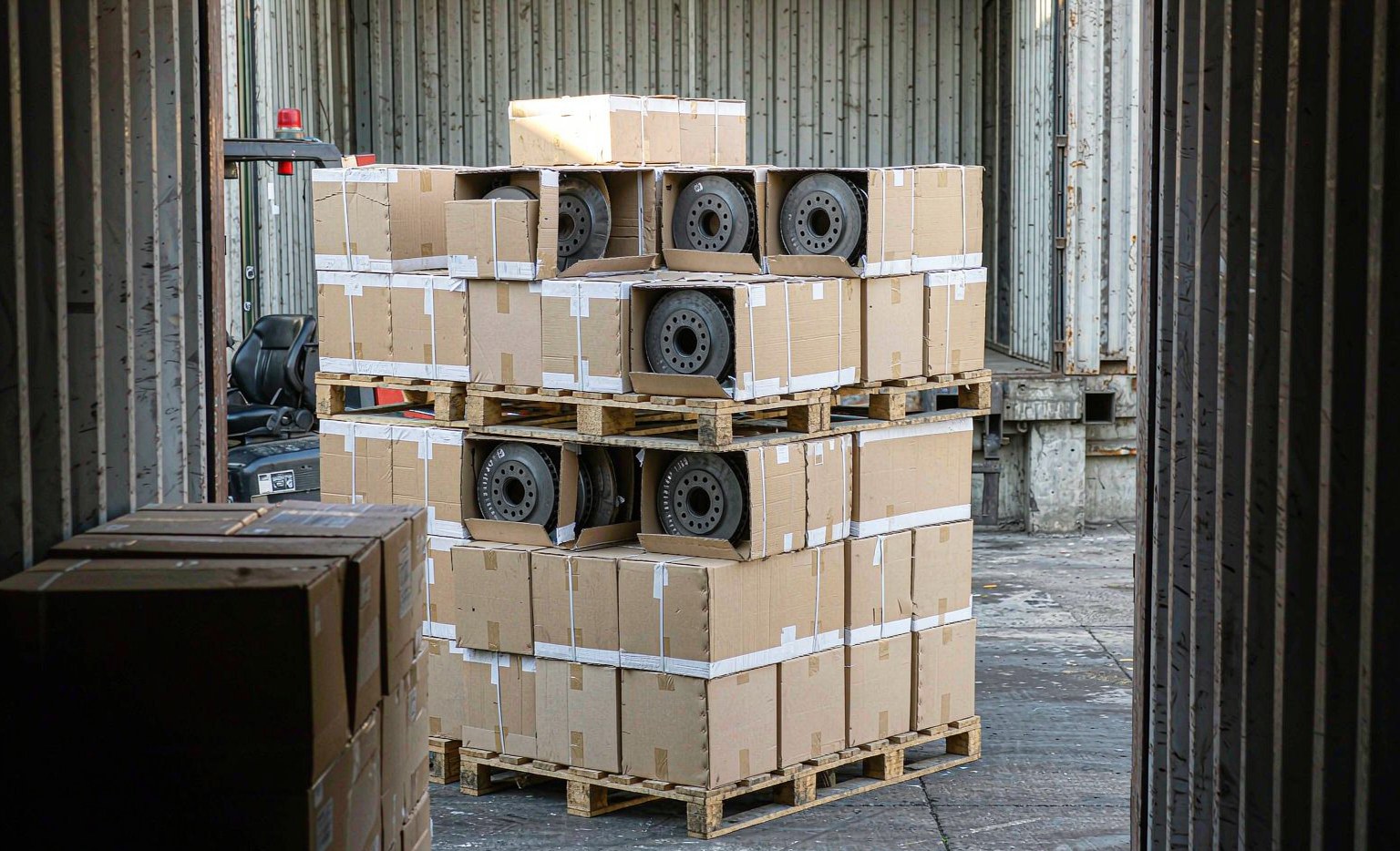
Brake parts ship well, but three details generate most claims. First, rotor protection: coated discs need edge protection and interleaving, uncoated ones need oil film plus VCI paper inside humidity-sealed cartons — a rotor that arrives with freckled rust is a return even if machining is perfect. Second, carton density: pads travel in small cartons, and a supplier who bulk-packs without inner boxes saves cents and costs you shelf appeal; decide the packaging format at the fair, because changing it later means repacking fees. Third, mixed-container loading: ask for the loading plan in advance — heavy calipers at the bottom, discs on pallets with edge guards, pads filling the crown — and confirm pallet heights fit your destination racking.
Documentation is routine for brake friction in most markets, but confirm two points per destination before booking: whether your market requires any conformity certificate for friction materials, and how carton markings should read for customs — part numbers, quantities and "made in China" markings must match the packing list. Suppliers who already ship to your market have this on file, along with a forwarder at Nansha and consolidation options for your other Guangzhou shipments.
Frequently Asked Questions
Are brake parts available at Canton Fair Phase 2 or Phase 3?
No. Auto parts, vehicles and motorcycles appear only in Phase 1 (15–19 October at the 140th session). Phase 2 (23–27 October) covers consumer goods, gifts and building materials, and Phase 3 (31 October–4 November) covers textiles, toys and food. After Phase 1 closes, the routes back to brake suppliers are the year-round online platform and the April 2027 session.
How do I find brake pad suppliers at the fair efficiently?
Search the official exhibitor database by product category (vehicle parts, brake system) before you arrive, and shortlist by who lists OE-number coverage for your applications. On site, the vehicle-parts sections concentrate friction, disc and caliper makers within a few aisles — our Pazhou halls guide shows where.
What certifications should brake pads from China carry?
For markets that regulate replacement friction, ECE R90 approval per product family is the reference standard — ask for the approval number and the applications it covers, not just the logo. Add a friction data sheet, batch traceability and, for discs, a metallurgy and hardness report.
What MOQ can I expect for brake pads at Canton Fair?
Factories commonly quote 100–500 sets per part number for pads, 100–300 pieces for discs and 50–200 for calipers, with lower figures from trading companies holding stock. Mixed-application orders inside one supplier's catalogue are the practical way to fill a first container without inflating any single SKU.
Semi-metallic or ceramic brake pads for hot climates?
Both are used in Gulf and tropical markets. Semi-metallic carries the fleet volume because it handles sustained heat and costs less per set; ceramic wins at the retail counter for quiet braking, low dust and rotor friendliness. Stock both on your top applications and let warranty data from your own installers settle the mix over two or three containers.
Can I buy Toyota, Hyundai and Kia brake parts with my own brand?
Yes — neutral packing and private-label boxes are standard requests at the brake booths. The usual path is the supplier's standard carton with your brand sleeve, moving to fully custom boxes once volumes justify the print run. Confirm the trademark situation for your destination market and keep the OE reference numbers on the cartons accurate.
Related Articles
Related Products
From our export catalog — parts and vehicles ready for international delivery

Full-Size EREV SUV
2026 Rox Adamas EREV 215km 6-Seat Executive Edition
USD 53,000 FOB Guangzhou
View Details
Full-Size EREV SUV
2026 Rox Adamas EREV 215km 7-Seat All-Terrain Edition
USD 51,500 FOB Guangzhou
View Details
