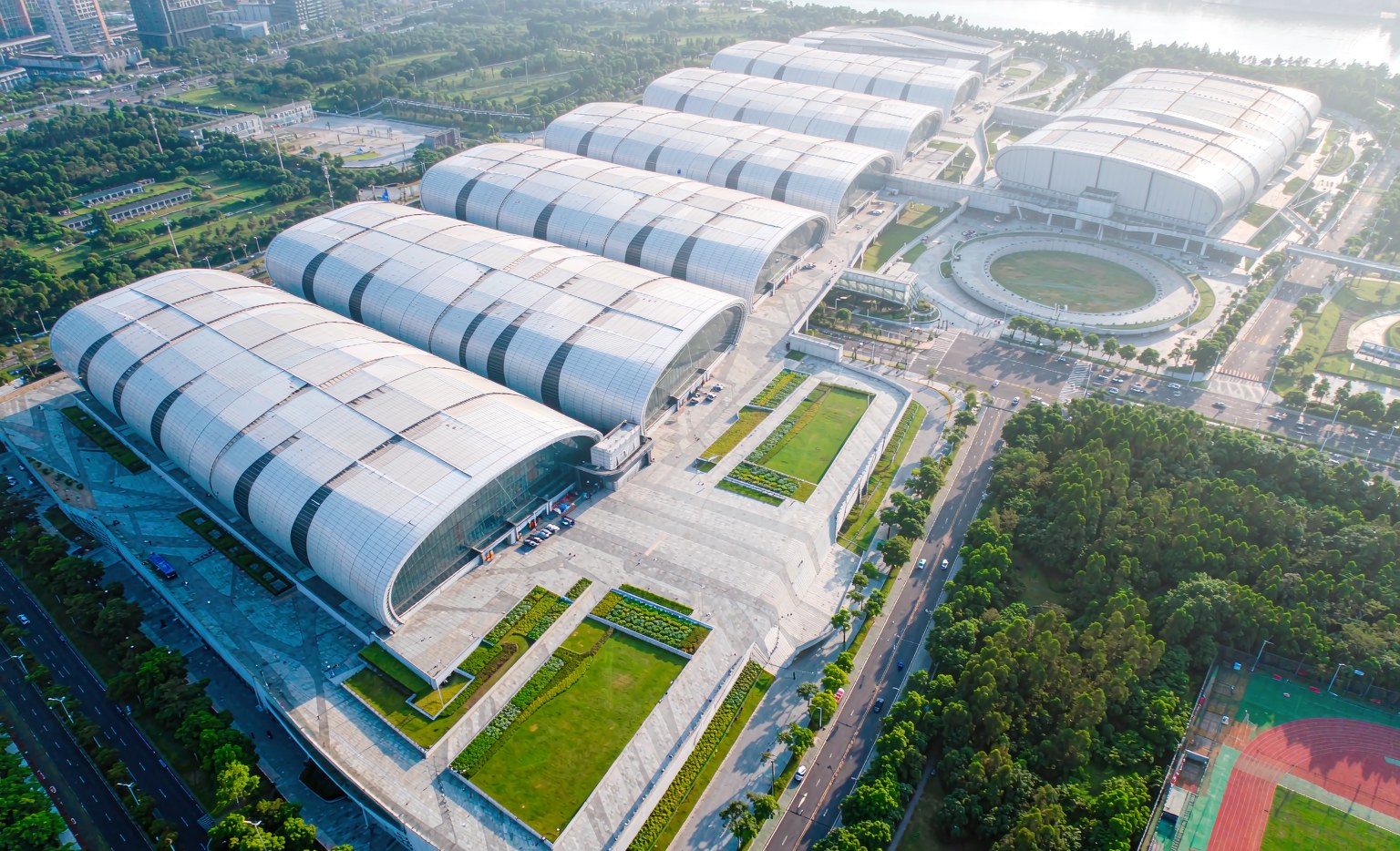
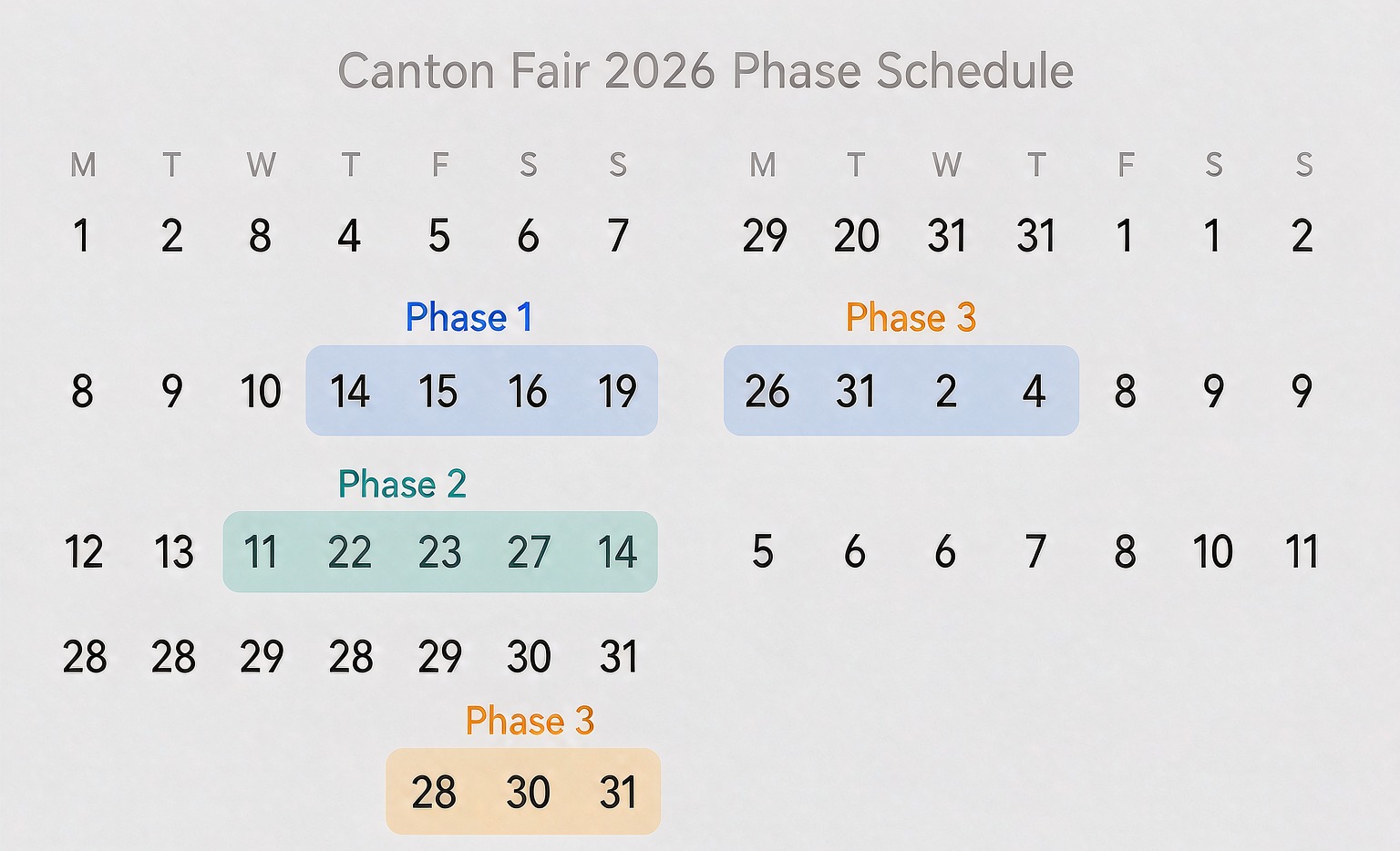
Short answer: At the 140th Canton Fair (autumn 2026), the vehicles and auto parts sections sit inside Phase 1 (October 15–19) at the Pazhou Complex in Guangzhou's Haizhu District. The complex is divided into four areas — A, B, C and D — and in recent sessions the vehicle and spare parts exhibits have been concentrated in the newer halls on the west side, with electronics, machinery, hardware and lighting filling the rest of Phase 1. Because hall assignments shift between sessions, always confirm your target aisles in the official buyer app map on arrival, and build your day around one area at a time.
The most expensive mistake an auto parts buyer can make at the Canton Fair is not missing a supplier — it is losing a full day to walking. The Pazhou exhibition halls cover roughly 1.55 million square meters, and a buyer who arrives without a hall plan can easily log 12 kilometers indoors and still leave without a single useful contact. This guide maps out where the Canton Fair auto parts halls sit inside the complex, how to find brakes, filters, suspension and electrical suppliers efficiently, and how to turn a layout plan into a daily walking schedule that ends with real quotations in your inbox.
1. Why the Hall Layout Matters More Than the Fair Dates
Most first-time buyers fixate on dates. Dates matter, but the Canton Fair auto parts halls question decides how much you actually achieve during the five days of Phase 1 (October 15–19, 2026). The 139th session welcomed about 314,000 overseas buyers from 220 countries and regions, and most of them spent their first morning figuring out where to go. A buyer who studies the layout before flying in starts meetings at 9:30 sharp while others are still reading directory boards.
There is a second reason: the fair is organized by product section, not by supplier quality. Two brake pad manufacturers can sit in different areas because one registered under friction materials and the other under motorcycle parts. If you only walk the obvious vehicle section, you will miss exhibitors whose products fit your catalog. And the layout also determines logistics — which metro exit you use and where you can sit down with a supplier all depend on which area hosts your priority sections.
2. Pazhou Complex at a Glance: Four Areas, One Plan
The China Import and Export Fair Complex — almost everyone calls it the Pazhou Complex — sits at 382 Yuejiang Middle Road, Haizhu District, on the south bank of the Pearl River. It is organized into four exhibition areas, each with two floors of halls. The official opening hours are 9:30 to 18:00 daily, with buyer registration desks typically running from about 8:30.
| Area | Position in complex | Nearest metro (Line 8) | Phase 1 product focus |
|---|---|---|---|
| Area A | North-west corner, near Yuejiang Middle Road | Xingangdong, Exit A | Electronics, appliances, machinery, tools |
| Area B | East of Area A, next to the Pazhou hotel cluster | Pazhou, Exit A/B | Hardware, building equipment, lighting, machinery |
| Area C | South side, across Xingang East Road, linked by covered bridge | Pazhou, Exit C (about 300 m walk) | Phase 1 sections vary by session; check the app map |
| Area D | Newer halls on the west/south-west side | Xingangdong Exit A, walk west and south (or Pazhou Exit D) | Vehicles, spare parts, new energy in recent sessions |
Treat the table as a planning aid, not a guarantee. The fair re-assigns sections between sessions as the exhibitor mix changes, and third-party guides often disagree on exact hall numbers for the same session. The official Canton Fair app and website publish the authoritative hall map for each phase, and the floor plan inside the halls matches it.
3. Where Vehicles and Auto Parts Sit in Phase 1
Phase 1 is the only phase that matters for automotive sourcing. The vehicles section — sedans, SUVs, commercial vehicles, new energy vehicles — and the vehicles spare parts section both run October 15–19, 2026. In recent editions the vehicle displays have occupied the newer, larger halls on the west side of the complex, where high ceilings and ground-floor loading suit full vehicle exhibits, while spare parts, motorcycle and related sections have been placed in adjacent halls.
What does this mean in practice? Build your shortlist around three concentric rings:
- Ring 1 — the vehicle and spare parts section itself. These halls hold the larger parts groups, new energy vehicle brands and OEM-adjacent exhibitors. Walk this ring on your first day.
- Ring 2 — adjacent Phase 1 sections. Machinery, hardware, tools and electronics halls sit in Areas A and B. Many auto parts factories register there because their business scope covers multiple categories.
- Ring 3 — the online platform. The fair's online platform runs all year and mirrors the offline exhibitor list. Search it before you fly and you will know which halls deserve a slow walk and which can be skipped.
Once the official hall map for the 140th session is live in your buyer account, convert each ring into a list of hall numbers and bookmark them in the app. Ten minutes of preparation saves roughly two hours per day on the floor.
4. Finding Brakes, Suspension and Steering Suppliers
Chassis and braking components are among the strongest categories for overseas buyers at the fair, because the factories behind them usually run their own casting or friction-material lines and can quote genuine factory-direct terms. Expect to find brake pads, brake discs, calipers, wheel cylinders, shock absorbers, control arms, ball joints and steering linkages spread across the vehicle spare parts section and, in some sessions, the motorcycle parts halls.
When you approach a chassis exhibitor, keep the conversation specific. Booth staff are often sales assistants on their first fair, so the questions that matter are:
- Which vehicle platforms does the part number cover — Toyota, Hyundai, Kia, VW, or Chinese brands?
- Is the product supplied to OEM assembly lines, the aftermarket, or both?
- What certification documents can be shown today — ISO, E-mark, or third-party test reports?
- What is the minimum order quantity per item, and how are mixed models consolidated into one container?
A useful trick: ask to see the friction material or rubber compound samples, not just the boxed product. A supplier who brings raw material samples to the fair is usually a manufacturer; a supplier who only shows retail boxes is usually a trading company. Neither is wrong — traders can be excellent consolidators — but knowing which one you are talking to protects your price expectations.
5. Finding Filters, Engine Parts and Cooling Suppliers
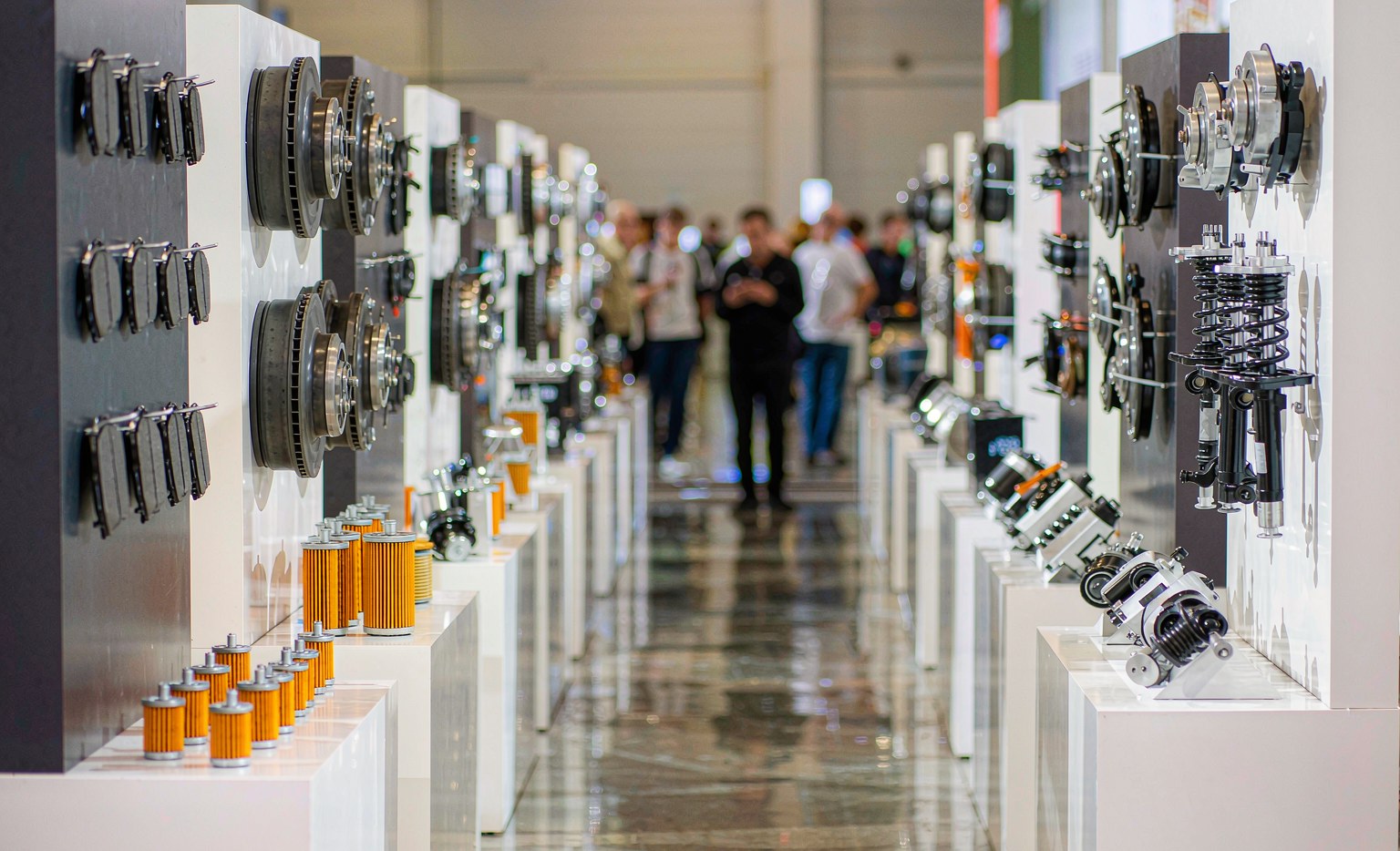
Engine-related components — oil filters, air filters, fuel filters, spark plugs, pistons, gaskets, water pumps, radiators and condensers — are scattered more widely than chassis parts because they straddle several official sections. Filter manufacturers frequently register under hardware or machinery accessories; radiator and condenser factories often appear next to general machinery suppliers. Two field tactics work well. First, use the exhibitor search in the buyer app with product keywords rather than section names — searching "oil filter" returns every exhibitor handling that product regardless of their registered section. Second, walk one full aisle of a machinery hall on your first afternoon even if it is not on your plan. Filters, hoses, bearings and small engine components surface there constantly, and some of the best quotations experienced buyers collect come from booths they never planned to visit.
| Category | Where to focus | Qualifying questions |
|---|---|---|
| Brake pads, discs, drums | Spare parts halls; friction material exhibitors | Which OE numbers? E-mark certification? Friction material source? |
| Suspension & steering | Spare parts halls; chassis exhibitors | Own casting line? Warranty terms? Rubber part supplier? |
| Filters (oil/air/fuel) | Spare parts and machinery accessory halls | Filter media brand? MOQ per model? Private label options? |
| Cooling (radiator, condenser) | Machinery halls; cooling system exhibitors | Aluminum or copper-brass? Leak test standard? Sample lead time? |
| Electrical & sensors | Electronics halls, Area A/B | Which vehicle platforms? Batch test reports? Chip origin? |
6. Finding Electrical, Lighting and EV Component Suppliers
Electrical parts have the widest footprint of any category. Starters, alternators, ignition coils, sensors, switches and wiring harnesses sit in the electronics halls alongside consumer electronics exhibitors, and lighting sections — including vehicle lamp and LED factories — have historically filled several halls in Area B during Phase 1.
The new energy vehicle wave has widened this further. Battery packs, drive motors, controllers, on-board chargers and charging station components now occupy a visible share of Phase 1, typically near the vehicle exhibits in the newer halls. For buyers serving markets where EV adoption is accelerating — the Gulf, Southeast Asia, Latin America — these aisles are worth a dedicated half day, because many exhibitors there are newer factories with more flexible minimum order quantities.
One caution: electrical components are where quality risk is highest and hardest to judge at a booth. Ask for batch-level test reports rather than datasheets, and note the exact factory name on the report — not the trading company name on the booth — so your pre-shipment inspection later checks the right entity.
7. How the Hall Numbering Works — and a Sample Walking Day
Hall numbers look confusing until you learn one rule: each area numbers its halls in a simple sequence, and the suffix tells you the floor — halls ending in .0 are on the ground floor, halls ending in .1 are on the second floor. Walking the full length of the complex from hall 1 to the last hall in Area C takes 35 to 45 minutes at fair pace; reaching Area D from Area A adds roughly another 30 minutes.
Those distances are why experienced buyers structure each day around a single area instead of chasing suppliers across the complex. A realistic first-day plan looks like this:
| Time | Zone | Focus |
|---|---|---|
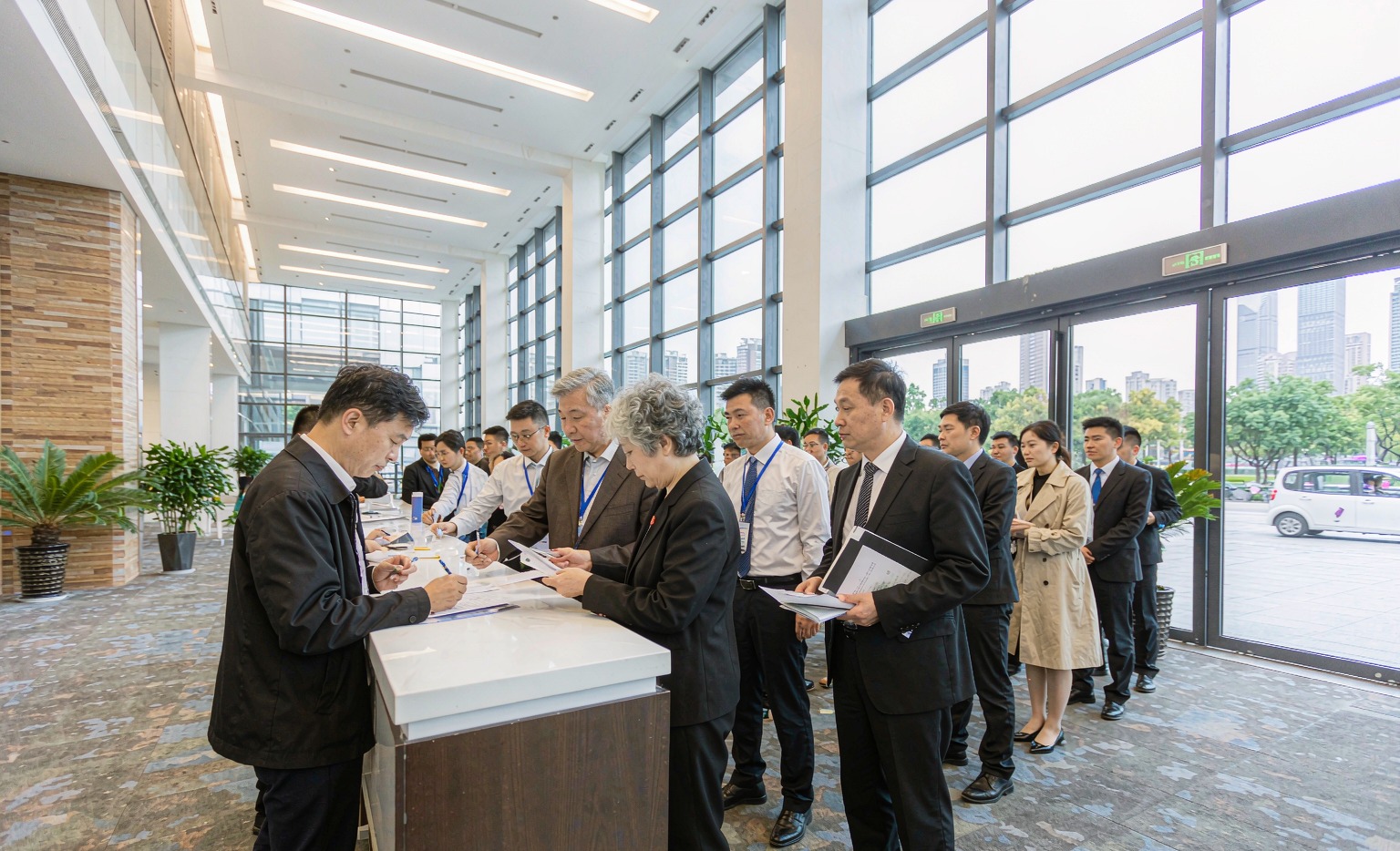
| 08:30–09:30 | Badge + entrance | Collect badge, confirm hall map in app, coffee, booth list review |
| 09:30–12:00 | Vehicle & spare parts halls | Ring 1: chassis, brake and filter shortlist; collect business cards, scan QR codes |
| 12:00–13:00 | Rest area | Lunch, sort cards, WhatsApp notes while memory is fresh |
| 13:00–15:30 | Adjacent machinery halls | Ring 2: filters, cooling, engine components hiding in machinery sections |
| 15:30–17:00 | Electronics halls | Electrical parts, sensors, lighting; EV component aisles |
| 17:00–18:00 | Follow-up desk or hotel | Send same-day follow-up messages while booths are still open |
On days two and three, mirror the structure for the halls you could not finish. Resist the urge to "just quickly cross" to another area mid-morning — the crossing always costs more than an hour once you include crowds and security checks at the hall entrances.
8. Navigation Tools That Save Hours
The fair has invested heavily in wayfinding, and using these tools properly is the difference between a planned day and a lost one:
- Official buyer app. Includes the interactive hall map, exhibitor search and booth favoriting. Pre-mark your booths before arrival and the app plots them on the map for you.
- Metro Line 8. Xingangdong station (Exit A) puts you at the Area A entrance; Pazhou station (Exits A/B) serves Area B, and Exit C walks you to Area C in about 300 meters. The line runs at enhanced frequency on fair days.
- Electric shuttle carts. Small electric carts run between areas for roughly 10–20 RMB per ride — worth knowing on day three.
- Pearl River promenade. The outdoor walkway along the river between Areas A and B is usually less crowded than the indoor corridors.
- Hotel shuttles. Dozens of designated hotels run shuttle buses during the fair. Check your hotel's schedule the night before — the last departures fill up fast after 18:00.
Avoid the taxi queue at closing time. When thousands of buyers leave at 18:00, the ride-hailing lines at Pazhou can take well over an hour. Either stay in the halls until the rush fades — good booths still welcome visitors until closing — or use the metro.
9. Layout Mistakes First-Time Buyers Make
Every fair, the same five mistakes cost first-time buyers real money:
- Assuming the "vehicles" sign covers everything automotive. Filters, cooling and electrical suppliers register under other sections. Without a keyword search you will never find them.
- No pre-marked booth list. Buyers who navigate "by eye" lose 90 minutes or more daily. The app's favoriting function exists precisely to prevent this.
- Area-hopping during peak hours. Crossing from A to D at 11:00 or 15:00 means shoulder-to-shoulder corridors and security queues. Cross at lunch or plan one area per day.
- Ignoring the second floor. Halls ending in .1 hold real exhibitors, and they are quieter — some of the best conversations happen upstairs.
- No recording system. By day two, business cards blur together. Write one line on each card — price level, MOQ, impression, next step — before you leave the booth.
10. How Globalucar Complements Your Hall Walk
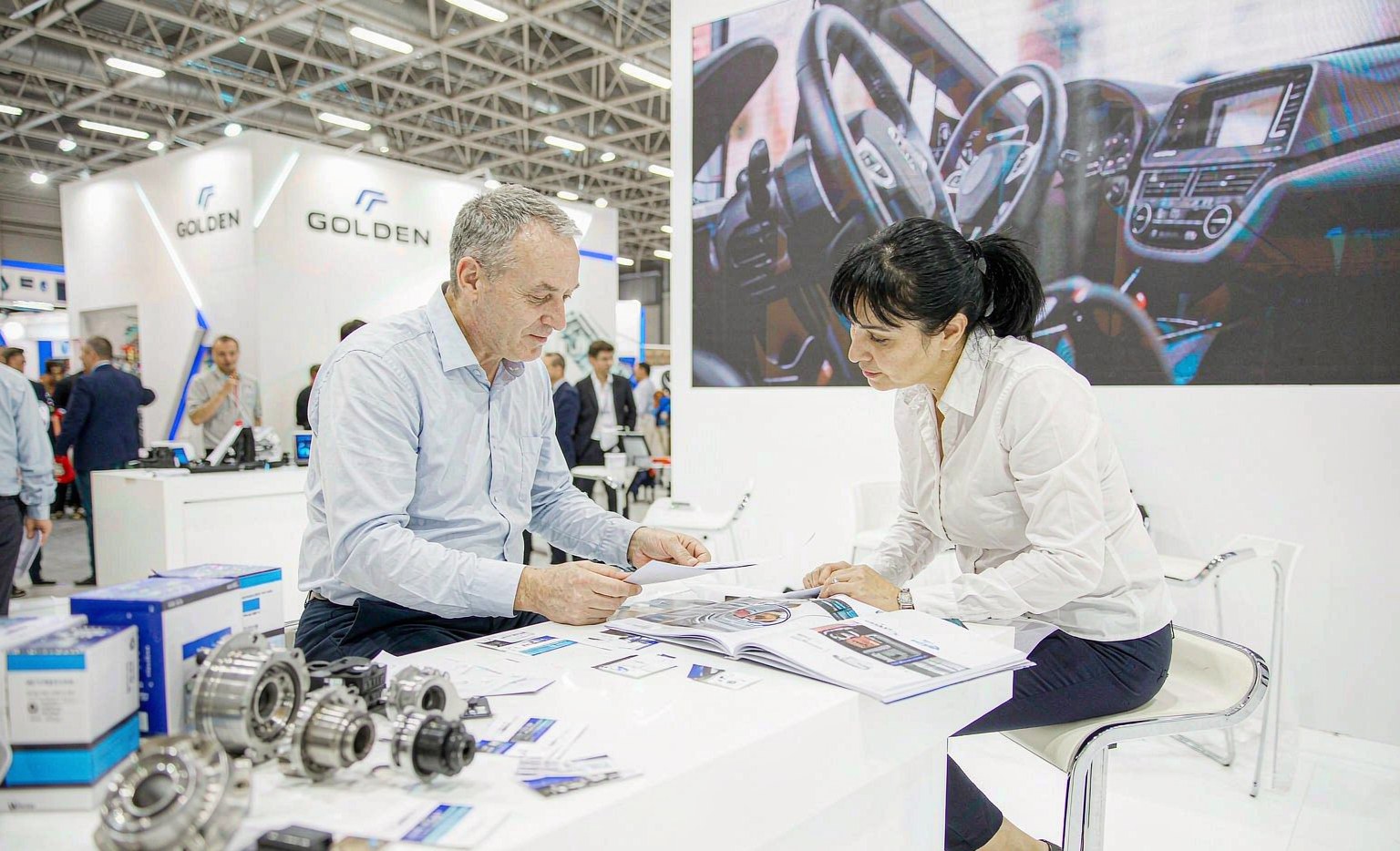
The Canton Fair auto parts halls are excellent for discovering new suppliers, but five days is a short window for qualifying factories, comparing real prices and arranging samples. That is where a local partner earns its keep. Globalucar is a Guangzhou-based vehicle and auto parts exporter — our office in Baiyun District is a short drive from the Pazhou Complex, and during fair week we meet buyers face to face, arrange factory visits across Guangdong's parts manufacturing belt, and quote from an established supplier network that keeps operating long after the halls close on October 19.
A practical pattern many buyers use: walk the fair to see what exists and benchmark prices, then spend the inter-phase break days (October 20–22) visiting factories and consolidators outside the fairground. If you plan to be in Guangzhou during Phase 1, contact Mr Didi at ucars@global-ucars.com or WhatsApp +86 133 0240 8528, or leave a message through our contact page to arrange a meeting or a parts sourcing session. Bring your target OE numbers or a photo of the parts you need — we can check availability against our Kingmay Auto Parts line, which covers engine, fuel, cooling, suspension and electrical systems for Toyota, Hyundai, Kia, VW and 100 other models.
Frequently Asked Questions
Which area of the Canton Fair has auto parts in 2026? The vehicles and vehicles spare parts sections run in Phase 1 (October 15–19, 2026). In recent sessions they have been placed in the newer halls on the west side of the Pazhou Complex, with related categories spread across Areas A and B. Confirm the exact halls in the official app map for the 140th session, because assignments change between editions.
How big is the Pazhou Complex and how long does it take to walk? The complex covers roughly 1.55 million square meters across four areas. Walking from the first hall in Area A to the last hall in Area C takes about 35–45 minutes at fair pace, and reaching the Area D halls adds roughly another 30 minutes. Plan one area per day instead of crossing the complex repeatedly.
What is the fastest way to find a specific part, like a brake pad for a Toyota Corolla? Use the exhibitor search in the official buyer app with product keywords such as "brake pad" or the part category, not section names. The search returns every exhibitor handling the product regardless of their registered section. Bookmark the booths in advance and the app will plot them on the hall map for you.
Which metro station should I use for the Canton Fair auto parts halls? Metro Line 8 serves the complex directly. Xingangdong station (Exit A) is closest to Area A, Pazhou station (Exits A/B) serves Area B, and Pazhou Exit C connects to Area C with a walk of about 300 meters. For the newer western halls, Xingangdong Exit A followed by a walk west and south works well.
Can I see electric vehicle components at the fair too? Yes. Phase 1 includes new energy vehicle sections — battery, motor, controller and charging component exhibitors are usually concentrated near the vehicle displays in the newer halls. If your market is adopting EVs quickly, reserve a dedicated half day for these aisles; many exhibitors there are newer factories with flexible minimum order quantities.
Is it worth visiting if I only have two days? Yes, if you pre-mark your booths and stick to one area per day. Two focused days covering the spare parts halls and one adjacent section produce better results than four scattered days. Many buyers pair the fair with one or two factory visit days in the October 20–22 break, which is when deeper supplier qualification actually happens.
Related Articles
Related Products
From our export catalog — parts and vehicles ready for international delivery

Full-Size EREV SUV
2026 Rox Adamas EREV 215km 6-Seat Executive Edition
USD 53,000 FOB Guangzhou
View Details
Full-Size EREV SUV
2026 Rox Adamas EREV 215km 7-Seat All-Terrain Edition
USD 51,500 FOB Guangzhou
View Details
