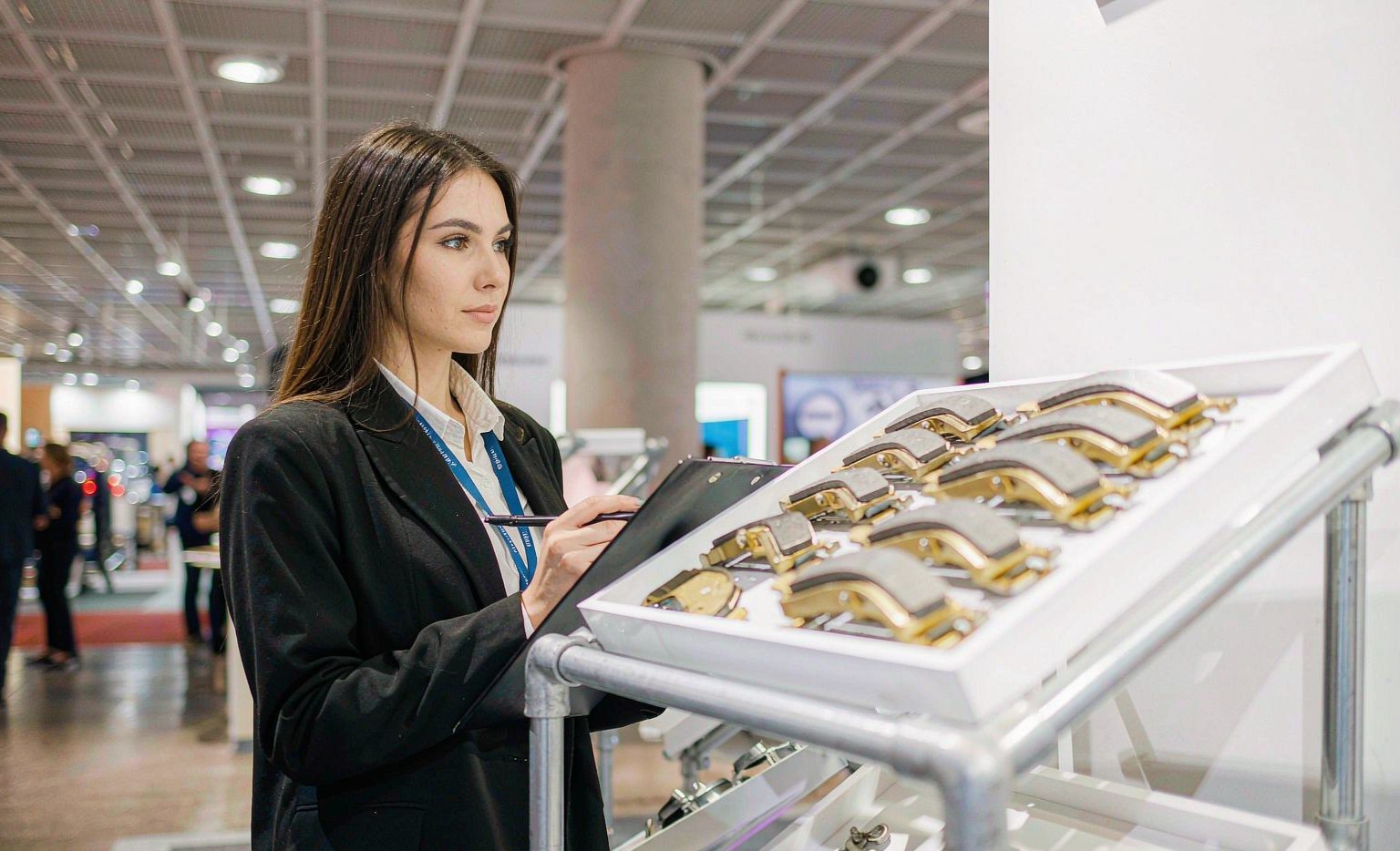
A booth, a business card and a glossy catalogue do not make a supplier. When you source auto parts at the Canton Fair, the real work is verifying that the company in front of you actually makes the part, holds the certifications it claims, and cross-references OE numbers accurately enough that the shipment fits the vehicles your customers drive. With the 140th session’s auto-parts-relevant Phase 1 running 15–19 October 2026 at the Pazhou complex in Guangzhou, this guide gives you a repeatable workflow — the license check, the certification check, the OE number check, the on-booth sample review and the factory audit — that separates real manufacturers from well-dressed intermediaries. Run it before you wire a deposit, and a five-day fair becomes a five-day confirmation exercise instead of a five-day guessing game.
How to Verify an Auto Parts Supplier at Canton Fair: The Big Picture
Verifying a supplier is not one question but five, and each one answers a different risk. The license check confirms the company exists and is legally allowed to manufacture. The certification check confirms its quality system and product performance meet automotive standards. The OE number check confirms the part will fit the vehicle it claims to replace. The sample and test-report review confirms the goods match the paperwork. The factory audit confirms the operation behind the booth is real and repeatable.
Buyers who skip this work at the fair usually do it later, at a much higher price. A wrong cross-reference does not fail on the test bench; it fails at the customer’s workshop, generating returns, claims and lost accounts. A trading company posing as a factory adds a margin layer without adding capability. A missing or expired certificate becomes your compliance problem the moment the container clears customs. Roughly speaking, a first container order that goes wrong can cost more than ten proper audits — which is exactly why the verification workflow belongs at the booth, before any deposit leaves your account.
The good news is that most of this takes minutes per supplier, not days. The sections below are ordered the way an experienced buyer actually works a hall.
Start With the License: Factory or Trading Company?
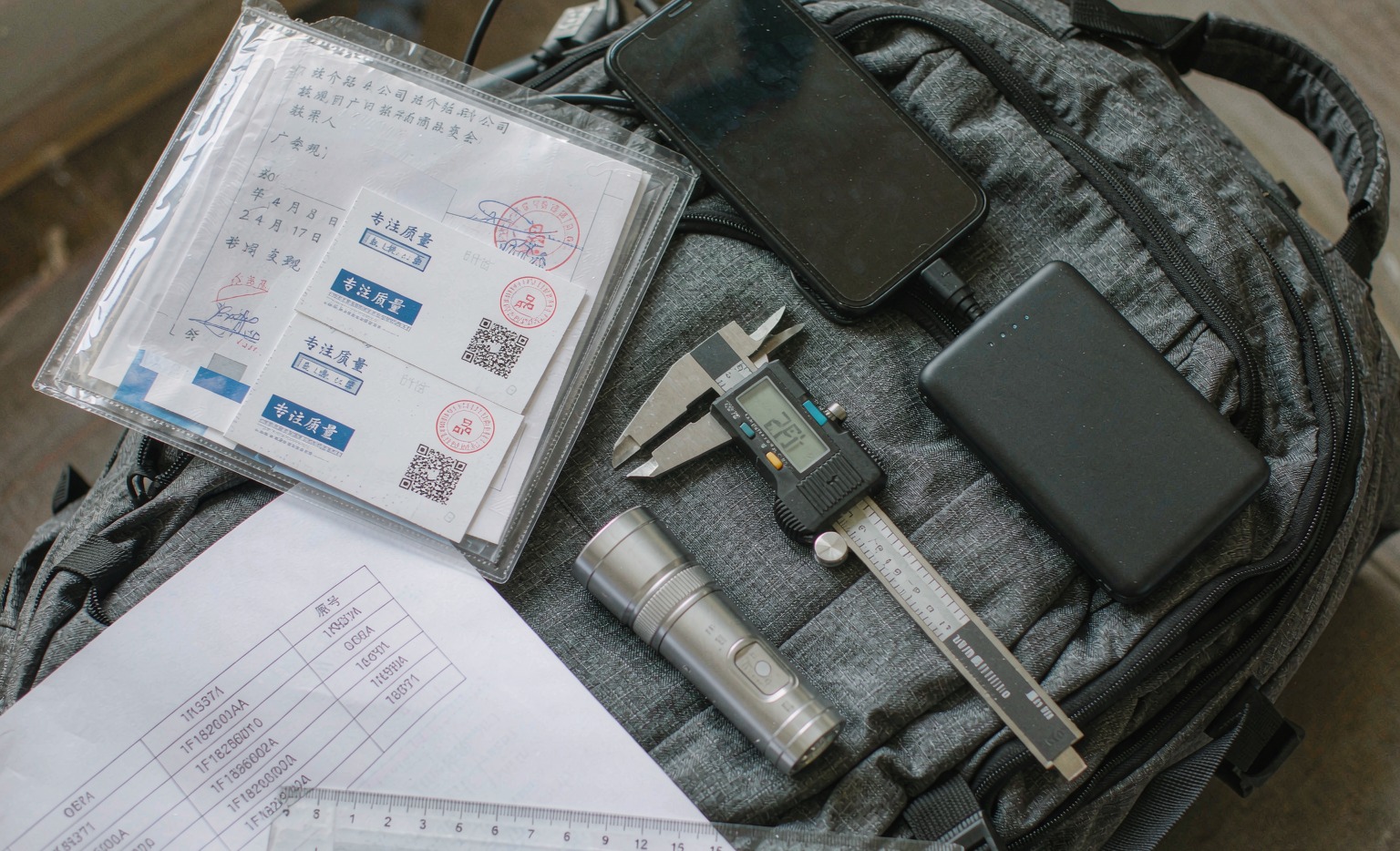
Ask for the business license first, and photograph it. On a Chinese license the unified social credit code is an 18-character code that can be checked against the national enterprise credit system, and the business scope will state whether the company is licensed for production (生产) or only for trading. A genuine factory shows a scope that includes manufacturing; a trading company typically shows distribution or import/export. That single field settles the most common source of confusion at any trade show.
Do not stop at the paper. Cross-check the registered address against satellite imagery: a factory footprint with truck docks and rooftops looks nothing like an office tower. If the address on the license does not match the address on the business card, ask why. Legitimate multi-site manufacturers exist, but the answer should be specific and verifiable, not vague.
| Signal | Looks like a factory | Looks like a trading company |
|---|---|---|
| Business scope | Lists production / manufacturing | Lists trading, distribution, import-export |
| Process ownership | Names the machines and processes it runs (forging, CNC, heat treatment) | Cannot name a process it owns |
| Sample origin | Offers a unit pulled from the production line | Sample arrives from “a partner factory” |
| Address check | Satellite shows a plant and loading docks | Satellite shows an office or virtual address |
| Capacity math | Headcount, lines and monthly output add up | Large “capacity” with no verifiable equipment |
Trading companies are not automatically a problem. Some curate excellent factories and add real value on consolidation and logistics. The problem is misrepresentation: paying factory pricing for trader service, or discovering months later that your “manufacturer” never controlled quality at all. Knowing which one you are dealing with lets you price and protect the order correctly.
Certifications That Matter: IATF 16949, ECE R90 and What to Verify
Certificates are where buyers are most often fooled, because a logo is easy to print and a system is hard to run. Ask for the certificate number, the scope, the issuing body and the expiry date — not an image of a badge. IATF 16949, the automotive industry’s core quality management standard, can be checked on the IATF’s public certification database, and certificates are re-audited on a three-year cycle. An expired certificate is meaningless. A supplier who answers a request for IATF 16949 with a generic ISO 9001 certificate is telling you something: ISO 9001 is a general quality standard with far lighter requirements for automotive production and is not a substitute for safety-critical parts.
| Certificate | What it covers | How to verify |
|---|---|---|
| IATF 16949 | Automotive quality management system; process control, traceability, internal audits | Ask for cert number, scope, expiry and issuing body; check the IATF public database |
| ISO 9001 | Generic quality management; not automotive-specific | Acceptable only as a supplement, never a substitute for IATF 16949 on safety parts |
| ECE R90 | Brake pad performance for the aftermarket; replacement must sit within a defined tolerance band of the OE part | Ask which dynamometer and test house ran it; in-house capability signals stronger control |
| ECE R13 / R10 / R118 | Braking systems (R13), electromagnetic compatibility (R10), interior material flammability (R118) | Match the regulation to the part category; request the test report, not the claim |
Note a live change in the rules: the IATF’s updated certification rules took effect on 1 January 2025 and extend IATF 16949 scope toward aftermarket replacement parts by 2028. In practice this means the line between “OEM” and “aftermarket” certifications is narrowing, and buyers who verify certifications today are building a checklist that stays relevant for years. For brake pads specifically, ECE R90 approval means the part was tested on an approved dynamometer and must not deviate beyond a fixed percentage from the OE pad’s performance curve — a supplier that outsources this testing has slower validation and less control than one that runs it in-house.

OE Numbers: The Buyer's Secret Weapon for Fitment Verification
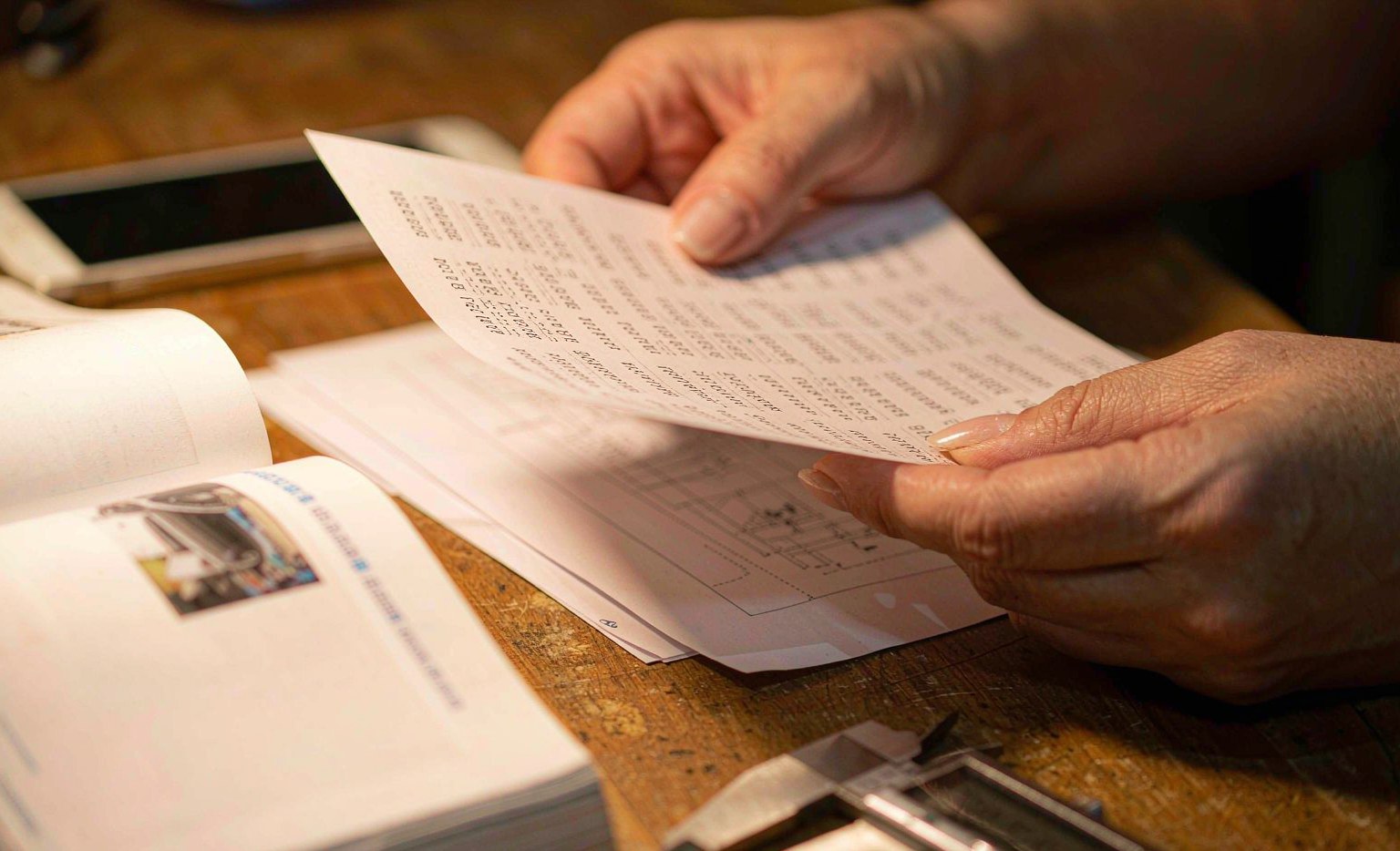
The single most useful thing you can carry into a hall is a clean OE number list. OE numbers are the shared language between your vehicle data and the factory’s cross-reference file, and they are the fastest way to test whether a supplier actually knows fitment or is guessing from photos. Provide the OE numbers for the vehicles you service — for example a Toyota brake pad reference such as 04465-35030, a Hyundai/Kia number in the 58101-xxxxx family for front pads, or a Denso and Bosch reference on an electrical part — and ask the supplier to confirm fitment with documented evidence.
A reliable supplier maintains a cross-reference database that maps its own SKU to OE references from vehicle makers and from tier-one brands, and can produce a specification sheet confirming dimensional and performance data for each reference. Treat every OE cross-reference as indicative until verified against the vehicle’s VIN or your own fitment catalogue. Two distinctions matter: a single aftermarket part number often replaces several OE numbers that share one core specification, which is a real inventory advantage for distributors — but the consolidation must be technically valid, not merely convenient. And “OE replacement” (a direct physical and functional substitute) is a stronger claim than “OE equivalent,” which can hide a different friction material or specification. Always confirm the material and specification match in writing.
Cross-reference accuracy has a maintenance cost. New models and mid-cycle updates arrive every year, so a serious supplier updates its fitment data on a rolling basis, often quarterly. Ask when their database was last refreshed. A supplier still quoting a 2019 cross-reference file is a supplier whose errors will land on your returns desk.
What to Check on the Booth Floor: Samples, Tolerances and Test Reports
At the booth, work through the physical evidence in a fixed order so nothing is skipped when the hall gets busy:
- Pull a production sample, not a display sample. Ask for a unit from the current production run and check the part number stamped on the product itself, not just the catalogue page. Confirm the stamped number matches the quoted OE reference.
- Measure what matters. Carry a caliper. On a brake pad, check backing plate thickness and the friction material edge; on a suspension arm, confirm critical dimensions against your drawing. A part that is dimensionally off by a fraction will pass a visual check and fail on the vehicle.
- Ask for the test report, not the test claim. A dated report naming the test method and the lab beats any verbal assurance. For chassis and brake parts, request material test reports matched to the production lot so a future complaint can be traced back to a specific batch.
- Review packaging and marking. Correct part numbers, bilingual labelling where your market requires it, and lot or date codes are signs of a controlled process. Mismatched numbers between listing and product are a classic warning sign.
Record a short voice memo at every booth before you move on: company name, hall and booth number, what you saw, what they promised. By day three the halls blur together, and that memo chain becomes your follow-up database when you sit down to rank suppliers.
Factory Audits: Announced, Unannounced and Third-Party Options
A booth conversation verifies intent; an audit verifies reality. There are three practical ways to run one, and the strongest programs use a mix.
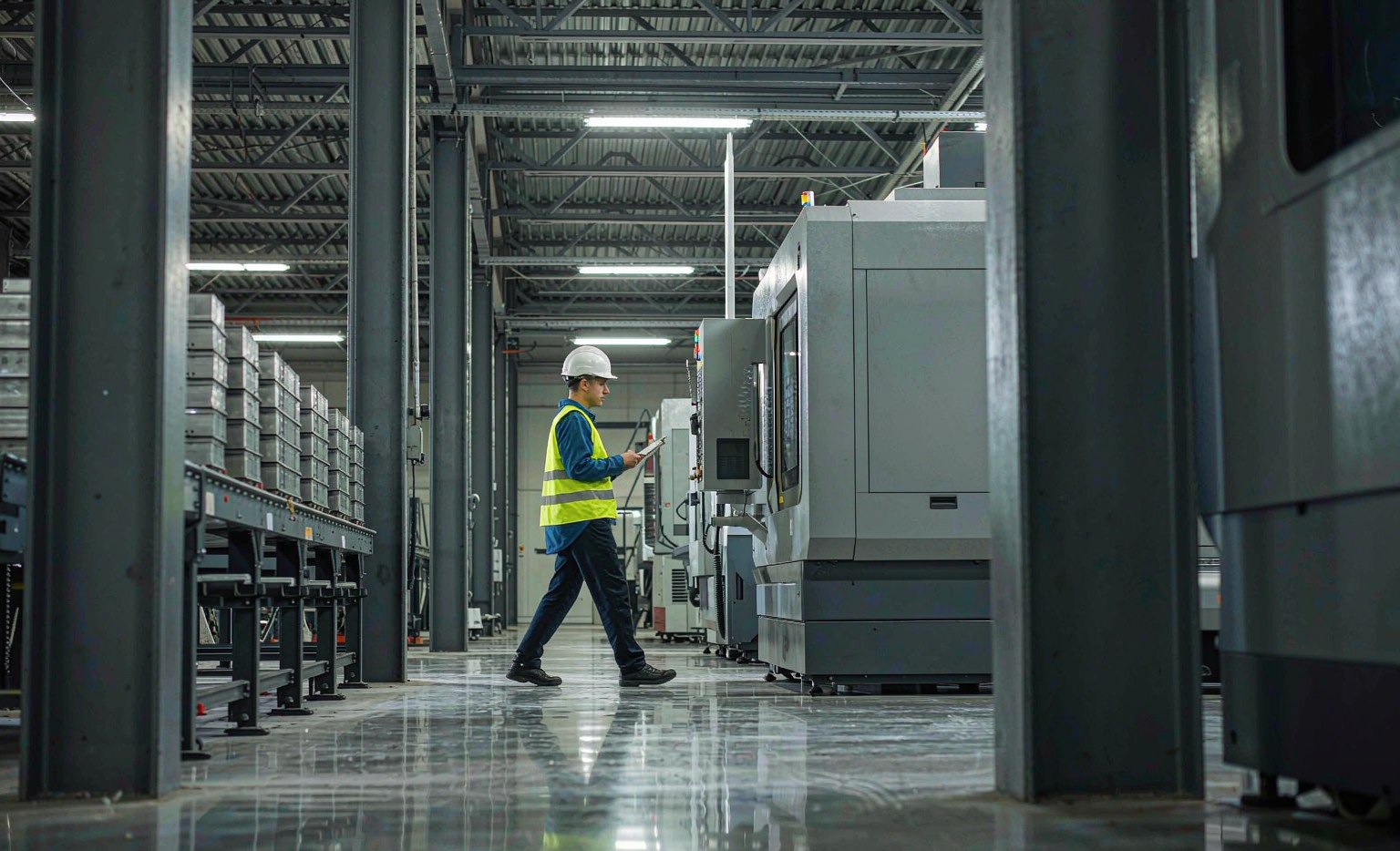
- Announced audit. The supplier knows you are coming and prepares documents, payroll records and certificates. This is necessary for document-heavy checks and gives you a structured, comparable report — but a prepared factory can also stage its floor.
- Unannounced spot check. Book a flight and do not notify the factory. Arrive at the gate, present your card and ask for the plant manager. Worker count, running lines and shift activity tell you the truth that a scheduled visit cannot. If the factory initially refuses entry, record that refusal as a finding.
- Third-party audit. Independent firms such as SGS, Bureau Veritas, Intertek and QIMA run capability, compliance and quality-system audits and report directly to you with photos. A basic verification audit commonly runs around USD 200–500, a fuller technical quality audit higher, with the largest international firms at the top of the range. Guangdong is one of the more expensive regions, but it is also where a large share of auto parts capacity sits.
Watch the cost benchmark as a share of your spend. For most importers, a sensible audit budget is a small fraction of what they spend with a given supplier each year — cheap insurance against a single failed container. And remember that an audit is a snapshot: even a factory that passes every step can slip when raw material prices move or a key operator leaves. Treat verification as the beginning of monitoring, not a one-time pass.
Pre-Shipment Inspection vs Factory Audit: What Each One Catches
Buyers often use these two terms interchangeably, but they answer different questions and catch different failures.
| Dimension | Factory audit | Pre-shipment inspection (PSI) |
|---|---|---|
| Question answered | Can this factory make my parts well and honestly, over the long term? | Is this specific batch ready to ship? |
| What it reviews | Equipment, process control, QC systems, traceability, compliance | The goods against the purchase order, at 80–100% production complete |
| Method | On-site walkthrough, records, worker interviews | AQL sampling of the produced batch, dimensional and functional checks |
| Timing | Before you commit; typically one day on site | Before container loading, every first order and every risky order |
| Typical cost | Broadly USD 200–500 basic, higher for full technical audits | Often a few hundred USD per inspection |
The practical rule: audit the factory once, inspect the goods every time. An audit without ongoing inspection still lets a bad batch through, and inspection without an audit still lets you buy from a trader with no production control. Together they cover the whole chain.
Red Flags: Ten Answers That Mean Walk Away
Verification is often about listening. The table below pairs the question with the answer a serious factory gives and the answer that should end the conversation.
| Question | Green flag | Red flag |
|---|---|---|
| “Send your certificate.” | Cert number, scope, expiry, issuing body | A logo image, or “we are certified” |
| “Do you make it or resell it?” | Names the processes and machines it owns | Vague, or “we have a partner factory” |
| “Show the test report.” | Dated report, named lab, stated method | “It always passes” |
| “What if a batch is out of spec?” | Written RMA process and defect terms | Assurances given only verbally |
| “Lead time at double volume?” | Real lead time, name the bottleneck | “Seven days, always” |
| “Can I see the line today?” | Sends real-time footage or invites you | Excuses, delays, stock photos |
| “Confirm this OE number.” | Checks a database and sends the spec sheet | Confirms from a photo alone |
| “Who pays for returns?” | A clear warranty and defect-rate term | The topic changes |
| “What is the sample fee?” | A paid sample and a small trial batch | Pressure to skip straight to the big order |
| “Can a third party inspect?” | Yes, with full access | Refusal of third-party QC access |
None of these answers is fatal on its own; a pattern of them is. A single fail on the license, certificate or reference check is reason to pause the order until it is resolved in writing.
A 5-Minute Verification Workflow You Can Run At the Fair
In a busy hall you will not have an hour per booth. Compress the workflow into five minutes and save the deep checks for your shortlist:
- Minute 1 — identity. Photograph the business license and card; note the credit code and the business scope.
- Minute 2 — certification. Request IATF 16949 with number, scope and expiry; note the issuing body for later verification.
- Minute 3 — fitment. Hand over three OE numbers from your list and ask for written confirmation with a spec sheet.
- Minute 4 — sample. Pull a production unit, photograph the stamped part number, and note one dimensional check you ran.
- Minute 5 — record. Voice-memo the booth, the promises and the next step. Mark the supplier shortlist, watch-list or drop.
Suppliers that clear all five minutes move to your audit list. Suppliers that stumble on any single minute move to the watch-list, where a written follow-up either resolves the gap or confirms the concern. This is the same discipline that makes hybrid sourcing between fairs work once you are back home.
After the Fair: Turning Verification into a Repeatable System
The fair is where verification starts, not where it ends. Within 48 hours of each hall day, convert every promising contact into a written record: restate the part numbers, quantities, FOB prices and agreed terms, and ask the supplier to confirm in writing. A supplier’s written confirmation is itself a quality filter — what they will not put in writing, they will not stand behind.
Then run sample validation against your golden sample, place a structured trial order small enough to limit risk but large enough to be taken seriously, and inspect it before it ships. If the supplier is in Guangdong, book a factory visit during the changeover break. Once an SKU is validated, move reorders to your fastest online channel and keep a cross-reference check in the loop, so fitment accuracy stays current as new model years arrive. Our OE parts library is a starting point for checking references, and a local partner can keep the verification rhythm going while you are 9,000 kilometres away.
Sourcing at Phase 1 (15–19 October 2026)? Send your OE number list and target part categories before you fly — we will pre-screen suppliers against license, certification and cross-reference checks and prepare a verification plan for your days in the halls. Contact Mr Didi: ucars@global-ucars.com | WhatsApp +86 133 0240 8528 | or reach us via our contact page. Browsing first? Start with the parts finder.
Frequently Asked Questions
How do I verify a Chinese auto parts supplier's IATF 16949 certificate?
Ask for the certificate number, the scope, the issuing certification body and the expiry date — not a badge image. Then check the number on the IATF’s public certification database. IATF 16949 certificates are re-audited on a three-year cycle, so an expired certificate is meaningless. If a supplier answers an IATF request with an ISO 9001 certificate, treat it as a warning sign: ISO 9001 is a general standard and is not a substitute for automotive production on safety-critical parts.
What is the fastest way to check if an auto part will fit my vehicle?
Use OE numbers. Send the supplier your OE references for the target vehicles and ask them to confirm fitment with documented evidence and a specification sheet. A reliable supplier maps its own SKU to OE references from vehicle makers and tier-one brands. Treat every cross-reference as indicative until it is verified against the vehicle’s VIN or your own fitment catalogue, and confirm whether the part is an “OE replacement” or merely “OE equivalent.”
Should I order a factory audit or a pre-shipment inspection?
Both, for different reasons. A factory audit checks whether the supplier can make your parts well and honestly over the long term — equipment, process control, QC systems and compliance. A pre-shipment inspection checks whether a specific batch is ready to ship, using AQL sampling at 80–100% production complete. Auditing the factory once and inspecting the goods every time covers both ends of the chain.
How much does a factory audit in China cost in 2026?
A basic verification audit commonly runs around USD 200–500, with fuller technical quality audits higher; the largest international firms such as SGS and Bureau Veritas price at the top of the range, and Guangdong sits among the more expensive regions. The right benchmark is not the absolute fee but the fee as a fraction of your annual spend with that supplier — a small slice is cheap insurance against one failed container.
How can I tell a factory from a trading company at the Canton Fair?
Three checks. First, the business license: the scope should include production, not only trading. Second, process ownership: a real factory can name the machines and processes it runs, such as forging, CNC machining, heat treatment and testing. Third, the sample: ask for a unit pulled from the current production line rather than a display piece, and confirm the part number stamped on the product matches the quoted reference.
What should I do in the first 48 hours after meeting a supplier at the fair?
Put everything in writing. Restate part numbers, quantities, FOB prices and agreed terms, and ask the supplier to confirm in writing — what they will not confirm in writing, they will not stand behind. Then run sample validation against your golden sample and place a structured trial order before committing to a full container. If the supplier is in Guangdong, book a factory visit during the changeover break while you are still in the region.
Related Articles


Related Products
From our export catalog — parts and vehicles ready for international delivery

Full-Size EREV SUV
2026 Rox Adamas EREV 215km 6-Seat Executive Edition
USD 53,000 FOB Guangzhou
View Details
Full-Size EREV SUV
2026 Rox Adamas EREV 215km 7-Seat All-Terrain Edition
USD 51,500 FOB Guangzhou
View Details
