
Phase 1 of the 140th Canton Fair closes at 18:00 on 19 October, and by tonight the aisles at Pazhou will be empty again. What you do in the next 48 hours decides whether five days on the floor turn into a supplier list you can actually buy from, or into a stack of business cards you will never read twice. This is the shortlisting routine that works when you are holding dozens of booth notes, a handful of quotations, and a flight home.
What You Are Holding — and Why It Expires in 48 Hours
By the afternoon of day five, most buyers are carrying the same mess: a phone gallery full of booth photos with no captions, business cards with handwritten numbers on the back, three quotations received over WeChat, one over email, and a memory that already cannot tell the coated rotor supplier from the plain one. That is normal. The problem is not the volume of notes — it is that none of it is comparable yet.
Raw booth notes are impressions. A shortlist needs rows. Until every supplier occupies one row with the same fields filled in, you are ranking on enthusiasm, and enthusiasm at a trade show correlates poorly with delivery performance. The four steps below convert impressions into a ranking you can defend to your own purchasing team three weeks from now.
If you recorded booths using the field list in our Canton Fair buyer checklist, this stage is mostly transcription. If you did not, you will be reconstructing from photographs — which is exactly why the 48-hour window matters.
Three things expire at once when the halls close. First, the exhibitors leave: the changeover break runs 20–22 October with no exhibition in session, and most booth staff travel back to their factories the same evening. A salesperson answering from a production office is not the same person who pulled a sample off the shelf for you on Tuesday.
Second, the quotation you were given was priced against a fair-week context — floor-space urgency, competitor booths within earshot, a sales manager authorised to discount. That context disappears with the booth. Buyers who wait until November frequently discover the price moved, or that the "we will confirm" item was never actually quoted.
Third, and most expensive, is your own recall. Five days of booths blur fast. The supplier who mentioned they hold stock for your specific OE numbers is indistinguishable from the one who said they could develop them — unless you wrote it down. Two weeks later you cannot tell, and you will send the same generic follow-up to both.
Working inside 48 hours does not mean deciding in 48 hours. It means getting every supplier into a comparable state while the people who met you are still reachable and still remember you.
Step One: One Supplier, One Row
Build a single sheet — a spreadsheet, not a document — with one row per supplier and the same nine fields on every row. Resist the urge to write paragraphs. If a field cannot be filled from your notes and photographs, leave it blank rather than guessing; a blank is honest and a guess is expensive.
| Field | Why it earns a column |
|---|---|
| Company name + booth area | Two suppliers may share a trading name; the hall and aisle locate them later |
| Contact person + WeChat/WhatsApp | The person who met you, not the general inbox — this is who answers |
| Categories they actually make | Separates factories from trading companies reselling the same catalogues |
| OE numbers confirmed vs "can develop" | The single strongest predictor of whether a first order runs smoothly |
| Quoted price, currency and Incoterm | Quotes are only comparable when the term matches; note FOB port too |
| MOQ per part number | A low unit price with a 2,000-piece MOQ is a different product |
| Lead time for a first order | Includes tooling where new development is required |
| Sample status | Seen / requested / paid for / shipped — and the date you asked |
| Certificates shown | Name them specifically, do not write "has certificates" |
Once the sheet exists, count the blank cells. A supplier with four blanks out of nine is not a shortlist candidate — it is a conversation you never finished. That is useful information, and it is far cheaper to learn on day five than after a deposit.

Step Two: Score Everyone on the Same Sheet
Now weight the columns. A simple 100-point scorecard beats a gut ranking, because it forces you to decide in advance what matters for your business rather than for the supplier's pitch. The weights below suit auto parts importers buying service-line parts for existing vehicle parc; adjust them if you are building a new catalogue from scratch.
| Criterion | Weight | What a high score looks like |
|---|---|---|
| OE coverage on your actual list | 25 | Confirms your part numbers from stock, not "we can develop" |
| Sample quality seen by hand | 20 | Machining, coating, packaging and markings inspected, not photographed |
| Commercial terms | 15 | FOB price, MOQ and payment terms stated in writing |
| Documentation | 15 | Named certificates, test reports, traceable batch records |
| Responsiveness during the fair | 15 | Answered within a day, brought the right person to the booth |
| Logistics fit | 10 | Consolidates with your existing Guangzhou shipments or a known forwarder |
Score each supplier 0–5 on every criterion and multiply by the weight. The output is rarely a surprise — you usually know who your top three are — but the exercise exposes the uncomfortable cases: the supplier with the lowest price and the weakest documentation, or the one who was charming and gave you no numbers at all. Those are the two profiles that generate most post-fair disputes.
Step Three: Sort Into Three Buckets
Drop the scored list into three buckets and stop treating them the same way.
Bucket A — pursue now. Score above roughly 75, with confirmed OE numbers and a written quotation. These get a specific follow-up within 24 hours and a sample order request. Two or three suppliers per category is the right size; more than that and you are spreading your own attention too thin to negotiate well.
Bucket B — keep warm. Scored 55–75, usually because documentation or samples are incomplete rather than because the price is wrong. These get one clear request for the missing item and a deadline. Many Bucket B suppliers become A within a fortnight simply because nobody else asked them for the certificate.
Bucket C — archive. Below 55, or with blank fields you cannot close. Archive them with a note explaining why. A note written today costs thirty seconds; the same reasoning reconstructed in March is impossible, and the supplier's card will resurface in your next sourcing round.
Step Four: Send the Follow-Up That Gets an Answer
Generic messages lose. "Thank you for your time, please send your catalogue" arrives in an inbox alongside two hundred identical notes and reads as nothing. What gets a reply is specificity: the exact part numbers, the quantity band, the port, and a question that requires a real answer rather than a brochure.
| Part of the message | What to write |
|---|---|
| Subject line | Your company + the part category + the fair — no "greetings" |
| Opening line | Where you met them and one concrete detail from the conversation |
| The ask | A quotation against named part numbers, in a named quantity, FOB a named port |
| The extra question | One thing only a real factory can answer: tooling, coating spec, batch traceability |
| The deadline | A date, and what happens on that date — "so we can confirm before the 22nd" |
| Channel | Email for the record, WhatsApp or WeChat for the nudge 24 hours later |
Send it to the person who met you, and copy the company address. If you met three people at one booth, message the one who answered your technical questions — that is usually the person with access to production, not the one with the business cards.
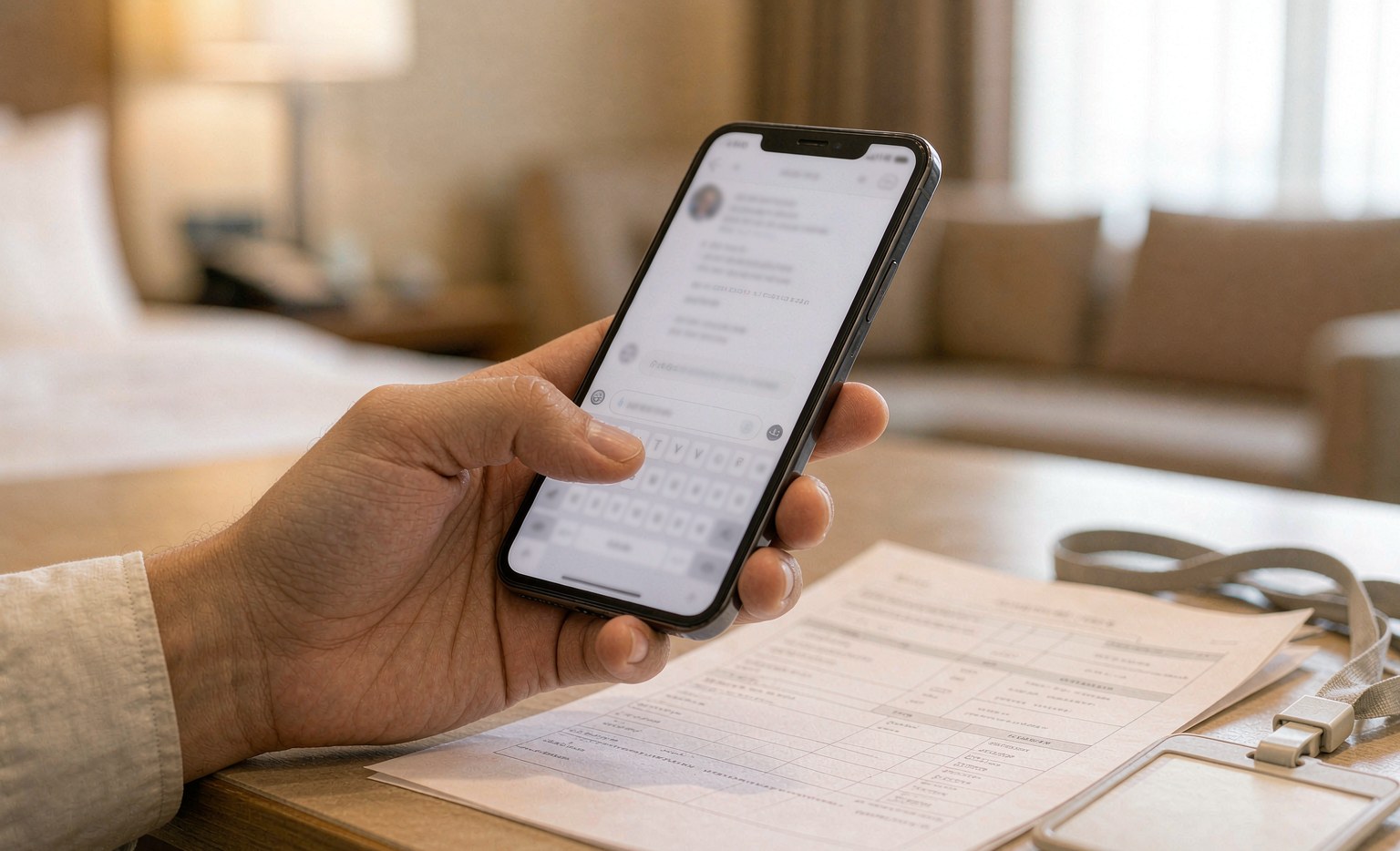
What to Demand Before 22 October
The changeover break is the natural cut-off. Ask for these items now so that the answers land while you are still in China and can act on them, rather than after you have flown home and lost the room to negotiate.
| Ask for | What it tells you |
|---|---|
| Written quotation with part numbers, price, MOQ, Incoterm and port | Whether the verbal number survives contact with their sales office |
| Certificate copies with number and scope | Whether the certificate covers your part family, not just the factory |
| Sample plan: cost, courier, dispatch date | Whether they treat samples as a step or as an obstacle |
| Tooling cost and ownership, if new development | Who owns the tooling and whether a second source is possible later |
| Production lead time for a repeat order | Whether the first container is repeatable or a one-off effort |
| Reference customers in your region | Whether they already ship to your market and know its paperwork |
Our guide to verifying auto parts suppliers on certificates, OE numbers and factory audits goes through how to read what comes back. Two documents arrive in the first reply more often than buyers expect — and both are easy to check.
Five Ways Buyers Damage Their Own Shortlist
Ranking on price alone. A price without an Incoterm, an MOQ and a lead time is not a quotation. It is an opening remark. Comparing opening remarks across five suppliers produces a winner who cannot deliver.
Keeping everyone. A shortlist of eleven is not a shortlist. Every supplier you keep costs you an email, a sample negotiation and a mental slot; three per category is workable and nine is not.
Waiting for the perfect quotation. Suppliers do not send a complete quote for free to an unknown buyer. Ask for the two fields you actually need — usually price at a stated quantity and lead time — and build from there.
Following up only by email. In China the reply almost always arrives on WeChat or WhatsApp first. Send both, and keep the email thread as the record you will quote from later.
Skipping the note on rejected suppliers. Without a reason recorded, the same card comes back in six months and you will re-run the whole evaluation from zero.
What the 20–22 October Break Is Actually For
The changeover is not dead time. With no exhibition running, it is the only clear window for factory visits outside Pazhou — Foshan, Dongguan, Zhongshan and the Pearl River Delta parts belt are all within reach, and the suppliers you met are back at their plants. This is where a Bucket A supplier either holds up or does not: the booth was a presentation, the factory is the evidence.
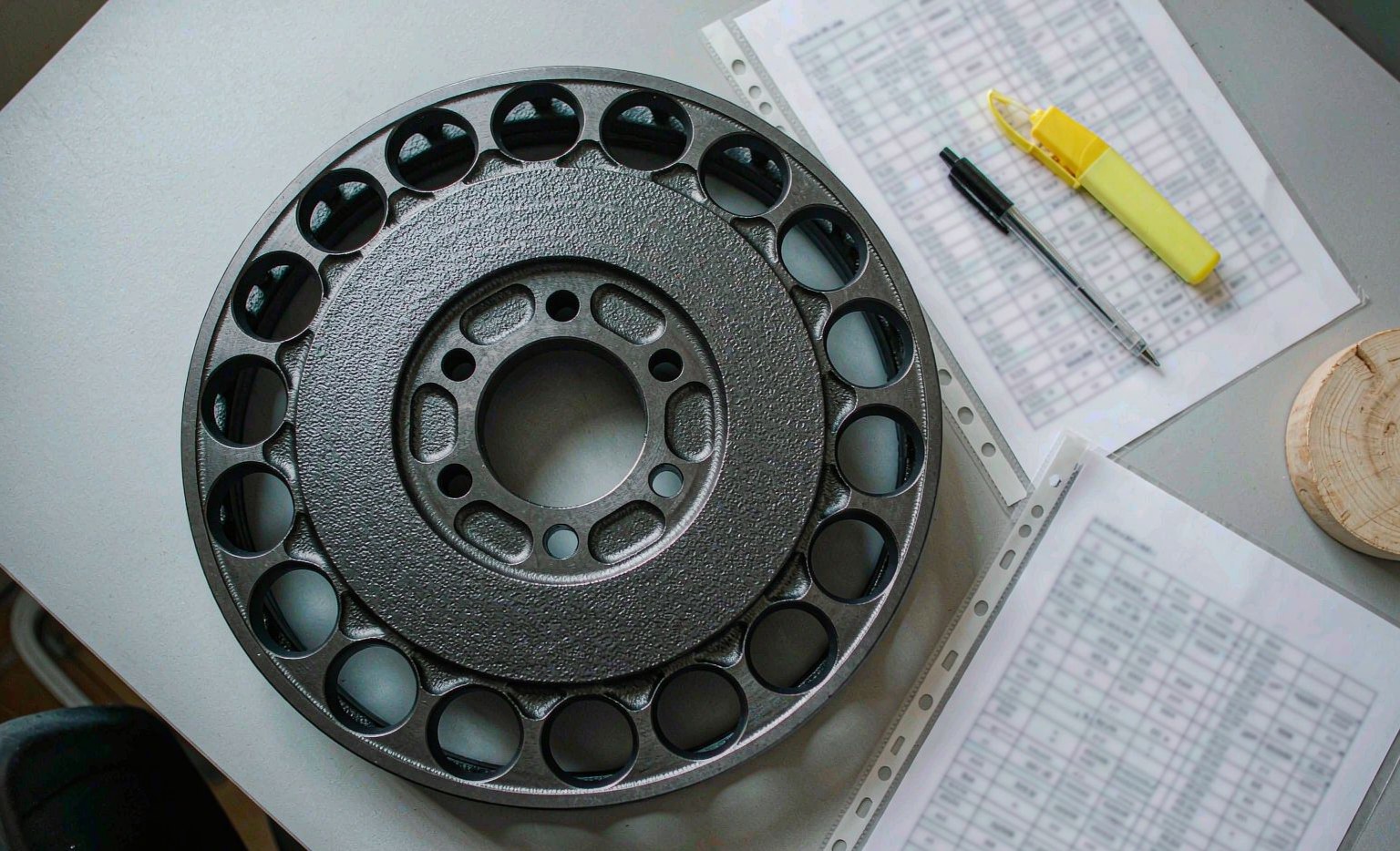
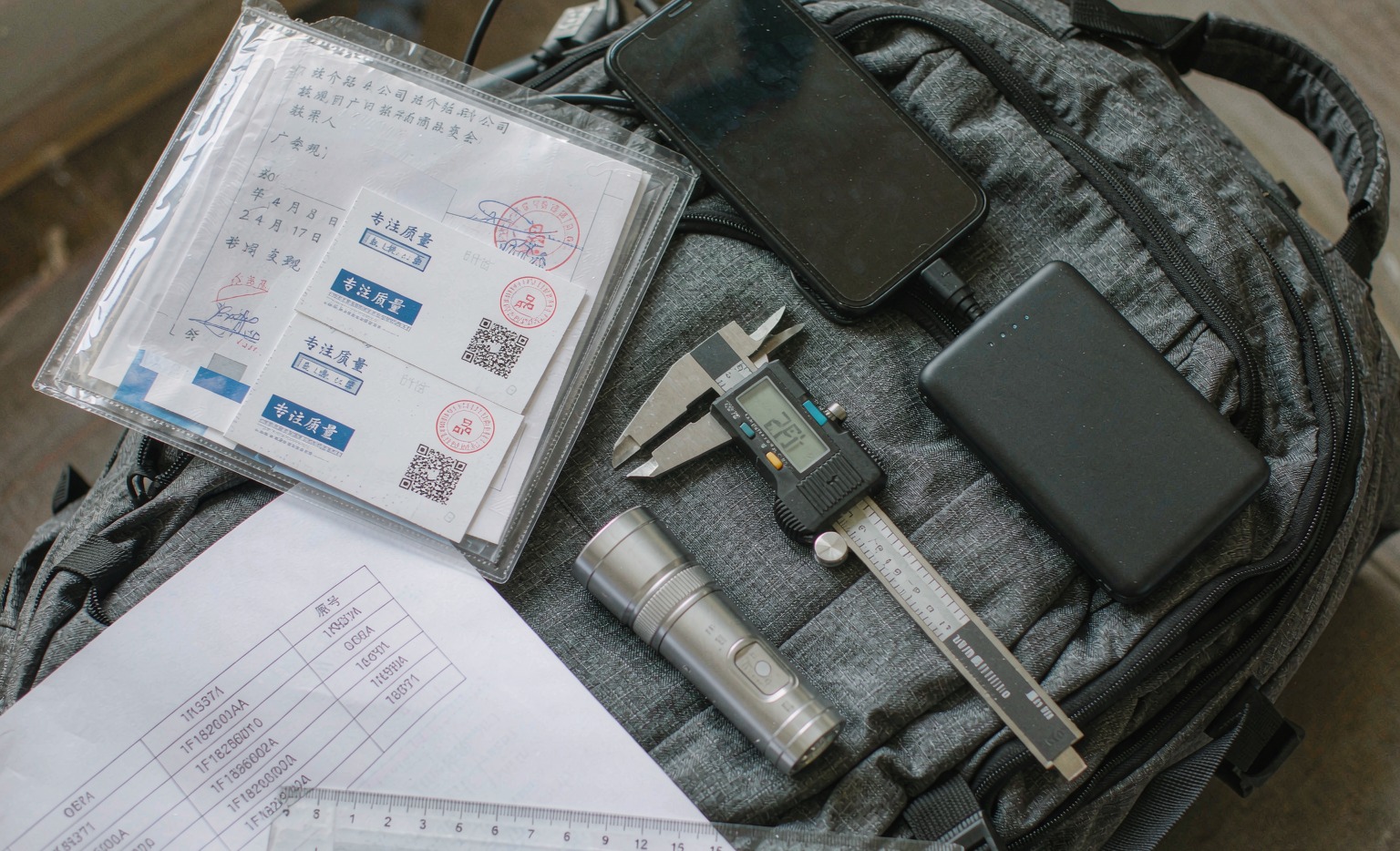
Use the break for three things: see one factory per shortlisted supplier if geography allows, review physical samples with a caliper rather than a photograph, and settle the commercial terms that were too awkward to finish on a crowded aisle. Our Guangzhou travel guide for Canton Fair week covers transport and payment practicalities if you are extending the stay.
When Price Is the Only Thing Left
Eventually two suppliers sit within a few percent of each other and the scorecard cannot separate them. Break the tie on things that cost you money later rather than now: who holds stock against your OE numbers, who has shipped to your market before and understands its paperwork, who answers in hours rather than days, and whose packaging survives a long-haul container. A two-percent price difference disappears the first time a shipment is held at customs for missing markings.
It is also worth keeping a second source in Bucket B for the same part family. Single-source dependence on a supplier you met five days ago is a risk you are taking on your own balance sheet, and the cost of maintaining one alternative quotation is close to zero.
Where a Guangzhou-Based Export Partner Fits
Everything above assumes you are still in Guangzhou and still reachable. Many buyers are not — the fair ends, the flight leaves, and the follow-up has to run from another time zone against suppliers who are now back at full production workload.
That is the gap a local partner closes. We are based in Guangzhou, a short drive from the Pazhou complex, and during fair season we can visit the suppliers on your list on your behalf, collect and inspect samples, and put the quotations side by side in one comparison sheet with the Incoterms and MOQs normalised. If you recorded OE numbers rather than part descriptions, send that list — it is the fastest route to a quotation that means something. Our comparison of Canton Fair sourcing against year-round online sourcing explains how we keep the conversation going after the halls close.
Phase 1 has closed and your notes are still notes? Send your OE number list and the categories you shortlisted — we can visit those suppliers, inspect samples, and return one normalised comparison quotation within the changeover break. Mr Didi: ucars@global-ucars.com | WhatsApp +86 133 0240 8528.
Frequently Asked Questions
When does Canton Fair 2026 Phase 1 close?
Phase 1 of the 140th Canton Fair runs 15–19 October 2026 at the Pazhou complex in Guangzhou, with negotiation hours from 09:30 to 18:00 daily. The changeover break follows on 20–22 October with no exhibition in session.
Do auto parts return in Phase 2 or Phase 3?
No. Phase 2 (23–27 October) covers consumer goods, gifts, home decor, building materials and furniture, and Phase 3 (31 October–4 November) covers toys, textiles, garments, shoes, stationery, medical and food. Auto parts appear only in Phase 1, so any supplier you missed cannot be revisited at this session.
How soon should I follow up after the fair ends?
Within 48 hours of the halls closing. Booth staff travel back to their factories during the 20–22 October changeover, response times lengthen, and quotations given in the fair-week context are easiest to confirm while the people who met you are still at their desks.
How many suppliers should stay on a shortlist?
Two or three per part category. That is enough to negotiate and to hold a second source, and few enough that you can actually manage the sample requests and quotation comparisons without losing track of the details.
What if a supplier never answers the follow-up?
Send one nudge on WeChat or WhatsApp after 24 hours and one more after three days, then move them to the archive with a note. Silence during the shortlisting stage is itself an answer about how the relationship will run once there is a deposit at stake.
Can I still source after the fair closes?
Yes. The official Canton Fair online platform and app run year-round with the same product categories, so exhibitors remain contactable after the halls empty. Many buyers use the fair to build the shortlist and the online platform to continue the conversation through the year.
Related Articles


Related Products
From our export catalog — parts and vehicles ready for international delivery

Full-Size EREV SUV
2026 Rox Adamas EREV 215km 6-Seat Executive Edition
USD 53,000 FOB Guangzhou
View Details
Full-Size EREV SUV
2026 Rox Adamas EREV 215km 7-Seat All-Terrain Edition
USD 51,500 FOB Guangzhou
View Details
