What Private Label Means in the Auto Parts Industry
Private label auto parts are components manufactured by a third-party factory and sold under your own brand name instead of the factory's brand or an OEM designation. The factory handles production; you handle branding, packaging, marketing, and distribution to your local market.
In mature markets like North America and Europe, private label programmes have existed for decades — brands like Duralast (AutoZone), Carquest (Advance Auto Parts), and Bosch's aftermarket line all rely on contract manufacturing partnerships. What has changed in the last five years is that the same manufacturing model is now accessible to mid-size wholesalers in Africa, the Middle East, and Southeast Asia, thanks to improved logistics from Chinese ports and the maturation of quality standards among Guangzhou and Ningbo-based auto parts factories.
This guide covers the full private label launch process: from choosing product categories and qualifying factories to designing packaging and receiving your first branded container. All recommendations are based on Kingmay Auto Parts' experience managing white-label programmes for distributors in 50+ countries over the past 13 years.
Why Wholesalers Are Switching to Own-Brand Strategies in 2026
The economics are straightforward. Consider the margin comparison for a common replacement part — a brake pad set for the Toyota Corolla (2014–2022):
| Selling Model | FOB Cost (per set) | Typical Wholesale Price | Gross Margin |
|---|---|---|---|
| Selling factory brand (e.g. generic "Made in China") | USD 6–8 | USD 12–16 | 45–50% |
| Selling OEM brand (e.g. Akebono, Bendix) | USD 14–18 | USD 28–38 | 45–50% |
| Private label (your own brand) | USD 7–10 | USD 18–28 | 60–65% |
The private label model delivers higher margins than generic Chinese parts because your brand commands a price premium in the local market, and it avoids the licensing costs that OEM-brand resellers pay. A distributor in Kenya or Nigeria selling under their own brand can position themselves as a premium local supplier — not just a "China parts importer" — which changes customer perception and negotiating dynamics with workshop clients.
Beyond margin, private label offers three strategic advantages:
- Customer loyalty: When workshops and mechanics buy your brand by name, they stop price-shopping against every other importer. You own the customer relationship.
- Market differentiation: In Nairobi, Lagos, Manila, or Amman, there may be 30–50 auto parts importers competing on price for the same factory brands. A private label gives you a defensible market position.
- Margin control: You set the wholesale and retail pricing for your own brand. As your brand recognition grows, you can raise prices incrementally without losing customers to identical products from competitors.
The Five-Step Private Label Launch Framework
Launching a private label auto parts brand follows a predictable five-step process. Each step has specific deliverables, timelines, and cost ranges. Here is the overview:
| Step | Activity | Timeline | Typical Cost |
|---|---|---|---|
| 1 | Select product categories and target vehicle applications | 2–4 weeks | USD 0 (research only) |
| 2 | Find and qualify Chinese manufacturing partners | 3–6 weeks | USD 500–1,500 (sample testing) |
| 3 | Negotiate MOQ, pricing, and quality terms | 1–3 weeks | USD 0 |
| 4 | Design brand identity and packaging | 2–4 weeks | USD 800–3,000 |
| 5 | Order, inspect, and ship first container | 4–8 weeks | USD 8,000–25,000 (product cost) |
Total time from first research to receiving goods at your warehouse: 12–25 weeks. This is a realistic timeline based on Kingmay's experience supporting over 200 private label launches. Steps 1 and 4 can run in parallel with Steps 2 and 3 to compress the schedule.
Step 1 — Select Your Product Categories and Target Vehicles
The most common mistake first-time private label buyers make is trying to brand too many categories at once. A single container can hold 2,000–6,000 individual units depending on part size — but if you spread that across 40 different SKUs, each SKU's stock depth is too thin to serve your market reliably.
Our recommendation: start with 1–2 product categories and 10–20 SKUs maximum. The best starting categories for private label in African and Middle Eastern markets are:
| Category | Why It Works for Private Label | Typical MOQ (per SKU) | FOB Price Range |
|---|---|---|---|
| Brake Pads | High turnover, standardized sizing, ECE R90 certification available | 200–500 sets | USD 6–16/set |
| Oil Filters | Consumable, universal demand across all vehicles | 500–2,000 pcs | USD 0.80–3.00/pc |
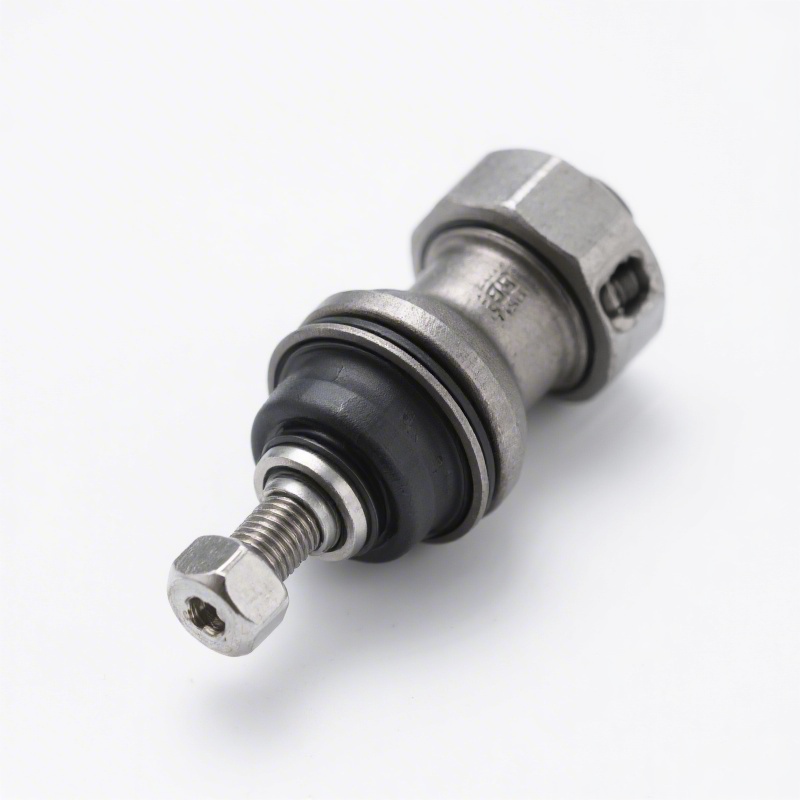
| Ball Joints | High failure rate on rough roads, good margin per unit | 100–300 pcs | USD 5–14/pc |
| Spark Plugs | Low unit cost, repeat purchase, easy to brand | 1,000–5,000 pcs | USD 0.50–2.00/pc |
| Shock Absorbers | Good shelf life, visible brand on product, premium perception | 50–200 pcs | USD 14–35/pc |
Target the vehicle platforms that dominate your specific market. In East Africa, focus on Toyota HiLux, Corolla, Land Cruiser, Nissan NP200, and Honda Civic. In the Gulf, add Hyundai Tucson, Santa Fe, and Kia Sportage. In West Africa, Toyota HiLux and Corolla alone can represent 40–60% of your brake pad and filter volume.
For detailed profitability analysis by part category, see our guide to the 20 most profitable auto parts to import from China.
Step 2 — Find and Qualify Chinese Manufacturing Partners
The factory you choose determines your product quality for years to come. A bad factory will produce inconsistent parts, miss delivery dates, and ultimately damage your brand reputation in your home market. Here is how to filter and qualify suppliers:
Minimum qualification criteria for auto parts factories:
- IATF 16949 certification: This is the global quality management standard for automotive production. Any factory without it should be treated as high-risk. Over 8,000 Chinese factories hold IATF 16949 — there is no shortage of certified options.
- Export experience to your target market: A factory that already ships to Africa or the Middle East understands the quality expectations, documentation requirements, and packaging needs for those markets.
- In-house testing capability: The factory should have its own quality lab — salt spray testing for metal parts, hardness testing for brake pads, dimensional inspection equipment, and performance testing rigs. Ask for photos or video of their testing facilities.
- Minimum 5 years in operation: New factories (under 3 years) have higher failure rates on quality consistency and production scheduling. The auto parts industry rewards manufacturing experience.
The sample evaluation process: Never commit to a production order without testing samples first. Order 3–5 samples of each SKU you plan to brand. Test them against OEM specifications — compare dimensions, material hardness, and (for brake pads) friction coefficient. Kingmay provides sample coordination and quality benchmarking services for distributors entering private label arrangements.
The Canton Fair (Guangzhou, April and October) and the Automechanika Shanghai exhibition are the two primary venues for meeting qualified auto parts manufacturers in person. Both events host 3,000+ auto parts exhibitors. If visiting is not feasible, working with an established sourcing partner like Kingmay — who maintains long-term relationships with 300+ IATF-certified factories — can substitute for direct factory visits.
Step 3 — Negotiate MOQ, Pricing, and Quality Terms
Private label orders typically require higher MOQs than generic branded orders because the factory must produce packaging, labels, and potentially mould modifications specific to your brand. Here are realistic negotiation benchmarks:
| Order Size | Typical MOQ per SKU | FOB Discount vs. Factory Brand | Payment Terms |
|---|---|---|---|
| Trial order (1st container) | 100–300 pcs (brakes/chassis); 500–2,000 pcs (filters/plugs) | 5–10% above factory brand price | T/T 30/70 |
| Regular order (2nd–4th container) | 200–500 pcs (brakes/chassis); 1,000–3,000 pcs (filters/plugs) | Same as factory brand | T/T 30/70 or L/C |
| Volume commitment (annual plan, 4+ containers) | Negotiated per annual forecast | 5–15% below factory brand | L/C or O/A 30 days |
Key contract terms to specify in your agreement:
- Quality guarantee clause: Factory agrees to replace any parts found defective upon arrival inspection, with replacement shipping at factory's cost. This is standard in the industry — do not accept orders without it.
- Packaging exclusivity: Confirm that the factory will not sell the same product in the same packaging design to any other customer in your target market. This protects your brand identity.
- Lead time commitment: Standard production lead time should be 15–25 working days from deposit payment. Anything beyond 30 days suggests the factory is overbooked or disorganized.
- Pre-shipment inspection (PSI): Build a third-party inspection into every order. Kingmay provides PSI at the factory before container loading — covering dimensional checks, packaging verification, and quantity confirmation. Typical PSI cost: USD 200–400 per inspection.
Step 4 — Design Your Brand Identity and Packaging
Your brand identity needs to work on both the packaging box and the product itself (where physically possible). For auto parts, brand recognition happens primarily at two touchpoints: the parts counter (workshop owner or mechanic sees the box) and the installed product (visible brand marking builds long-term recognition).
Essential brand elements for auto parts packaging:
- Brand name and logo: Keep it short (2–3 syllables max) and easy to pronounce in your target market's languages. Avoid generic names that could be confused with existing brands.
- Colour scheme: Choose a distinctive primary colour that stands out on a crowded parts shelf. If every competitor uses red, consider blue, green, or orange.
- Application information: The box must clearly state which vehicles the part fits. Use OEM cross-reference numbers — this is how mechanics search for parts. Example: "Brake Pad Set — Front — Toyota Corolla 2014–2022 (OEM: 04465-0R046)".
- Quality certification marks: Display ECE R90 (for brake parts sold in ECE-member countries), ISO 9001, and IATF 16949 logos if applicable. These marks build trust with professional buyers.
- Origin marking: "Made in P.R.C." or "Manufactured in China" is legally required in most markets. Include it prominently rather than hiding it — transparency builds credibility.
Packaging design cost ranges from USD 800 to USD 3,000 depending on whether you work with a local designer in your home market or hire a Chinese design agency that specializes in export packaging. The factory can also provide packaging design services, but be aware that factory-designed packaging tends to be generic — investing in professional design pays off in brand perception.
Step 5 — Order, Inspect, and Ship Your First Container
With your factory selected, terms agreed, and packaging designed, the production process follows this sequence:
- Place the order: Submit a formal purchase order listing every SKU, quantity, packaging specifications, and your brand artwork files. Pay the 30% deposit via T/T wire transfer. The factory begins raw material procurement upon deposit receipt.
- Production (15–25 working days): Request mid-production photos to verify that your brand packaging is being applied correctly. This is your last chance to catch errors before the full run is complete.
- Pre-shipment inspection: Kingmay or your nominated inspection agency visits the factory to verify: (a) correct product-to-SKU matching, (b) packaging quality and brand consistency, (c) quantity accuracy, (d) loading plan for the container.
- Container loading and shipping: FOB Guangzhou (Nansha Port) is the standard shipping term for auto parts from South China factories. Transit times to major destinations: East Africa (Mombasa/Dar es Salaam) 25–30 days; West Africa (Lagos/Tema) 30–35 days; Middle East (Jebel Ali/Jeddah) 18–22 days; Southeast Asia (Manila/Bangkok) 8–12 days.
- Receive, inspect, and launch: Upon arrival at your warehouse, conduct a spot-check inspection (minimum 10% random sample from each SKU). Once quality is confirmed, begin distributing to your workshop and dealer network.
What to expect in the first 6 months: Your first container will sell slower than subsequent orders because your brand has zero recognition. Plan for this — your first 6 months are a marketing investment. Provide branded point-of-sale displays to your top 10–20 workshop customers. Offer a small discount on the first order to encourage trial. Ask for feedback on product quality and adjust your second-order specifications based on what you learn.
Most successful private label brands reach break-even customer awareness (where mechanics start requesting the brand by name) within 8–14 months of market entry. After that point, re-order rates and margins improve significantly.
Getting Started with Your Private Label Programme
Kingmay Auto Parts supports private label programmes for distributors in Africa, the Middle East, Southeast Asia, and Latin America. Our team provides factory matching, sample coordination, quality inspection, and logistics management throughout the entire process — from initial product selection to container delivery at your destination port.
We work with 300+ IATF 16949-certified factories across Guangzhou, Ningbo, and Wenzhou, covering brake parts, engine components, chassis parts, filtration, and electrical systems for Toyota, Nissan, Hyundai, Honda, BYD, Chery, and Geely applications.
Discuss your private label requirements → WhatsApp our team for a factory matching consultation →
Verify Part Numbers in Our OE Library
Every part covered in this guide has a matching OE number in our reference library — grouped by system with cross-references, so you can source the exact fit for Hyundai, Kia, GM Korea and more.
Related Articles


Related Products
From our Auto Parts catalog — 4 export-ready products