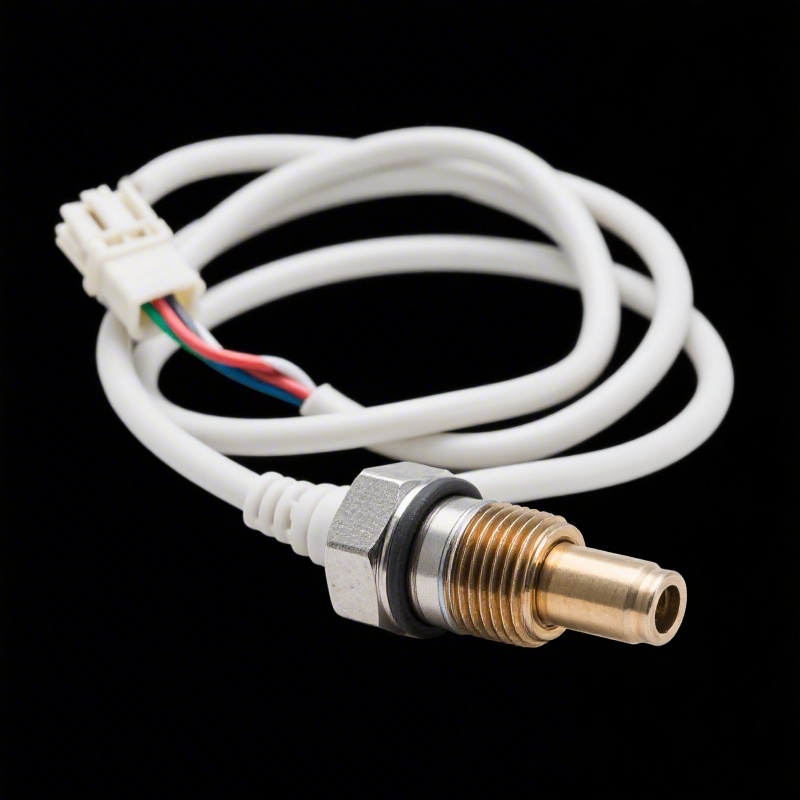
Why Engine Sensors Fail So Often
Modern petrol engines rely on engine sensors — up to 30 individual units managing combustion, emissions, and driver-assist functions. These automotive sensors live in hostile environments: sustained high heat, engine vibration, oil mist, and constant electrical interference. For independent workshops and parts distributors worldwide, engine sensors represent one of the highest-volume car parts replacement categories in the after-market.
Engine sensors are critical components that determine engine performance and fuel efficiency.The good news for importers: OEM auto parts from verified Chinese factories offer genuine OE-equivalent sensor quality at a fraction of OES pricing. Wholesale engine sensors from China supply markets across Southeast Asia, the Middle East, Africa, and Latin America at competitive price points.
Oxygen Sensor (O2 / Lambda) — The Most-Replaced Engine Sensor
The oxygen sensor measures exhaust gas oxygen content and sends a continuous voltage signal to the ECU to trim the air-fuel ratio. Most petrol vehicles run two sensors: a pre-cat (upstream) wideband oxygen sensor for closed-loop control, and a post-cat (downstream) sensor for catalytic converter monitoring. A failed oxygen sensor causes rich/lean running, increased fuel consumption, failed emissions tests, and check engine lights.
- Average service life: 80,000–160,000 km for zirconia wideband sensors
- Common fault codes: P0130–P0167 (pre-cat), P0140–P0167 (post-cat)
- Wholesale price range (China): $12–$50 per unit, depending on vehicle application and sensor type
- OE cross-reference: Most oxygen sensors share industry-standard 4-wire or 5-wire connectors; always verify connector type and thread size against the OE part number.
MAF Sensor — Air Measurement Accuracy for Engine Sensors
The MAF sensor (Mass Air Flow sensor) measures the volume and density of incoming air, which the ECU uses to calculate the correct fuel quantity for each injection event. A contaminated or failing MAF sensor disrupts the air-fuel ratio, causing hesitation under acceleration, erratic idle, and black exhaust smoke. Hot-wire MAF sensors can sometimes be cleaned with specialist isopropyl spray, but once the hot-wire element is degraded, replacement is the only solution.
For buyers sourcing automotive MAF sensors from China, the critical check is the voltage output curve — a reputable supplier will provide a test chart showing voltage vs. airflow at 3 operating temperatures. Browse our MAF sensor catalog with OE-compatible part numbers.
- Average service life: 100,000–200,000 km
- Common fault codes: P0100–P0104
- Wholesale price range: $25–$95 per unit
Crankshaft Position Sensor — Engine Timing Reference
The crankshaft position sensor provides the ECU with the engine's exact rotational position and RPM — the reference signal for injection timing, ignition advance, and cylinder identification in sequential injection. Without a reliable crankshaft sensor signal, the ECU cannot determine which cylinder is at top dead centre. A faulty sensor causes intermittent stalling, hard starting from cold, and in severe cases a complete no-start condition — typically the most disruptive engine sensor failure for the end customer.
Most aftermarket crankshaft position sensors use either Hall-effect or magnetic reluctance (Variable Reluctance) technology. Hall-effect sensors are preferred for their digital output signal stability across RPM ranges.
- Common fault codes: P0335–P0338
- Wholesale price range: $15–$55 per unit
- Tip: Always check the air gap specification — aftermarket sensors often come with a fixed spacer; OE-style sensors are adjustable.
Camshaft Position Sensor — Variable Valve Timing Control in Automotive Sensors
Used on Variable Valve Timing (VVT) systems, the camshaft position sensor monitors the rotational phase angle of the camshaft relative to the crankshaft. On engines with dual overhead camshafts, each has its own sensor. The ECU uses this signal to determine the correct timing for fuel injection and ignition events within each cylinder's cycle. Failure typically manifests as rough idle, poor throttle response, and P0340–P0349 fault codes.
For distributors stocking camshaft position sensors, the key consideration is matching the sensor to the correct VVT phase — some engines use oil-control valve (OCV) solenoids in conjunction with the sensor, meaning both may need replacement if either fails.
- Common fault codes: P0340–P0349
- Wholesale price range: $15–$55 per unit
Knock Sensor — Detonation Detection for Car Sensors
The knock sensor detects engine detonation (pre-ignition) by listening for characteristic piezoelectric vibration frequencies in the engine block. When knock is detected, the ECU retards ignition timing to protect piston crowns and bearings from damage. A failed knock sensor permanently forces the ECU into a retarded timing map — noticeably reducing engine power and increasing fuel consumption — while throwing P0325–P0334 fault codes.
- Common fault codes: P0325–P0334
- Wholesale price range: $15–$55 per unit
- Installation tip: Always apply genuine thread sealant on installation. Incorrect torque causes a false-reading vibration path through the block.
Sourcing Engine Sensors in Bulk: What Wholesale Buyers Should Know
All five engine sensors covered here are high-volume, standardised car parts — making them ideal for bulk auto parts import from China. View our complete engine sensor product range with application guides.
Key sourcing practices for wholesale buyers:
- OE cross-reference first: One sensor SKU can fit 50+ vehicle applications. Always verify the OE/part number before placing a bulk order.
- Connector compatibility: Chinese-manufactured sensors sometimes use non-standard connector shells (JST, AMP, or Molex equivalents). Request a connector identification card from the supplier, or ask for a sample unit before committing to a full order.
- Minimum order: 50 pieces per SKU for competitive wholesale pricing. Mixed vehicle applications are acceptable — buyers in diverse markets benefit most from mixed SKUs.
- Quality documentation: Request factory test certificates for voltage output, resistance range, and operating temperature range (typically −40°C to +125°C).
Ready to Order Engine Sensors?
Kingmay Auto Parts supplies a full range of engine sensors — oxygen sensors, MAF sensors, crankshaft position sensors, camshaft sensors, and knock sensors — at competitive wholesale prices with global shipping from Nansha Port, Guangzhou. All parts are quality-tested before dispatch and backed by our after-sales support team.
Browse our complete engine sensor catalog with OE-compatible part numbers and pricing. For a custom bulk quote, contact our team directly or reach us on WhatsApp with your OE number list.
Globalucar / Kingmay Auto Parts — Your reliable wholesale partner for automotive sensors from China.
Verify Part Numbers in Our OE Library
Every part covered in this guide has a matching OE number in our reference library — grouped by system with cross-references, so you can source the exact fit for Hyundai, Kia, GM Korea and more.
Related Articles

Related Products
From our Engine System catalog — 4 products ready for export