Why China Dominates Global Auto Parts Supply in 2026
China manufactures approximately 35% of the world's automotive components by value, a share that has grown every year since 2018 (source: China Association of Automobile Manufacturers, 2025 Annual Report). For international importers — distributors, repair chains, and wholesale buyers across Africa, Southeast Asia, and the Middle East — this dominance translates into one practical reality: if you are not sourcing auto parts from China, your competitors almost certainly are.
The global automotive aftermarket was valued at USD 482 billion in 2024 and is forecast to exceed USD 590 billion by 2028, growing at a CAGR of 5.1% (source: Business Research Insights, Global Automotive Aftermarket Report 2025). Within this market, Chinese-manufactured parts now command significant share in every product category — from engine sensors to suspension arms to brake pads.
But not all auto parts are equally profitable. This guide identifies the 20 most profitable auto parts to import from China in 2026, based on three criteria: gross margin potential (retail price minus FOB + landed cost), sell-through velocity in key markets, and supply chain reliability from Chinese manufacturers.
How We Ranked the 20 Most Profitable Parts
Profitability in the auto parts import business depends on more than just the spread between FOB and retail price. We ranked each part across four dimensions:
- Gross margin range: The typical difference between FOB China price and distributor selling price in target markets (East Africa, Gulf, Southeast Asia)
- Replacement frequency: How often the part needs replacement per vehicle per year — higher frequency means faster inventory turnover
- Chinese supply maturity: Whether established IATF 16949-certified factories exist in China for this part category — supply reliability affects your ability to reorder at consistent quality
- Search demand: Google search volume for import-intent queries in target markets — an indicator of active buyer demand in 2026
The result is a practical list, grouped into four categories that reflect how successful auto parts wholesalers typically structure their product portfolios.
Group 1: Engine & Fuel System Parts — Highest Margins
Engine and fuel system components offer the highest per-unit margins of any auto parts category. They require technical knowledge to sell, which limits competition and preserves pricing power. Chinese factories have achieved near-OEM quality in this segment, with leading suppliers holding IATF 16949 certification and supplying Chinese OEM production lines simultaneously.
| Part | FOB China (per unit) | Typical Retail (Africa/Middle East) | Gross Margin % | Replacement Interval |
|---|---|---|---|---|
| Fuel Injector | USD 18–45 | USD 65–140 | 55–70% | 80,000–120,000 km |
| Fuel Pump Assembly | USD 22–55 | USD 80–160 | 55–68% | 100,000–150,000 km |
| Throttle Body | USD 25–60 | USD 90–175 | 58–72% | Failure-based, 100k+ km |
| Engine Piston Set | USD 35–90 | USD 120–280 | 60–70% | Engine rebuild |
| Camshaft | USD 40–110 | USD 140–350 | 62–72% | Engine rebuild / 200k+ km |
The fuel injector is the standout product in this group. Modern common-rail diesel vehicles in Africa and Southeast Asia — Toyota HiLux, Mitsubishi L200, Isuzu D-Max — require injector replacement or cleaning every 80,000–100,000 km under typical operating conditions. Chinese Bosch-licensed injectors from Guangzhou factories deliver 55–70% gross margins with an average sell-through time of under 30 days for active distributors.
Throttle bodies are the fastest-rising item in this group, driven by the rapid increase in Chinese vehicles (BYD, Chery, MG, Geely) entering emerging markets. As these vehicles approach 50,000–80,000 km, throttle body cleaning and replacement demand is building in workshop channels across Nigeria, Kenya, and the Philippines.
Group 2: Chassis & Suspension Parts — Volume Leaders
Chassis and suspension components are the backbone of any profitable auto parts import business. The combination of high replacement frequency (poor roads in African and Southeast Asian markets accelerate wear dramatically), large per-order volumes, and China's well-established suspension parts manufacturing base makes this category the safest starting point for new importers.
| Part | FOB China (per unit) | Typical Retail | Gross Margin % | Why It Sells |
|---|---|---|---|---|
| Control Arm (lower) | USD 12–28 | USD 45–90 | 58–68% | Fails every 60–100k km on rough roads |
| Ball Joint | USD 5–14 | USD 20–50 | 55–65% | Replaced in sets of 4; high volume |
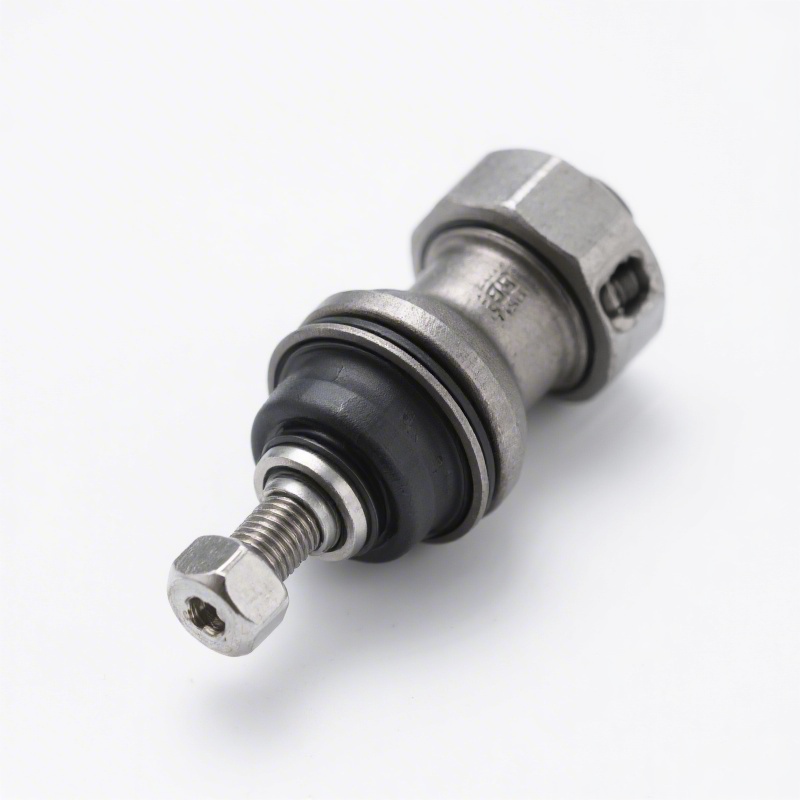
| Tie Rod End | USD 4–12 | USD 18–45 | 58–70% | Steering safety part; workshop staple |
| Shock Absorber | USD 14–35 | USD 50–110 | 55–65% | Pairs of 4 per vehicle; frequent replacement |
| CV Axle | USD 10–22 | USD 38–75 | 58–70% | Highest volume drivetrain item globally |
Control arms and ball joints are the most consistently profitable suspension items. In East African markets, where roads regularly exceed 30% unpaved by distance, suspension wear rates are 2–3× the European norm. A Toyota Land Cruiser 70 Series operating in Kenya or Tanzania may require ball joint replacement every 40,000–60,000 km — versus 100,000+ km under European conditions. This translates into 2–3 replacement cycles per vehicle per year for the most active workshop buyers.
The CV axle (covered in detail in our transmission and drivetrain sourcing guide) remains the single highest-volume chassis item for wholesale distributors targeting urban markets. A mid-sized distributor in Lagos or Nairobi typically sells 200–400 CV axles per month across Toyota, Nissan, Hyundai, and Honda fitments — a product range that maps neatly to China's most mature aftermarket production lines.
Group 3: Electrical & Ignition Parts — Rising Demand
The electrical and ignition category has grown sharply in the past two years, driven by three converging trends: aging vehicle fleets (electrical components fail with age), the penetration of Chinese vehicles with proprietary electrical architectures, and the global transition from carbureted to fuel-injected vehicles across sub-Saharan Africa.
| Part | FOB China (per unit) | Typical Retail | Gross Margin % | Best Application |
|---|---|---|---|---|
| Ignition Coil | USD 8–18 | USD 30–65 | 58–70% | Toyota, Nissan, Honda; sets of 4–6 |
| Oxygen (O2) Sensor | USD 9–22 | USD 32–75 | 58–68% | All fuel-injected vehicles post-2000 |
| Alternator | USD 28–55 | USD 95–175 | 58–68% | High-value, repeat order item |
| Starter Motor | USD 22–45 | USD 75–140 | 58–68% | Diesel vehicles in Africa |
| MAF / MAP Sensor | USD 12–30 | USD 45–95 | 58–68% | Chinese vehicle market: BYD, Chery, Geely |
Ignition coils deserve special attention as an entry point for new importers. They are small, lightweight (easy to ship in mixed containers), technically simple to cross-reference, and universally required across petrol vehicle fleets. A single Toyota 1ZZ-FE ignition coil (fits Corolla E120/E150, Wish, RAV4) covers millions of vehicles in East Africa and Southeast Asia. Chinese Denso-licensed ignition coil factories in Guangdong produce these at USD 8–12 FOB with margins exceeding 60% at typical East African retail prices.
The MAF/MAP sensor category is the fastest-growing electrical item for importers targeting markets with significant Chinese vehicle penetration. As BYD, Chery, and Geely vehicles from 2020–2023 begin entering the 50,000–80,000 km replacement window in Nigeria, the Philippines, and Thailand, demand for Chinese-brand engine sensors is rising rapidly — and independent workshops currently have limited access to these parts through traditional supply channels.
Group 4: Maintenance & Wear Parts — Fast Movers
Maintenance and wear parts are the workhorses of any auto parts wholesale operation. Margins per unit are lower, but sell-through speed, order predictability, and the ability to build recurring customer relationships make this category essential for cash flow management.
| Part | FOB China (per unit) | Typical Retail | Gross Margin % | Order Frequency |
|---|---|---|---|---|
| Brake Pad Set | USD 6–16 | USD 22–55 | 55–65% | Every 25,000–50,000 km |
| Brake Disc (rotor) | USD 12–28 | USD 42–90 | 58–68% | Every 50,000–80,000 km |
| Spark Plug Set | USD 3–8 | USD 12–28 | 55–65% | Every 20,000–30,000 km |
| Oil Filter | USD 1.50–4 | USD 6–14 | 60–70% | Every 5,000–10,000 km |
| Air Filter | USD 2–6 | USD 8–20 | 60–70% | Every 15,000–20,000 km |
Brake pads and discs are the most critical maintenance items from a profitability standpoint. While per-unit margins sit at the lower end of the list (55–68%), the order frequency, multi-axle replacement pattern (front and rear, four corners per vehicle), and the safety-critical nature of the product — which prevents buyers from delaying replacement — create a reliable, high-volume revenue stream. Chinese ECE R90-certified brake pad suppliers in Shandong and Guangdong produce pads for Toyota, Hyundai, Nissan, and VW fitments at highly competitive FOB pricing.
Oil and air filters appear to have modest per-unit economics but they are the glue that holds a distributor's customer relationships together. A workshop that buys your filters every service interval is also your most likely customer when they need a control arm, alternator, or fuel injector. Smart importers use filters as loss leaders or margin-neutral products to secure recurring workshop orders — then capture the high-margin engine and suspension sales as a result.
FOB Price Reference Table — All 20 Parts
The following table consolidates FOB Guangzhou pricing for all 20 parts, based on Kingmay Auto Parts Q2 2026 supplier quotations at standard MOQ (50–200 pieces per SKU, or mixed-container basis for smaller quantities). Prices assume Tier 1 quality from IATF 16949-certified factories:
| # | Part | Category | FOB China (per unit) | Target Gross Margin |
|---|---|---|---|---|
| 1 | Fuel Injector | Engine | USD 18–45 | 55–70% |
| 2 | Fuel Pump Assembly | Engine | USD 22–55 | 55–68% |
| 3 | Throttle Body | Engine | USD 25–60 | 58–72% |
| 4 | Engine Piston Set | Engine | USD 35–90 | 60–70% |
| 5 | Camshaft | Engine | USD 40–110 | 62–72% |
| 6 | Control Arm (lower) | Chassis | USD 12–28 | 58–68% |
| 7 | Ball Joint | Chassis | USD 5–14 | 55–65% |
| 8 | Tie Rod End | Chassis | USD 4–12 | 58–70% |
| 9 | Shock Absorber | Chassis | USD 14–35 | 55–65% |
| 10 | CV Axle | Chassis | USD 10–22 | 58–70% |
| 11 | Ignition Coil | Electrical | USD 8–18 | 58–70% |
| 12 | Oxygen (O2) Sensor | Electrical | USD 9–22 | 58–68% |
| 13 | Alternator | Electrical | USD 28–55 | 58–68% |
| 14 | Starter Motor | Electrical | USD 22–45 | 58–68% |
| 15 | MAF / MAP Sensor | Electrical | USD 12–30 | 58–68% |
| 16 | Brake Pad Set | Maintenance | USD 6–16 | 55–65% |
| 17 | Brake Disc (rotor) | Maintenance | USD 12–28 | 58–68% |
| 18 | Spark Plug Set | Maintenance | USD 3–8 | 55–65% |
| 19 | Oil Filter | Maintenance | USD 1.50–4 | 60–70% |
| 20 | Air Filter | Maintenance | USD 2–6 | 60–70% |
Note: FOB prices reflect Q2 2026 Guangzhou factory quotations for Tier 1 quality at standard MOQ. Prices exclude sea freight, destination customs duties, and local distribution costs. Landed cost in East Africa typically adds USD 0.80–1.50/kg; in Southeast Asia USD 0.40–0.90/kg depending on destination port.
How to Start Importing Profitable Auto Parts from China
Knowing which auto parts offer the best margins is only the first step. Execution — supplier selection, quality control, logistics, and market pricing — determines whether your auto parts import business delivers consistent profit.
Here is a practical starting framework for new importers entering the China-to-market auto parts wholesale channel:
- Start with 3–5 high-velocity SKUs, not 50: Pick the items from this list that match your target market's dominant vehicle population. If your market is Toyota-heavy (East Africa, Southeast Asia), start with ignition coils, control arms, and CV axles for 1KD/2KD/1ZZ/2GR applications. Depth beats breadth at the start.
- Request factory samples before any container order: For each SKU, pay for 3–5 sample units and inspect them physically. Check dimensional conformity against OE spec, boot material on CV axles, friction compound marking on brake pads. A USD 200–300 sample investment can save a USD 15,000 container mistake.
- Verify supplier certification: IATF 16949 is the minimum standard for safety-critical parts (brakes, steering, suspension). ISO 9001 is acceptable for non-safety items (filters, sensors). Request certificates directly and confirm the expiry date and scope — certificates can be fabricated or out-of-date.
- Use mixed FCL containers for your first orders: A 20-foot container holds approximately 18–22 CBM of auto parts cargo. For your first order, mix 8–12 different SKUs at 100–200 pieces each. This spreads quality risk, tests market demand for multiple products simultaneously, and avoids over-concentration in any single SKU.
- Build your landed cost model before confirming any FOB price: Add sea freight (USD 1,200–2,500 per 20ft container to most African and Southeast Asian ports), destination customs duties (typically 15–35% of CIF value in Africa, 5–20% in Southeast Asia), local trucking, and your warehouse margin. Gross margin targets of 55–70% on FOB price typically compress to 35–50% at the landed, post-duty level — still excellent margins, but the math must be confirmed before ordering.
"The importers who build the most profitable auto parts businesses do not try to sell everything. They pick the 10–15 SKUs that their specific market demands most, source them from two or three verified Chinese factories, and reorder reliably. Simplicity scales; complexity stalls." — Kingmay Auto Parts sourcing advisory team
Kingmay Auto Parts supplies all 20 product categories in this guide — engine parts, chassis components, electrical items, and maintenance consumables — to wholesale distributors in 50+ countries from our Guangzhou Nansha Port warehouse. All products come from IATF 16949-certified factories with complete quality documentation available on request.
Use our Parts Finder to match SKUs to your vehicle applications → Request a wholesale quotation from Kingmay → WhatsApp our sourcing team directly →
Verify Part Numbers in Our OE Library
Every part covered in this guide has a matching OE number in our reference library — grouped by system with cross-references, so you can source the exact fit for Hyundai, Kia, GM Korea and more.
Related Articles


Related Products
From our Auto Parts catalog — 4 export-ready products