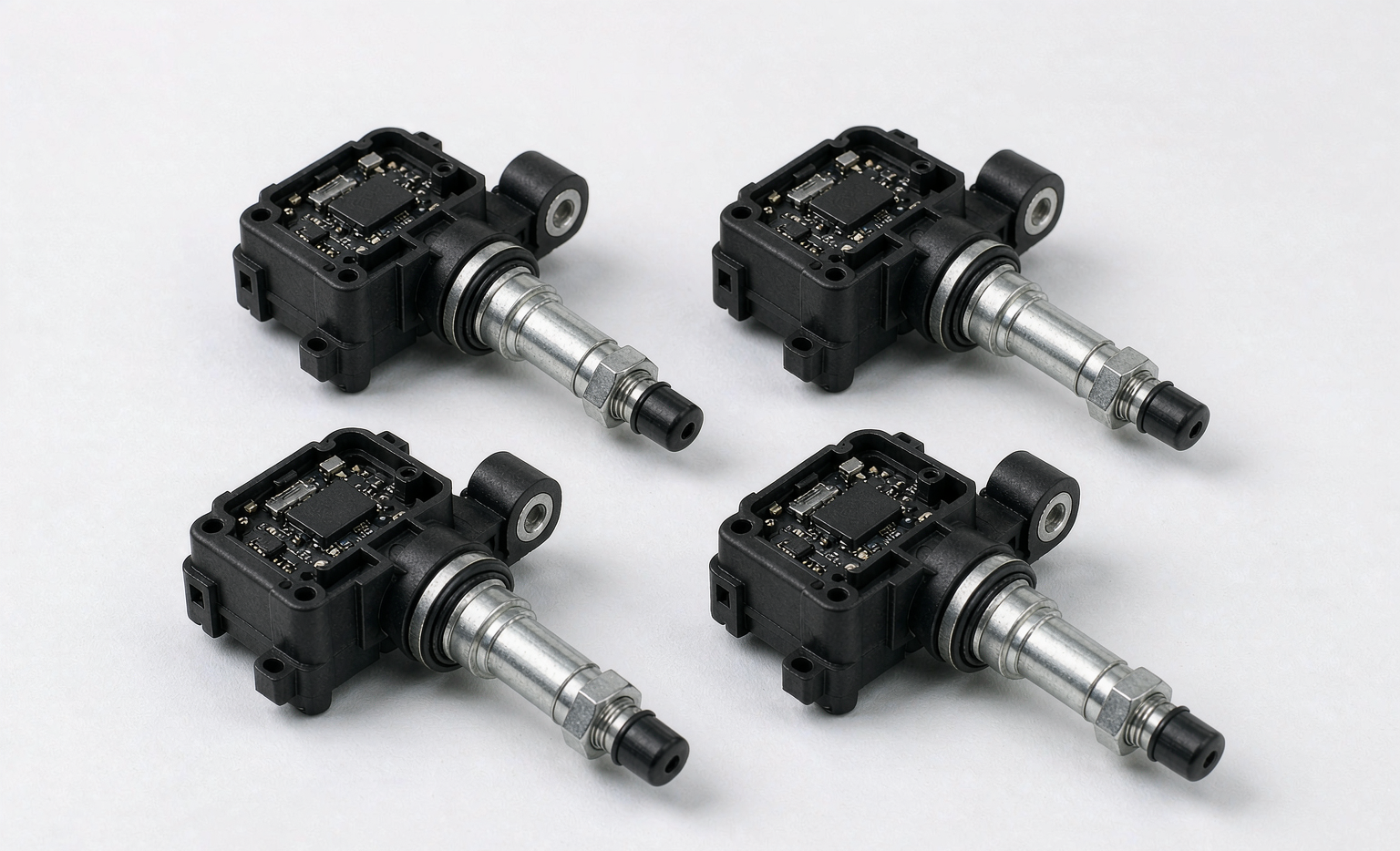
Why TPMS Is the Fastest-Growing Replacement Part Category
Tire pressure monitoring sensors stopped being optional hardware a decade ago. The United States mandated TPMS on all light vehicles from 2007, the European Union followed in 2014, and China's GB 26149 standard made the system compulsory on every new passenger car from January 2020. That single regulatory wave created a replacement fleet measured in hundreds of millions of vehicles — and every one of those sensors carries an internal battery with a service life of 5 to 10 years.
The arithmetic is what makes TPMS attractive for wholesale distributors. A sedan sold in 2018 is now entering its second or third sensor replacement cycle. A four-sensor set at $6.00 FOB represents $24 of goods that retails for $120-200 fitted in most markets, and the part is small enough that a single carton can hold several hundred units. For repair shops, TPMS service has become a standard upsell attached to every tire replacement and seasonal wheel change.
Kingmay's Guangzhou inventory covers the three platforms that dominate export-destination fleets: Toyota Corolla / Camry / RAV4, Nissan Sentra / Sylphy / X-Trail / Qashqai, and Hyundai Elantra / Tucson / Sonata / Kia Sportage / K5. All sensors are packaged with valve stems, seals and nuts where applicable, labeled with OE-grade references, and available from 50-piece trial orders up to full mixed-container loads.
Direct vs Indirect TPMS: What Distributors Should Stock
Not every tire pressure system uses a physical sensor in the wheel. Understanding the split matters because it determines which part numbers actually move in your market.
| System type | How it works | Typical vehicles | Parts sold |
|---|---|---|---|
| Direct TPMS | Pressure sensor inside each wheel transmits by RF to the body control module | Most US-spec vehicles, all post-2020 Chinese-market cars, most Korean and Japanese models for GCC and Latin America | Sensor units, valve stems, service kits |
| Indirect TPMS (iTPMS) | Uses ABS wheel-speed data to infer pressure loss; no sensor in the wheel | Many European-market Hyundai and Kia models, some budget trims | No dedicated sensor — only ABS sensors and module software |
For wholesale buyers the practical takeaway is simple: stock direct-TPMS sensors for the models your customers actually service. Toyota, Nissan, Hyundai and Kia passenger cars sold across the Middle East, Africa, Latin America and Southeast Asia overwhelmingly use direct systems with replaceable sensor units, which is why those four brands form the core of the Kingmay TPMS catalog.
315 MHz vs 433 MHz: Matching Frequency to Destination Market
TPMS sensors transmit on one of two radio bands, and the frequency is fixed by the vehicle's body control module — a 433 MHz sensor will never pair with a 315 MHz car. Buying the wrong band is the most expensive mistake a first-time TPMS importer makes, because it only shows up after the customer has mounted the tires.
| Frequency | Primary markets | Typical vehicle sourcing |
|---|---|---|
| 315 MHz | United States, Canada, Middle East (GCC-spec), Latin America, China domestic | Toyota, Nissan, Hyundai and Kia models built for or exported to those regions |
| 433 MHz | Europe, Russia, Central Asia, most of Africa, Southeast Asia, Australia | European and Asian-market variants of the same nameplates |
Because the same Corolla or Tucson can carry either band depending on where it was originally sold, the practical rule for distributors in mixed markets is to stock both frequencies in the top ten references and verify the band against the vehicle VIN or the existing sensor part number before shipping. Kingmay marks the frequency on every carton and on each sensor label to prevent warehouse mix-ups.
Product Catalog: OE-Grade TPMS References & Vehicle Fitment
The table below lists the most-ordered references across the four core brands. OE numbers are used for interchange verification; Kingmay supplies OE-grade aftermarket units unless genuine-packaged orders are requested.
| Brand | Vehicle fitment | OE / interchange references | Frequency |
|---|---|---|---|
| Toyota | Corolla E210, Levin, Camry XV70 | PMV-C215 / 42607-06020 / 42607-52020 | 315 MHz |
| Toyota | RAV4 XA50, Highlander, Land Cruiser | PMV-107J / 42607-0E290 / 42607-0C080 | 315 MHz |
| Nissan | X-Trail T32, Qashqai J11, Rogue | 40700-4BB0A / 40700-3VA0A | 433 MHz |
| Nissan | Sentra B18, Sylphy, Almera | 40700-6CA0A / 40700-1AA0D | 315 / 433 MHz by region |
| Hyundai | Elantra AD / CN7, Avante | 52933-F2000 / 52933-3X300 | 433 MHz |
| Hyundai | Tucson TL / NX4, Sportage | 52933-D4100 / 52933-D9000 | 433 MHz (315 MHz GCC) |
| Kia | Sportage QL, Seltos, K5 DL3 | 52933-D9100 / 52933-L1100 | 433 MHz (315 MHz GCC) |
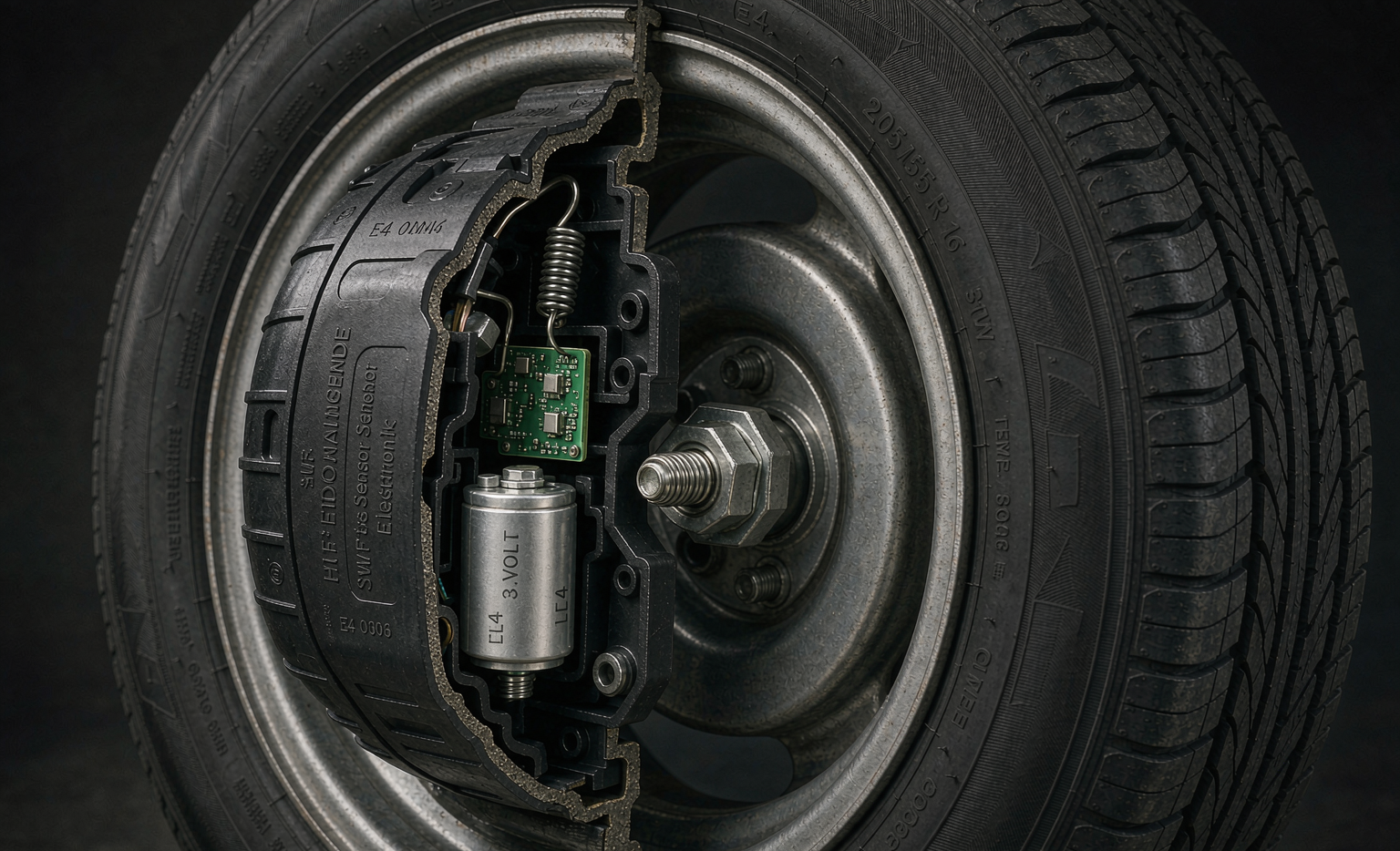
Each Kingmay sensor ships as a complete service unit: sensor body, valve stem or clamp-in hardware, seal washer, retaining nut and cap. Service kits — the rubber grommet, seal and nut that should be renewed every time a tire is dismounted — are also sold separately for workshops that re-use sensor bodies across seasonal tire sets.
Pre-Programmed vs Programmable Universal Sensors
The catalog splits into two product families, and the right choice depends on how your customers work.
| Type | How it works | Best for | Watch-outs |
|---|---|---|---|
| Pre-programmed (OE-fitment) | Sensor is written with the exact vehicle protocol at the factory; bolt on and it pairs automatically or after a relearn | Dealers, fleet workshops, distributors serving one brand at volume | Each part number is vehicle-specific — stock the references your market actually runs |
| Programmable / universal | Blank sensor loaded with the target vehicle protocol using a TPMS programming tool before fitting | Multi-brand repair shops, mobile tire services, distributors with diverse VIO | Requires the programming tool and protocol database to be kept current |
Pre-programmed sensors win on installation speed and zero-tool cost, which is why they dominate dealer and fleet business. Programmable universal sensors win on inventory efficiency: a workshop that services Toyota, Nissan, Hyundai and Kia from one shelf can hold a single universal SKU instead of four brand-specific ones, then write the correct protocol in about 30 seconds. Most Kingmay wholesale customers stock a base of top-selling pre-programmed references and add programmable units as flexible coverage for the long tail.
FOB Pricing Tiers & Wholesale Structure
TPMS pricing is driven by sensor type (pre-programmed vs programmable), frequency band, and valve hardware (snap-in rubber vs clamp-in metal). The tiers below are FOB Guangzhou in USD.
| Product group | MOQ 50-199 pcs | MOQ 200-499 pcs | MOQ 500+ pcs / container |
|---|---|---|---|
| Pre-programmed OE-fitment sensor (snap-in) | $8.50 - $14.00 | $7.00 - $11.00 | $5.50 - $8.50 |
| Pre-programmed OE-fitment sensor (clamp-in metal) | $10.00 - $16.00 | $8.50 - $12.50 | $6.50 - $10.00 |
| Programmable universal sensor | $9.00 - $15.00 | $7.50 - $11.50 | $6.00 - $9.00 |
| TPMS service kit (grommet, seal, nut, cap) | $1.20 - $2.50 | $0.90 - $1.80 | $0.60 - $1.20 |
| TPMS programming tool (handheld) | $85.00 - $160.00 | $70.00 - $130.00 | $55.00 - $105.00 |
OEM-grade references sit at the top of each range and carry full battery spec, matched valve hardware and individually serialized labels. Container buyers typically mix 60% sensors, 25% service kits and 15% tools, because the tool margin is strong and it anchors the workshop customer to the distributor's ecosystem. A 40ft high-cube container holds roughly 20,000-30,000 snap-in sensor units in double cartons, which at container-tier pricing leaves room for a 45-60% gross margin in most destination markets.
Failure Diagnosis: When to Replace TPMS Sensors
Most TPMS complaints trace back to four root causes. Training workshop customers to diagnose before replacing protects their margins and prevents warranty claims on healthy units.
| Symptom | Most likely cause | Action |
|---|---|---|
| Warning light on one corner, no pressure loss | Sensor battery dead (typical after 5-10 years) | Replace the sensor unit; battery is sealed and not serviceable |
| Slow leak around the valve | Grommet or seal aged, valve core corroded | Renew service kit and valve core; sensor body reusable if battery is healthy |
| Light on after tire rotation or replacement | Sensor positions not relearned to the module | Run the vehicle relearn procedure or reprogram with a TPMS tool |
| Light after wheel impact (pothole, curb strike) | Sensor body cracked or broken off the stem | Replace the sensor; inspect rim for damage |
| Intermittent signal, cold-weather only | Marginal battery voltage drops in cold | Replace proactively — failure will become permanent within months |
Because the battery is sealed inside the sensor body, "replace the whole unit" is the standard service model, and that is exactly what makes the category recurring. A workshop that fits forty sets of tires a month at three years of average vehicle age is a guaranteed repeat buyer of sensors, and the service-kit line turns every seasonal tire change into another order.
Container Loading & Shipping from Guangzhou
TPMS sensors are light and dense, which makes them one of the easiest categories to ship. Standard packaging is a single sensor per polybag in an inner box of four or ten, then into master cartons of 100 units. Palletized loads travel in 20ft or 40ft containers, and LCL is available for trial orders.
| Destination region | Port examples | Sea freight (per 40ft HC) | Transit time |
|---|---|---|---|
| Middle East | Jebel Ali, Dammam, Kuwait | $2,800 - $4,200 | 18 - 26 days |
| East Africa | Mombasa, Dar es Salaam | $3,200 - $4,800 | 24 - 34 days |
| West Africa | Lagos, Tema, Abidjan | $3,800 - $5,500 | 28 - 40 days |
| Latin America | Manzanillo, Buenaventura, Callao | $4,500 - $6,500 | 25 - 35 days |
| Southeast Asia | Port Klang, Laem Chabang, Tanjung Priok | $1,800 - $2,800 | 8 - 14 days |
Freight is per container, not per piece. Because sensors are so dense, freight typically adds only 3-6% to landed cost — the lowest freight drag of any suspension or electrical category in the catalog. LCL trial orders from our Guangzhou warehouse run $120-180 per cubic meter depending on destination.
FAQ: TPMS Sensor Sourcing from China
Can I mix 315 MHz and 433 MHz sensors in one order?
Yes. Mixed-frequency containers are standard practice for distributors serving regions where both bands circulate — the Gulf, East Africa and Latin America all run 315 MHz on newer imports and 433 MHz on European-market vehicles. Kingmay packs each frequency in clearly marked cartons and lists the split on the packing list so destination customs clearance stays clean.
How do I verify which frequency a customer's vehicle uses?
Two reliable methods. First, check the existing sensor part number through the valve stem — the number is printed on the sensor body and maps directly to a frequency. Second, match the vehicle VIN or model-year market: North America, GCC and China-market vehicles are almost always 315 MHz, while European, Russian, most African and Southeast Asian market vehicles are 433 MHz. When in doubt, ask the customer to read the number off an existing sensor before ordering.
Do programmable TPMS sensors need a special tool to install?
The tool is needed to write the vehicle protocol into the blank sensor before fitting, not to mount the sensor itself. The programming step takes about 30 seconds per sensor with a handheld tool. Workshops that already own a TPMS diagnostic tool usually have programming built in; those that do not can add the Kingmay handheld tool at container-tier pricing, which is why most wholesale orders include one or two tools per pallet of sensors.
What is the typical battery life of a TPMS sensor?
Five to ten years of real-world service, depending on how often the vehicle is driven and the climate. High ambient heat shortens lithium battery life, which is why sensors in GCC vehicles often fail at the five-year mark while the same reference in a temperate climate runs past eight years. The battery is sealed inside the sensor body and is not field-serviceable, so the replacement unit is the service part.
Are aftermarket TPMS sensors as reliable as OE units?
OE-grade aftermarket units from a qualified factory match the OE pressure range, transmission protocol and battery specification, and are validated against the same relearn procedures. The differences from genuine-packaged parts are packaging, branding and price — typically 40-60% lower at wholesale. For independent repair shops and distributors, OE-grade aftermarket is the standard choice; genuine-packaged units are sourced for dealership customers who require original boxes.
What documents come with a wholesale TPMS order?
Each shipment includes a commercial invoice, packing list, certificate of origin and a pre-shipment inspection report with photos. Sensors ship as HS 8531.90 or 9031.80 depending on destination, and Kingmay labels cartons with frequency, part number and quantity for straightforward customs clearance. Radio-frequency certification documents (CE for 433 MHz, FCC for 315 MHz) are available on request for regulated markets.
Source OE-grade TPMS sensors, service kits and programming tools from Kingmay Auto Parts, Guangzhou. MOQs from 50 pieces, FOB pricing from $5.50 per pre-programmed sensor at container tier. Coverage for Toyota, Nissan, Hyundai, Kia and Chinese-branded passenger cars in both 315 MHz and 433 MHz. Contact Miss UU: ucars@global-ucars.com, WhatsApp +86 133-0240-8528. 28F Guangzhou Jianhua Center, Baiyun District, Guangzhou.
Verify Part Numbers in Our OE Library
Every part covered in this guide has a matching OE number in our reference library — grouped by system with cross-references, so you can source the exact fit for Hyundai, Kia, GM Korea and more.
Related Articles


Related Products
From our Engine System catalog — 4 products ready for export


