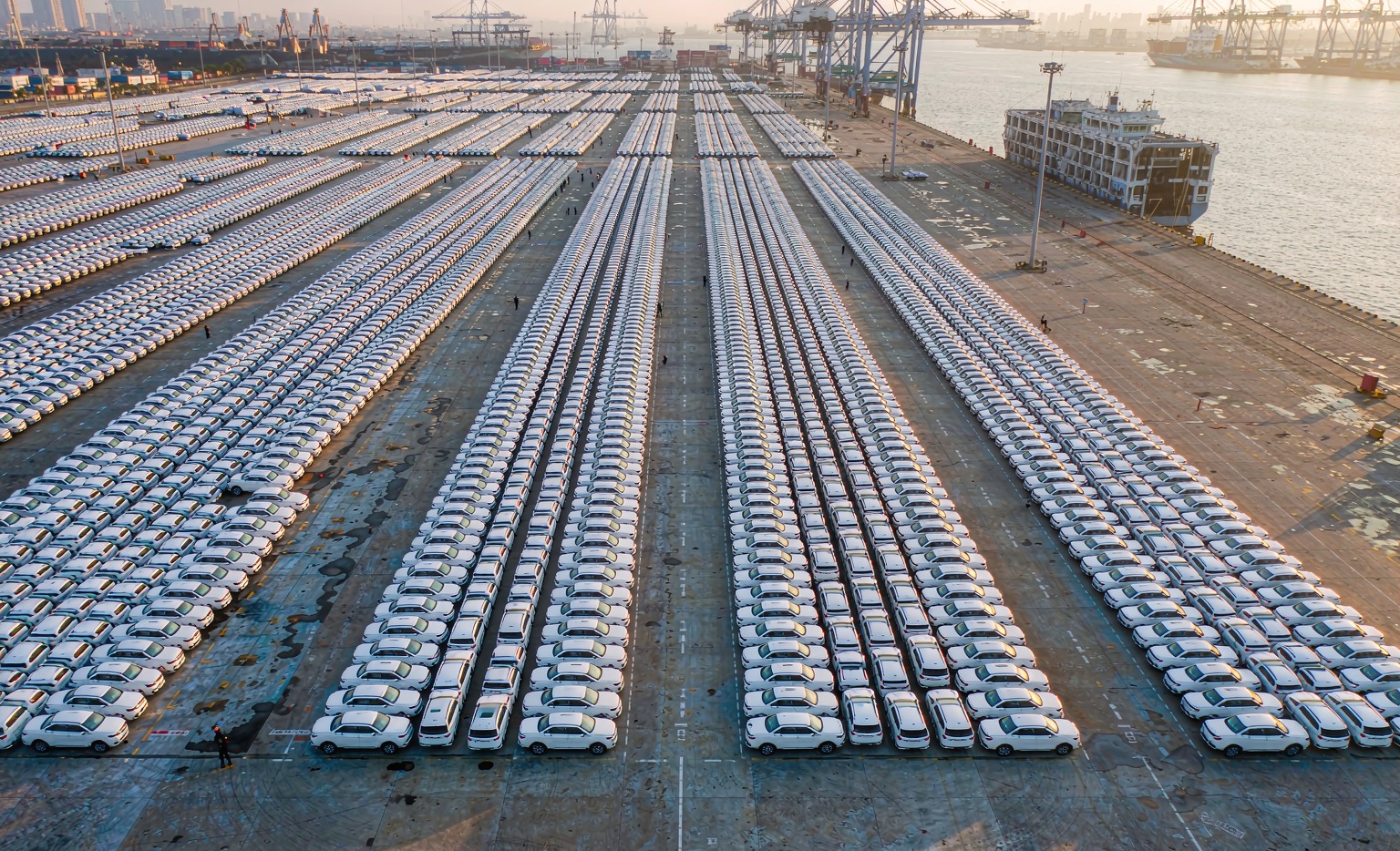
Two GWM nameplates cover opposite ends of the SUV export trade, and most wholesale enquiries end up needing both. The Haval H6 sells on price and equipment against RAV4-class rivals, while the Haval H9 answers the question fleet buyers in Russia, the Gulf and Africa ask most often: which China-built SUV survives towing, desert tracks and broken asphalt without paying a Japanese body-on-frame price? This guide sets out the 2026 Haval H6 export price ladder, the H9 diesel export specifications that matter in fleet tenders, and the market-by-market fit that decides which model belongs in your order.
All prices quoted are FOB Nansha, Guangzhou, based on 2026 model-year quotations for left-hand-drive units. RHD production for the H9 is available on order; the H6 is built in LHD only for most export trims, which shapes where each model can be sold.
Why the H6 and H9 Belong in the Same Export Order
GWM shipped Haval-branded SUVs to more than 170 markets in 2025, and the two models anchor opposite ends of that trade. The H6 is the volume play: a 2,738 mm wheelbase family SUV priced against Corolla Cross and Tucson, sold to distributors who need turnover and warranty depth. The H9 is the margin play: a 5.0 m ladder-frame SUV with low-range 4WD that competes where Fortuner and Land Cruiser Prado prices have climbed past what many markets can absorb.
For a distributor, the pairing matters because the two models share a dealer support structure — the same parts catalogues, the same training material and the same diagnostic platform. A market entrant can open with 20 H6 units for retail turnover and add H9 stock for the mining, security and government fleet segments that pay premium margins. Importers in Kazakhstan, Nigeria and Saudi Arabia all run this two-tier structure; our earlier guides cover the Chery equivalent (Tiggo 8 Pro / Tiggo 9 for Russia and Central Asia) and the Jetour equivalent (Jetour Traveler 4WD).
Haval H6 2026: Engine, Trim and Equipment Overview
The fourth-generation H6 facelift carries three powertrains into 2026. The 1.5T is the fleet workhorse — 135 kW through a 7-speed wet dual-clutch, returning 6.8 L/100 km on the WLTC cycle. The 2.0T adds 175 kW and an on-demand AWD system for markets with hills, gravel or towing duty. The HEV pairs the 1.5T with a front-mounted P1+P2 hybrid module and a 1.8 kWh battery, cutting urban consumption below 5.5 L/100 km without charging infrastructure.
Equipment on export trims runs at the high end of the class: 14.6-inch centre screen, wireless CarPlay and Android Auto on 2026 software, heated seats, a 540-degree camera on upper trims and six airbags across the range. ADAS content (AEB, adaptive cruise, lane keeping) is standard on 2.0T and HEV trims and optional on the 1.5T base. Build quality for Russia and CIS-spec units includes an engine block heater and cold-climate battery; Gulf-spec units add upgraded AC capacity and dust sealing. The table below compares the four export powertrains across the H6 and H9 ranges.
| Specification | H6 1.5T | H6 2.0T AWD | H9 2.0T Petrol | H9 2.4T Diesel |
|---|---|---|---|---|
| Dimensions (mm) | 4,703×1,886×1,730 | 4,703×1,886×1,730 | 5,000×1,960×1,930 | 5,000×1,960×1,930 |
| Wheelbase (mm) | 2,738 | 2,738 | 2,850 | 2,850 |
| Engine | GW4B15 1.5T | GW4N20 2.0T | GW4N20 2.0T | GW4D20M 2.4T |
| Power / Torque | 135 kW / 275 N·m | 175 kW / 340 N·m | 165 kW / 385 N·m | 135 kW / 480 N·m |
| Transmission | 7DCT | 7DCT | 8AT | 9AT |
| Drive | FWD | On-demand AWD | TOD 4WD, low range | TOD 4WD, low range |
| Fuel (WLTC, L/100 km) | 6.8 | 7.1 | 9.8 | 8.6 |
| Ground clearance (mm) | 190 | 190 | 230 | 230 |
| Fuel tank (L) | 58 | 58 | 80 | 80 |
| Braked towing (kg) | 1,500 | 1,800 | 3,000 | 3,000 |
The figures worth reading closely are torque and towing. The H9 diesel's 480 N·m arrives at 1,500 rpm, which is what keeps convoy speeds up on African gravel and Russian winter roads with a trailer behind. The H6's 275 N·m covers 90% of urban and intercity duty at a price the H9 cannot approach.
Haval H9 2026: Body-on-Frame Diesel and Petrol for Hard Duty
The second-generation H9 moved to a ladder frame with a double-wishbone front and solid-axle rear suspension, and that chassis choice decides which buyers order it. TOD (Torque-On-Demand) 4WD with a 2.48:1 low-range transfer case is standard on both engines; the flagship diesel trim adds a rear differential lock. Approach and departure angles of 30 and 26 degrees put it in the same envelope as the Fortuner, well clear of any monocoque SUV at this price.
Export buyers split between the two engines in a predictable pattern. The 2.0T petrol suits Gulf and Central Asian markets where diesel quality varies and petrol infrastructure is universal. The 2.4T diesel is the specification of choice for Russian tenders, African mining fleets and any buyer who clocks highway kilometres — the 80-litre tank and 8.6 L/100 km give a real 850 km range between fills, which matters where fuel stations are 200 km apart. Seating is five or seven depending on market homologation; most African and Russian stock ships as five-seat with a flat-load cargo floor.
FOB Nansha Price List and Order Tiers
The 2026 Haval H6 export price ladder and H9 pricing are set out below. These are indicative FOB Nansha figures for LHD units at container tier; volume and trim selection move the final quotation, and RHD commands a 4-6% premium on the H9.
| Variant | FOB Nansha (USD) | Drive | Units per 40HC |
|---|---|---|---|
| H6 1.5T 7DCT (fleet trim) | $14,600 | FWD | 4 |
| H6 2.0T 7DCT AWD | $17,900 | AWD | 4 |
| H6 1.5T HEV | $19,800 | FWD | 4 |
| H9 2.0T petrol 8AT | $28,800 | TOD 4WD | 2 |
| H9 2.4T diesel 9AT | $31,500 | TOD 4WD | 2 |
| H9 diesel flagship (rear locker) | $33,400 | TOD 4WD | 2 |
Container loading uses wheel-frame racks: four H6 units per 40HC is standard practice, and two H9 units per container with the boot-to-boot method. RORO is the better option above eight units per sailing — Nansha has direct car-carrier sailings to the Gulf (18-22 days to Jebel Ali), West Africa (25-35 days to Lagos) and Russia (Far East lines via Vladivostok, Black Sea lines to Novorossiysk), while Central Asia moves by rail through Khorgos in 18-22 days. The Haval H6 hybrid FOB Nansha price of $19,800 is the number most fleet buyers compare against Corolla Cross Hybrid quotations, which currently start around $24,000 at the same port.
Russia and Central Asia: Certification and the Tula Question
Russia remains the largest Haval export market by volume, and buyers should understand how the local plant changes the trade. GWM builds the H6, Jolion, Dargo and H3 at its Tula factory, so domestically-produced supply covers those models. The H9 is not built at Tula — China-built units carry the entire market, which is why the diesel H9 holds its resale value unusually well there. Importing the H6 into Russia competes with Tula output and customs duty, so the practical Russian order book is H9-heavy.
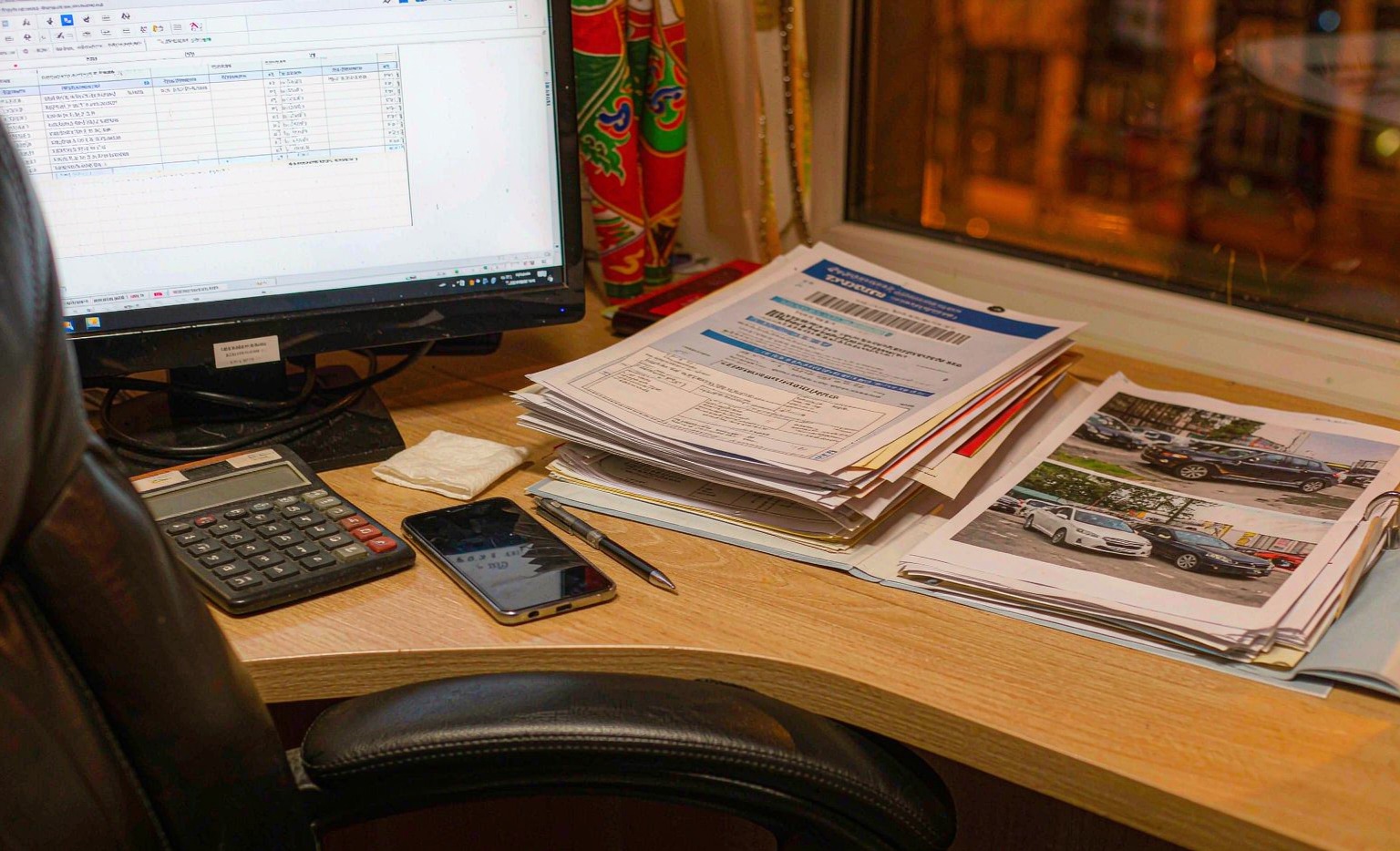
Customs documentation workflow for China-built vehicle imports into Russia and the EAEU.
Certification runs through the EAC system under TR CU 018/2011, with single-vehicle type approval (OTTC/SBKTS) handled per unit for parallel imports and SBKTS-registered clearance for commercial lots. Budget three paperwork items that catch first-time importers: the utilization fee (raised again in 2025 for commercial importers), power-based excise on the petrol H9, and GLONASS-era emergency system requirements. Kazakhstan and Uzbekistan accept the same EAC framework with lower utilization fees, which is why many CIS traders clear stock through Almaty before re-export. Our Russia GOST/EAC certification guide walks through the full document chain.
Middle East and Africa Fit: Heat, Dust and Fuel Quality
Gulf buyers order the H6 2.0T and petrol H9. Both engines carry upgraded cooling and AC specifications for 50°C ambient operation, and the petrol choice avoids the diesel-particulate complications that 45°C stop-start city traffic creates. Saudi fleet tenders increasingly specify the H6 HEV for municipal and airport duty where fuel subsidy reform has shifted the running-cost calculation.
GWM Haval wholesale to the Africa market leans the other way. Nigeria, Kenya, Ghana and Tanzania take the 1.5T H6 for urban retail and the diesel H9 for upcountry, mining and NGO duty. Two spec decisions matter on African orders: fit the full-size spare as standard (the H9 already carries one; spec it on the H6 fleet trim), and confirm the fuel program — both engines run on 91 RON, but markets with uncertain fuel quality should order the petrol H6 with the standard (non-GDi) injection calibration, which tolerates variation better. Parts support runs through the same Kingmay-serviced channel as other Chinese brands; a front-end parts set for the H6 costs roughly a third of the Fortuner equivalent.
H9 vs Toyota Fortuner and Pajero Sport
The H9's real competition is not the Chinese market — it is the used and new Fortuner trade. The comparison below sets the diesel H9 against the two ladder-frame rivals that dominate Gulf and African tender lists.
| Comparison | Haval H9 2.4T | Toyota Fortuner 2.8 | Mitsubishi Pajero Sport 2.4 |
|---|---|---|---|
| Chassis | Ladder frame | Ladder frame (Hilux-based) | Ladder frame (Triton-based) |
| Engine / Torque | 2.4T diesel, 480 N·m | 2.8T diesel, 500 N·m | 2.4T diesel, 430 N·m |
| 4WD | TOD + low range, rear locker (flagship) | Part-time + low range, rear locker (some trims) | Super-Select + low range |
| Indicative price basis | $31,500 FOB China (new) | $44,000-52,000 landed GCC/Africa (new) | Production ended; used/remaining stock only in most markets |
| Warranty for fleets | 5 yr / 150,000 km typical export terms | 3-5 yr by market | Varies, contract-limited |
The decision usually comes down to resale depth versus acquisition cost. The Fortuner sells faster at trade-in and its parts network is unmatched; the H9 undercuts it by $12,000-20,000 per unit landed, carries more equipment as standard, and the Pajero Sport's exit from production has left tender buyers searching for a mid-price ladder-frame alternative — a gap the diesel H9 fills directly. For traders, the margin sits in the price gap; for end fleets, the calculation is depreciation against purchase price.
Landed Cost Snapshots for Four Markets
Landed cost decides which variant wins each order, so the two most-quoted builds are set out below with indicative duty, freight and tax components. Figures use 2026 RORO and container rates and should be treated as planning estimates, not quotations.
H6 1.5T (FOB $14,600) — retail-market build:
- UAE (Jebel Ali): 5% duty $730 + RORO freight ~$1,700 + 5% VAT on CIF → landed ≈ $17,900
- Nigeria (Lagos): duty and levies ≈ 40% ($6,200) + freight ~$2,600 → landed ≈ $23,600 before port charges
- Kazakhstan (rail, Khorgos): EAEU duty 15% ($2,190) + rail freight ~$2,400 + VAT → landed ≈ $20,300
H9 2.4T diesel (FOB $31,500) — fleet build:
- UAE (Jebel Ali): 5% duty $1,575 + freight ~$1,700 + VAT → landed ≈ $36,100
- Russia (Novorossiysk): 15% duty + 20% VAT + power-based excise + utilization fee + freight ~$3,400 → landed ≈ $43,500
- Australia (Melbourne): 0% duty under ChAFTA + 10% GST on CIF + freight ~$2,200 → landed ≈ $37,000 before ADR/RAWS compliance
Two notes on the snapshots. Nigeria's effective charge on new vehicles is the steepest of the four, which is why H6 stock there concentrates in the fleet trim and why used-Japanese competition stays strong below $20,000. Australia's zero duty under ChAFTA is a genuine advantage, but RAWS type-approval cost per model means H9 imports only pay off above 15-20 units per year — which suits established GWM dealers rather than first-time entrants.
Ordering Process, Lead Time and Mixed Loading
A first GWM order through our desk follows six steps: variant and trim confirmation against your market's homologation requirements, proforma invoice with FOB or CIF terms, 30% deposit, production slot booking (3-5 weeks if the trim is not in port stock), pre-shipment inspection with photo report, and balance against shipping documents. Units currently in Nansha stock ship within 10 days of deposit.
Mixed loading keeps first orders low-risk. A typical trial container pairs two H6 units with a parts package — filters, brake pads, suspension bushings and body panels sized to the retail forecast — so the dealer opens with both sales stock and service stock in one clearance. RORO bookings accept single units, which suits the H9 flagship trims that move slowly but at high margin. Warranty terms run five years or 150,000 km on most export markets with the parts programme supported from our Guangzhou warehouse; the products catalogue lists current H6/H9 fast-moving parts alongside the wider Chinese-brand coverage.
Frequently Asked Questions
What is the 2026 Haval H6 export price from China?
The H6 range runs $14,600 for the 1.5T fleet trim, $17,900 for the 2.0T AWD and $19,800 for the HEV, all FOB Nansha at container tier. The H9 spans $28,800 (2.0T petrol) to $33,400 (diesel flagship with rear locker). Volume discounts of 2-4% apply above ten units per order, and RHD H9 units carry a 4-6% premium.
Can the Haval H9 be imported into Russia, and which certification applies?
Yes — the H9 is not produced at GWM's Tula plant, so China-built units supply the Russian market in full. Imports clear under the EAC framework (TR CU 018/2011) with OTTC or SBKTS per-unit approval, plus the 2025-raised utilization fee and power-based excise on the petrol version. The diesel H9's 2,393 cc keeps excise in a lower band than the petrol 2.0T's output would suggest at similar price points.
Is the Haval H6 hybrid suitable for African fuel quality?
The HEV runs 91 RON and tolerates moderate fuel variation, but where fuel quality is unpredictable we recommend the standard 1.5T or 2.0T with non-GDi injection calibration — fewer sensors, no high-voltage battery exposure to rough loading, and cheaper field repairs. The H6 hybrid FOB Nansha price makes sense for urban fleet tenders in Nigeria, Kenya and Ghana where running-cost clauses reward the 5.5 L/100 km city figure.
H9 vs Toyota Fortuner — which is cheaper to import?
The diesel H9 lands $12,000-20,000 below a new Fortuner 2.8 in the same market: roughly $36,100 landed in the UAE against $48,000-56,000 for the Fortuner, and the gap widens in Africa. The Fortuner's advantages are resale depth and parts ubiquity; the H9 answers with lower acquisition cost, more standard equipment and a 480 N·m diesel matched to the Fortuner's torque curve.
What is the minimum order and lead time from Nansha Port?
RORO accepts single units; container orders run from two H9 or four H6 per 40HC with mixed H6+H9 loading available. In-stock trims ship 10 days after deposit; factory orders take 3-5 weeks production plus transit — 18-22 days to Jebel Ali, 25-35 to Lagos, 18-22 by rail to Central Asia via Khorgos, and 30-45 days to Far East Russian ports depending on sailing schedules.
Does Australia charge import duty on China-built Haval SUVs?
No. Under the China-Australia Free Trade Agreement, passenger vehicles built in China enter at 0% duty; only 10% GST on the CIF value applies. The practical barrier is compliance — ADR approval through the Registered Automotive Workshop Scheme costs $8,000-15,000 per model variant, which is why H9 imports to Australia suit established GWM dealers moving 15-20+ units per year rather than one-off imports.
Data sources: GWM 2026 model-year export specifications and quotation guidance; UAE Federal Customs Service tariff schedule; Nigeria Customs Service import charge structure (20% duty + 7% surcharge + CISS/ETLS levies); EAEU Common Customs Tariff and 2025 utilization fee schedule; China-Australia Free Trade Agreement tariff schedule (Chapter 87); Drewry car-carrier and RORO freight assessments, Q3 2026. Landed-cost figures are planning estimates and vary with sailing dates and trim selection.
Source 2026 Haval H6 and H9 export stock from Globalucar Vehicle, Guangzhou. FOB Nansha pricing from $14,600 (H6 1.5T) and $28,800 (H9 2.0T), mixed container loading with parts packages, RORO bookings to Jebel Ali, Lagos, Novorossiysk and Melbourne, and rail routing to Central Asia via Khorgos. Contact Mr Didi: ucars@global-ucars.com, WhatsApp +86 133 0240 8528, or send your market and quantity through the contact page for a same-week quotation. 28F Guangzhou Jianhua Center, Baiyun District, Guangzhou.
Verify Part Numbers in Our OE Library
Every part covered in this guide has a matching OE number in our reference library — grouped by system with cross-references, so you can source the exact fit for Hyundai, Kia, GM Korea and more.
Related Articles

Related Products
From our Vehicle Export catalog — new & used cars ready for international delivery

Full-Size EREV SUV
2026 Rox Adamas EREV 215km 6-Seat Executive Edition
USD 53,000 FOB Guangzhou
View Details
Full-Size EREV SUV
2026 Rox Adamas EREV 215km 7-Seat All-Terrain Edition
USD 51,500 FOB Guangzhou
View Details