Steering linkage parts occupy a specific spot in every auto parts warehouse: low unit price, high turnover, and a direct line to workshop customers who need them every week. Potholes, overloading and rough rural roads chew through tie rod ends faster than almost any other chassis component, which is why distributors serving Africa, the Middle East and Southeast Asia treat rack ends and outer tie rod ends as core stock rather than occasional orders.
This guide separates the two parts that buyers most often confuse, lists verified OE numbers for the Hyundai, Kia, Toyota and Nissan applications that dominate export volume, and walks through thread specs, FOB pricing tiers and container loading from Guangzhou.
Why Steering Linkage Parts Never Sit on the Shelf
Three forces keep steering linkage moving year after year. First, every wheel alignment job starts with an inspection of the tie rods, so worn ends get flagged and replaced as a matter of routine. Second, ball studs and rack boots are exposed to water, dust and salt with no protection beyond a rubber boot, so they wear on schedule even when the driver is careful. Third, the parts are cheap enough that repair shops replace rather than rebuild — nobody presses a new ball stud into an old housing.
For a distributor, the buying pattern matters as much as the wear pattern. A typical first order is a mixed pallet of 50 to 200 pieces per SKU, then monthly replenishment once the workshop customer base settles. Steering linkage also pulls related sales: a customer replacing tie rods usually needs stabilizer links, ball joints and control arm bushings checked at the same time, so stocking the full front-end group increases the average order value. Our earlier guides cover the wider chassis group — see the suspension overview (id=80) and the shock absorber and strut mount guide (id=121).
Rack End vs Outer Tie Rod End: What Distributors Must Separate
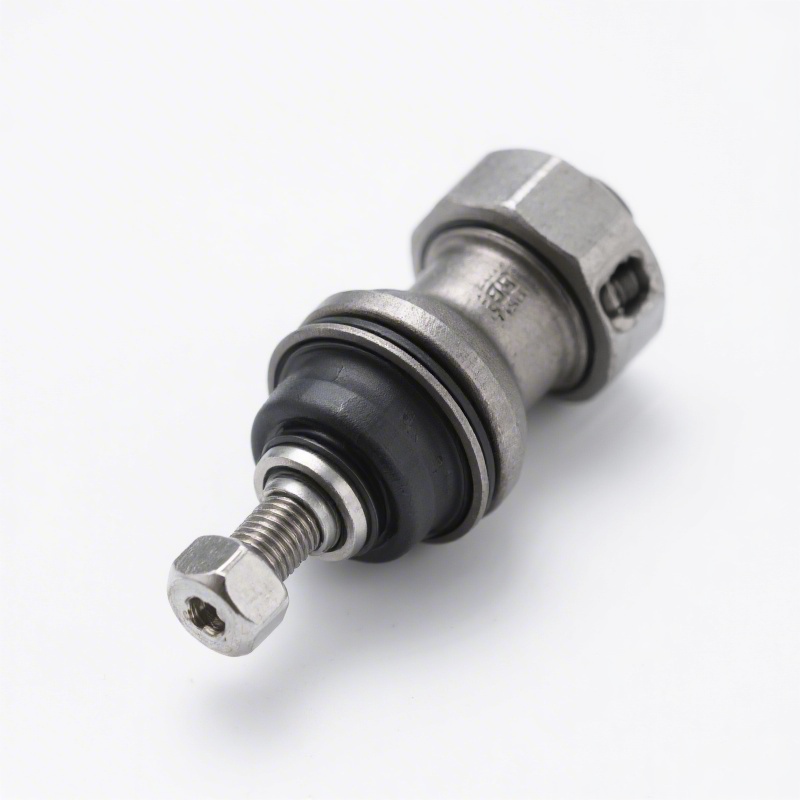
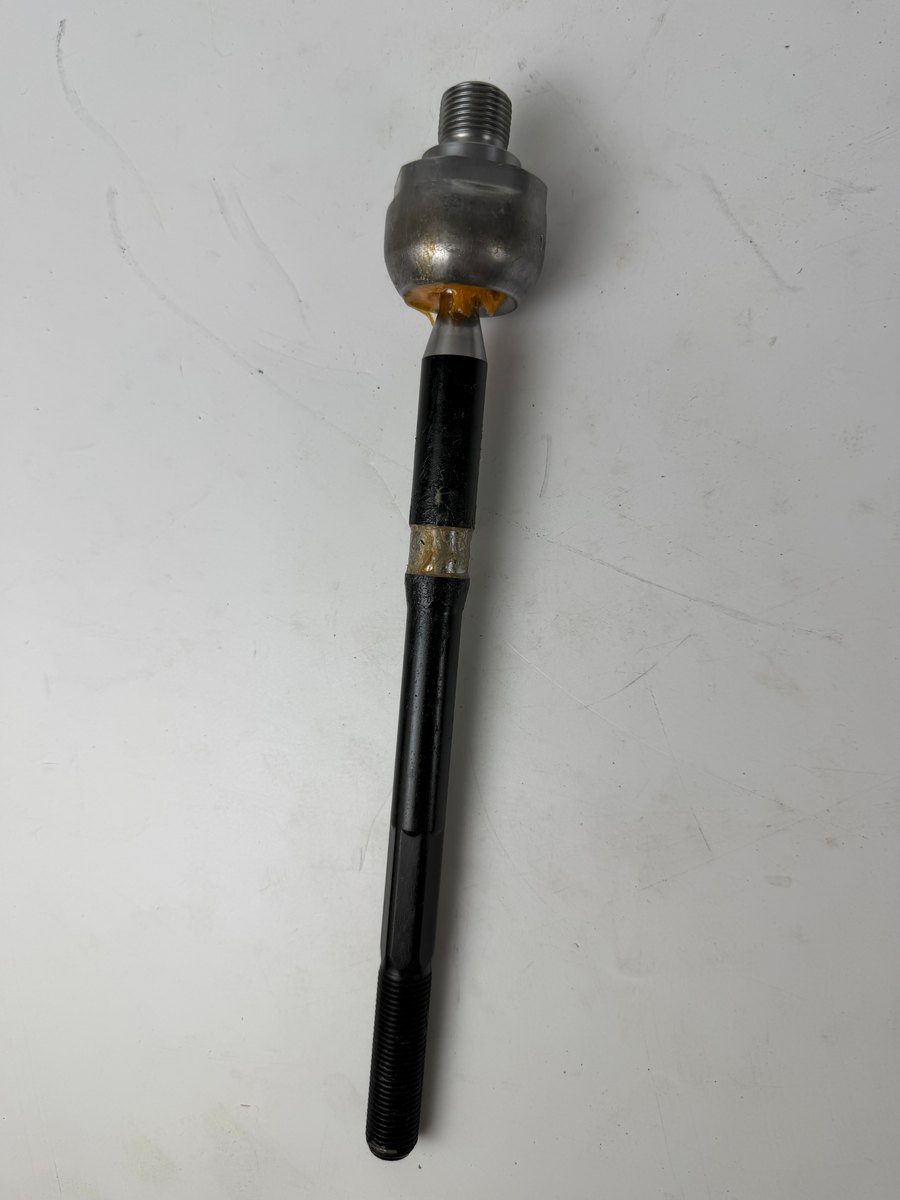
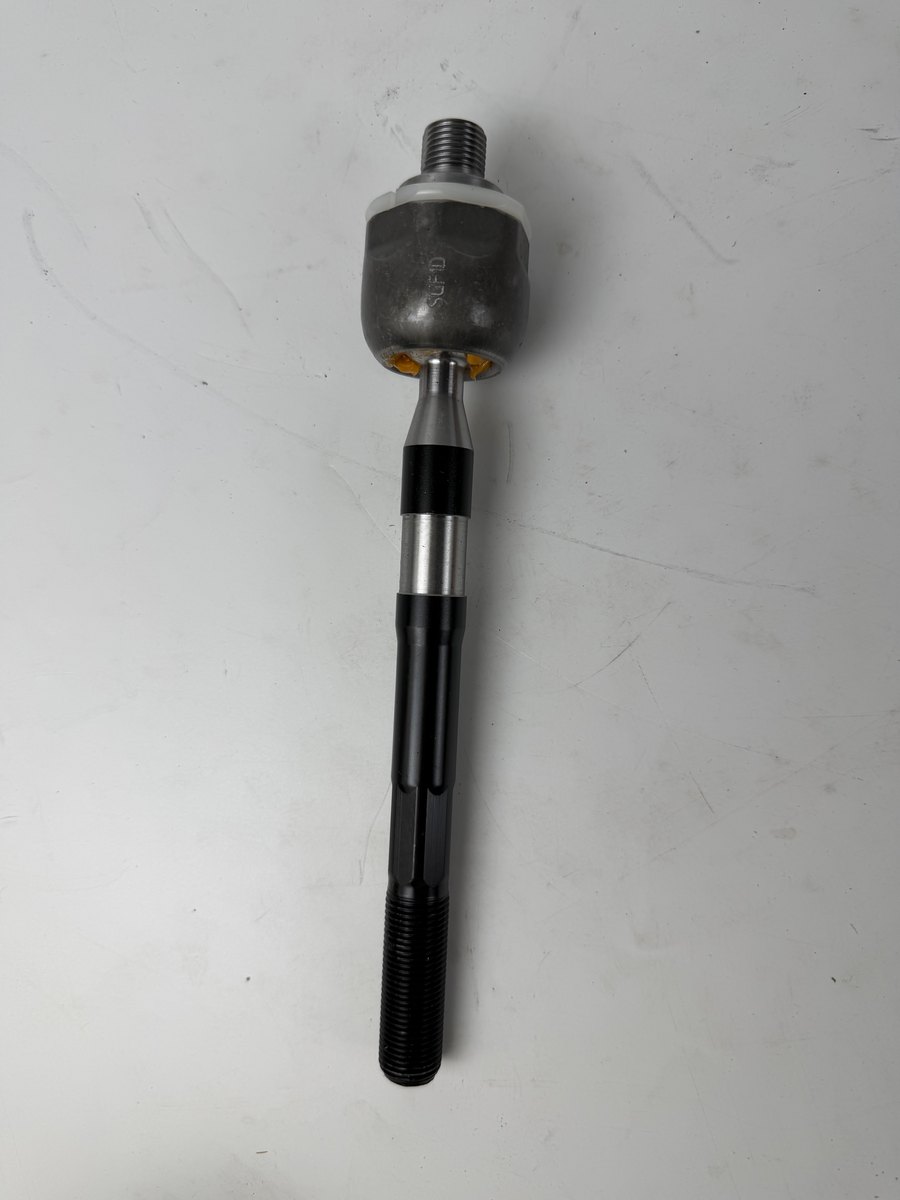
The steering linkage has two replaceable joints per side. The rack end — also called the inner tie rod — screws directly into the steering rack shaft and carries the rack boot on its body. The outer tie rod end connects the rack end to the steering arm on the knuckle through a tapered ball stud. Turning the steering wheel pushes the rack, the rack end transmits that force, and the outer tie rod end pivots to follow the wheel as the suspension moves up and down.
Catalogs blur the naming: some list the rack end as an "inner tie rod end", others as a "rack end" or even "side rod". The mistake that costs money is treating them as interchangeable. They are not: the rack end has a long threaded shank and no taper stud, while the outer has a tapered stud with a castle nut or self-locking nut. When a buyer orders "tie rod ends" without specifying, the supplier has to guess — and a mixed container of wrong parts is expensive to unwind. Always order by OE number and position, and if you cannot read the OE from the old part, send a photo of the removed piece plus the vehicle make, model, year and engine.
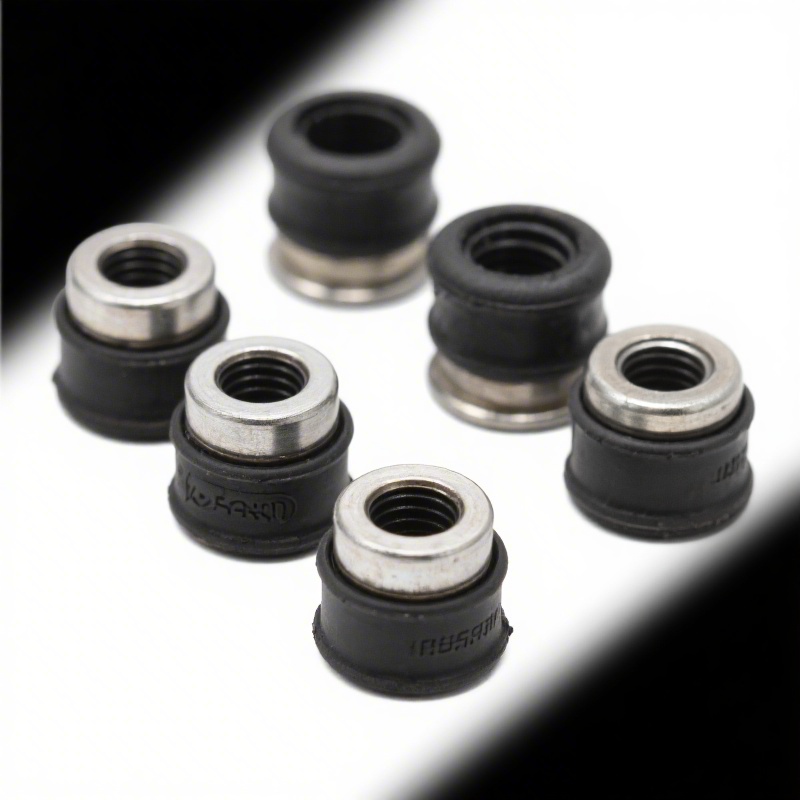
Product photo: Kingmay Auto Parts
Failure Symptoms Your Workshop Customers Report First
Steering linkage wear announces itself in a predictable sequence, and knowing the symptoms helps you advise customers and upsell the paired part:
- Loose or vague steering. The wheel turns a few degrees before the car responds. This is the classic rack end wear signature as the ball stud develops play inside its seat.
- Clunk or knock over bumps. A worn outer tie rod end knocks when the suspension cycles, especially on rough roads or speed bumps.
- Front-end vibration. Play anywhere in the linkage lets the wheel shimmy at highway speed.
- Uneven inner or outer tire wear. Steering play changes toe angle as the car rolls, feathering the tire edges.
- Failed alignment. If toe cannot be held within spec, the tie rods are usually the culprit — the alignment rack finds the wear before the customer does.
- Torn boot and grease loss. A split rack boot dries the rack end out within weeks. Replace the boot and the rack end together; greasing a worn joint buys a month at best.
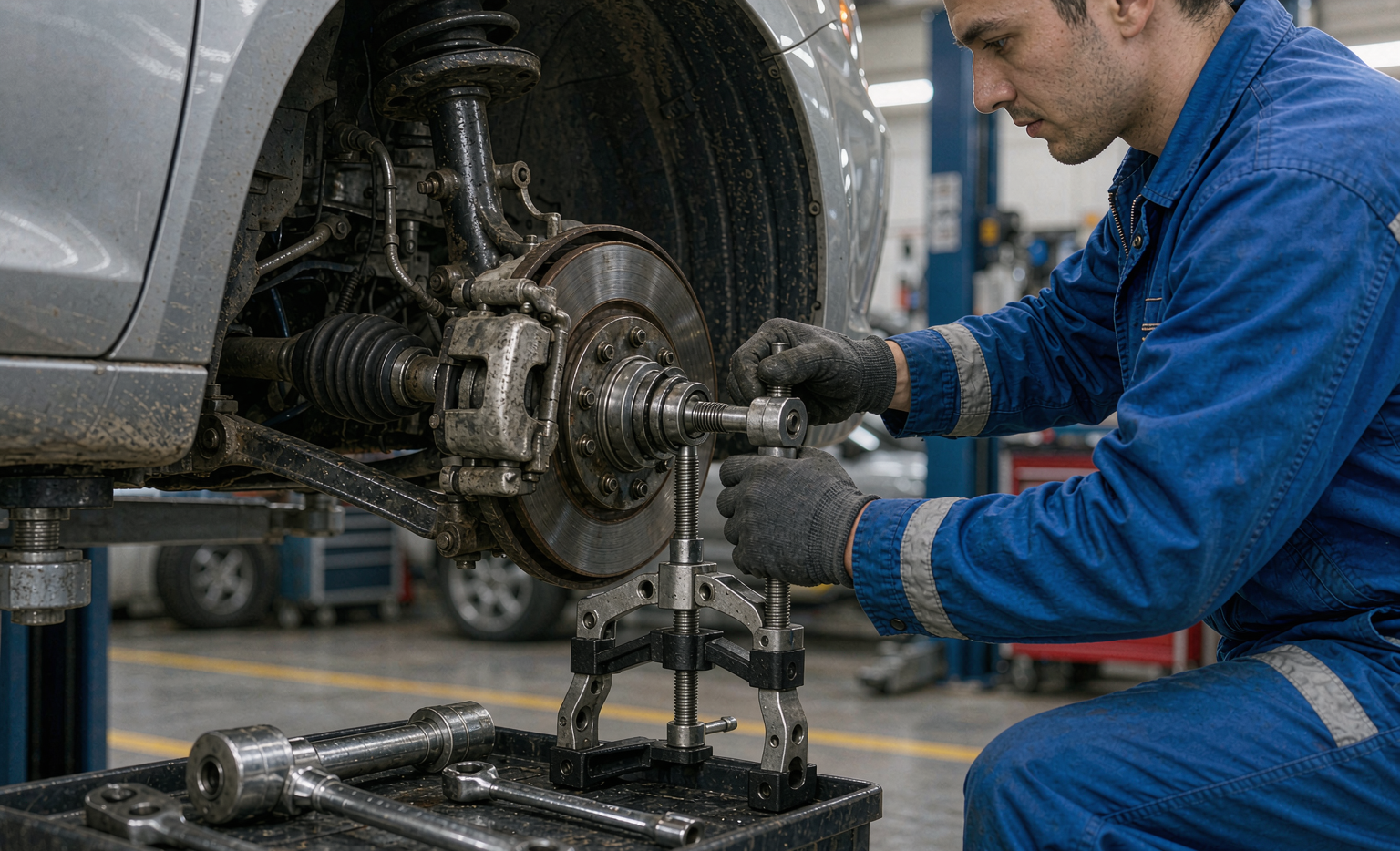
The standard bench check: with the front wheel off the ground, rock the wheel at the 3 and 9 o'clock positions and watch the ball stud. Visible play means replacement. Play at the 12 and 6 o'clock positions points to a wheel bearing instead — a distinction worth teaching your workshop customers, because it protects you from warranty claims on parts that were not the fault.
OE Number Cross-Reference: Hyundai, Kia, Toyota & Nissan
The table below lists the steering linkage OE numbers with the highest export turnover for our four core brands. Thread details follow in the next section. Equivalents from 555 Sankei, CTR, MOOG and TRW are included where catalogs confirm them, so you can match against customer enquiries that quote aftermarket numbers.
| Brand | OE Number | Part & Position | Fits |
|---|---|---|---|
| Hyundai / Kia | 56820-2E000 (LH) / 56820-2E900 (RH) | Outer tie rod end | Tucson (JM), Sportage II (JE/KM) 2004–2010 |
| Hyundai | 56820-0Q000 | Outer tie rod end | Elantra (YD, Yuedong) |
| Hyundai | 56820-2D000 | Outer tie rod end | Elantra (HD) 2006–2010 |
| Hyundai | 56820-1E000 / 56820-1E900 | Outer tie rod end LH / RH | Accent (MC) 2005–2011 |
| Hyundai | 56820-2B000 / 56820-2B900 | Outer tie rod end LH / RH | Santa Fe (CM) 2006–2012 |
| Hyundai | 57724-0Q000 | Rack end (inner tie rod) | Elantra (YD, Yuedong) |
| Hyundai | 57742-2D000 | Rack end (inner tie rod) | Elantra (HD) |
| Hyundai | 57724-1E000 | Rack end (inner tie rod) | Accent (MC) |
| Hyundai | 57724-2Z000 | Rack end (inner tie rod) | Tucson / ix35 (LM) 2009–2015 |
| Toyota | 45047-19115 (LH) / 45046-19265 (RH) | Outer tie rod end | Corolla (E12), Camry (ACV4) |
| Toyota | 45047-09301 / 45046-09631 | Outer tie rod end LH / RH | Yaris (Vitz) |
| Toyota | 45047-59026 / 45046-59026 | Outer tie rod end LH / RH | Vios |
| Toyota | 45047-09335 / 45046-09675 | Outer tie rod end LH / RH | RAV4 |
| Toyota | 45503-09631 | Rack end (inner tie rod) | Yaris |
| Toyota | 45503-59045 | Rack end (inner tie rod) | Vios |
| Toyota | 45503-0R020 / 45503-0R030 | Rack end (inner tie rod) | RAV4 |
| Nissan | D8520-ET00A | Outer tie rod end (RH) | Sentra (B16) 2007–2012 |
| Nissan | D8520-EW00A | Outer tie rod end | Versa, Cube (HR16DE/MR18DE) |
| Nissan | D8520-4EA0A | Outer tie rod end (RH) | Sylphy / Sentra applications, 193 mm length |
| Nissan | D8520-VS42A / D8570-VS42A | Outer tie rod end LH / RH | Patrol (Y61) 1997–2010 |
Two pairing notes that show up constantly on purchase orders: Hyundai ties LH and RH outer ends together as -000 and -900 suffixes on the same base number, and Toyota uses 45047- for left and 45046- for right. Nissan adds a third digit in the suffix (D8520- vs D8570-) on heavier applications such as the Patrol. Quote both sides in every offer — workshops almost always change them in pairs.
Thread Specs & Dimensional Matching Before You Order
OE numbers settle fitment, but dimensions settle quality. Before confirming an order for any steering linkage SKU, lock these five measurements with the supplier against the old part or a dimensional sheet:
| Spec | Typical Values | Why It Matters |
|---|---|---|
| Stud thread | M10×1.25 (small cars), M12×1.25 (Toyota), M14×1.5 (larger SUVs) | Wrong lock-nut thread means the jam nut will not seat |
| Housing thread | M16×1.5 RH (LH part) / M16×1.5 LH (RH part) on Hyundai outer ends | Rack-end side threads are handed — pairing errors strip the rack |
| Stud taper (cone) | Ø13.5 mm, 1:8 cone pitch | Wrong taper seats incorrectly and develops play within weeks |
| Overall length | 168–193 mm for outer ends (measured center to center) | Length sets toe geometry; a 5 mm error pulls alignment out |
| Mounting height | ~31.5 mm (stud center to housing face) | Affects bump-steer behavior on lowered or loaded vehicles |
As an example of how complete a proper spec sheet looks: the Hyundai 56820-2E000 outer end runs M16×1.5 housing thread, M10×1.25 stud, 168 mm mounting length, Ø13.5 mm cone, 186 mm full length — and the same sheet lists its aftermarket equivalents (555 SEK-8041L, CTR CEKH-35L, MOOG HY-ES-3887, TRW JTE7600). Ask every new supplier for that level of detail; suppliers who cannot produce it are reselling, not manufacturing.
FOB Guangzhou Price List & Order Tiers
Indicative FOB Guangzhou pricing for OE-grade steering linkage parts in neutral packaging, based on current order books. Actual quotes vary with steel prices and order structure.
| Part | 50–199 pcs | 200–999 pcs | 1,000+ pcs |
|---|---|---|---|
| Outer tie rod end (Hyundai/Kia/Toyota/Nissan) | $2.60 | $2.30 | $1.95 |
| Rack end / inner tie rod | $3.20 | $2.85 | $2.45 |
| Lower ball joint (paired stock) | $2.90 | $2.55 | $2.20 |
| Stabilizer bar link | $1.80 | $1.55 | $1.30 |
| Steering rack & pinion assembly (remanufactured-grade new) | $58 | $52 | $47 |
Notes on the quote structure: neutral packaging is included in the prices above; printed boxes with your brand add about $0.12 per piece with a 500-piece minimum per SKU. Production lead time runs 25–35 days for container orders and 5–7 days for sample batches sent by courier. Payment terms are 30% deposit with the balance against the B/L copy for established buyers.
Quality Checks Before Loading
Steering parts carry safety liability, so inspection deserves more rigor than price-tier parts get. Four checks catch most problems before the container sails:
- Forging and material. Ball housings should be die-forged from 40Cr or 45# steel with visible forging flow lines, not castings. Cast ball housings crack under side load — ask for the material certificate alongside the sample.
- Ball stud pull-off force. A serviceable joint must hold the stud under a measured axial load (documented in kN on the test report). Request the report for the production batch, not a generic datasheet.
- Boot material and grease fill. EPDM or high-grade TPE boots resist cracking in desert heat; check the grease fill weight against spec — under-filled joints run dry and wear out early, which shows up as warranty claims in month four.
- Thread and torque retention. Gauge-check the housing threads with a real nut on site, and confirm the stake or crimp that locks the bearing seat survives the specified torque.
Factories running IATF 16949 systems will hand over batch test reports without prompting. If a supplier resists, treat it as a screening answer and move on — the steering category is too liability-heavy to gamble on an unverified line.
Left/Right Pairing, MOQ & Container Loading
Plan inventory in pairs. A Tucson outer end order should arrive as 50 LH (56820-2E000) plus 50 RH (56820-2E900), not 100 of one side. Workshops replace both ends in one alignment job most of the time, and unbalanced stock ties up cash on the slow side. The same logic applies to Toyota 45047/45046 and Nissan D8520/D8570 pairs.
On loading: a standard mixed steering-linkage pallet holds 40 cartons of 60 pieces — roughly 2,400 mixed pieces per pallet, and a 40-ft high-cube container takes about 20 pallets, so a full container program covers 45,000–50,000 pieces across 20 to 30 SKUs. Keep the top ten fast movers (Tucson, Elantra, Corolla, Vios, Sentra ends) at two pallets each and let the long tail share the rest. Inner rack ends pack denser than outer ends, so mixed-pallet loading usually lands within 3% of the calculated volume.
Product photo: Kingmay Auto Parts
Landed Cost Snapshot: Kenya, UAE & Chile
Using a reference order of 1,000 mixed outer tie rod ends and rack ends at $2.60 FOB per piece ($2,600 goods value), indicative landed cost per piece:
| Market | Freight & Local Charges | Duty & Tax | Landed Cost / pc |
|---|---|---|---|
| Mombasa, Kenya | ~$620 | 35% duty + 16% VAT (common external tariff) | ~$3.55 |
| Jebel Ali, UAE | ~$390 | 5% duty | ~$3.05 |
| San Antonio, Chile | ~$540 | 6% duty + 19% VAT | ~$3.38 |
Rates move with the market; the useful number is the ratio. Steering linkage lands at roughly 1.2–1.4× FOB on most lanes, which leaves room for the distributor margin workshop customers expect on wear parts. For a duty-rate deep dive on more markets, see our import duty cheat sheet (id=28).
How to Order from Kingmay
Send your enquiry with any of the following: a list of OE numbers, photos of the removed parts with dimensions, or vehicle make-model-year-engine lists and we will map the SKUs for you. You will receive a quoted price list within 24 hours covering FOB and CIF terms, a sampling offer (5–7 days by courier) for any SKU you want to verify, and a container loading plan for the mixed pallet. Contact details are on the products page, and the chassis category index lists every steering and suspension line in stock.
Frequently Asked Questions
What is the difference between a rack end and an outer tie rod end?
The rack end (inner tie rod) screws into the steering rack shaft and carries the rack boot; the outer tie rod end bolts to the knuckle's steering arm with a tapered ball stud. They are separate parts with separate OE numbers and usually separate lifespans — the outer wears faster because it pivots with every wheel movement.
How do I know a tie rod end needs replacement?
Watch for loose steering, clunks over bumps, front-end vibration and uneven tire edge wear. On the bench, lift the wheel, rock it at the 3 and 9 o'clock positions and look for visible play at the ball stud. Any measurable play means the joint is done.
Should tie rod ends be replaced in pairs?
Yes in practice. Both sides have the same mileage and wear, workshops change both during one alignment session, and replacing in pairs keeps toe settings symmetric. Stock LH and RH in equal quantities.
Is wheel alignment required after replacing tie rod ends?
Always. Replacing an outer end changes the linkage length and moves the toe angle. Thread the new end to the marked position on the old part to get the car to the alignment shop, then set toe to factory spec.
What vehicles does OE 56820-2E000 fit?
It is the front-left outer tie rod end for the Hyundai Tucson (JM) and Kia Sportage II (JE/KM), 2004–2010, with 56820-2E900 as its right-hand pair. Cross-references include 555 SEK-8041L, CTR CEKH-35L and MOOG HY-ES-3887.
What is the MOQ and lead time for wholesale tie rod ends from China?
Sample batches ship in 5–7 days with no minimum beyond courier cost. Production orders start at 50 pieces per SKU, with tiered pricing at 200 and 1,000 pieces, and container orders run 25–35 days from deposit to port.
Verify Part Numbers in Our OE Library
Every part covered in this guide has a matching OE number in our reference library — grouped by system with cross-references, so you can source the exact fit for Hyundai, Kia, GM Korea and more.
Related Articles


Related Products
From our Auto Parts catalog — 4 export-ready products