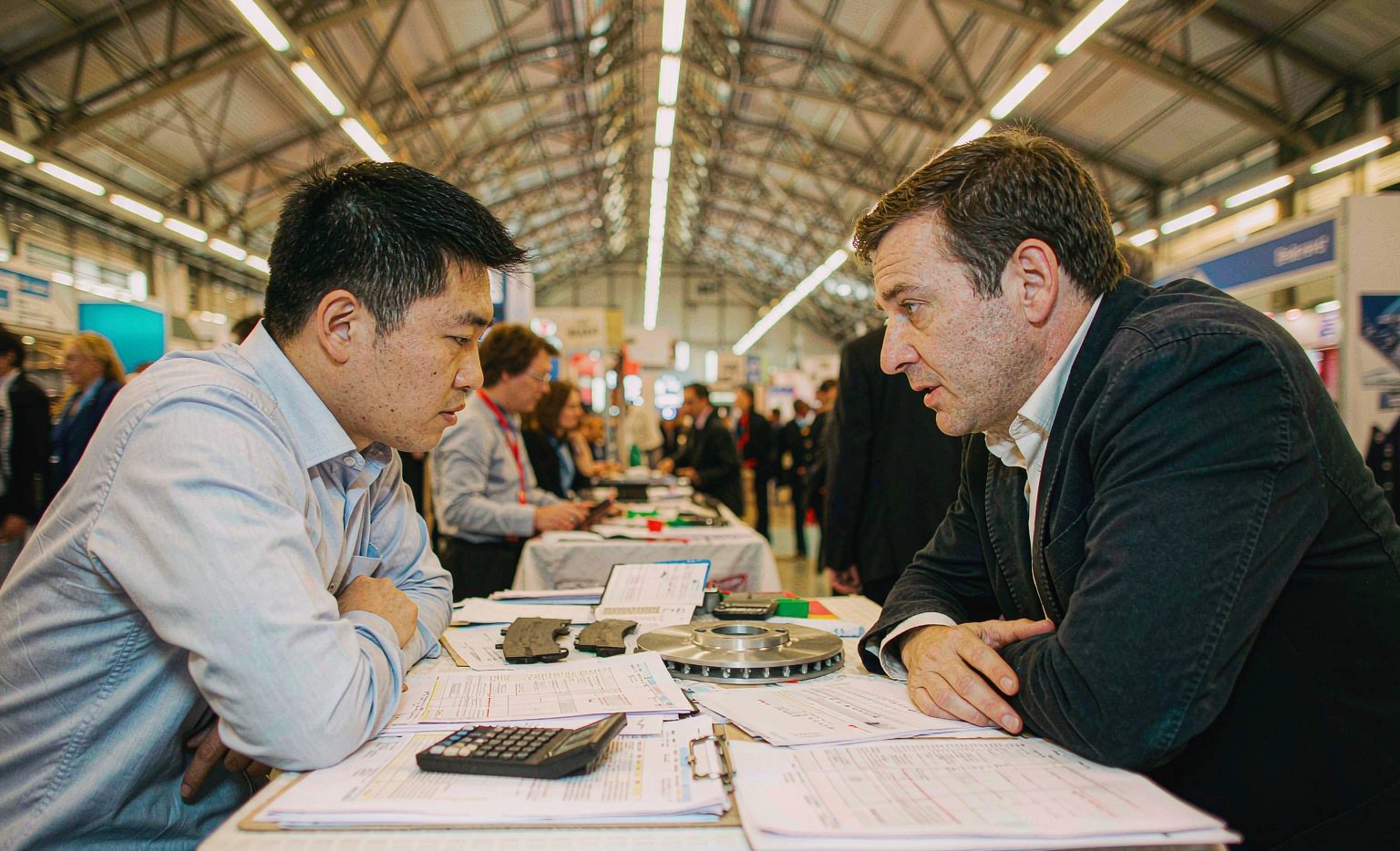
Phase 1 of the 140th Canton Fair closed on 19 October with 189,000 overseas buyers from 214 countries and regions, up 13.3 percent on the last session. Most left Pazhou with a folder of quotations and one unresolved question: how much of that number is negotiable? For auto parts the answer is a band rather than a figure — on commodity friction and chassis parts a 3 to 8 percent cut from the first quote is normal, 12 percent or more warns that the specification is about to change, and when you ask matters as much as how.
Why the Real Discount Window Opens After Phase 1 Closes
The price quoted at a booth is a show price. Everyone on that floor knows the buyer is comparing twenty suppliers in three days, so the salesperson quotes the top of the range and holds two or three concessions back. That is not dishonesty; it is how a five-day exhibition works.
The conversation changes once the halls go dark. Phase 1 ran 15–19 October, the changeover covers 20–22 October, and Phase 2 (23–27 October) is home goods and building materials — no auto parts until the 141st session in April 2027. Phase 3 (31 October–4 November) is textiles and toys. So a Canton Fair price negotiation on parts almost always happens by email, in the week after your flight home, with a sales team that has time to check stock and ask the plant manager for a real number.
Two forces pull in opposite directions in that window. Factories are hunting orders to fill Q4 capacity, which softens unit prices; they are also booking slots against a February production stop and a pre-holiday freight peak, which hardens lead times. Ask for the discount in the first week after the fair, ask for the schedule in November, and put both into one proforma invoice. Our 48-hour shortlist routine covers the filtering step; this is the pricing conversation itself.
What “Discount” Means in an Auto Parts Quotation
Before comparing percentages, fix the baseline. Three numbers get called a discount here, and confusing them is how buyers end up paying more than last year. The catalogue price is a list for distributors, routinely 20 to 30 percent above real FOB. The first quote at the fair is a trimmed version of it, still carrying a negotiation reserve. The number you name is only useful if it is anchored to a cost you understand.
So the useful question in any auto parts price negotiation is not “how low can you go” but “what is this price built on”. A brake pad quotation rests on a friction mix code, a pad thickness, a backing plate gauge, a shim type, a box configuration and an Incoterm. Change one and the price moves without anyone calling it a discount. A supplier who drops 12 percent without touching one of those has either been overquoting you all along, or intends to change them later.
The Realistic Discount Ladder
The bands below come from our own 2026 quotation files for Guangzhou and Pearl River Delta suppliers — the spread between the first written quote and the price an average-volume buyer settles at. Treat them as order of magnitude, not as a tariff.
| Part category | First quote to settled price | What has to be true to reach the top of the band |
|---|---|---|
| Brake pads (high-volume Toyota, Hyundai, Kia applications) | 3–8% | Single mix code, 500+ sets per part number, neutral packing, 50% deposit |
| Rotors and drums (castings) | 2–6% | Buyer absorbs freight weight, accepts one coating spec, orders a full pallet |
| Filters, bearings, hardware, seals | 4–10% | Consolidated order across many SKUs from one supplier, annual frame |
| Suspension and steering (control arms, ball joints, tie rod ends) | 3–7% | Mixed container across platforms, longer lead time, no custom marking |
| Sensors and electronics (ABS, TPMS, ignition) | 1–4% | Little room: component cost dominates, volumes thin per SKU |
| Private label or tooled parts | 0–3% on price, more on terms | Tooling amortization, print quantities, payment terms, sample waivers |
Read the last column rather than the percentages. The band is not an entitlement — it is what a factory can fund. Friction and hardware are elastic because the bill of materials is flexible; sensors are not, because nobody negotiates with a chip. Push a sensor quote to the bottom of the pad band and the reply is a polite email, not an order confirmation.
Where the Margin Actually Lives
To argue price credibly you need to know which line of the quote has room. Below is the cost stack we see repeatedly for a front pad set at 500 sets, as a share of FOB value.
| Cost line | Share of FOB | Can a factory move it without you noticing? |
|---|---|---|
| Friction compound | 28–34% | Yes — mix grade and pad thickness are the classic levers |
| Backing plate, shim, hardware | 12–16% | Yes — plate gauge and shim presence are easy to trim |
| Pressing, curing, grinding labour and energy | 10–14% | Barely — cycle time is fixed by the press |
| Inner box, carton, pallet, marking | 6–9% | Yes, and often a fair trade to make explicitly |
| Factory overhead, scrap, rework | 8–11% | Only through order stability |
| Factory profit | 6–10% | Yes, down to 3–4% for a repeat buyer with clean payments |
| Export docs, inland haul to Nansha, forwarder fees | 3–5% | Yes, by changing the Incoterm rather than the price |
Two conclusions follow. Profit is the smallest single line, so a factory giving away 10 percent has handed over its entire margin plus a slice of overhead — which is why deep discounts rarely survive to the second order. And the two biggest lines are the easiest to alter, so any discount above roughly 6 percent needs a written specification in the proforma invoice.
MOQ Is the Price Lever That Actually Moves
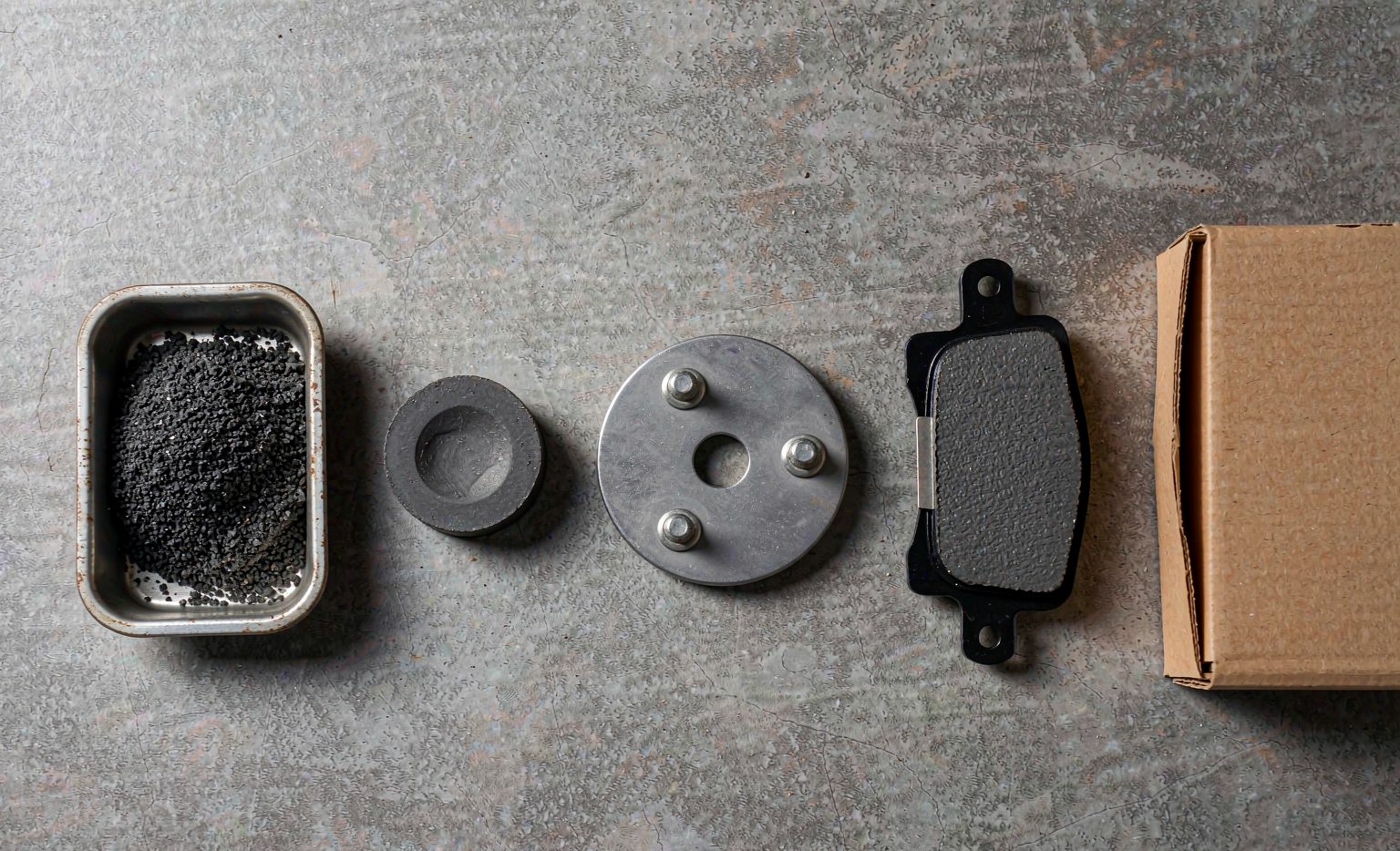
Volume is the concession every factory understands. These five references, priced at three levels under identical specification and packaging.
| OE reference | Application | Product | 200 sets/pcs | 500 | 1,000 |
|---|---|---|---|---|---|
| 04466-12130 | Toyota Corolla / Auris (E18) | Front brake pad set | USD 4.8 | USD 4.2 | USD 3.9 |
| 04465-06090 | Toyota Camry (V50 and later) | Front brake pad set | USD 5.1 | USD 4.5 | USD 4.1 |
| 04465-26300 | Toyota Hiace (H200) | Front brake pad set | USD 5.4 | USD 4.8 | USD 4.4 |
| 51712-02100 | Hyundai / Kia front axle | Brake disc | USD 11.5 | USD 10.4 | USD 9.6 |
| 28101-02A10 | Hyundai / Kia applications | Brake pad set | USD 4.6 | USD 4.0 | USD 3.7 |
The step from 200 to 500 units is worth roughly 10 to 13 percent per unit — more than any argument about margin will win. The step from 500 to 1,000 adds another 7 to 8 percent, because the set-up cost has already been absorbed. That is the shape to exploit: reach the first volume step on your two or three fastest movers, buy slow movers at 200, and stop pushing. Demanding 1,000-unit pricing on 200 units across forty SKUs asks a factory to fund inventory nobody will sell.
Reference numbers matter here. Suppliers quote from an OE index, and our OE parts library covers brake, chassis and engine references across Toyota, Hyundai and Kia so you can build the volume list before writing to anyone. For the friction and coating decisions underneath the price, see the brake sourcing guide from this session.
Payment Terms Carry a Price
Every payment term has a financing cost inside it, and at factory level that cost lands in the quotation as a percentage. Asking for a lower unit price while holding 60-day credit asks the supplier to lend to you and discount the loan; the two cancel out.
| Payment structure | Effect on unit price | Why the factory prices it that way |
|---|---|---|
| 100% deposit before production | 2–4% below baseline | No working capital tied up; offered on small or repeat orders |
| 50% deposit / 50% before shipment | 0.5–1.5% below baseline | Standard for a first order; covers raw material purchase |
| 30% deposit / 70% before shipment | Baseline | The default T/T structure in most quotes you collected at the fair |
| L/C at sight | 1–2.5% above baseline | Bank charges, document handling, slower cash release |
| 60-day credit after bill of lading | 2–3.5% above baseline | Factory borrows working capital at its own cost for two months |
Two details sit outside the table and are worth as much as the percentages. Who pays the wire fee: at USD 30–50 per transfer, four part-payments on a USD 12,000 order is real money. And validity: a USD quote held for 30 days is a different offer from one held for 90, and a supplier asked for 90 will build an exchange-rate cushion into it.
Concessions That Cost the Supplier Nothing
Not every concession is a price cut, and factories grant these more readily because they cost little.
Carton configuration and slot. Moving from a printed colour box to a plain carton with a branded label saves 2 to 4 percent of packaging cost, which a supplier can pass through. If your customers buy off a shelf, keep the box; selling to workshops, take the saving. And a factory at 70 percent utilisation prices an order it can schedule in its quiet week better than one squeezed in before a peak — ask which week is light.
Mixed applications in one shipment. Freight per set falls when a container carries six applications from one supplier instead of one application from six. Unit prices barely move; landed cost drops.
Incoterm and banking. FOB Nansha, EXW factory and CIF destination are three prices for the same goods; with a forwarder you trust, EXW plus your own booking usually beats a CIF quote with an inland margin inside it. Sample costs refunded against the first order, and tooling amortised across three shipments instead of paid upfront, improve cash flow without touching the unit price.
Three Discounts That Cost You Money
The discount that hurts is paid for out of the product. Three versions recur in friction and chassis parts, each with a written defence.
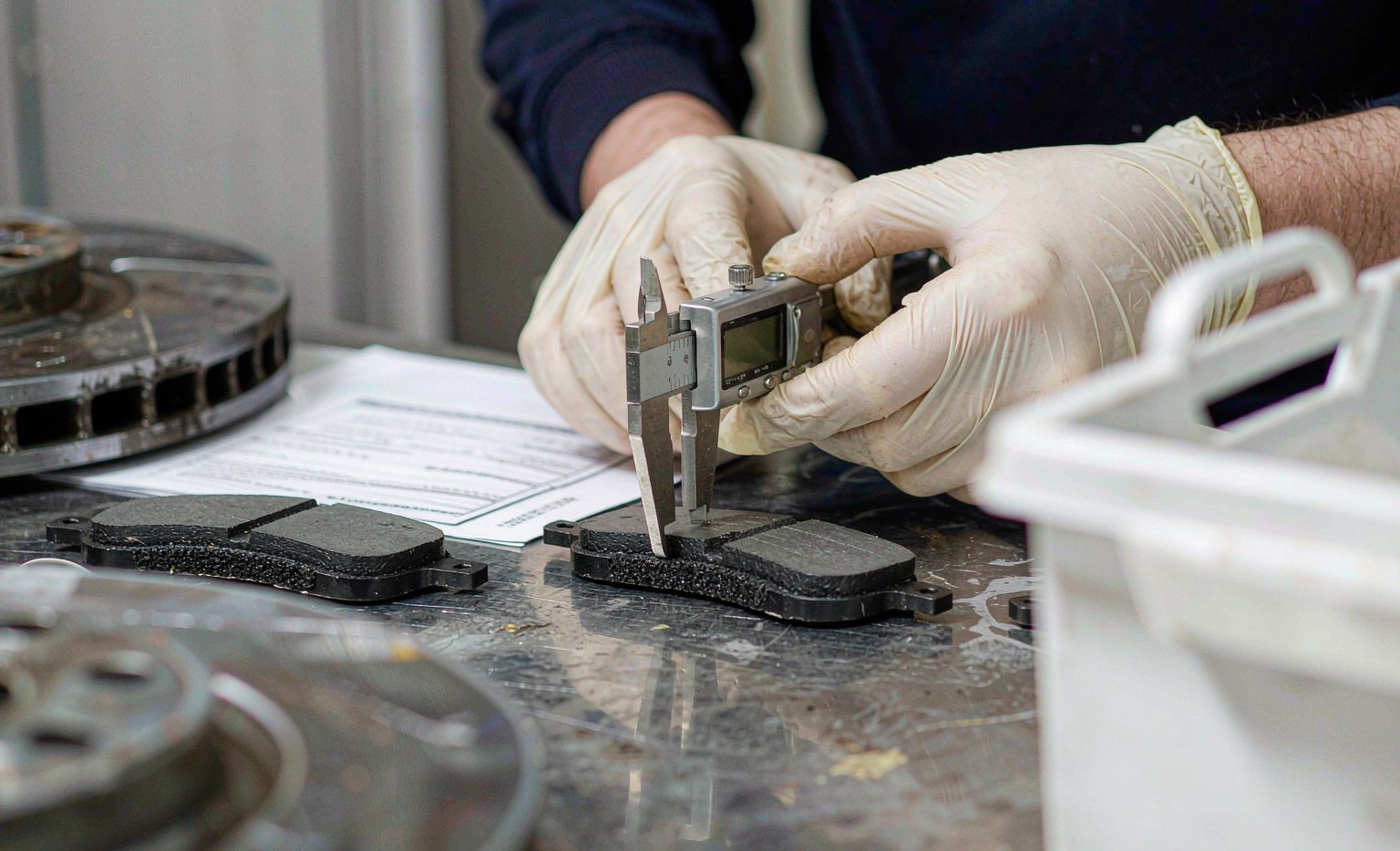
Thinner friction, cheaper mix. A pad ground to 7.5 mm instead of 9 mm saves compound and looks identical in a photograph. Service life falls by roughly the same proportion, and your customer finds out in eight months rather than eight days. Defence: state pad thickness and mix grade in the proforma invoice, then check the first shipment with a caliper.
Thinner plate, missing shim. Backing plate gauge dropping from 1.5 mm to 1.2 mm, or a shim quietly dropped from the assembly, saves visible steel and less visible noise control. Defence: name the plate gauge, the shim type and whether anti-squeal coating is applied, then sign off a first-article sample against those values.
Certificates that do not cover the SKU. A friction approval is issued for a product family and a formulation, not for a factory in general, so forty applications are not covered by one test report. Defence: ask for the approval number and its application list, then match your OE list against it. Our guide to verifying suppliers by certificate and audit turns that into a checklist.
The Counter-Offer Script: Six Questions
Most buyers lose the negotiation in the first email by naming a number without a reason. A number with a reason is a proposal; a number alone invites silence or a quiet downgrade.
Before naming anything, get six answers in writing. Which friction mix code and pad thickness is this price built on? What is the backing plate gauge and shim specification? What happens to price and lead time at 600 sets instead of 200? What is the price on a 50 percent deposit? Which references ship from your Guangzhou warehouse and which need a production run? How long does the quotation hold?
Those answers give you a baseline comparable across suppliers, plus a cost model that shows which concession to spend. A supplier who answers all six has stock visibility and its own tooling; one who answers two is a trader, and the price should reflect it. Then name your target: 5 to 7 percent under the settled Canton Fair band, attached to something you are giving — a doubled first order, a 50 percent deposit, a two-month delivery window, plain packing. Ask for 15 percent with nothing attached and the reply is a discount on paper plus a thinner pad in the carton.
Timing Your Close: Phases, Validity and Production Slots
The calendar does more work than most buyers realise. Phase 1 ended on 19 October, the second changeover runs 28–30 October around Phase 2, and the fair closes on 4 November after Phase 3. Those dates do not touch auto parts supply directly, but they shape attention: until 4 November every supplier you met is handling two other categories and a stream of new enquiries, and the buyer who writes within five working days keeps the top of the file.
Quotation validity is the practical clock. Most sheets in your folder carry 15 or 30 days, which puts the decision in mid-November. Confirm by then and you get a production slot that ships before the February holiday; confirm in December and the price holds while the ship date slips — a difference in landed cost that usually exceeds the discount you were arguing over.
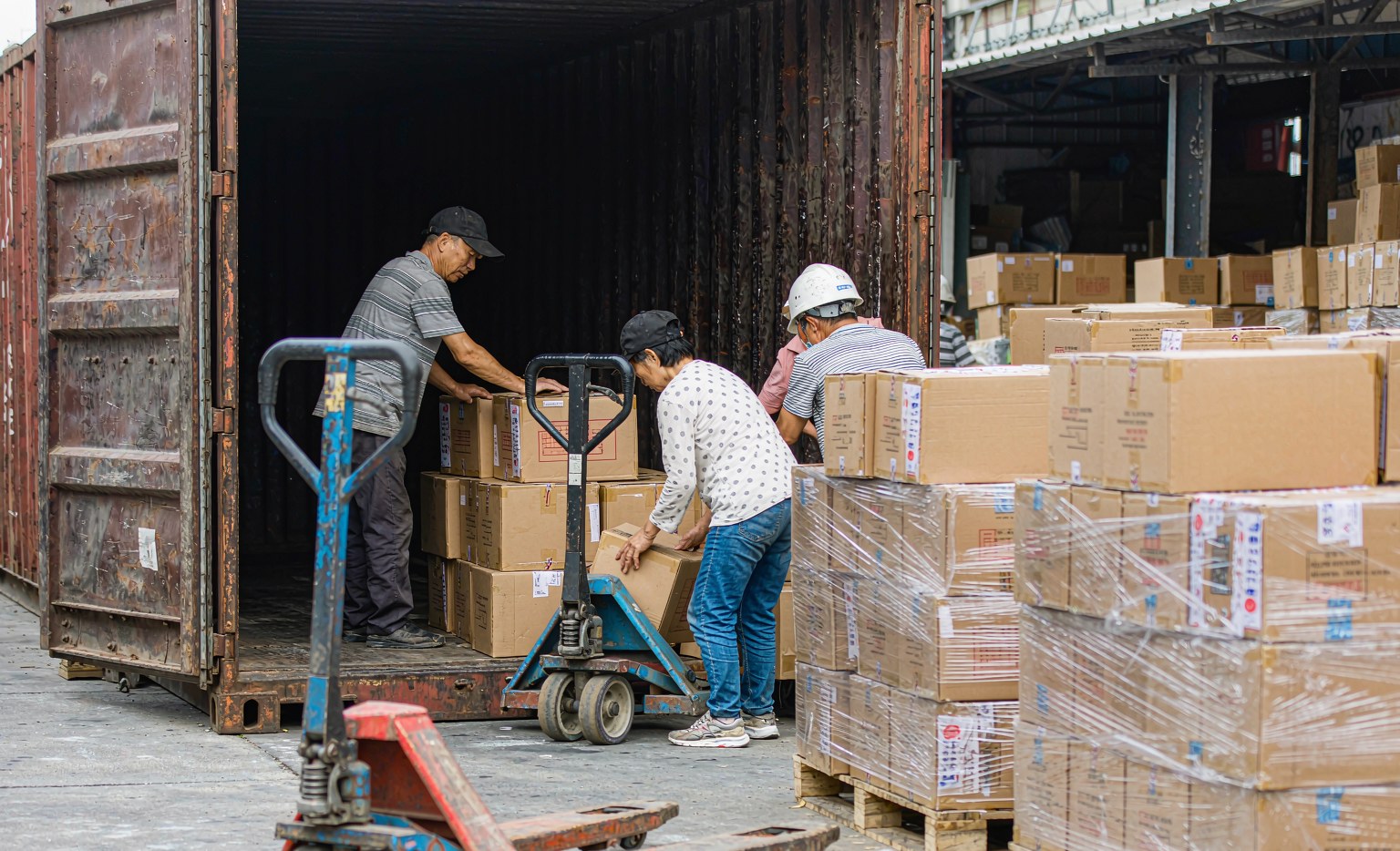
Two habits make the timing work. Follow up every three working days with one new piece of information — a revised quantity, an added application, a packaging decision — because a message that adds something gets answered. And once the price is agreed, ask for the loading plan: carton counts, pallet heights and container fill decide freight per unit.
Frequently Asked Questions
How much discount is realistic on auto parts at Canton Fair?
For commodity categories — brake pads, filters, hardware, common chassis parts — 3 to 8 percent off the first written quote is normal once volume, packing and payment terms are settled. Precision and electronic parts move 1 to 4 percent. Above 12 percent usually signals a specification change.
Should I negotiate at the booth or after the fair?
After. The booth quote is a show price held back for comparison shopping, and the salesperson cannot check stock or call the plant. Write within five working days of leaving Pazhou with your volume and payment structure.
What MOQ should I expect for brake and suspension parts from China?
Brake pads usually quote 100–500 sets per part number, discs 100–300 pieces, calipers 50–200 units, and suspension items 100–300 pieces.
Which payment term gets the lowest price?
50/50 T/T, at 0.5 to 1.5 percent below the standard 30/70 without the working-capital penalty of credit. L/C at sight adds 1 to 2.5 percent; 60-day credit adds 2 to 3.5 percent.
Can I get a lower price by accepting a longer lead time?
Yes, usually 1 to 3 percent, because the factory can slot your run into a quieter week instead of interrupting a peak line. Spend that concession before touching the friction specification.
Are auto parts cheaper at Canton Fair than on sourcing platforms?
Not automatically. The fair gives face-to-face verification and a faster read on who owns tooling; platforms give price transparency with less certainty about the factory behind them. The pattern we recommend is in our comparison of fair and online sourcing.
If you want a second price on a specific application list before replying to a supplier, send the OE references. We quote brake, chassis and engine parts for Toyota, Hyundai and Kia platforms from verified Guangzhou suppliers and will tell you which line of your quotation has room. Write to Mr Didi at ucars@global-ucars.com, message WhatsApp +86 133 0240 8528, or use the contact form; our Baiyun office is a short drive from Pazhou. Price bands are listed in the auto parts catalogue, and the parts finder works by brand, model and system.
Related Articles
Related Products
From our export catalog — parts and vehicles ready for international delivery

Suspension Kit
Complete Suspension Rebuild Kit – Hyundai Tucson / Kia Sportage (Front Axle)
$65.00 - $130.00
View Details
Tie Rod Kit
Steering Rack Inner & Outer Tie Rod Kit – Hyundai Tucson / Kia Sportage
$22.00 - $45.00
View Details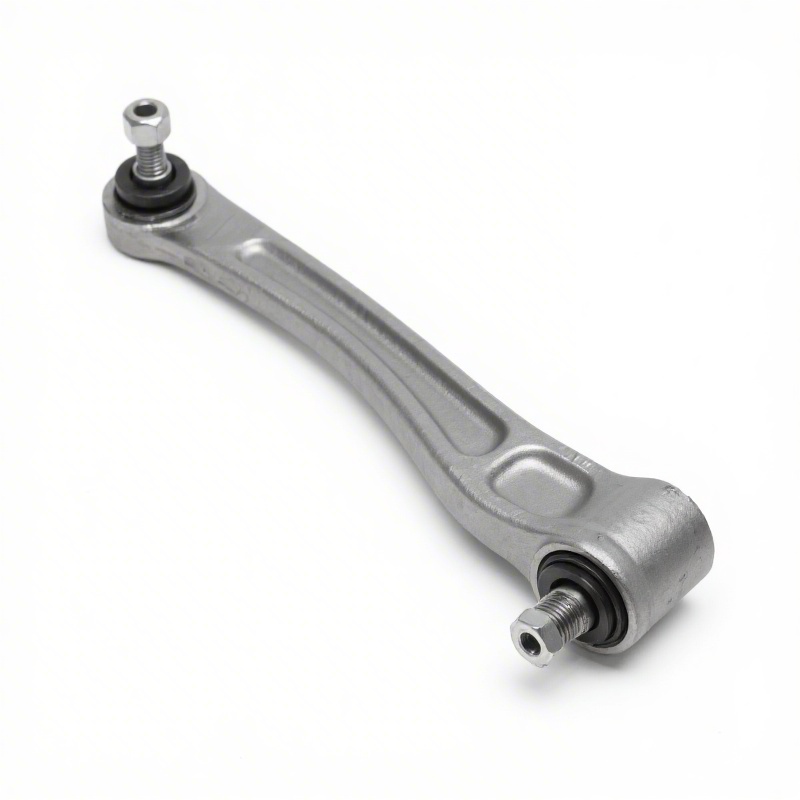
Control Arm
Front Lower Control Arm Complete Assembly – Hyundai Santa Fe / Kia Sorento (4WD)
$22.00 - $50.00
View Details