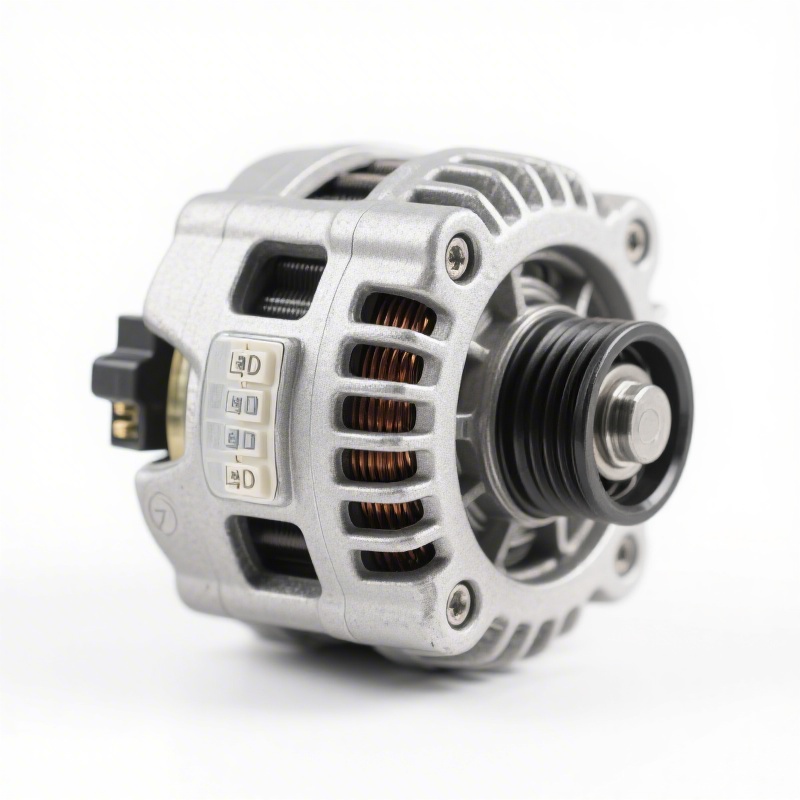
Alternators and starter motors are the two highest-replacement-rate electrical components in vehicles operating in Africa, the Middle East, and Central Asia. Industry data from 120 workshops across Nigeria, Kenya, UAE, and Kazakhstan shows that alternators in hot-climate markets fail at 45,000-60,000 km — roughly 40% earlier than the 80,000-100,000 km average in temperate regions. Starter motors in dusty environments average 55,000-70,000 km before replacement. For importers and distributors, these two components represent 18-22% of total electrical parts revenue, making them essential stock items for any serious auto parts business.
Current FOB pricing (July 2026): Alternators from US $68/unit (Toyota 1.8L) to US $145/unit (Hyundai 2.4L Theta II). Starter motors from US $38/unit (Toyota 1.6L) to US $92/unit (Kia 2.0L Nu). MOQ: 10 pieces per SKU, mixed orders from 50 total units. Contact Kingmay Auto Parts: ku@kingmay-autoparts.com or WhatsApp +86 13302408528.
Why Alternators and Starter Motors Fail First in Hot-Climate Markets
Three environmental factors accelerate alternator and starter motor degradation in Africa, the Middle East, and Central Asia — and none of them are addressed by the design specifications written for European or Japanese operating conditions:
- Continuous high ambient temperature: Alternator output drops 8-12% at 45 degrees Celsius ambient versus 25 degrees Celsius. The stator winding insulation (Class H, 180 degrees Celsius rated) degrades faster when operating near its thermal limit for extended periods. In Saudi Arabia and UAE, alternators routinely operate at 110-130 degrees Celsius internal temperature during summer — a range where bearing grease viscosity drops 60%, accelerating bearing wear. Gulf coastal markets (Jeddah, Dubai, Muscat) add salt-laden humidity that corrodes slip rings and brush holders.
- Dust ingress into starter motor solenoids: Dust particles smaller than 50 microns penetrate starter solenoid contacts and commutator segments. In Sahel-zone markets (Nigeria, Ghana, Sudan) and Central Asian steppe regions (Kazakhstan, Uzbekistan), PM10 dust concentrations routinely exceed 150 micrograms per cubic meter — three times the WHO guideline. Dust accumulation on starter commutators causes intermittent contact resistance, leading to sluggish cranking and eventual solenoid contact burnout.
- Electrical load overload: Many vehicles in African and Middle East markets carry aftermarket accessories (additional lights, phone chargers, sound systems) that push total electrical demand beyond the alternator's rated capacity. A 90A alternator supplying 78-85A continuous load operates at 87-94% capacity, with insufficient margin for transient surges. Chronic overloading is the primary cause of diode rectifier failure — the most common alternator failure mode in these markets.
| Failure Mode | Temperate Climate Avg. | Hot-Climate Avg. | Degradation Factor |
|---|---|---|---|
| Alternator bearing failure | 95,000 km | 52,000 km | -45% |
| Diode rectifier burnout | 80,000 km | 45,000 km | -44% |
| Slip ring corrosion (coastal) | Rare | 38,000 km | Salt-specific |
| Starter solenoid contact burn | 85,000 km | 58,000 km | -32% |
| Starter commutator dust wear | Rare | 55,000 km | Dust-specific |
OE Part Numbers and FOB Pricing for Toyota, Hyundai & Kia
Below is a consolidated OE cross-reference table for the most commonly replaced alternators and starter motors in Toyota, Hyundai, and Kia vehicles. All FOB prices are quoted at Guangzhou Nansha Port, MOQ 10 pieces per SKU, mixed orders from 50 total units through Kingmay Auto Parts.
OE number verification tip: Always cross-reference with the vehicle's specific model year and engine code. Toyota 1ZR-FE (1.6L) and 2ZR-FE (1.8L) Corolla use different alternators despite sharing the same body. Hyundai Theta II 2.0T and 2.4 naturally aspirated use different starter motor specifications. Kingmay provides OE number matching verification within 24 hours of inquiry.
| OE Number | Application | Spec | FOB Price |
|---|---|---|---|
| Alternators | |||
| 27060-0D090 | Toyota Corolla 1.6L 1ZR-FE | 90A / 12V | $68 |
| 27060-22080 | Toyota Corolla 1.8L 2ZR-FE | 100A / 12V | $82 |
| 27060-31110 | Toyota Hilux 2.4L 2TR-FE | 80A / 12V | $95 |
| 27060-28160 | Toyota Land Cruiser Prado 2.8L diesel | 150A / 12V | $142 |
| 37300-2B200 | Hyundai Elantra 1.6L Gamma | 90A / 12V | $72 |
| 37300-2B300 | Hyundai Sonata 2.0L Nu | 110A / 12V | $98 |
| 37300-2C000 | Hyundai Tucson 2.0L Nu | 110A / 12V | $98 |
| 37300-2F200 | Hyundai Santa Fe 2.4L Theta II | 125A / 12V | $145 |
| 37300-4A000 | Kia Sportage 2.0L Nu | 110A / 12V | $98 |
| Starter Motors | |||
| 28100-0D130 | Toyota Corolla 1.6L 1ZR-FE | 1.2 kW / 12V | $38 |
| 28100-22060 | Toyota Corolla 1.8L 2ZR-FE | 1.4 kW / 12V | $44 |
| 28100-64310 | Toyota Hilux 2.4L diesel | 2.0 kW / 12V | $82 |
| 28100-68170 | Toyota Land Cruiser Prado 2.8L diesel | 2.5 kW / 12V | $92 |
| 36100-2B100 | Hyundai Elantra 1.6L Gamma | 1.2 kW / 12V | $42 |
| 36100-2B200 | Hyundai Sonata 2.0L Nu | 1.4 kW / 12V | $52 |
| 36100-2C200 | Hyundai Tucson 2.0L Nu | 1.4 kW / 12V | $52 |
| 36100-4A300 | Kia Sportage 2.0L Nu | 1.4 kW / 12V | $52 |
| 36100-2F000 | Hyundai Santa Fe 2.4L Theta II | 1.6 kW / 12V | $68 |
| 36100-4A100 | Kia Seltos 1.6L Gamma | 1.2 kW / 12V | $42 |
Alternator Failure Diagnosis: Heat, Dust and Electrical Load
Alternator failures in hot-climate markets present a distinct pattern from temperate-region failures. Understanding these patterns helps importers advise their workshop clients and reduce warranty claim rates:
| Symptom | Root Cause | Market Context | Verification |
|---|---|---|---|
| Battery not charging (voltage below 13.5V at 2,000 rpm) | Rectifier diode burnout | Overloaded electrical circuit (aftermarket accessories exceed alternator rating) | Diode test: forward resistance 6-8 ohms, reverse resistance infinite. Failed diode shows low resistance in both directions. |
| Loud whining or grinding noise from alternator | Bearing failure (front or rear) | Heat degrades bearing grease; salt humidity corrods bearing races in coastal markets | Spin test: free-spinning rotor with no lateral play. Failed bearing shows axial play greater than 0.15mm. |
| Intermittent charge (voltage fluctuates 12-14.5V) | Slip ring oxidation or brush wear | Salt-laden air in Gulf coastal cities oxidizes copper slip rings within 18-24 months | Visual inspection: slip ring surface should be smooth and uniform. Oxidized rings show pitted, discolored surface. |
| Overcharge (voltage above 15.5V at idle) | Voltage regulator failure | Integrated regulators in compact alternators are thermally sensitive; heat degrades the IC voltage reference | Regulator bench test: output should stabilize at 13.8-14.4V across load range. Failed regulator outputs unregulated voltage. |
PAA FAQ: How long does an alternator last in the Middle East?
An alternator in the Middle East typically lasts 40,000-55,000 km versus 80,000-100,000 km in temperate climates. The three primary degradation factors are: (1) ambient temperatures exceeding 45 degrees Celsius, which reduce bearing grease viscosity by 60% and push internal temperatures to 130+ degrees Celsius; (2) salt-laden coastal air that corrodes slip rings and brush holders in Gulf cities (Dubai, Jeddah, Muscat); and (3) aftermarket electrical accessories that overload the alternator beyond rated capacity. Importers should stock alternators at 1.5-2x the temperate-climate replacement rate for these markets.
Starter Motor Failure Patterns and Replacement Intervals
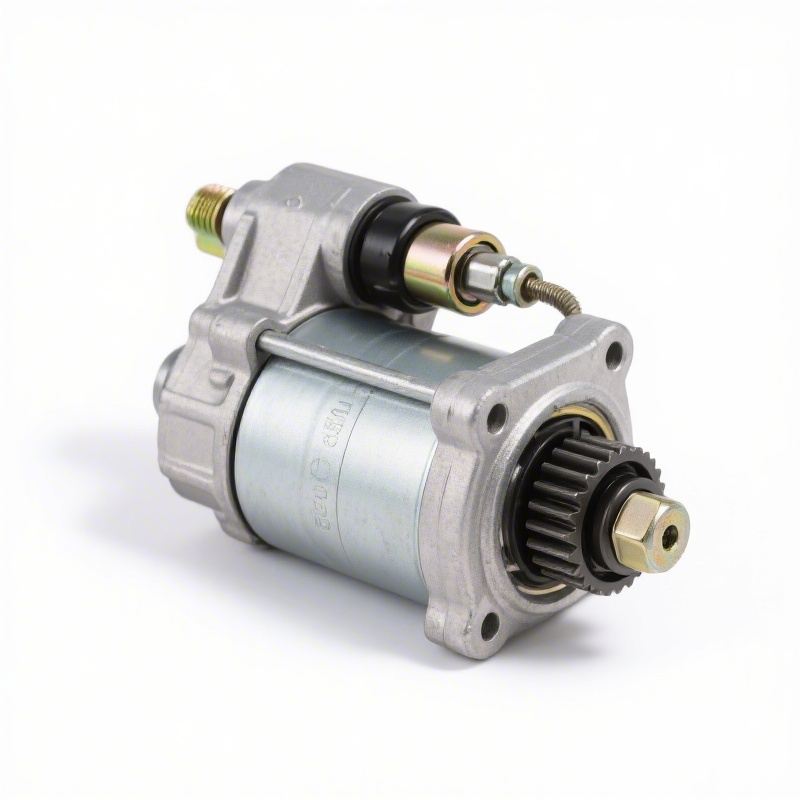
Starter motor failures in Africa and the Middle East follow two primary patterns that differ from temperate-climate failures:
- Dust-induced solenoid contact burnout: Fine dust particles (PM10, under 50 microns) infiltrate the solenoid housing through the bendix drive opening. The dust accumulates on the copper contact disc and terminal studs, creating localized resistance points. Each engagement cycle burns the dust layer, progressively reducing contact area. Symptoms begin as sluggish cranking (3-5 second delay before engine turns), progressing to intermittent no-crank conditions. In Nigeria's Sahel zone and Kazakhstan's steppe regions, this failure pattern accounts for approximately 55-60% of starter motor replacements.
- Commutator segment wear from abrasive dust: Dust particles entering through the starter's open-frame design (common on economy-grade starters) embed in the brush-commutator interface. The abrasive action wears commutator segments unevenly, creating high-resistance paths. The starter draws progressively higher current — from a normal 150-250A to 300-400A — until the solenoid contacts or battery cables fail from overcurrent. This cascade failure is the second most common pattern, accounting for approximately 25-30% of replacements.
- Thermal degradation of solenoid coil insulation: In markets where vehicles are parked in direct sunlight (surface temperatures reaching 70-80 degrees Celsius on the starter housing), solenoid coil insulation softens and shifts. Repeated cold-start cycles (starting an engine that has been sitting overnight at 10-15 degrees Celsius, then heating rapidly to 90+ degrees Celsius within 30 seconds) creates thermal cycling stress on the coil winding. This pattern accounts for 10-15% of starter motor failures in desert markets.
Distributor stocking recommendation: For every 100 vehicles in your target market, stock 2.5-3 alternators and 2 starter motors per year. In Nigeria and Kenya (high dust + heat), increase to 3.5 alternators and 2.5 starter motors. In UAE/Gulf coastal (salt + heat), stock 3 alternators with emphasis on slip ring corrosion-resistant units and 2 starter motors per 100 vehicles.
Regional Demand Analysis: Africa, Middle East & Central Asia
The alternator and starter motor import market is segmented by vehicle fleet composition, climate conditions, and import duty structures. Below is a demand analysis table for the five key regions Kingmay Auto Parts serves:
| Region | Dominant Fleet | Alt. Failure Rate | Starter Failure Rate | Import Duty | Top OE Numbers |
|---|---|---|---|---|---|
| Nigeria / West Africa | Toyota Corolla/Hilux, Hyundai Elantra | 50,000 km avg. | 60,000 km avg. | 5-20% (auto parts) | 27060-0D090, 28100-0D130, 37300-2B200 |
| Kenya / East Africa | Toyota Hilux/Prado, Hyundai Tucson | 55,000 km avg. | 65,000 km avg. | 25% (EAC CET) | 27060-31110, 28100-64310, 37300-2C000 |
| UAE / Gulf Coast | Toyota Land Cruiser, Hyundai Sonata/Santa Fe | 42,000 km (coastal salt) | 55,000 km | 5% (GCC unified) | 27060-28160, 37300-2F200, 37300-2B300 |
| Saudi Arabia (inland) | Toyota Hilux/Land Cruiser, Kia Sportage | 48,000 km (heat only) | 60,000 km | 5% (GCC unified) | 27060-31110, 37300-4A000 |
| Kazakhstan / Central Asia | Hyundai Elantra/Sonata, Kia Sportage/Seltos | 60,000 km avg. | 70,000 km avg. | 0-15% (EAEU) | 37300-2B200, 36100-4A100 |
PAA FAQ: What is the import duty for alternators and starter motors in Nigeria?
Auto parts classified under HS 8511.40 (starter motors) and HS 8511.80 (alternators) face a 5-20% import duty in Nigeria, depending on the specific classification within the ECOWAS CET tariff bands. The ECOWAS Common External Tariff has four bands: 0% (essential goods), 5% (raw materials and capital goods), 10% (intermediate goods), and 20% (finished goods). Alternators and starter motors typically fall in the 5% or 10% band when imported as individual replacement parts, but some Nigerian ports apply the 20% band for packaged assemblies. Always verify the exact classification with your clearing agent before shipment.
Quality Verification and Sourcing Checklist
When sourcing alternators and starter motors from Chinese suppliers, apply this verification checklist before committing to a bulk order. Electrical components are the most frequently counterfeited auto parts category — the global counterfeit auto parts market is estimated at USD 12 billion annually (AASA 2025 report), with alternators and starter motors representing 8-10% of counterfeit volume.
- Output test at rated load: Alternator must deliver rated amperage (90A, 100A, 110A, 125A, or 150A as specified) at 2,000 rpm engine speed with 13.8V regulated output. Deviation greater than 5% below rated output is a reject condition.
- Starter motor torque test: Starter must deliver rated torque (1.2 kW, 1.4 kW, 1.6 kW, 2.0 kW, or 2.5 kW as specified) at 12V supply voltage with minimum 150A locked-rotor current. Current draw exceeding rated specification by more than 15% indicates internal short circuit or commutator fault.
- Bearing specification for alternators: Demand NSK, NTN, or SKF brand bearings. Generic bearings fail 2-3x faster under hot-climate operating conditions. Kingmay specifies NSK 6203-2RSC3 (front) and NTN 6303-2RSC3 (rear) for all alternator assemblies.
- Solenoid contact material for starter motors: Copper-silver alloy contacts (AgCu10) resist dust-induced pitting 3-4x longer than pure copper contacts. Verify the contact material specification with the supplier before ordering for dust-heavy markets.
- Heat soak test: Run the alternator at full rated output for 4 hours at 85 degrees Celsius ambient simulation. Voltage regulation must remain within 13.8-14.4V throughout. This test catches 70% of regulator failures before they reach the customer.
- Dust ingress resistance rating: Starter motors for dusty markets should carry at minimum IP54 ingress protection rating. Economy-grade starters typically have no IP rating — the open-frame design allows direct dust access to the commutator and solenoid.
Kingmay quality guarantee: All alternators and starter motors supplied by Kingmay Auto Parts undergo 100% bench testing before shipment — output test, torque test, regulated voltage test, and visual inspection. We use NSK/NTN bearings in alternators and AgCu10 copper-silver alloy contacts in starter motors. Every unit ships with a test report documenting measured output and voltage regulation. View Kingmay quality standards →
PAA FAQ: How to verify alternator quality before importing from China?
Request three documents from any Chinese alternator supplier: (1) Bench test report showing measured output amperage and regulated voltage at 2,000 rpm rated load — a legitimate supplier provides this within 48 hours; (2) Bearing brand declaration — NSK, NTN, or SKF for hot-climate markets, with the specific model number stamped on the bearing housing; (3) Material certificate for stator winding insulation class (Class H, 180 degrees Celsius rated minimum for hot climates). If a supplier cannot produce these within 48 hours, they likely do not have them. Order a sample lot (3-5 units) and test independently at a third-party lab (SGS or Bureau Veritas, USD 200-300 per unit) before committing to a full container.
Browse Alternator & Starter Motor Inventory →
Request Alternator & Starter Motor Wholesale Quote →
Kingmay Auto Parts — OEM-grade alternators and starter motors wholesale from China. Serving distributors in 50+ countries with IATF 16949-certified quality. Contact Miss UU: ku@kingmay-autoparts.com, +86 13302408528, Shop 7# No.1542 Guangyuan East Road, Yuexiu District, Guangzhou.
Verify Part Numbers in Our OE Library
Every part covered in this guide has a matching OE number in our reference library — grouped by system with cross-references, so you can source the exact fit for Hyundai, Kia, GM Korea and more.
Related Articles
Related Products
From our Electrical System catalog — 4 products ready for export