1. The 60-Second Pre-Departure Canton Fair Buyer Checklist: Documents, Devices & Tools
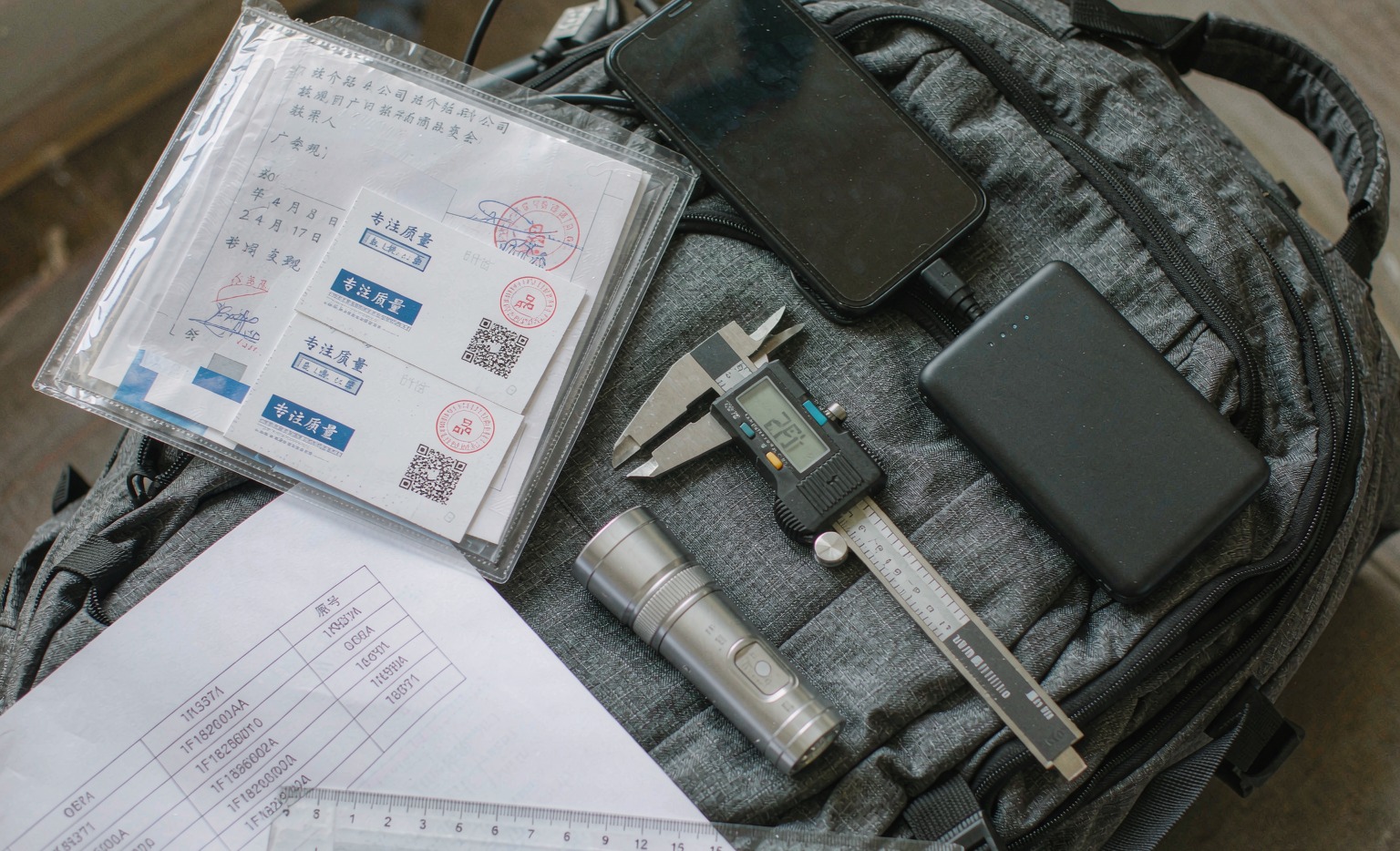
First-time Canton Fair buyers tend to over-pack clothes and under-pack the few documents that actually matter at the gate. The fair's online buyer registration system takes roughly five minutes to fill in from a laptop and saves 30 to 45 minutes of queue time at the on-site badge counter on Day 1. Beyond the badge, this Canton Fair buyer checklist splits into five carry-on groups: documents, devices, measurement tools, sample references, and the social layer. Documents include the buyer badge, the printed invitation letter, business cards in English and Chinese, a tax registration document if you intend to issue a formal purchase order, and a packing list template from your home freight forwarder. Pack these in a single clear plastic folder that sits on top of your bag. Buyers who skip any of these items at the gate lose the next 90 minutes to logistics that should have been a 30-second exchange.
Table 1 — Five-group carry-on kit (22 items)
| Group | Item | Why it matters |
|---|---|---|
| Documents | Buyer badge + invitation letter (printed) | Gate entry; second checkpoint |
| Documents | Passport + 2 spare passport photos | Last-minute M-visa renewal |
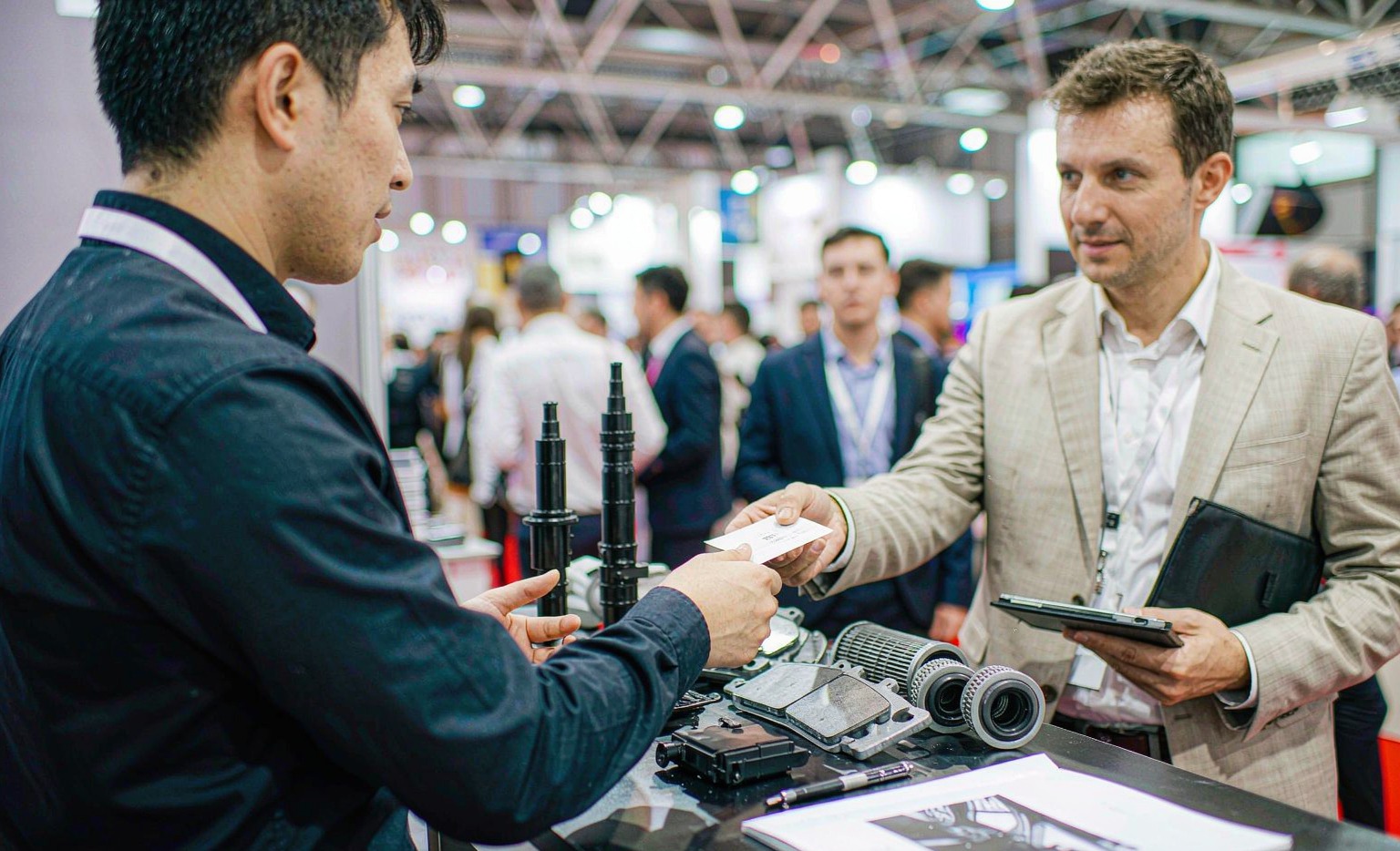
| Documents | Business cards (English + Chinese) | Suppliers ask for different languages |
| Documents | Tax ID + import license number | Formal PO processing |
| Documents | Packing list template | On-the-spot HS codes / carton dims |
| Devices | Phone with China data roaming (5-8 USD/day) | Maps, voice memos, supplier contact |
| Devices | Power bank 10,000 mAh | Day 5 by 16:00 phones are flat |
| Devices | HDMI tablet (optional) | CAD drawing review at mould-makers |
| Measure | Digital calliper 0.01 mm | Spot-check moulded parts in 20 min |
| Measure | Small torch | Inspect casting interiors |
| Measure | 1-metre rigid ruler | Carton dimension verification |
| Samples | Printed OE reference sheet (A4) | Year + engine code + market |
| Samples | Counter-sample pickup labels | DHL/FedEx return shipment |
| Social | Alipay / WeChat Pay installed | Small sample fee settlement |
| Social | Bank wire reference (SWIFT/BIC) | Formal PO payment |
| Backup | Spare phone charger + cable | China uses Type A/I; bring adapter |
| Backup | Notebook + pen | WiFi drops happen; paper survives |
| Backup | Booth-route map (printed) | Don't trust phone battery on Day 1 |
| Backup | Hotel address in Chinese characters | Taxi driver rarely reads English |
| Backup | Emergency contact list (local + home) | Lost phone / medical event |
| Backup | Reusable water bottle | 5-day fair = ~ 10 bottles saved |
| Backup | Comfortable walking shoes | 15,000 to 20,000 steps per day |
2. Documents and Devices: What Senior Buyers Carry That Newcomers Forget
Senior Canton Fair auto parts buyers run a tighter kit than tourists because the conversation inside a booth is short, technical and reversible only on the spot. The kit splits into five small groups. First, documents: buyer badge, invitation letter, two passport photos (for last-minute Chinese visa renewals if your trip extends), tax ID, business cards, and your home country's import license number if your jurisdiction requires one for HS-coded goods. Second, devices: a phone with Chinese data roaming activated before departure (5 to 8 USD per day for most plans, well below local SIM cost and zero registration friction), a small power bank, and an HDMI-capable tablet if you expect suppliers to show CAD drawings of moulded parts. Third, measurement tools: a digital calliper accurate to 0.01 mm (most Chinese mould-makers carry one, but if you want to spot-check the unit a buyer brought, you save 20 minutes per booth), a small torch for inspecting interior surfaces of castings, and a 1-metre rigid ruler for cartons. Fourth, sample reference: if you are sourcing to fit a specific OE reference, print the OE number on a single A4 sheet along with the vehicle's year, engine code and market (GCC, EU, LATAM). Suppliers cross-reference much faster with this than with a verbal description. Fifth, the social layer: a Chinese payment app installed on your phone if you intend to settle small sample fees by Alipay or WeChat Pay; most major booths accept it but the formal contract still runs on a bank wire.
3. Pre-Fair Online Work: Filter Exhibitors by OE Number, Category & Country
Phase 1 of the 140th Canton Fair (Oct 15-19, 2026) hosts roughly 20,000 booths across the Pazhou complex. Walking all of them in five days is impossible, which is why the week before departure is the most productive hour of the entire trip. Two free tools cut that workload by 80 percent. First, the official cantonfair.org.cn exhibitor search lets you filter by product category (Vehicle and Auto Parts is category 4 under Mechanical & Hardware), by country of origin (China), and by hall number once you know the hall layout. Save the resulting CSV and sort it by booth number to plan a walking route that does not backtrack. Second, your own OEM parts database: pre-load the OE numbers you intend to source (typically 5 to 15 references from a real procurement list) and email them to five shortlisted suppliers a week before the fair. Their replies by Day 1 will tell you which suppliers actually hold stock for your reference versus which ones will quote on the spot. The third free tool, often overlooked, is the Globalucar OE Lookup on global-ucars.com: it returns cross-references across 12,000+ OE numbers with FOB Guangzhou indicative price ranges. Use it to set a walk-away price before you enter the booth, not after.
4. Day-1 In-Booth Negotiation: Six Questions to Ask Brake Pad Suppliers
Brake pads and rotors are the highest-traffic category at Phase 1. The walk-in question every booth hears is "what's your best price on a Toyota Camry 2018 front pad set". The question that separates serious buyers from walk-ins is what comes next. The six-question test for any brake pad supplier, in the order they should be asked: 1) What is the friction material grade — semi-metallic, low-metallic, ceramic, or NAO? Most will answer low-metallic because it is the default Chinese aftermarket grade. The serious ones will name the brand of formula (Bosch-equivalent, ATE-equivalent, Ferodo-equivalent) and quote an ECE R90 code. 2) What is the minimum order quantity for a custom-formula run versus the catalogue item? Custom MOQ is typically 1,000 to 3,000 sets; catalogue item MOQ is typically 200 to 500 sets. 3) What is the lead time from PO to EXW — 15, 25, or 35 days? Anything above 35 days means the supplier is relaying your order to a sister factory. 4) What testing reports can you show me on the booth? ECE R90 is the European legal minimum; for GCC markets, SASO 1173 is required; for North America, the FMSI code and a copy of the friction material data sheet. 5) Do you have a copy of the IATF 16949 certificate valid through 2027? If yes, ask which certification body issued it (BSI, TUV, SGS are credible; small Chinese-issued bodies are not). 6) Can you take a counter-sample today and ship it by DHL to my office for fitment verification before I sign the PO? A serious supplier will say yes within 30 seconds. The ones who hedge on the counter-sample are the ones you cross off the list.
Table 2 — Six questions per auto parts category (PAA negotiation playbook)
| Category | Question 1 (Spec) | Question 2 (MOQ) | Question 3 (Lead time) | Question 4 (Cert) | Question 5 (Process cert) | Question 6 (Sample) |
|---|---|---|---|---|---|---|
| Brake pads & rotors | Friction grade + ECE R90 code | 1,000-3,000 sets custom / 200-500 catalogue | 15-25 days EXW | ECE R90 / SASO 1173 / FMSI | IATF 16949 (BSI/TUV/SGS) | DHL counter-sample in 7 days |
| Oil / air / fuel filters | Thread size + media + ADB valve | 500 catalogue / 100 OEM replacement | 7-15 days catalogue / 25-30 custom | ISO 4548 / ISO 5011 | IATF 16949 | 5-piece sample set in 5 days |
| Suspension & steering | Dimensional tolerance band (+/- 0.5 mm max) | 200-500 pieces per OE reference | 30-45 days | ECE R13 / ECE R13-H / GOST R | IATF 16949 | CAD + dimensional report instead of physical sample |
| Cooling (radiator/condenser) | Core material + tank material | 100-300 pieces per part number | 20-35 days | ECE R118 (fire behaviour) | IATF 16949 | 1-piece sample + pressure test cert |
| Ignition coils & sensors | VIN-decoded cross-reference table | 300-1,000 pieces per OE reference | 20-30 days | ECE R10 (EMC) / ECE R7 (lighting) | IATF 16949 | Connector / harness inspection sample |
| Electrical (ECU / modules) | Firmware version + CAN protocol | 50-200 pieces (high unit cost) | 35-60 days | ECE R10 + ECE R118 | IATF 16949 + ISO 26262 (functional safety) | Return-to-bench test report only; no physical sample |
5. The Filter and Lubricant Stall Playbook: MOQ, Lead Time and Compliance Docs
Oil filters, air filters and fuel filters are easier to source at Canton Fair than brake pads because the SKUs are more standardised, but they have a hidden compliance dimension that catches first-time buyers. The visible stall signage at Phase 1 concentrates on price per unit, but the questions you must ask sit one level below. For oil filters, the four binding specs are: thread size (M20x1.5, M22x1.5, 3/4-16 UNF are the three dominant Asian sizes), gasket diameter, bypass valve setting (typically 0.8 to 1.0 bar), and anti-drainback valve presence. A Chinese aftermarket filter without an anti-drainback valve is cheaper and will leak on cold start, which is why serious fleet buyers will not touch it. For air filters, the binding spec is the media: cellulose (12-month replacement cycle), synthetic (24-month), and HEPA-grade (36-month). Most Canton Fair stalls will quote cellulose media unless you ask. For fuel filters, diesel vs gasoline matters — diesel filters carry a water separation stage at 50 to 100 micron that gasoline filters do not. The MOQ for filters is consistently lower than for brake pads: 500 pieces for catalogue SKUs, dropping to 100 pieces for end-of-line OEM replacements. Lead time is 7 to 15 days for catalogue, 25 to 30 days for custom-branded.
Table 3 — Filter category MOQ, lead time and unit price band
| Filter type | Dominant Asian spec | Catalogue MOQ | Custom MOQ | Lead time (catalogue) | Lead time (custom) | Indicative FOB Guangzhou unit price |
|---|---|---|---|---|---|---|
| Oil filter (spin-on) | M20x1.5 / M22x1.5 / 3/4-16 UNF | 500 pcs | 2,000 pcs | 7-12 days | 20-25 days | USD 0.55-2.20 |
| Oil filter (cartridge) | Housing-specific (no universal thread) | 500 pcs | 2,000 pcs | 10-15 days | 25-30 days | USD 0.85-3.50 |
| Air filter (panel) | Cellulose / synthetic / HEPA media | 500 pcs | 2,000 pcs | 7-12 days | 20-25 days | USD 0.95-4.20 |
| Air filter (round) | Cellulose media (default) | 300 pcs | 1,500 pcs | 7-12 days | 20-25 days | USD 1.20-3.80 |
| Fuel filter (gasoline) | Inline 6/8 mm barb | 300 pcs | 1,500 pcs | 7-12 days | 20-25 days | USD 1.40-4.50 |
| Fuel filter (diesel) | Inline with water separation stage | 200 pcs | 1,000 pcs | 10-15 days | 25-30 days | USD 3.20-9.50 |
| Cabin filter (HEPA optional) | Carbon layer optional | 500 pcs | 2,000 pcs | 7-12 days | 20-25 days | USD 1.05-3.20 |
6. Suspension and Steering: What Is Sampleable, What Is Not
Suspension and steering parts — control arms, ball joints, tie rod ends, shock absorbers, struts, stabiliser links — sit in a different negotiation mode than filters and pads because the unit cost is higher and the safety margin is thinner. Two facts that change the conversation. First, almost no Chinese aftermarket suspension supplier will ship a counter-sample of a strut assembly, because the unit cost is 35 to 80 USD and the dimensional verification requires a vehicle on a lift. Instead, they will quote from a CAD drawing and a factory-side dimensional report. The CAD report must show the OE reference, the OE-equivalent part number on their side, and the dimensional tolerance band; if the tolerance band is wider than +/- 0.5 mm on a load-bearing surface, walk away. Second, ECE R90 does not cover suspension parts; the binding compliance document is ECE R13 or ECE R13-H for brake-related suspension, and ISO/TS 16949 / IATF 16949 for the production process. For GCC markets, SASO 1177 is the equivalent; for the Russian and CIS markets, GOST R certification is non-negotiable. Suppliers who claim "we can do all certs" are usually not the ones with the strongest certs. Ask for the certificate number and verify it on the issuing body's website before paying the deposit.
7. Electrical and Sensors: ECE R10, EMC, and VIN-Decoded Cross-Reference
Electrical and sensor parts at Canton Fair Phase 1 are a different category of negotiation again because certification is the gating factor, not unit price. Three compliance documents are non-negotiable depending on the destination market. ECE R10 covers electromagnetic compatibility for any electronic part plugged into a vehicle CAN bus; ECE R7 covers lighting (headlamps, tail lamps, signal lamps); ECE R118 covers fire behaviour for interior wiring. For sensors specifically — lambda, MAF, MAP, ABS wheel speed, knock — the binding spec is the cross-reference table from the OE part to the supplier part, decoded by VIN. A Chinese aftermarket sensor with "fits Toyota Camry 2018-2024" on the box is almost certainly a 1 to 3 percent dimensional compromise; the only safe suppliers are the ones that publish a per-VIN cross-reference table on their website or in their catalogue PDF. The negotiation tempo on Day 1 is also different: electrical buyers tend to spend longer per booth (20 to 30 minutes) because they need to inspect the connector, the wiring harness entry, the potting compound, and the labelling. Plan accordingly: an electrical-only Day 1 is realistic for a buyer who wants to cover 8 to 12 suppliers; a mixed-category Day 1 caps at 15 to 20 suppliers across all six categories.
8. Recording What You Saw: Three Methods Senior Buyers Actually Use
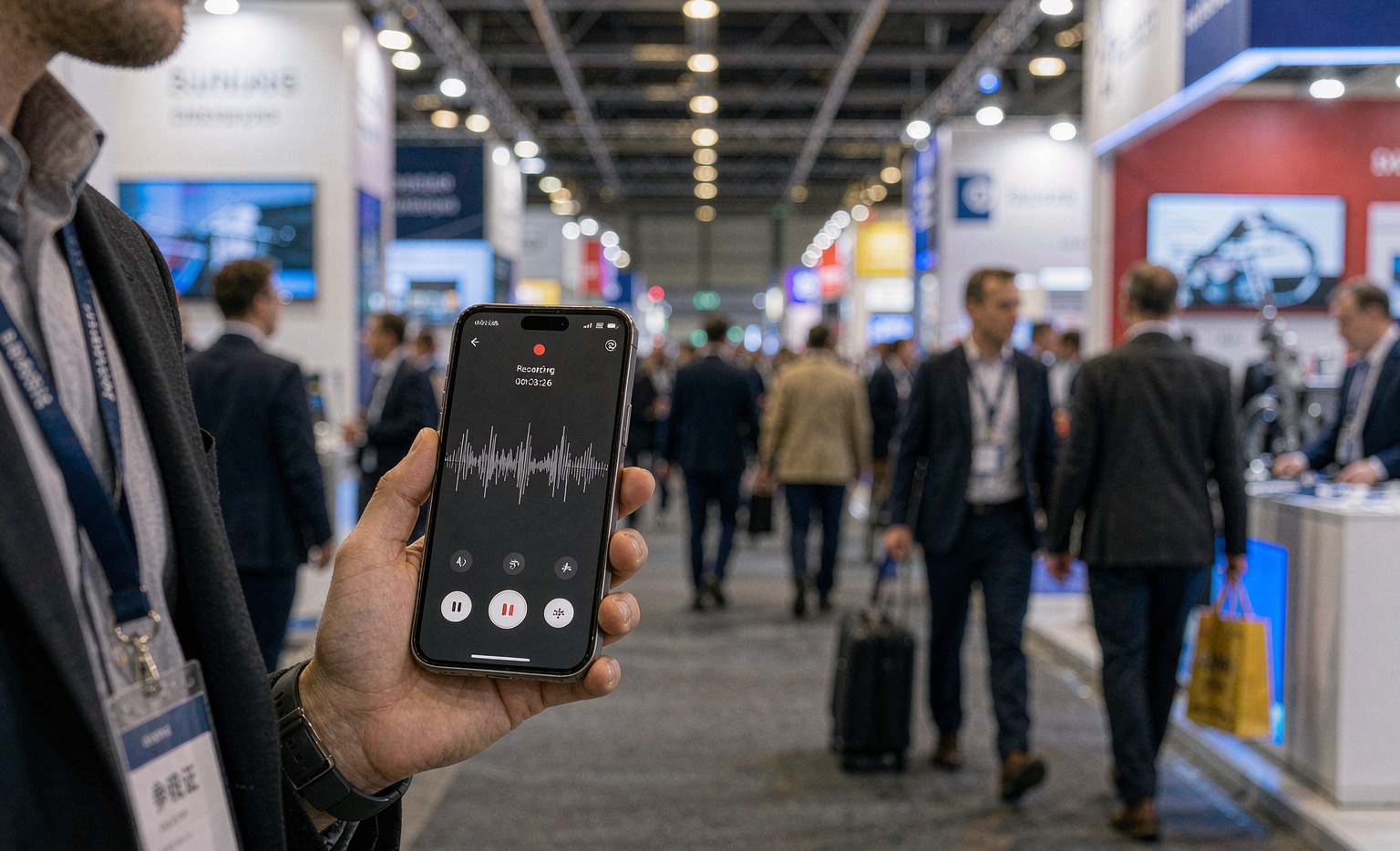
The most common buyer mistake at Canton Fair is treating the fair as a one-shot deal and leaving with photos they cannot decode a week later. Three recording methods that work. Method 1: voice memo with a fixed script. At every booth, after the conversation, record a 30-second memo with the booth number, supplier name, part discussed, unit price, MOQ, lead time, and one differentiating fact ("they showed ECE R90 cert #E4*1179*2018*0045" or "they could not produce a friction material data sheet"). Most buyers who use this method reduce their post-fair shortlist time from three weeks to one. Method 2: standardised paper card per supplier. Print 50 small cards before departure (one per supplier), each with fields for booth number, supplier name, contact, key part, price, MOQ, sample fee, and a 0-5 score for credibility. A photo of the card at the end of Day 5 is your entire shortlist in one image. Method 3: photo log with EXIF date. Most modern phones already tag photo metadata with date and time. Snap the booth number sign, then a photo of the product, then a photo of the supplier's business card, in that order. Sort by timestamp later and you have a chronological trip log without any extra effort.
9. Day-5 Follow-Up: The 48-Hour Window That Determines Your Margin
Phase 1 closes at 18:00 on Day 5 (Oct 19, 2026). The 48 hours between the close and the next morning is the single most under-used window in the Canton Fair cycle. Two things happen in that window: the best suppliers send their revised pricing because they now know they have lost buyers to competitors, and the worst suppliers go silent because they have filled their order book. The professional buyer uses the window by sending a single, structured email to the shortlist within 24 hours of Phase close. The email has five fields: thank-you note (one sentence), recap of the part discussed at the booth, the price they quoted on the spot, the buyer's target price (typically 8 to 15 percent below the quoted price for catalogue parts, 5 to 10 percent for custom), and a request for a counter-sample shipment within 7 days. By Day 10 after the fair, half of the suppliers will have replied with a revised price; by Day 14, the buyer's shortlist has consolidated to 3 to 5 candidates; by Day 21, the first PO can be issued. Buyers who wait until Day 14 to send the email get quoted 5 to 10 percent higher prices because the suppliers have moved on.
Table 4 — 48-hour follow-up timeline (post-Phase 1 close, Oct 19, 2026)
| Hour / Day after close | Buyer action | Expected supplier response | Outcome |
|---|---|---|---|
| Hour 0 (18:00, Oct 19) | Walk back to hotel, sort photos, sort voice memos | None yet | Shortlist of 15-25 candidates typed up |
| Hour 6 (midnight, Oct 19) | Send 5-field structured email to top 15 candidates | None yet (Chinese suppliers offline) | 15 emails in outbox |
| Hour 18 (12:00, Oct 20) | Read first replies; flag aggressive discounters | 5-7 of 15 have replied | First revised price quotes in |
| Hour 24 (18:00, Oct 20) | Send counter-offer to top 5 (8-15% below quote) | 2-3 of 5 reply same day | Negotiation opens |
| Hour 36 (06:00, Oct 21) | Confirm counter-sample shipment with top 3 | DHL pickup scheduled | Counter-samples in transit |
| Day 5 (Oct 24) | Counter-samples arrive; fitment testing | None | First quality verdict |
| Day 10 (Oct 29) | Issue first PO with 30% deposit | PI confirmed | First PO accepted |
| Day 14 (Nov 2) | Close supplier list; archive non-responders | None | Final shortlist 3-5 suppliers |
| Day 21 (Nov 9) | First production batch EXW | First photos from factory floor | Production confirmed |
10. Frequently Asked Questions: Canton Fair Buyer Checklist for Auto Parts Buyers
What is the best time to arrive at Canton Fair Phase 1 for auto parts buyers?
Day 1 morning (09:30 to 11:00) is the worst window for serious sourcing because every booth is crowded with walk-ins and the senior sales staff is tied up greeting buyers. Day 1 afternoon (14:00 to 17:30) or Day 2 morning are the two best windows: booths are quieter, senior staff is free, and the supplier has had 24 hours to recover from the morning rush. Most top auto parts suppliers at Canton Fair are also at the autumn edition (Phase 1, Oct 15-19), so the timing holds for repeat buyers.
Do I need a visa invitation letter for Canton Fair 2026?
Yes, for most non-visa-free nationalities. The invitation letter is issued free of charge by the Canton Fair once you complete online buyer registration and upload your passport scan. The processing time is 5 to 10 working days, so apply at least three weeks before departure. The letter is a Chinese government-issued document that smooths the M-visa application at your local Chinese consulate; it is not the visa itself.
How much cash should I bring to Canton Fair for sample fees?
For a five-day sourcing trip covering 30 to 50 suppliers across six auto parts categories, plan on 800 to 1,500 USD in cash or instant-payment app balance for sample fees. Most sample fees for brake pads, filters, and small electrical parts run 5 to 50 USD per sample. Larger items such as strut assemblies or ECU modules can run 100 to 300 USD per sample. Ask the supplier to deduct the sample fee from your first PO before paying it in cash.
Is Chinese the working language at Canton Fair auto parts booths?
Mandarin is the working language at most Chinese exhibitor booths. English is widely understood at the larger, export-focused booths in categories 4 (Vehicle and Auto Parts). Arabic, Russian and Spanish speakers are increasingly common at booths targeting Middle East, CIS and LATAM buyers respectively. If your Chinese is zero, bring a translator for the first half-day; by Day 2, the technical vocabulary converges on English terms (MOQ, lead time, OE reference, FOB, ECE R90).
Can I take product samples home in my luggage from Canton Fair?
Yes for small, low-value items (brake pads, filters, sensors, ignition coils). Declare them at customs on exit if they have commercial value above 50 USD. For larger or heavier items (strut assemblies, exhaust components, radiators), the supplier will arrange courier shipment through DHL, FedEx or a nominated freight forwarder. Plan on 7 to 15 days door-to-door for DHL/FedEx, 25 to 35 days for sea freight.
What is the difference between FOB Guangzhou, FOB Shenzhen and EXW Nansha for Canton Fair orders?
FOB Guangzhou or FOB Shenzhen means the supplier delivers the goods to the named Chinese port and loads them onto the buyer's nominated vessel; the buyer pays ocean freight and insurance from that point. EXW Nansha (or EXW any inland city) means the buyer takes responsibility at the supplier's factory gate and arranges all inland transport to the port plus ocean freight. FOB is the Canton Fair default and is recommended for first-time buyers because the supplier's nominated freight forwarder handles the export customs clearance. EXW is cheaper in unit cost (typically 1 to 3 percent lower) but requires the buyer to engage a Chinese freight forwarder, which is more setup cost than it is worth for first-time buyers below 5 containers per year.
Related Articles
Related Products
From our export catalog — parts and vehicles ready for international delivery

Full-Size EREV SUV
2026 Rox Adamas EREV 215km 6-Seat Executive Edition
USD 53,000 FOB Guangzhou
View Details
Full-Size EREV SUV
2026 Rox Adamas EREV 215km 7-Seat All-Terrain Edition
USD 51,500 FOB Guangzhou
View Details
