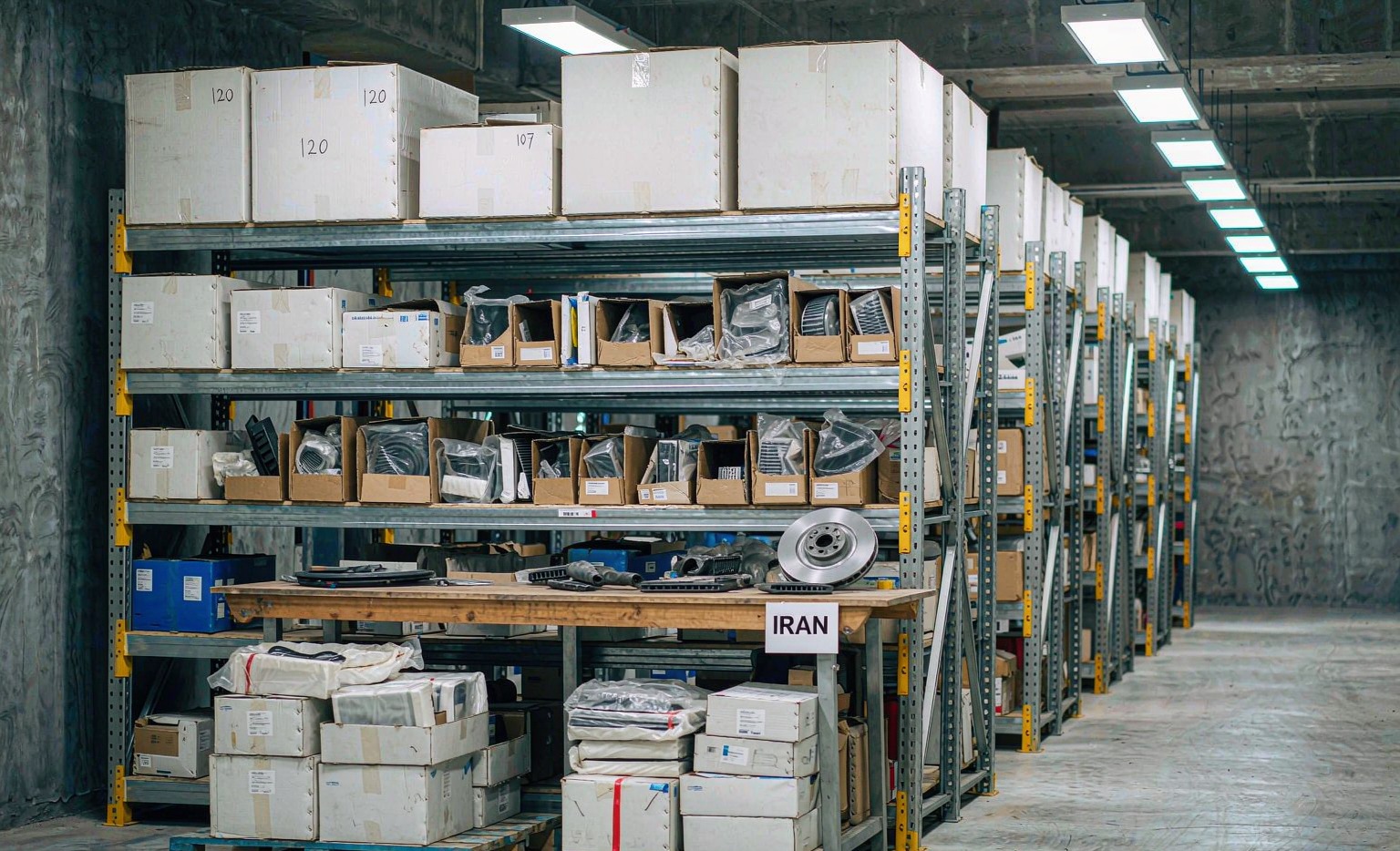
If you run a wholesale auto-parts desk in Guangzhou, the most important structural fact about the Iranian aftermarket in 2026 is that it is not a developing market — it is a recovering market that lost its official supply line in 2018 and never got it back. The Toyota, Hyundai and Kia vehicles on Iranian roads are mostly between five and fifteen years old. The OEM dealer network that would have supplied replacement parts for those vehicles disappeared under sanctions. What replaced it is a layered aftermarket — local Iranian parts makers producing to reverse-engineered OE specs, used parts stripped from end-of-life vehicles in neighbouring jurisdictions, and a steadily growing import flow out of Chinese ports that is now the marginal source for several high-velocity part categories. The composition of that import flow is what this guide is about.
1. Iran's Fleet Reality: Millions of Aging Japanese and Korean Cars with No Official Supply Line
To understand the parts market, you have to understand the fleet. Iran's passenger vehicle parc is roughly 14 to 16 million units, of which an estimated 35 to 45 per cent is the Toyota Corolla family (sedan, Cross, older Sprinter), the first-generation Toyota RAV4, the Kia Rio and Pride, the Hyundai Elantra (XD, MD, AD generations), the Hyundai Sonata (EF, YF, LF), and a smaller but persistent share of the Kia Sportage. Almost all of these vehicles were either officially imported in the 2005 to 2017 window, or were reassembled from CKD kits through IKCO and SAIPA lines. The 2018 sanctions did not remove these vehicles from the road. They removed the official Toyota, Hyundai and Kia parts pipeline that would have supported them. What remains is the aftermarket.
The mechanics of the gap matter. A 2014 Toyota Corolla owner in Tehran today cannot order a genuine Toyota cabin air filter through the official Toyota Iran dealer network, because the official dealer network no longer exists in the form that would service that order. The owner instead buys either an aftermarket filter from a Tehran-area workshop that sources through the Jafari Bazaar parts district, a reverse-engineered equivalent from a local Iranian manufacturer, or — increasingly — an imported aftermarket filter from a wholesale distributor in Guangzhou, Dubai, or Istanbul who is buying the part at container scale. The third of these three flows is the one the global wholesale desk in 2026 should be pricing for, because it is the one with the most stable documentary profile and the lowest per-unit landed cost.
2. Why Iranian Workshops Prefer Japanese Cars: Parts Availability and Repair Simplicity
The argument is not sentimental. It is mechanical. Iranian workshops are calibrated to Japanese cars because three decades of accumulated practice have made the typical 2007 Corolla or 2012 Elantra faster to diagnose and faster to repair than a 2023 CKD Chery Tiggo 7. The wire harness layout is known, the diagnostic protocols are standard, the bolt patterns are standard, and the parts inventory is deep. A workshop that can turn around a Toyota brake job in two hours will need four hours and a proprietary diagnostic tool for a comparable job on a Chinese CKD. That productivity gap is what keeps Japanese cars dominant in the Iranian workshop queue, and it is what gives the Japanese parts aftermarket its structural depth.
For a wholesale distributor, the implication is direct. A Toyota or Hyundai/Kia aftermarket part shipped to Iran is being shipped into a market that already knows how to install it, knows what a good one looks like, and knows what a bad one looks like. The risk of "the part doesn't fit" is materially lower than it is for a less-established nameplate. The risk of "the part arrives broken" is the same as for any other lane and is managed through pre-shipment inspection rather than through market education.
| Fleet segment | Estimated parc (2024) | Typical age | Aftermarket depth | Primary competitor for a Chinese-port import |
|---|---|---|---|---|
| Toyota Corolla (all gens) | ~3.5-4.5M | 5-15 years | Very deep (Jafari Bazaar, Tehran, Isfahan) | Local Iranian makers; used parts from GCC |
| Toyota RAV4 (1st-3rd gen) | ~0.6-0.8M | 8-15 years | Deep | Used parts from UAE; local makers |
| Hyundai Elantra (XD/MD/AD) | ~1.5-2.0M | 6-14 years | Deep | Local Iranian makers (Saipa Alvand-era) |
| Kia Rio / Pride | ~1.5-2.0M | 7-15 years | Very deep (SAIPA assembly era) | Local Iranian makers; GCC used parts |
| Hyundai Sonata / Kia Sportage | ~0.5-0.8M | 6-12 years | Moderate | Local makers; imports from Turkey |
3. The Six Highest-Demand Part Categories for the Iranian Aftermarket
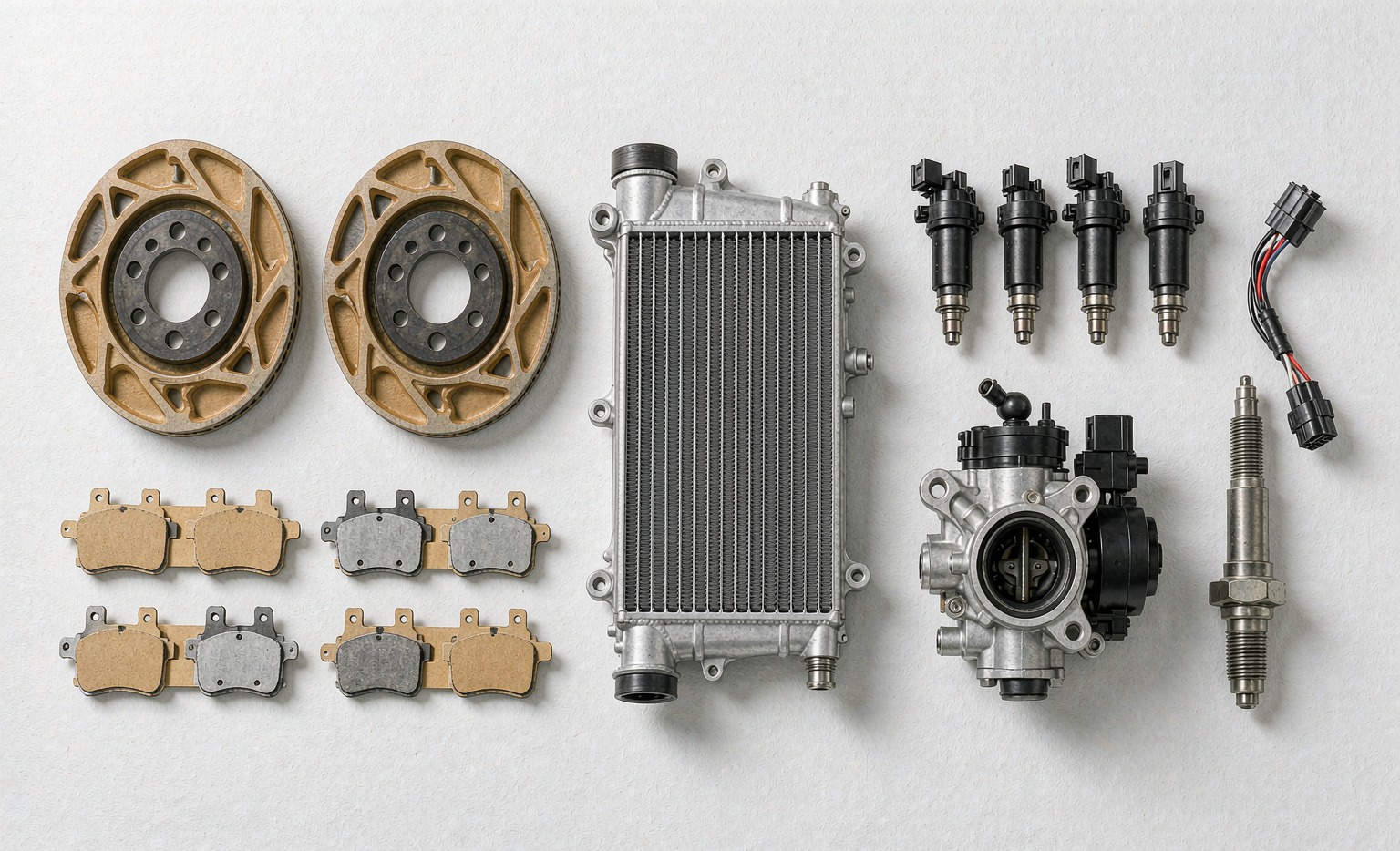
Six categories account for the bulk of the volume of the import lane into the Iranian aftermarket. Each has its own unit economics, its own OE reference patterns, and its own certification burden.
Brake pads and rotors. Brake pads are a 3,000 to 8,000 km wear item on Tehran traffic, and the Iranian taxi fleet alone consumes them at industrial scale. OE references for the Corolla 1.8L run across the D1217 / D1224 pad families and the 43512-series rotor family. RAV4 2.0L and 2.5L share a rotor generation that is widely cross-referenced. Rotor diameter, pad friction grade (ceramic, semi-metallic, low-metallic NAO) and ECE R90 certification for the European-style destination flows all matter. Pad pricing out of Guangzhou FOB runs from roughly USD 6 to USD 18 per axle set depending on grade; rotors run from USD 18 to USD 55 per piece depending on diameter and coating (plain, drilled, slotted, painted).
Cooling and air-conditioning. Cooling is the second-highest volume category, and it is the one that interacts most directly with the local environmental stress. Tehran summer ambient temperatures run above 40°C for sustained periods, which shortens radiator hose life, condenser life, and AC compressor life well below the OEM design envelope. Radiators, condensers, electric cooling fans, expansion tanks, and AC compressors are all on the high-velocity list. Pricing out of Guangzhou for the Toyota Corolla 1.8L aluminium radiator is roughly USD 38-65 per piece, with a 20-piece carton. Condensers run USD 22-40 per piece. AC compressors for the RAV4 hybrid variants run USD 160-220 per piece. The hybrid-specific cooling plate (the plate that sits under the inverter) is its own category and prices higher than the conventional radiator at roughly USD 140-180 per piece.
Ignition and engine management. Pencil coils, spark plugs, ignition leads, the throttle body, and the engine control unit are the engine-management layer. For the Toyota 1.8L and 2.0L four-cylinder the pencil-coil pricing is roughly USD 8-14 per piece at the FOB level, with 50-piece cartons. The aftermarket plug pricing for iridium and platinum grades runs USD 1.8-3.5 per piece at the FOB level. Throttle bodies for the Corolla 1.8L run USD 45-80 per piece. ECU pricing is significantly higher and more variable.
Suspension top mounts, bushings, and shock absorbers. Tehran's road surface is hard on rubber and polyurethane parts. Top mounts, control arm bushings, and the front strut cartridges all see accelerated wear. Top mount pricing for the Corolla and Elantra is roughly USD 5-12 per piece at the FOB level. Shock absorbers (front struts as a complete cartridge) run USD 22-55 per piece depending on the brand tier. Bushings come in by the bag (typically 20 to 50 pieces per bag) at USD 0.4-1.2 per piece at the FOB level.
Oxygen, MAF, MAP, and ABS sensors. The sensor category is the one that is most exposed to quality variation, because a bad oxygen sensor does not look any different from a good one in the carton. The Iranian workshop layer is calibrated to know this and prices accordingly: the OE-equivalent oxygen sensor for a Corolla 1.8L runs USD 18-35 per piece at the FOB level, and the workshop will typically install two as a pair. The ABS wheel speed sensor runs USD 12-28 per piece. The MAF sensor for the Corolla and RAV4 runs USD 28-55 per piece. The MAP sensor is cheaper at USD 8-18 per piece.
Oil, air, fuel, and cabin filters. Filters are the volume backbone of the aftermarket import lane. A filter is light, cheap, and easy to ship, which is why this category works as a container-stuffer alongside higher-value parts. The pricing out of Guangzhou FOB for the four common filter types is roughly: oil filter USD 0.6-1.5 per piece (100 pieces per carton); air filter USD 1.2-2.8 per piece (50 pieces per carton); fuel filter USD 1.5-3.5 per piece (50 pieces per carton); cabin filter (the activated-carbon type that sells in Iran because of the dust load) USD 1.0-2.4 per piece (50 pieces per carton). The cabin filter is the most-velocity item on a per-container basis.
| Category | Typical unit FOB Guangzhou | Carton size | OE reference style | Quality certification |
|---|---|---|---|---|
| Brake pads (axle set) | USD 6-18 | 10-20 sets | D1217 / D1224 family for Corolla; 04465-XXXXX for Toyota | ECE R90 mandatory for Europe-export; IATF 16949 for OEM-grade |
| Brake rotors (each) | USD 18-55 | 4-8 pieces | 43512-XXXXX for Toyota; 51712-XXXXX for Hyundai | OE-grade cast iron; ISO 26262 for some electronics-equipped variants |
| Aluminium radiator | USD 38-65 | 20 pieces | 16400-XXXXX / 88450-XXXXX for Toyota | IATF 16949 |
| AC compressor | USD 160-220 | 1-4 pieces | 88310-XXXXX / 97701-XXXXX family | IATF 16949; ISO/TS 16949 legacy |
| Pencil ignition coil | USD 8-14 | 50 pieces | 90919-XXXXX family for Toyota | IATF 16949 |
| Top mount (each) | USD 5-12 | 20 pieces | 48609-XXXXX / 54611-XXXXX family | IATF 16949 |
| Shock absorber (cartridge) | USD 22-55 | 4-10 pieces | 48531-XXXXX / 54651-XXXXX | IATF 16949 |
| Oxygen sensor | USD 18-35 | 20-50 pieces | 89465-XXXXX / 39210-XXXXX family | IATF 16949; cross-check OE protocol |
| ABS wheel speed sensor | USD 12-28 | 50 pieces | 89543-XXXXX / 59810-XXXXX | IATF 16949 |
| MAF sensor | USD 28-55 | 20-50 pieces | 22204-XXXXX family | IATF 16949 |
| Cabin filter (carbon) | USD 1.0-2.4 | 50 pieces | 87139-XXXXX family for Toyota | ISO 11155 cabin filter standard |
4. Toyota Corolla and RAV4: The Anchor Nameplates of Iran's Aftermarket
The Toyota Corolla and the Toyota RAV4 together account for the largest single block of the Iranian aftermarket import lane. The Corolla is the taxi-fleet backbone of every major Iranian city. The RAV4 (mostly the third-generation XA40) is the family SUV of choice for the Iranian upper-middle class and is also a strong second-hand rental fleet vehicle. Both nameplates have OE references that have been stable for two decades, which means an aftermarket part cross-referenced to a 2010 Corolla usually fits the 2017 Corolla and very often the 2020 Corolla as well. The reference density for these two nameplates is what makes them the most economical to import at scale.
| Vehicle | Common service part | Indicative OE reference | Verify by VIN | FOB Guangzhou price band |
|---|---|---|---|---|
| Toyota Corolla 1.8L (E140 / E170 / E210) | Front brake pads (axle set) | 04465-XXXXX family | Yes — engine code and trim level | USD 7-15 |
| Toyota Corolla 1.8L (E140 / E170 / E210) | Front brake rotor (each) | 43512-XXXXX family | Yes — generation-specific | USD 22-48 |
| Toyota Corolla 1.8L (E140 / E170 / E210) | Aluminium radiator | 16400-XXXXX family | Yes — transmission type (AT/MT/CVT) | USD 40-60 |
| Toyota Corolla 1.8L (E140 / E170 / E210) | Cabin filter (carbon) | 87139-XXXXX family | Cross-model fit (also fits RAV4, Camry) | USD 1.0-2.4 |
| Toyota Corolla 1.8L (E140 / E170 / E210) | Pencil ignition coil (each) | 90919-XXXXX family | Yes — engine code | USD 9-13 |
| Toyota RAV4 2.0L / 2.5L (XA40) | Front brake pads (axle set) | 04465-XXXXX family | Yes — generation-specific | USD 9-16 |
| Toyota RAV4 2.0L / 2.5L (XA40) | Front brake rotor (each) | 43512-XXXXX family | Yes — engine code | USD 28-52 |
| Toyota RAV4 2.5L Hybrid | Inverter cooling plate | G9200-XXXXX / similar hybrid family | Yes — VIN required (hybrid variant) | USD 140-180 |
| Toyota RAV4 2.0L / 2.5L (XA40) | AC compressor | 88310-XXXXX family | Yes — refrigerant type (R134a / R1234yf) | USD 160-220 |
| Toyota RAV4 2.0L / 2.5L (XA40) | Oxygen sensor (each) | 89465-XXXXX family | Yes — pre-cat / post-cat position | USD 20-35 |
Note: every OE reference above is indicative. Cross-reference the buyer's VIN to confirm fitment before booking. The FOB price bands are an indicative wholesale range for an aftermarket part of equivalent specification, not the OE-genuine price (which can run three to five times higher).
5. Hyundai Elantra and Kia Sportage: The Korean Workhorses of Tehran's Taxi Fleet
The Korean side of the Iranian aftermarket is dominated by the Hyundai Elantra (XD, MD, AD generations) and the Kia Sportage, with a smaller but persistent share for the Kia Rio and the Hyundai Sonata. The Elantra in particular is the second-largest single nameplate in the Iranian taxi fleet after the Corolla, and the Elantra's parts pattern is the one a Korean parts desk in Guangzhou should be pricing for. The Kia Sportage is the Korean family SUV of choice in Iran and runs against the RAV4 on price positioning in the wholesale lane.
| Vehicle | Common service part | Indicative OE reference | Verify by VIN | FOB Guangzhou price band |
|---|---|---|---|---|
| Hyundai Elantra 1.5L / 1.6L / 1.8L (MD/AD) | Front brake pads (axle set) | 58101-XXXXX family | Yes — engine code | USD 7-14 |
| Hyundai Elantra 1.5L / 1.6L / 1.8L (MD/AD) | Front brake rotor (each) | 51712-XXXXX family | Yes — generation-specific | USD 22-46 |
| Hyundai Elantra 1.5L / 1.6L / 1.8L (MD/AD) | Aluminium radiator | 25310-XXXXX family | Yes — AT/MT/DCT | USD 38-58 |
| Hyundai Elantra 1.5L / 1.6L / 1.8L (MD/AD) | Pencil ignition coil (each) | 27301-XXXXX family | Yes — engine code (Nu 2.0 vs Gamma 1.5T) | USD 8-12 |
| Kia Sportage 1.6T / 2.0L (QL) | Front brake pads (axle set) | 58101-XXXXX family (shared with Elantra generation) | Yes — generation-specific | USD 8-15 |
| Kia Sportage 1.6T / 2.0L (QL) | Front brake rotor (each) | 51712-XXXXX family | Yes — engine code | USD 28-50 |
| Kia Sportage 1.6T / 2.0L (QL) | AC compressor | 97701-XXXXX family | Yes — refrigerant type | USD 155-210 |
| Kia Sportage 1.6T / 2.0L (QL) | Cabin filter (carbon) | 97133-XXXXX family | Cross-model fit | USD 1.0-2.2 |
Every OE reference above is indicative. Confirm by buyer-supplied VIN. The price bands assume aftermarket-grade (IATF 16949) manufacture, not OE-genuine manufacture.
6. OE References and Cross-Compatibility: What to Verify Before Ordering
The single largest source of after-sales dispute in the cross-border parts lane is the cross-reference error. A distributor quotes an OE reference for a 2010 Corolla 1.8L radiator; the buyer's workshop receives it and finds that the hose connection is for a 2014 Corolla 1.6L. Both distributors and workshops are right from their own perspective, and the dispute is genuinely the result of incomplete cross-referencing. The fix is procedural, not commercial: every OE reference should be quoted with the engine code, the build year, the transmission type, and where relevant the regional market variant. The buyer's VIN gives you the four pieces of information; the seller's catalogue gives you the cross-reference. The cross-check is the buyer's responsibility before shipping.
7. Quality Grades and Certification: IATF 16949, ECE R90 and What Iranian Importers Actually Ask For
Two certifications dominate the conversation. IATF 16949 is the global quality management standard for automotive parts manufacture; a factory with IATF 16949 certification is operating under the same quality discipline as an OE factory, even if the parts it produces are aftermarket-grade rather than OE-genuine. ECE R90 is the European brake-component regulation, and is the relevant certification for brake pads and rotors exported to jurisdictions that follow the European vehicle regulation regime. The Iranian aftermarket accepts both grades, but the workshop layer prices accordingly: a brake pad with ECE R90 certification sells at a 30 to 50 per cent premium over an equivalent pad without it. The general rule for a wholesale distributor pricing the Iran-bound container is to stock a 60/40 mix: 60 per cent of the IATF 16949 aftermarket grade, 40 per cent of the IATF 16949 + ECE R90 grade. The workshop's "premium job" trade will absorb the latter.
8. FOB Guangzhou Price Ladder and Container Economics
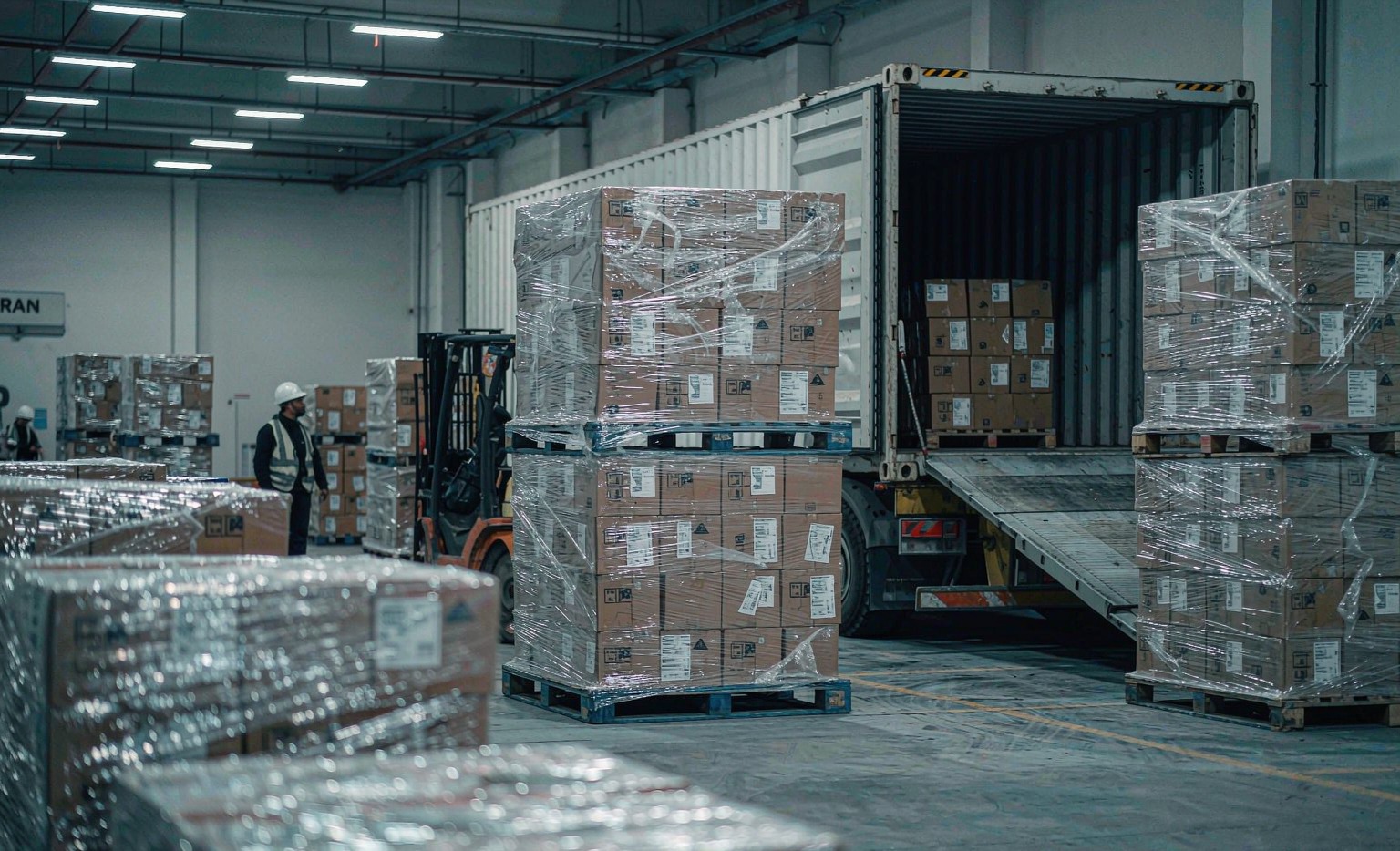
The container economics for the Iranian aftermarket are favourable for the mixed-category container. A 40HQ running a mix of brake pads, rotors, filters, ignition coils and top mounts in the proportions above will hold roughly 4,000 to 12,000 pieces depending on which categories are weighted. The cabin filter is the densest item at roughly 6,000 pieces per 40HQ if loaded pallet-on-pallet. The brake rotor is the bulkiest at roughly 600 pieces per 40HQ. The pencil coil runs roughly 4,000 pieces per 40HQ. The AC compressor runs roughly 240 pieces per 40HQ. The hybrid inverter cooling plate is the bulkiest by weight at roughly 200 pieces per 40HQ.
For a wholesale buyer pricing the Iran-bound container in October 2026, the indicative per-container FOB Guangzhou value is roughly USD 38,000 to USD 95,000 depending on the mix. The Iranian-side landed cost (freight, insurance, Iranian customs duty, local inland transport) typically runs another 25 to 40 per cent on top, depending on the documentary structure. The per-piece margin available to the buyer ranges from 30 per cent on filters to 80 to 120 per cent on sensors and AC compressors. The whole category economics work because the volume is there and the workshop layer is calibrated to install the parts without service-cost surprises.
9. Shipping Routes and Payment Realities for Iran-Bound Parts
Two shipping routes run in parallel. The deep-water option goes from Nansha or Shanghai through the Strait of Hormuz to Bandar Abbas, with onward trucking to Tehran, Isfahan, Mashhad or Tabriz. The overland option goes by rail to a consolidation point in a neighbouring jurisdiction and then overland into Iran; the documentary profile is different and the transit time is longer. Both routes are well-established in 2026. The cross-border wholesale lane is not new, but the volume has grown materially in the last twelve months as Chinese-port supply has become the marginal source for several categories.
The payment reality is that the cross-border lane operates under the same documentary discipline as the vehicle lane, with a third-country finance and insurance structure typically used to manage sanctions reach. The buyer's sanctions verification is the buyer's responsibility, and the seller's role is to deliver the parts to the buyer's nominated port against the buyer's letter of credit or equivalent instrument. Buyers and importers must independently verify applicable sanctions, export-control and import regulations for their destination market and consult qualified trade-compliance counsel before any booking. That sentence is the same one on the vehicle guide for the same reason: in 2026 the documentary discipline is the deal.
10. Frequently Asked Questions
What is the size of the Iranian auto parts aftermarket today?
Iran's passenger parc is roughly 14 to 16 million units, of which 35 to 45 per cent is the Toyota Corolla family, the first-generation RAV4, the Hyundai Elantra, the Kia Rio/Pride, and the Hyundai Sonata. The official Toyota, Hyundai and Kia parts pipeline that would have supported these vehicles was effectively cut in 2018. What replaced it is a layered aftermarket — local Iranian manufacturers producing to reverse-engineered OE specifications, used parts stripped from end-of-life vehicles in the Gulf and Central Asia, and a steadily growing import flow out of Chinese ports. The import flow is the marginal source for several categories and is the lane a Chinese-port wholesale desk should be pricing for in 2026.
Which categories move the most volume into the Iranian aftermarket?
Six categories account for the bulk: brake pads and rotors, cooling and air-conditioning, ignition and engine management, suspension top mounts and bushings, oxygen and ABS sensors, and the four filter types (oil, air, fuel, cabin). Of these, filters are the highest-volume container stuffer at roughly 6,000 cabin filters per 40HQ. Brake pads and rotors are the highest-revenue per container for the workshop trade. AC compressors and inverter cooling plates are the highest-margin individual items.
Why is the Toyota Corolla the anchor nameplate for the Iranian aftermarket?
Two reasons. First, volume: the Corolla family is the largest single nameplate in the Iranian taxi fleet, with an estimated parc of 3.5 to 4.5 million units across the E140, E170 and E210 generations. Second, reference stability: the OE reference pattern for the Corolla 1.8L four-cylinder has been stable for two decades, which means an aftermarket part cross-referenced to a 2010 Corolla usually fits the 2017 and very often the 2020 Corolla as well. That reference density is what makes the Corolla the most economical nameplate to import at scale.
What is the IATF 16949 certification and does the Iranian market care about it?
IATF 16949 is the global quality management standard for automotive parts manufacture. A factory operating under IATF 16949 is subject to the same quality discipline as an OE factory, even if the parts it produces are aftermarket-grade rather than OE-genuine. The Iranian workshop layer prices for it. An IATF 16949 aftermarket part sells at a 20 to 40 per cent premium over an equivalent non-certified part. The general rule for a 40HQ container bound for Iran is 60 per cent IATF 16949 aftermarket grade and 40 per cent IATF 16949 + ECE R90 (for brake parts) grade.
How are OE references cross-referenced for an Iran-bound parts order?
Every OE reference should be quoted with the engine code, the build year, the transmission type, and the regional market variant. The buyer's VIN gives the four pieces of information; the seller's catalogue gives the cross-reference. The cross-check is the buyer's responsibility before shipping. The indicative OE references in this guide are starting points for that cross-check, not final answers — the same OE reference family covers multiple part positions on the same vehicle, and the wrong position will fit loosely and fail quickly.
What does a wholesale buyer need to verify before booking a container to Iran?
Three things, in this order. First, the buyer's own jurisdiction's sanctions rules, including any U.S. OFAC reach, any EU export-control rules, and any destination-country import licensing. Second, the documentary structure of the transaction — Incoterms 2020 terms, letter of credit or equivalent instrument, third-country finance and insurance if applicable. Third, the parts mix and the cross-references — engine code, build year, transmission type, regional variant. Globalucar will support the documentary and cross-reference side of the booking; the legal characterisation of the transaction is a matter for the buyer's own trade-compliance counsel.
Related Articles
Related Products
From our export catalog — parts and vehicles ready for international delivery

Full-Size EREV SUV
2026 Rox Adamas EREV 215km 6-Seat Executive Edition
USD 53,000 FOB Guangzhou
View Details
Full-Size EREV SUV
2026 Rox Adamas EREV 215km 7-Seat All-Terrain Edition
USD 51,500 FOB Guangzhou
View Details
