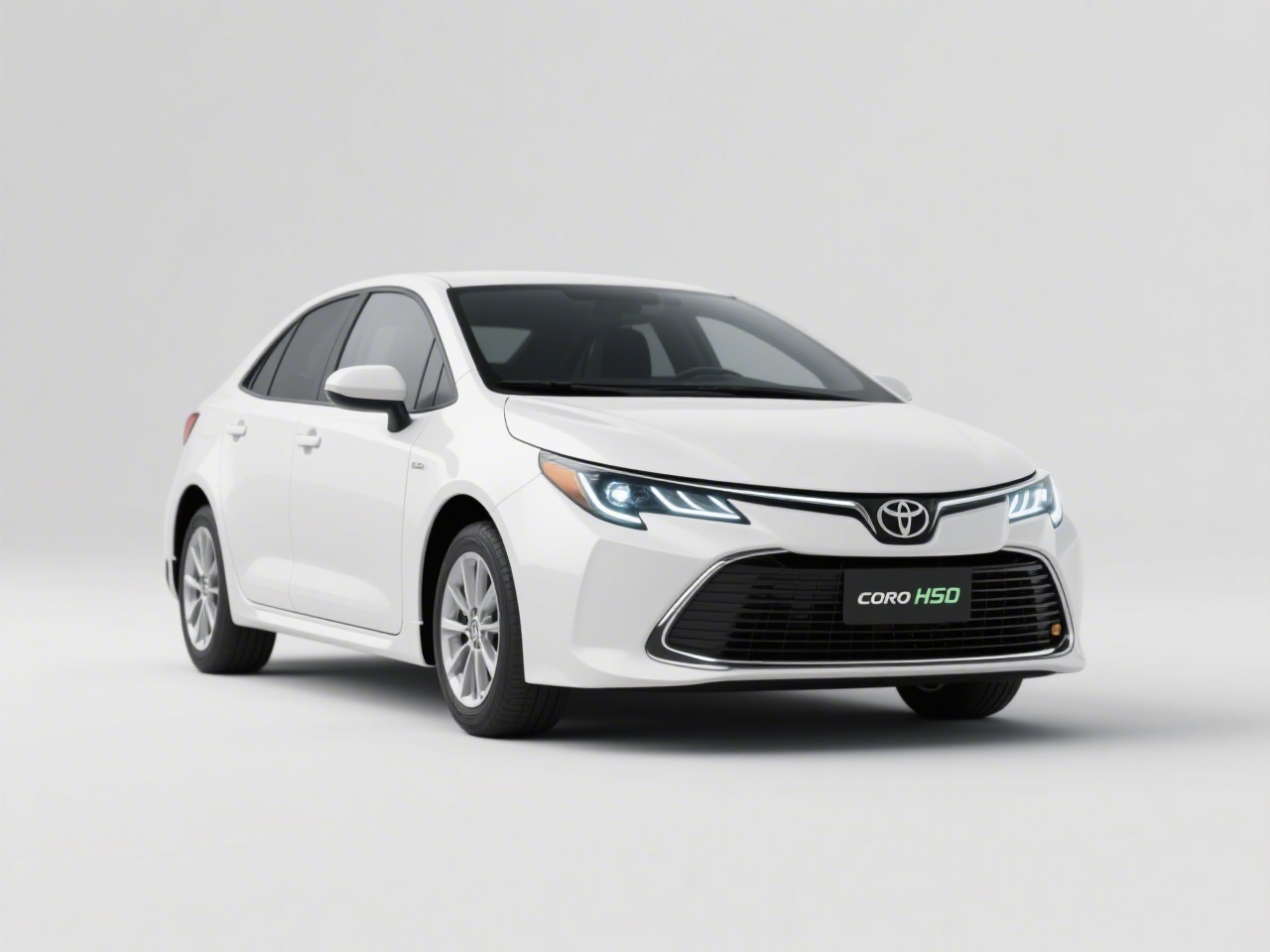
Why Central Asia, Africa & the Middle East Are Prime Markets for the Toyota Corolla HEV
The Toyota Corolla is the best-selling nameplate in global automotive history — over 50 million units sold across 190+ countries since 1966. But there is a specific reason the 2026 Corolla 1.8L HEV (Self-Charging Hybrid) is now the most compelling vehicle for importers across Central Asia, Sub-Saharan Africa, and the Middle East: it solves the fuel cost crisis without requiring a single charging station.
Consider the fuel price landscape in 2026:
| Market | Fuel Price (Local) | Monthly Fuel Cost (2,000 km, Corolla HEV) | Monthly Saving vs 2.0L Gasoline Sedan |
|---|---|---|---|
| Kazakhstan | KZT 215/L (AI-92) | KZT 18,060 (~US$38) | ~US$16/month |
| Uzbekistan | UZS 12,800/L (AI-92) | UZS 1,075,200 (~US$85) | ~US$36/month |
| Nigeria | NGN 980/L (PMS) | NGN 82,320 (~US$52) | ~US$22/month |
| Kenya | KES 185/L (Super) | KES 15,540 (~US$120) | ~US$51/month |
| Ghana | GHS 15.5/L (Super) | GHS 1,302 (~US$83) | ~US$36/month |
| UAE | AED 3.15/L (Special 95) | AED 264.6 (~US$72) | ~US$31/month |
Source: National petroleum authorities — Kazakhstan (KazMunayGas Q1 2026), Uzbekistan (UNG Petro), Nigeria (NNPCL May 2026), Kenya (EPRA May 2026), Ghana (NPA), UAE (ADNOC May 2026). Monthly saving calculated against 2.0L sedan consuming 7.5 L/100 km.
The Fuel Economy That Wins Deals: 4.2 L/100 km in Real-World Numbers
For fleet procurement officers and individual importers in emerging markets, fuel consumption is not a marketing number — it is a line item on the monthly P&L. The 2026 Corolla HEV delivers WLTC-certified 4.2 L/100 km, equivalent to 56 mpg (US) or 67 mpg (UK Imperial). Here is what that means in practice:
- Annual Fuel Cost (30,000 km): 1,260 liters of RON 92 gasoline. At Kazakhstan prices of KZT 215/L, that is approximately KZT 270,900 (~US$570) per year — roughly one-third the annual fuel bill of a comparable 2.0L gasoline SUV (such as the Hyundai Tucson at 8.5 L/100 km).
- Range Per Tank: 43-liter fuel tank times 4.2 L/100 km gives approximately 1,020 km per tank. For a sales representative covering Almaty to Astana (1,210 km), one refuelling stop is all that is needed. Compare this to a conventional 2.0L sedan (7.0 L/100 km, 614 km range from the same tank size) which would require two refuelling stops on the same journey.
- Hybrid Payback Period: At a price premium of approximately US$2,000-3,000 over a comparable gasoline Corolla 1.2T, the hybrid system pays for itself in 18-24 months for high-mileage fleet applications (30,000+ km/year). For private buyers accumulating 15,000 km/year, the payback extends to 3-4 years — still within a typical vehicle ownership cycle.
- Fuel Quality Flexibility: The 8ZR-FXE engine uses port fuel injection (PFI) rather than direct injection (GDI), making it tolerant of lower-quality RON 91+ gasoline commonly available in Central Asian and African markets — a critical consideration where fuel adulteration and octane variability are common procurement risks.
No Charging, No Headaches: How Toyota Self-Charging HEV Works
One of the most persistent objections to electrified vehicles in emerging markets is the absence of reliable charging infrastructure. The Toyota Hybrid System (THS II) in the 2026 Corolla addresses this by eliminating the charging requirement entirely:
| Comparison | Toyota Corolla HEV | Full Battery EV (e.g., BYD Dolphin) | Plug-In Hybrid (PHEV) |
|---|---|---|---|
| Charging Required? | No — self-charging via regen braking + engine surplus | Yes — L2 wallbox or DC fast charger | Recommended for best economy |
| Range (full tank/charge) | ~1,020 km | ~420 km (WLTP) | ~1,100 km (combined) |
| Refuel/Recharge Time | 3 minutes at any fuel station | 30 min (10-80% DC fast) / 7 hours (AC) | 3 min fuel + 3-5 hours AC charge |
| Grid Dependency | Zero | Total — requires stable electricity | Partial |
| Cold Climate Performance | Excellent — Ni-MH battery operates at -30 degrees C | Reduced range (30-40% loss at -20 degrees C) | Reduced EV range in cold |
| Suitable for Central Asia? | Yes — Astana winters, Tashkent summers | Limited — charging infrastructure gap | Limited — plug-in infrastructure gap |
Sources: Toyota Motor Corporation THS II technical documentation, BYD Dolphin WLTP certification data, SAE International cold-weather EV range testing (2025).
The Ni-MH (Nickel-Metal Hydride) battery pack — rated at 6.5 Ah, 201.6V — is specifically chosen over lithium-ion for its proven durability in extreme temperatures. This battery chemistry has accumulated over 25 years of field data in Toyota Prius models operating in conditions ranging from Siberia to the Sahara, with documented service lives exceeding 200,000 km without capacity degradation that would impact fuel economy.
Technical Deep-Dive: TNGA-C Platform, 8ZR-FXE Engine & E-CVT Transmission
Understanding the engineering behind the 2026 Corolla HEV is critical for importers who need to explain the value proposition to fleet managers, government procurement committees, and retail buyers. Below is a component-level breakdown of the vehicle's three core systems:
1. TNGA-C Platform (Toyota New Global Architecture — Compact)
- Body Rigidity: 60% increase in torsional rigidity over the previous E170 Corolla generation, achieved through 590 MPa+ high-tensile steel in the GOA (Global Outstanding Assessment) safety body structure. This directly translates to improved crash safety scores and better ride composure on the uneven road surfaces common in Central Asian and African markets.
- Center of Gravity: 20 mm lower than the previous generation — reducing body roll in corners and improving highway stability at speeds of 120-140 km/h (common on Central Asian intercity highways).
- Rear Suspension: Double-wishbone independent multi-link — a configuration typically reserved for the mid-size sedan segment (Camry/Accord). This provides superior rear-wheel articulation over potholes and speed bumps compared to the torsion-beam rear axles used by the Nissan Sylphy and Hyundai Elantra in the same price band.
2. 8ZR-FXE 1.8L Atkinson-Cycle Engine
- Thermal Efficiency: Exceeds 40% under the WLTC test cycle — among the highest of any mass-produced internal combustion engine. The Atkinson cycle achieves this by delaying intake valve closure, effectively creating a longer expansion stroke than compression stroke — extracting more mechanical work from each combustion event.
- Port Fuel Injection (PFI): Unlike direct-injection (GDI) engines, the 8ZR-FXE uses port injection, which eliminates carbon buildup on intake valves — a common failure point for GDI engines operating on low-quality fuel. This is a critical reliability advantage in markets where fuel quality is inconsistent (Uzbekistan AI-80, Nigerian adulterated PMS).
- No Turbocharger: The naturally aspirated Atkinson-cycle configuration avoids the turbocharger-related failure modes (oil coking, bearing wear, boost leaks) that affect turbocharged competitors like the Hyundai Elantra 1.6T and Kia K3 1.5T in high-temperature, high-dust environments.
3. E-CVT (Electronically Controlled Continuously Variable Transmission)
- Planetary Gear Set Design: Unlike belt-driven CVTs (Nissan, Honda, Subaru), the Toyota E-CVT uses a planetary gear set with two motor-generators (MG1 + MG2) — zero belts, zero clutches, zero wear items. This design has demonstrated reliability exceeding 300,000 km in taxi fleets across Southeast Asia, East Africa, and the Middle East.
- Instant Torque Delivery: The electric motor (MG2) delivers 163 Nm of torque from 0 rpm, eliminating the "rubber-band" acceleration feel of conventional CVTs and providing immediate response in stop-and-go urban traffic — particularly valuable in congested cities like Lagos, Nairobi, and Almaty.
Import Duty & Total Cost of Ownership by Market
Below is a detailed total-cost-of-ownership (TCO) analysis for the 2026 Corolla HEV across six key export markets, factoring import duties, VAT, and fuel costs. All figures are estimates based on Q2 2026 regulatory schedules and should be verified with a licensed customs agent in the destination country:
| Market | Import Duty | VAT / Other | Landed Cost (US$19,000 FOB) | Annual Fuel (30,000 km) | 3-Year TCO |
|---|---|---|---|---|---|
| Kazakhstan | 15% CIF value | 12% VAT, recycling fee ~US$500 | ~US$24,850 | ~US$570 | ~US$26,560 |
| Uzbekistan | 30% + US$3/L engine displacement excise | 12% VAT | ~US$29,260 | ~US$1,020 | ~US$32,320 |
| Nigeria | 35% CIF value | 7.5% VAT, 0.5% levy, SON CoC fee ~US$400 | ~US$29,360 | ~US$625 | ~US$31,235 |
| Kenya | 25% CIF value | 16% VAT, 2% IDF, KEBS inspection ~US$250 | ~US$27,750 | ~US$1,440 | ~US$32,070 |
| Ghana | 30% CIF value | 13% VAT, 1% ECOWAS levy, GSA fee ~US$200 | ~US$28,320 | ~US$1,000 | ~US$31,320 |
| UAE | 5% customs (commercial) | 5% VAT, registration ~US$200 | ~US$21,150 | ~US$865 | ~US$23,745 |
Sources: Kazakhstan — Eurasian Economic Union Common Customs Tariff (2026); Uzbekistan — Customs Committee Decree 2025; Nigeria — Nigeria Customs Service HS Code 8703.90 (2026); Kenya — KRA Customs Tariff (2026); Ghana — GRA Customs Division (2026); UAE — Federal Customs Authority. Fuel costs based on May 2026 retail pump prices. FOB-to-CIF conversion assumes US$2,000 ocean freight + insurance per unit from Nansha.
Key Insight: The UAE offers the lowest landed cost due to its 5% GCC customs duty rate, making it an ideal transshipment hub for re-export to East Africa (via Jebel Ali Port to Mombasa/Dar es Salaam) or Central Asia (via Jebel Ali to Bandar Abbas, then overland to Turkmenistan/Uzbekistan). Several of our customers use Dubai-based trading companies to aggregate container loads and split shipments to regional buyers, reducing per-unit freight costs by 30-40%.
Toyota Safety Sense 3.0: 8 Airbags and Advanced Driver Assistance
Safety features are increasingly becoming mandatory in import regulations across emerging markets. The 2026 Corolla HEV Smart Hybrid Elite comes standard with Toyota Safety Sense 3.0 (TSS 3.0), a comprehensive active safety suite that puts it ahead of most competitors in the compact sedan segment:
- Pre-Collision System (PCS): Millimeter-wave radar + monocular camera detect vehicles, pedestrians (day and night), and cyclists (daytime). The system provides audible and visual warnings, brake assist, and — if the driver does not respond — automatic emergency braking. In Euro NCAP equivalent testing, this system reduces rear-end collisions by approximately 38%. Source: Toyota Motor Corporation, TSS 3.0 Technical Brief, 2025.
- Lane Tracing Assist (LTA): Keeps the vehicle centered in its lane on highways by providing subtle steering inputs — particularly valuable for the long intercity drives common in Central Asia (e.g., Almaty-Shymkent, 700 km) where driver fatigue is a safety risk.
- Full-Speed Dynamic Radar Cruise Control (DRCC): Maintains a set distance from the vehicle ahead, automatically adjusting speed from 0 km/h to the set maximum. Reduces driver workload in both highway and congested urban conditions.
- 8 Airbags: Dual front, front side, curtain shield (front + rear), and driver's knee airbag — a configuration that meets the most stringent global safety standards and exceeds the 2-airbag minimum still common on budget sedans in African and Central Asian markets.
- Additional Systems: Automatic High Beam (AHB), Road Sign Assist (RSA), Vehicle Stability Control (VSC), Traction Control (TRC), Hill-Start Assist (HAC), and Tire Pressure Monitoring System (TPMS) — all standard.
Sourcing from China: FOB Nansha Port, Shipping Routes & Export Logistics
The 2026 Toyota Corolla HEV is manufactured at the FAW Toyota joint venture plant in Tianjin and exported through Nansha Port, Guangzhou — one of China's three largest vehicle export terminals, handling over 700,000 export vehicles annually. Below is a practical logistics overview for importers:
| Destination | Port of Discharge | Transit Time | Shipping Method | Estimated Freight (per unit) |
|---|---|---|---|---|
| Kazakhstan | Altynkol (rail) / Aktau (sea) | 18-22 days (rail) / 30-35 days (sea) | Rail (via Khorgos Gateway) or RoRo | US$2,200 (rail) / US$1,800 (RoRo) |
| Uzbekistan | Altynkol → Tashkent (rail intermodal) | 22-28 days | Rail intermodal | US$2,500 |
| Nigeria | Lagos (Apapa / Tin Can Island) | 28-35 days | RoRo or Container (40ft takes 3 units) | US$2,000 (RoRo) / US$1,400/unit (shared container) |
| Kenya | Mombasa | 22-28 days | RoRo or Container | US$1,800 (RoRo) |
| Ghana | Tema | 28-35 days | RoRo | US$2,100 |
| UAE | Jebel Ali, Dubai | 12-16 days | RoRo or Container | US$1,200 |
Source: COSCO Shipping, Maersk Line, and Sinotrans route schedules Q2 2026. Freight estimates based on single-unit RoRo rates; container rates (40ft, 3 units) reduce per-unit cost by 30-40%.
- MOQ: Single-unit trial orders accepted — ideal for first-time importers testing market demand. Volume pricing available for 10+ unit orders.
- Export Documentation: Full vehicle documentation package includes Certificate of Origin (Form E for preferential duty under China-ASEAN/China-Pakistan FTA where applicable for transit markets), commercial invoice, packing list, bill of lading, and MIIT export compliance certificate.
- Inspection: Pre-shipment inspection (PSI) available upon request. All vehicles undergo 360-point inspection at Nansha Port's dedicated vehicle inspection center before loading.
- Payment Terms: T/T (30% deposit, 70% against copy of B/L), letter of credit (L/C at sight) available for qualified buyers. Contact our export team for terms.
Corolla HEV vs Competitors: Nissan Sylphy, Hyundai Elantra, Kia K3
Importers evaluating the 2026 Corolla HEV against competing compact sedans in the US$15,000-$22,000 FOB range should consider the following head-to-head comparison:
| Specification | Toyota Corolla 1.8L HEV | Nissan Sylphy 1.6L CVT | Hyundai Elantra 1.6L MPI | Kia K3 1.5L CVT |
|---|---|---|---|---|
| FOB Price (est.) | US$19,000 | US$17,208 | US$15,800 | US$14,500 |
| Engine / Output | 1.8L HEV, 90 kW (122 hp) | 1.6L NA, 100 kW (135 hp) | 1.6L NA, 91 kW (123 hp) | 1.5L NA, 88 kW (118 hp) |
| Fuel Consumption | 4.2 L/100 km | 5.9 L/100 km | 6.5 L/100 km | 6.0 L/100 km |
| Rear Suspension | Double Wishbone (Multi-Link) | Torsion Beam | Torsion Beam | Torsion Beam |
| Airbags | 8 (incl. knee) | 6 | 6 | 6 |
| ADAS (Standard) | TSS 3.0 (PCS, LTA, DRCC, AHB, RSA) | Basic (AEB only) | Basic (LKA only) | Basic (FCW only) |
| Resale Value (3 yr) | 65-70% | 55-60% | 50-55% | 48-52% |
| Parts Availability (Africa) | Excellent (Toyota global network) | Good (Nissan Africa distributor) | Moderate (growing) | Limited |
| Best Market Fit | Central Asia, Nigeria, Kenya, UAE | East Africa, Southeast Asia | Middle East, Latin America | Entry-level West Africa |
FOB prices sourced from Globalucar product listings (May 2026). Fuel consumption per WLTC certification. Resale values estimated from used-car price tracking in Lagos, Almaty, and Nairobi markets (2025-2026).
The Corolla HEV commands a higher initial purchase price than all three competitors, but the total cost of ownership — particularly the fuel savings and higher residual value — makes it the most economical choice over a 3-5 year ownership horizon for vehicles accumulating 20,000+ km annually. For fleet applications, the fuel-cost differential alone can offset the initial price premium within 18 months.
Market-Specific Procurement Recommendations
Kazakhstan & Central Asia
- Recommended Configuration: White or silver exterior (high solar reflectivity for summer temperatures exceeding 40 degrees C). The standard LED headlights and automatic climate control are non-optional in a market where winter temperatures drop to -30 degrees C (Astana) and summer temperatures reach +45 degrees C (Turkistan).
- Certification Requirement: Eurasian Economic Union (EAEU) OTTC certification. Toyota vehicles manufactured in China for the Chinese domestic market may require additional EAEU conformity assessment — verify with a Kazakhstan-based certification body (KazStandard) before ordering.
- Market Trend: Kazakhstan's used car import market is shifting toward hybrid vehicles as fuel prices continue to rise (AI-92 increased 18% year-on-year from 2025 to 2026). The Kazakhstan Automobile Industry Association reports hybrid vehicle registrations grew 47% in 2025.
Nigeria (Lagos Commercial Market)
- Recommended Configuration: Any color acceptable — Nigerian buyers prioritize mechanical condition and Toyota brand equity over color. The hybrid system's fuel economy is a direct marketing advantage given fuel subsidy removal has pushed PMS to NGN 980/L.
- Import Age Limit: Nigerian Customs applies a 15-year age limit for used vehicles. As a 2026 model, the Corolla HEV has no entry restrictions and qualifies for the lowest insurance bracket.
- Financing Strategy: Nigerian importers commonly finance Toyota purchases through local bank facilities (Access Bank, GTBank auto loans at 18-24% APR). Presenting a TCO analysis comparing the Corolla HEV (lower fuel cost) vs a conventional sedan can support loan applications by demonstrating lower operating expenses.
Kenya & East Africa
- Recommended Configuration: Left-hand drive (LHD) acceptable in Kenya — but verify with the destination country if re-exporting to Tanzania, Uganda, or Rwanda, where right-hand drive (RHD) is the legal standard. Chinese-market Corollas are LHD only.
- Tax Incentive: Kenya applies a reduced excise duty rate for hybrid vehicles under the Finance Act 2024 (15% vs 25% for conventional ICE vehicles) — confirm current rate with KRA, as excise provisions are subject to annual finance bill amendments.
UAE & GCC Transit Hub Strategy
- Recommended Configuration: White exterior (GCC market standard for heat management). Sunroof option is popular for UAE retail buyers. The LED headlights and climate control are expected as standard.
- Re-Export Strategy: Import to Jebel Ali Free Zone (JAFZA) under customs suspension, then re-export to East Africa or Central Asia. This avoids paying UAE 5% customs duty on vehicles not intended for the domestic market. JAFZA-based trading companies handle documentation, container consolidation, and destination-country compliance.
FAQ: Corolla HEV Export Questions Answered
Is the Chinese-market Corolla the same as the Japan-market Corolla?
The 2026 Corolla for the Chinese domestic market is manufactured by FAW Toyota in Tianjin using the same TNGA-C platform, 8ZR-FXE engine, and THS II hybrid system as the globally-sold Corolla Hybrid. Key differences: the Chinese-market model includes China-specific infotainment (Baidu CarLife in addition to Apple CarPlay/Android Auto), uses a slightly different front fascia design (Chinese-market "Keen Look" styling), and is badged as Corolla Twin Engine. Mechanically, the powertrain, chassis, and safety systems are identical to export-market Corolla Hybrids manufactured in Japan (Takaoka plant) and Thailand (Gateway plant).
What is the warranty coverage for exported Corolla HEVs?
Standard factory warranty documentation is provided with every exported vehicle: 3 years / 100,000 km comprehensive warranty on the vehicle, and 8 years / 200,000 km on the hybrid battery and hybrid system components (MG1, MG2, inverter/converter, and power control unit). Warranty service is available at any authorized Toyota distributor in the destination country — Toyota's global warranty system cross-references the vehicle's VIN to validate coverage. Extended warranty packages (up to 5 years / 150,000 km) are available as a dealer option — contact our team for pricing.
Can I order a specific color or optional equipment?
Yes. Available colors for the Corolla HEV Smart Hybrid Elite include: Super White (040), Silver Metallic (1F7), Attitude Black (218), and Red Mica (3R3). The sunroof (single-pane electric tilt & slide) is available as a factory option at approximately US$600 additional FOB. Custom fleet orders (10+ units) can be specified with additional options — contact our team with your requirements. Lead time for factory option vehicles is approximately 4-6 weeks from order confirmation.
How does the Corolla HEV handle extreme temperatures?
The Ni-MH battery chemistry is inherently more tolerant of temperature extremes than lithium-ion batteries. Toyota's cold-weather testing program validates operation from -30 degrees C (Siberia winter testing) to +50 degrees C (Death Valley, USA summer testing). The hybrid system includes a dedicated battery thermal management system with a cabin-air cooling intake and electric blower fan. In practice, Corolla HEVs operate reliably in Astana winters (average January low: -18 degrees C) and Dubai summers (average July high: +43 degrees C) with no impact on battery longevity. For Kazakh and Uzbek importers, the E-CVT transmission also eliminates cold-start viscosity concerns associated with conventional automatic transmissions (torque converter drag, delayed shifting).
Ready to import the 2026 Toyota Corolla 1.8L HEV? Request a detailed quotation.
View full specifications & current FOB pricing →
Contact our export team for volume discounts & shipping schedules →
Verify Part Numbers in Our OE Library
Every part covered in this guide has a matching OE number in our reference library — grouped by system with cross-references, so you can source the exact fit for Hyundai, Kia, GM Korea and more.
Related Articles
Related Products
From our Vehicle Export catalog — new & used cars ready for international delivery
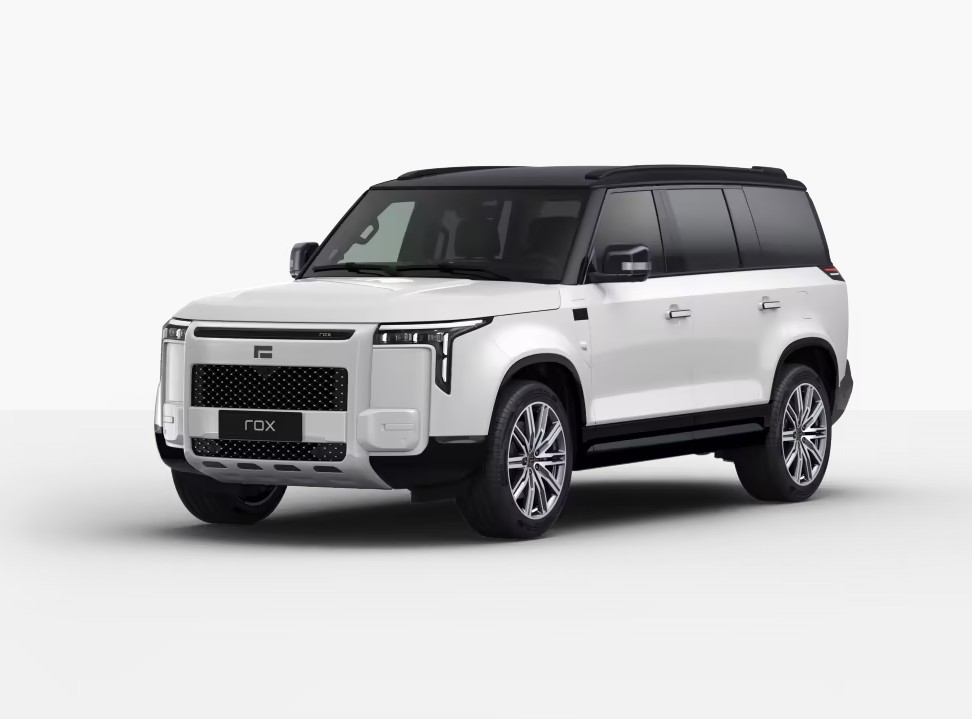
Full-Size EREV SUV
2026 Rox Adamas EREV 215km 6-Seat Executive Edition
USD 53,000 FOB Guangzhou
View Details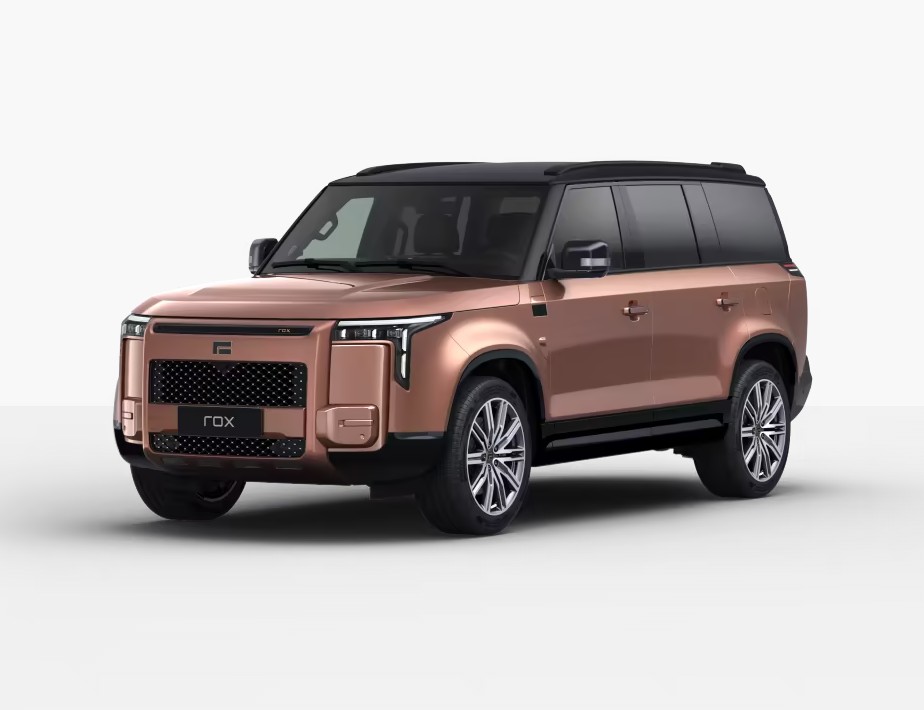
Full-Size EREV SUV
2026 Rox Adamas EREV 215km 7-Seat All-Terrain Edition
USD 51,500 FOB Guangzhou
View Details