
China’s EV Export Scale in 2026
China produced 10.2 million new-energy vehicles (NEVs) in 2025 — more than the rest of the world combined. BYD alone sold 4.3 million units, overtaking Volkswagen Group as the world’s third-largest automaker by volume. But the number that matters most for international buyers is this: China exported 1.6 million NEVs in 2025, a 45% increase over 2024, and that figure is projected to reach 2.1–2.4 million units in 2026.
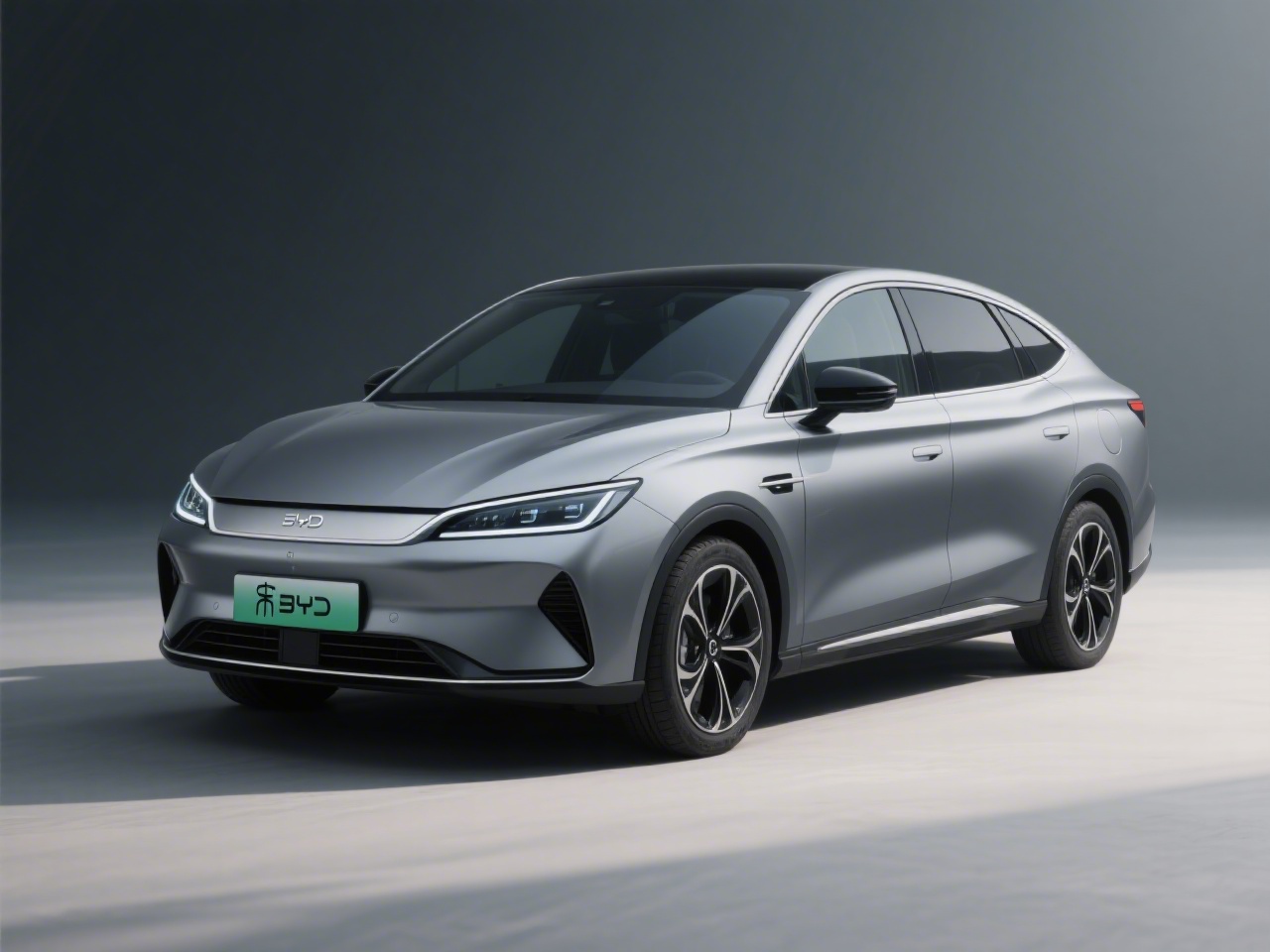
The electric vehicle market in China has matured rapidly, creating export opportunities worldwide.What is driving this surge? Three structural forces. First, Chinese domestic EV adoption has reached 38% of new car sales — creating massive manufacturing scale that drives per-unit costs down to levels no other country can match. Second, Chinese battery manufacturers (CATL, BYD FinDreams, Gotion, CALB) control over 65% of global lithium-ion cell production, giving Chinese automakers a built-in cost advantage on the single most expensive EV component. Third, Chinese brands have moved beyond the “budget electric car” phase — models like the BYD Han L, XPENG G9, and BYD Fang Cheng Bao Leopard 5 now compete on quality and features, not just price.
For importers in Southeast Asia, the Middle East, Africa, Latin America, and Australia, this represents a generational opportunity — if you understand the technical and regulatory hurdles that separate successful EV imports from expensive mistakes.
Charging Standard Compatibility for Electric Vehicle Importers
This is the single biggest practical challenge for EV exporters. China uses GB/T 20234 (both AC and DC fast charging). Most export markets use different standards, and getting this wrong means your customer’s new EV cannot charge at any local station — a vehicle-killing problem.
| Market | AC Charging | DC Fast Charging | China Export Fix |
|---|---|---|---|
| European Union | Type 2 (IEC 62196) | CCS2 | Factory CCS2 inlet swap |
| Southeast Asia | Type 2 or Type 1 | CCS2 or CHAdeMO | Depends on country |
| UK / Australia | Type 2 | CCS2 | Factory CCS2 swap |
| Japan / Thailand | Type 1 | CHAdeMO | Adapter often needed |
| GCC (UAE, Saudi) | Type 2 | CCS2 | Factory CCS2 swap |
| China domestic | GB/T AC | GB/T DC | Standard — no change |
The good news: BYD, MG (SAIC), XPENG, and Chery all offer export-spec variants with CCS2 DC connectors and Type 2 AC inlet as standard for European, ASEAN, and GCC markets. This is not an aftermarket conversion — it is a factory-built configuration. However, you must explicitly specify the export charging spec when placing your order. A domestic-spec vehicle with GB/T connectors shipped to Europe or Australia is essentially unsellable without expensive retrofit work.
Battery Regulations for Export
Lithium battery transport is heavily regulated internationally, and the rules affect both sea freight and insurance costs. Understanding these regulations before your first shipment avoids costly delays at the port.
Sea Freight for Electric Vehicle Export (IMDG Code)
EVs shipped by sea fall under UN 3171 (Vehicles, Lithium Battery Powered) in the International Maritime Dangerous Goods (IMDG) Code. Key requirements:
- State of Charge (SoC): Battery must be between 30–50% per SOLAS Chapter VII regulation. Higher SoC increases thermal runaway risk at sea; lower SoC may trigger low-voltage protection systems during long transits.
- BMS readout: Most shipping lines now require a pre-shipment Battery Management System report showing cell voltage balance, no error codes, and SoC confirmation. This is usually generated at the factory before handover.
- Fire suppression: Some shipping lines (particularly for container shipments) now require fire-suppression blankets or fireproof containers for EV cargo. This adds $300–$800 per vehicle depending on the route and carrier.
- Declaration: The shipper must provide a dangerous goods declaration specifying UN 3171, battery chemistry (LFP or NMC), and total battery watt-hour rating.
Battery Chemistry Matters for Electric Vehicle Buyers
Two dominant lithium-ion chemistries are used in Chinese EVs, and the choice directly affects your customer’s experience in hot climates:
- LFP (Lithium Iron Phosphate): Used by BYD’s entire lineup and many Chery models. Longer cycle life (3,000–5,000 full cycles), better thermal stability, safer in extreme heat. Trade-off: lower energy density means slightly shorter range per kWh. Recommended for GCC, Africa, and Southeast Asia.
- NMC (Nickel Manganese Cobalt): Used by XPENG and some higher-spec variants. Higher energy density for more range in a lighter pack, but degrades faster in sustained high temperatures. Better suited to temperate markets.
Homologation by Market in EV Export Market
EVs often require separate type approval because the powertrain does not exist in the carmaker’s existing ICE approval. This is where many first-time importers underestimate both cost and timeline.
| Market | Approval Type | Timeline | Cost | Key Notes |
|---|---|---|---|---|
| EU (27 states) | WVTA (EC 2018/858) | 6–12 months | $50,000–$120,000 | BYD, MG already approved |
| ASEAN | UNECE-based | 4–8 months | $15,000–$40,000 | Thai TISI, Malaysian JPJ |
| Australia | RAWS / ADR | 4–8 weeks | $8,000–$25,000 | Depends on model |
| GCC | ESMA GSO | 3–6 months | $10,000–$30,000 | BYD pre-approved for several models |
| Africa (non-FTA) | CoC (Certificate of Conformity) | 2–4 weeks | $800–$2,500 | Lowest barrier |
| Latin America | Country-specific | 2–6 months | $5,000–$20,000 | Varies widely |
Top Export-Ready EV Models in 2026
Based on Globalucar’s export data and factory allocation availability, these are the most competitive Chinese EV and PHEV models for international markets in 2026:
| Model | Type | EV Range | Total Range | FOB Price (USD) | Best Markets |
|---|---|---|---|---|---|
| BYD Seal U DM-i | PHEV SUV | 100 km | 1,000+ km | $24,500–$28,000 | SE Asia, GCC |
| BYD Han DM-i AWD | PHEV Sedan | 125 km | 1,050 km | $21,800–$25,000 | Middle East, Africa |
| XPENG G6 AWD | BEV SUV | 580 km | 580 km | $29,000–$32,000 | EU, Australia |
| XPENG G9 Flagship | BEV SUV | 650 km | 650 km | $43,000–$48,000 | EU, Middle East |
| BYD Han L DM | PHEV Sedan | 200 km | 1,200 km | $25,000–$29,000 | GCC, SE Asia |
| FCB Leopard 5 Ultra | PHEV 4WD | 210 km | 900+ km | $18,000–$21,000 | Africa, GCC |
| Geely Galaxy L7 | PHEV SUV | 115 km | 1,150 km | $22,000–$26,500 | SE Asia |
| XPENG P7+ RWD | BEV Sedan | 702 km | 702 km | $31,900–$35,000 | EU, Australia |
All FOB prices are quoted at Guangzhou Nansha Port with export VAT rebate applied. Prices are indicative for Q2 2026 — contact us for current allocation availability and exact quotations.

Choosing Between BEV and PHEV for Your Market
This is the most important strategic decision you will make. The wrong choice can leave you with unsold inventory:
- Choose BEV if: Your market has growing public charging infrastructure, government EV incentives, and urban buyers with home or workplace charging access. EU, Australia, South Korea, and Singapore fall into this category.
- Choose PHEV if: Your market has limited or unreliable charging infrastructure, frequent long-distance travel, and buyers who want fuel flexibility. GCC countries, most of Africa, rural Southeast Asia, and Latin America are prime PHEV markets.
- The hybrid sweet spot: PHEV models like the BYD Seal U DM-i (1,000+ km total range) give buyers daily EV driving for urban commutes with zero range anxiety for weekend trips. In markets where charging is available but not ubiquitous, PHEV is often the safer bet.
Shipping EVs: RoRo vs Container for Chinese EV Buyers
EVs can be shipped both by RoRo and container, but each method has specific considerations that do not apply to ICE vehicles:
RoRo (Roll-on / Roll-off)
Most major RoRo operators — including SIEM, Wallenius Wilhelmsen, and MOL — now accept EV cargo. EVs are classified as UN 3171 and stowed in designated fire-protected zones. Advantages: lowest per-unit shipping cost ($800–$2,500 depending on destination), fastest loading, weekly departures from Nansha Port. Requirements: advance EV declaration, SoC confirmation, and BMS readout at port.
Container Shipping
Some buyers — particularly in Australia and Europe — prefer container shipping for EVs because the sealed steel container provides an additional fire containment barrier that RoRo decks do not. This is increasingly required by marine insurers for high-value EV cargo. Trade-off: container shipping costs $1,500–$4,500 more per vehicle than RoRo on the same route, and you can typically only fit 2–3 standard EVs in a 40’ HC container.

After-Sales Support Considerations
EVs introduce after-sales requirements that simply do not exist for ICE vehicles. Planning for these before your first shipment arrives is not optional — it is the difference between a sustainable import business and a one-time deal that destroys your reputation.
- Diagnostic tools: Chinese EVs use proprietary protocols. BYD’s DiLink system and XPENG’s XNGP both require brand-specific diagnostic equipment. Plan for this cost ($2,000–$5,000 per tool set) and factor it into your initial investment. Generic OBD2 scanners will read basic codes but cannot perform battery cell balancing, firmware updates, or ADAS calibration.
- High-voltage safety training: Any technician who works on an EV drivetrain — even for routine tasks like brake pad replacement near high-voltage cables — needs HV safety certification in most markets. Budget for sending 2–3 technicians for factory training before your first vehicles arrive.
- Spare parts supply chain: The most critical spare part for any EV is the battery pack itself. While catastrophic battery failure is rare, when it does occur, the vehicle is immobile until a replacement arrives. Ensure the manufacturer has a local parts hub or will ship emergency parts by air within 72 hours. Ask specifically about battery module-level repair capability — some BYD packs allow individual module replacement rather than full pack swap, reducing repair cost dramatically.
- Battery warranty: Chinese automakers typically offer 8–10 year / 150,000–200,000 km battery warranties. Confirm the warranty terms for your specific market — some manufacturers exclude extreme climate regions or require annual battery health checks at authorized service points to maintain warranty validity.
Pricing & Minimum Orders
Globalucar’s standard terms for Chinese EV and PHEV exports:
| Order Size | Pricing | Lead Time | Notes |
|---|---|---|---|
| 1–2 units (sample) | FOB + sample surcharge | 4–6 weeks | Available from standing stock |
| 3–9 units (small fleet) | Standard FOB | 3–5 weeks | Factory allocation |
| 10+ units (container load) | Volume discount 3–5% | 2–4 weeks | Best per-unit economics |
| 50+ units (dealer program) | Dealer pricing on application | 4–6 weeks | Exclusive territory possible |
All shipments depart from Guangzhou Nansha Port with weekly RoRo sailings to Southeast Asia, bi-weekly to the Middle East and Africa, and monthly to Australia and Latin America. Complete export documentation — including Commercial Invoice, Packing List, B/L, Certificate of Origin, and Vehicle Inspection Certificate — is included as standard.
Full pre-shipment PDI and 200+ photo inspection report is performed on every vehicle at our Nansha bonded warehouse before loading. For EVs, this inspection additionally includes BMS health readout, SoC confirmation, and charge port connector verification.
Browse our EV & new car export catalog → Discuss an EV import project with our team →
Verify Part Numbers in Our OE Library
Every part covered in this guide has a matching OE number in our reference library — grouped by system with cross-references, so you can source the exact fit for Hyundai, Kia, GM Korea and more.
Related Articles


Related Products
From our Vehicle Export catalog — new & used cars ready for international delivery

Full-Size EREV SUV
2026 Rox Adamas EREV 215km 6-Seat Executive Edition
USD 53,000 FOB Guangzhou
View Details
Full-Size EREV SUV
2026 Rox Adamas EREV 215km 7-Seat All-Terrain Edition
USD 51,500 FOB Guangzhou
View Details