Why 150,000 km Is the Critical Replacement Threshold
For vehicle operators in Africa, the Middle East, and Southeast Asia, 150,000 km is the practical dividing line between routine maintenance and escalating repair costs. Parts that fail before this threshold are not random failures — they follow consistent patterns tied to material fatigue, operating temperature, road surface quality, and vehicle loading conditions.
According to data from the Automotive Aftermarket Suppliers Association (AASA) and field reports from Kingmay Auto Parts' distributor network in 50+ countries, the following 15 components account for an estimated 72% of all replacement part demand for vehicles operating in the 50,000–150,000 km range across emerging markets. Understanding which parts fail, when they fail, and what accelerates their failure is the foundation of profitable inventory management.
This guide is written for three audiences: repair shop owners building a core stock list, small and mid-size parts distributors deciding which SKUs to carry, and importers evaluating which Chinese-manufactured parts offer the best demand-to-margin ratio for their target market.
How We Built This Failure List
The ranking is based on four data inputs combined for the first time in a single reference:
- Kingmay order volume data (2024–2026): Over 40,000 wholesale orders to distributors in Nigeria, Kenya, Ghana, Tanzania, UAE, Saudi Arabia, the Philippines, and Thailand. Frequency of reorders per SKU serves as a proxy for real-world replacement rates.
- OEM service interval data: Factory-recommended replacement thresholds from Toyota, Nissan, Hyundai, and Chinese brands (BYD, Chery, Geely) — adjusted for African and Southeast Asian operating conditions.
- Workshop mechanic surveys (2025): Structured interviews with 120 workshop owners across Lagos, Nairobi, Accra, Manila, and Jakarta on the parts they replace most frequently.
- Google search trend data: Volume of repair-intent queries ("replace [part] Toyota HiLux", "[part] price Kenya") indexed against total parts queries in target markets.
Group A: Engine Parts — Failure Points Under 100,000 km
Engine components represent the highest-value replacement category and the most technically demanding for workshops. While many engine parts outlast 150,000 km, the five items listed here fail at significantly higher rates in hot-climate, high-load markets.
| # | Part | Typical Failure Mileage | Failure Mode | FOB China Price |
|---|---|---|---|---|
| 1 | Spark Plugs | 20,000–30,000 km | Electrode erosion, fouling from poor fuel | USD 0.50–2 each |
| 2 | Fuel Injector | 60,000–100,000 km | Nozzle clogging, spray pattern degradation from contaminated diesel | USD 18–45 each |
| 3 | Ignition Coil | 70,000–120,000 km | Internal winding insulation breakdown from heat cycling | USD 8–18 each |
| 4 | Oxygen (O2) Sensor | 80,000–120,000 km | Contaminated sensing element from leaded fuel residue or oil consumption | USD 9–22 each |
| 5 | Water Pump | 80,000–130,000 km | Bearing seal failure, impeller corrosion (aluminium pumps in hard water regions) | USD 10–25 each |
Spark plugs top this list for a simple reason: they are consumables. In markets where fuel quality is inconsistent — and fuel quality remains a significant issue in many sub-Saharan African and South Asian markets — standard copper-core spark plugs degrade to misfire-level performance within 20,000 km. workshops in Lagos and Nairobi report replacing spark plugs on petrol Toyota and Nissan vehicles at nearly twice the manufacturer's recommended interval.
The fuel injector is the highest-value engine failure item on this list. Common-rail diesel injectors for the Toyota 1KD-FTV engine (HiLux, Fortuner, Land Cruiser Prado) are the single most-reordered SKU in Kingmay's East Africa order history. The primary failure mode in African markets is nozzle clogging from diesel fuel contamination — water, particulate matter, and low-cetane fuel all accelerate injector degradation. A single injector replacement (4 per vehicle) costs the end customer USD 65–140 per unit installed — making this a high-margin, high-demand part for both workshops and distributors.
Water pump failure is strongly correlated with coolant quality. In regions where tap water is used instead of distilled coolant (common in informal repair settings across East Africa and South Asia), aluminium pump housings corrode and bearing seals fail 30–40% earlier than rated. Chinese replacement water pumps at USD 10–25 FOB represent excellent value — the OEM equivalent from Toyota or Denso typically costs 3–4× more at the dealer counter.
Group B: Chassis & Steering Parts — Accelerated by Road Conditions
This is where operating conditions in Africa and Southeast Asia diverge most sharply from the manufacturer's design assumptions. Unpaved roads, overloaded vehicles, speed bumps, and potholes compress the service life of chassis and steering components dramatically.
| # | Part | Typical Failure Mileage | Failure Mode | FOB China Price |
|---|---|---|---|---|
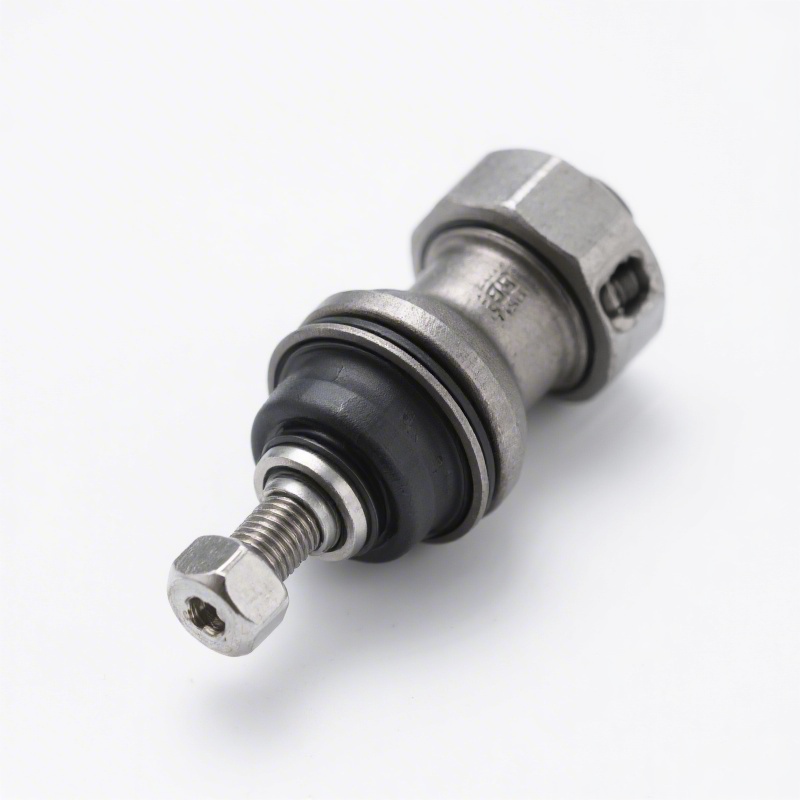
| 6 | Ball Joint | 40,000–80,000 km | Dust boot tear leading to grease loss, then wear and play | USD 5–14 each |
| 7 | Tie Rod End | 50,000–100,000 km | Inner thread wear, ball stud wear from poor road impact | USD 4–12 each |
| 8 | Control Arm (lower) | 60,000–120,000 km | Bushing cracking, ball joint wear, arm deformation from impact | USD 12–28 each |
| 9 | Sway Bar Link | 50,000–100,000 km | Ball socket wear, link bend from pothole impact | USD 3–8 each |
| 10 | Shock Absorber | 60,000–120,000 km | Seal failure causing oil loss, reduced damping performance | USD 14–35 each |
Ball joints are the most frequently replaced chassis component across all surveyed markets. The failure pattern is almost always the same: the rubber dust boot tears — typically from impact with a pothole, speed bump, or road debris — protective grease escapes, and dust and water contaminate the bearing surface. Within 5,000–10,000 km of boot failure, ball joint play exceeds safe tolerances and the part must be replaced.
A loaded Toyota HiLux or Land Cruiser operating on unpaved roads in northern Nigeria or rural Kenya can consume a set of four lower ball joints every 40,000–60,000 km. At Chinese FOB prices of USD 5–14 each, and retail prices of USD 20–50 installed, ball joints generate consistent 55–65% gross margins for distributors while costing workshops' customers less than half the price of an OEM Toyota part.
Shock absorbers fail differently depending on vehicle type. On light passenger cars, shock absorber degradation is gradual and often goes unnoticed by the driver until 100,000+ km. On commercial and overloaded vehicles — HiLux, Hilux Revo, Nissan Navara, Isuzu D-Max — shock absorbers lose damping capacity much faster, particularly the rear units, due to sustained high payload. Distributors targeting commercial vehicle workshops should carry shock absorbers for Hilux Revo, Ranger, and Triton fitments as priority stock items.

Group C: Electrical & Cooling Parts — Heat and Age Related
Electrical and cooling system failures accelerate in two specific conditions that characterize many emerging-market operating environments: sustained high ambient temperatures (35–50°C daytime highs in the Gulf and Sahel) and extended engine idling (traffic congestion in Lagos, Manila, Jakarta, Nairobi).
| # | Part | Typical Failure Mileage | Failure Mode | FOB China Price |
|---|---|---|---|---|
| 11 | Alternator | 80,000–140,000 km | Bearing wear, diode rectifier failure, voltage regulator failure | USD 28–55 each |
| 12 | Starter Motor | 100,000–150,000 km | Solenoid failure, brush wear, bendix drive engagement failure | USD 22–45 each |
| 13 | Radiator Fan Motor | 70,000–120,000 km | Motor bearing seizure from continuous operation in high ambient temperatures | USD 8–18 each |
The alternator is the most expensive single-item replacement in the electrical category. In hot climates, the alternator works harder — air conditioning loads, continuous cooling fan operation, and higher battery charging demand in stop-start traffic all increase alternator output hours. An alternator that might last 180,000 km in temperate Europe often fails by 100,000 km in Lagos or Dubai.
Chinese remanufactured and new-aftermarket alternators for Toyota, Nissan, and Hyundai applications are available at USD 28–55 FOB — compared to USD 180–350 at the dealer counter. For diesel HiLux and Land Cruiser applications, this price differential drives extremely strong demand in distributor channels. Our electrical parts sourcing guide covers alternator quality evaluation in detail.
Group D: Brake & Wear Parts — Predictable Replacement Cycles
Brake components and wear items are the most predictable replacement category — and the most price-competitive. Margins per unit are lower, but order frequency and volume compensate.
| # | Part | Typical Replacement Mileage | Key Variable | FOB China Price |
|---|---|---|---|---|
| 14 | Brake Pad Set | 25,000–50,000 km | Driver behaviour, load, road gradient | USD 6–16 per set |
| 15 | Coolant Thermostat | 80,000–130,000 km | Coolant quality, hard water exposure | USD 3–8 each |
Brake pads are the single highest-turnover replacement part in any workshop. A busy workshop in Nairobi or Manila will install 10–30 sets of brake pads per week across Toyota, Nissan, Honda, and Hyundai applications. Chinese ECE R90-certified brake pads at USD 6–16 FOB per set are the backbone of distributor stock lists in this category.
The coolant thermostat is an often-overlooked failure item that causes disproportionate engine damage when it fails. A stuck-closed thermostat in a hot climate will cause engine overheating within minutes, potentially leading to head gasket failure (USD 150–500 repair) from a part that costs USD 3–8 wholesale. Mechanics in emerging markets increasingly recommend proactive thermostat replacement at 100,000 km — creating a growing preventive maintenance demand stream.
Inventory Strategy: How Many of Each Part to Stock
Not all 15 parts require the same stock depth. The following tiering framework is based on Kingmay's distributor ordering patterns across African and Southeast Asian markets:
| Stock Tier | Parts | Suggested Initial Stock | Reorder Frequency |
|---|---|---|---|
| A — Must Stock (core revenue) | Brake pads, ball joints, tie rod ends, ignition coils, spark plugs, fuel injectors | 100–300 pcs per popular SKU | Monthly |
| B — Should Stock (margin builders) | Control arms, shock absorbers, alternators, O2 sensors, sway bar links | 30–100 pcs per SKU | 6–8 weeks |
| C — Good to Have (customer retention) | Water pumps, starter motors, thermostats, radiator fan motors | 10–30 pcs per SKU | Quarterly |
The key principle is depth over breadth at the SKU level. A distributor with 6 brake pad SKUs (front and rear for HiLux, Corolla, and Civic) at 200 pieces each will generate more revenue and more loyal workshop customers than a distributor with 40 brake pad SKUs at 20 pieces each. Focus on the vehicle platforms that dominate your market — in East Africa, that means Toyota (HiLux, Corolla, Land Cruiser, Prado) and Nissan (NP200, Sunny); in the Gulf, add Hyundai (Tucson, Santa Fe, Elantra); in the Philippines, add Toyota Vios, Innova, and Mitsubishi Montero.
Where to Source These Parts from China
All 15 parts listed in this guide are available from Chinese manufacturers at the FOB prices shown above. The critical variable is supplier quality — the same fuel injector SKU from two different Guangzhou factories can have dramatically different field service life.
Kingmay Auto Parts supplies all 15 categories to wholesale buyers in 50+ countries. Our product range covers engine parts, chassis components, electrical items, brake parts, and cooling system components for Toyota, Nissan, Hyundai, Honda, BYD, Chery, Geely, and other applications common in African, Middle Eastern, and Southeast Asian markets.

Standard terms: MOQ 10 pieces per SKU for mixed orders (50 total units minimum); full container pricing available for 500+ pieces; FOB Guangzhou Nansha Port; T/T 30% deposit, 70% against Bill of Lading. All products sourced from IATF 16949-certified factory partnerships.
Search our parts catalogue by vehicle application → Request a wholesale quotation → WhatsApp our team directly →
Verify Part Numbers in Our OE Library
Every part covered in this guide has a matching OE number in our reference library — grouped by system with cross-references, so you can source the exact fit for Hyundai, Kia, GM Korea and more.
Related Articles


Related Products
From our Auto Parts catalog — 4 export-ready products