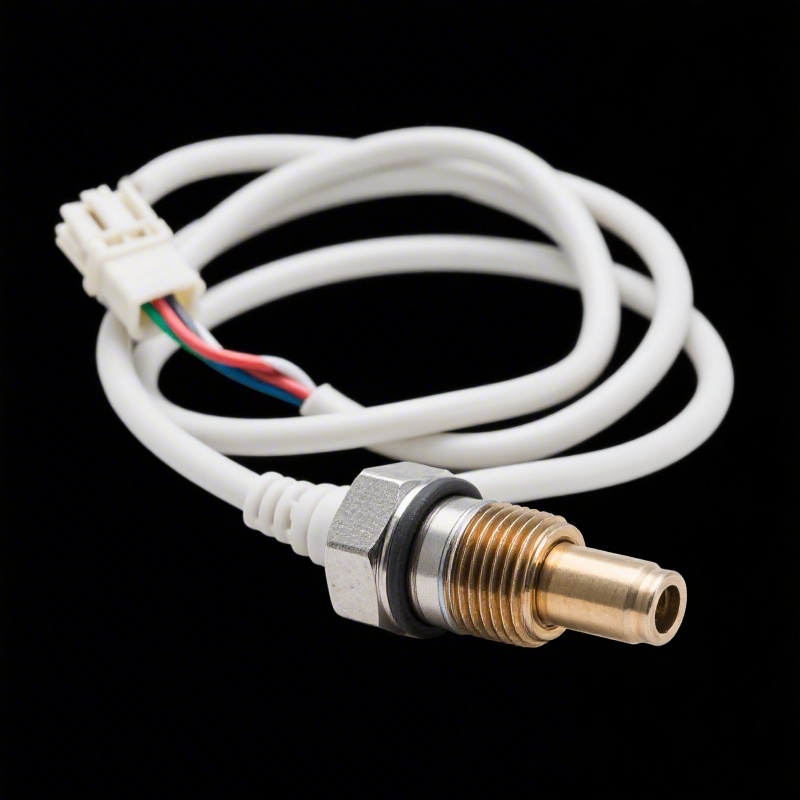
Why Exhaust System Parts Are a High-Demand Global Product Category
The global automotive exhaust and emission control market is worth over USD 47 billion annually, and it is growing at approximately 6.8% CAGR through 2030. Every vehicle on the road — from a Toyota Corolla in Nairobi to a Ford F-150 in Texas — has an exhaust system that requires replacement parts within its 15–20 year service life. Catalytic converters, oxygen sensors, mufflers, exhaust manifolds, and DPF (Diesel Particulate Filter) components are among the highest-volume replacement items in the global aftermarket.
The used car market drives a particularly strong secondary demand for exhaust system parts. Older vehicles — typically 5–15 years old — disproportionately populate roads across Africa, Southeast Asia, Latin America, and Eastern Europe. These markets are major importers of used vehicles from Japan, the UAE, the UK, and increasingly from China. When a catalytic converter fails or an oxygen sensor goes faulty on a 2015 Land Cruiser or 2012 Hilux in Lagos or Mombasa, the owner needs a replacement quickly and at an affordable price. This is the demand signal that Chinese wholesale suppliers are increasingly serving.
Three macro trends are accelerating global demand for exhaust system parts:
- Rising vehicle parc globally: The world vehicle parc exceeded 1.5 billion units in 2025. Older vehicles dominate in emerging markets — average fleet age in Sub-Saharan Africa exceeds 14 years; in South Asia it is above 11 years. Older vehicles produce higher per-unit demand for replacement parts, including exhaust components.
- Tightening emission regulations: More than 40 countries have adopted Euro 6 or equivalent emission standards, with China rolling out China VI (equivalent to Euro 6c) for new vehicles since 2020 and for all vehicles by 2027. These standards increase demand for high-quality catalytic converters, oxygen sensors, and DPF systems — both for new vehicle production and retrofitted replacement.
- DPF replacement cycle in diesel markets: Diesel particulate filter (DPF) systems in Euro 4/5/6 vehicles require replacement at approximately 160,000–240,000 km. As the first generation of Euro 4+ diesel vehicles reaches this mileage threshold, the DPF replacement market is entering a significant growth phase globally.
Data sources: Grand View Research Automotive Aftermarket Report 2025; IEA Global EV Outlook 2025; European Automobile Manufacturers Association (ACEA) Vehicle Parc Data 2024.
Core Exhaust Components: From Manifold to Tailpipe — Product Guide
Understanding the product taxonomy is essential before approaching any China exhaust parts supplier. The exhaust system can be divided into five functional zones, each with distinct components and pricing dynamics:
| Zone | Components | Aftermarket Demand | Key Quality Indicators |
|---|---|---|---|
| 1. Up-Pipe / Manifold | Exhaust manifold, turbo elbow, downpipe | High (heat stress cracks common) | Material grade (cast iron vs. stainless steel), flange flatness, gasket surface finish |
| 2. Emission Control | Catalytic converter, DPF, SCR (urea) system, oxygen sensors | Very High (regulatory requirement) | Precious metal loading (Pt/Pd/Rh ratio), honeycomb cell density, oxygen sensor response time |
| 3. Sound Control | Muffler (silencer), resonator, tailpipe | Medium-High | Internal baffle design, welding quality, anti-rust coating |
| 4. Connecting / Hangers | Exhaust pipe (front/mid/rear sections), flex pipe, hanger rubber mounts | High (rust-through common) | Pipe wall thickness (1.5mm min for aftermarket), flex joint braid quality, rubber durometer |
| 5. Heat Shielding | Heat shields, thermal wraps, catalytic converter blankets | Medium | Material (steel vs. aluminium), rivet/spot-weld integrity |
Best-selling lines for global aftermarket importers: Oxygen sensors (especially universal-fit 4-wire wideband types), catalytic converters (ceramic substrate, 400–600 CPSI cell count), mufflers for Japanese and Korean vehicle platforms, and exhaust manifold gaskets. These four categories consistently rank in the top 10 highest-turnover exhaust SKUs globally.
Understanding Emission Standards: Euro 6, EPA Tier 2, China GBV Standards
If you are sourcing catalytic converters or oxygen sensors for resale in regulated markets, the emission standard of your destination country is the single most important variable in product selection. Each standard defines allowable tailpipe emission limits and requires specific catalytic converter formulations and oxygen sensor response characteristics.
| Standard | Region / Countries | Key Limits (Gasoline) | Catalyst Requirement | O2 Sensor Requirement |
|---|---|---|---|---|
| Euro 6d-ISC-FCM | EU, UK, Japan (some), South Korea | CO: 0.5g/km; NOx: 0.035g/km; PM: 0.0045g/km | TWC (Three-Way), high Pt/Pd/Rh loading, ≥400 CPSI | Wideband (LSU) sensor, ≤50ms response |
| EPA Tier 2 Bin 5 / LEV II | USA (pre-2025), Canada | NMOG: 0.055g/mi; CO: 2.1g/mi | TWC, OBD-II compliant, GM/ Ford OE-spec substrates | 4-wire heated O2 sensor, OBD-II compatible |
| China VI (GB 18352.6-2016) | China (national rollout 2027) | Equivalent to Euro 6c; RDE requirements added | TWC, real-driving emission (RDE) compliant | Wideband O2 sensor mandatory for GDI engines |
| GCC Standard (GSO 1591) | Saudi Arabia, UAE, Kuwait, Qatar, Oman, Bahrain | Based on Euro 5; adapted for high-temperature conditions | TWC, heat-resistant to ≥950°C substrate temperature | Standard heated O2 sensor, high-temp connector |
| BS VI | India (nationwide since 2020) | Based on Euro 6; Bharat Stage equivalent | TWC for gasoline, CDPF for diesel | OBD-II compatible from BS VI implementation |
For markets with no Euro-standard requirement — including much of Sub-Saharan Africa, rural Southeast Asia, and Central Asia — you can source cost-optimised catalytic converters with lower precious metal loading (Euro 4-equivalent or Euro 3 formulations). This significantly broadens your supplier pool and reduces unit cost by 30–50% compared to Euro 6-spec components.
China as a Sourcing Destination: Advantages, Certifications and Factory Profiles
China is the world's largest producer of automotive parts, manufacturing approximately USD 700 billion worth of components annually. For exhaust system parts, China offers a compelling combination of price, capacity, and technical capability that makes it the top sourcing destination for importers in over 100 countries.
Why buyers choose China for exhaust parts:
- Cost advantage: Chinese-manufactured catalytic converters and oxygen sensors are typically 35–55% cheaper than equivalent OE (Original Equipment) brand parts from Bosch, Denso, NGK, or Faurecia, while delivering comparable or better functional performance for non-OE applications.
- Full production chain concentration: China has the complete supply chain for exhaust components — from ceramic substrate manufacturers (NGK Ceramic, Sinocera) to precious metal recycling companies, muffler shell stampers, and final assembly plants. This vertical integration keeps costs low and production timelines short.
- Broad vehicle platform coverage: Chinese factories produce exhaust parts for virtually every major vehicle platform sold globally — Toyota (Corolla, Camry, Hilux, Land Cruiser), Honda (Civic, Accord), Hyundai/Kia, Ford, VW Group, and increasingly Chinese domestic brands (BYD, Geely, Changan) for the aftermarket of these newer platforms.
- Flexibility on order quantity: Most Chinese exhaust parts suppliers offer MOQs as low as 10–20 units per SKU for popular applications, with no MOQ for custom orders at higher price points. This is a significant advantage over OE suppliers who typically require minimum order quantities of 100–500 units.
Certifications to look for in Chinese exhaust parts suppliers:
| Certification | What It Covers | Relevance to Exhaust Parts |
|---|---|---|
| IATF 16949:2016 | Automotive quality management system | Required for any supplier to major OEMs — indicates disciplined QC process |
| ISO 9001:2015 | General quality management | Minimum acceptable standard for any professional supplier |
| ISO 14001 | Environmental management | Relevant for catalytic converter and precious metal handling processes |
| CNAS / CMA Accredited Lab Reports | Third-party product testing (China) | Confirms emission test results for specific catalytic converter models |
| ECE R103 / R24 Approval | European emission component type approval | Required for selling catalytic converters in EU and ECE member countries |
Kingmay Auto Parts, for example, works exclusively with IATF 16949-certified factories and maintains an ISO 9001:2015 quality management system across its operations in Guangzhou. Their exhaust component catalog covers over 3,000 SKUs across catalytic converters, oxygen sensors, mufflers, and manifold gaskets for vehicles from 40+ brands globally.
Quality Evaluation Checklist: What Professional Importers Inspect Before Placing Orders
Whether you are ordering oxygen sensors, catalytic converters, or complete muffler assemblies, a structured quality inspection protocol is essential. Here is the checklist used by professional auto parts importers when evaluating Chinese exhaust parts suppliers:
Catalytic Converters:
- ✅ Substrate dimensions match OE specification (check length, diameter, cell count in CPI/CPSI)
- ✅ Precious metal loading certificate from the factory or third-party lab
- ✅ Can and housing material: 409 stainless steel minimum for corrosion resistance
- ✅ Welding quality: X-ray inspection report for the can-to-flange weld (internal)
- ✅ Oxygen sensor boss thread integrity (M18x1.5, check for cross-threading)
- ✅ Heat stress test: 100-hour thermal cycle test report (if available)
- ✅ Batch emission test results (tailpipe CO, HC, NOx within target standard)
Oxygen Sensors:
- ✅ Response time: ≤100ms (standard) or ≤50ms (wideband) — verify with oscilloscope test
- ✅ Heater circuit resistance: typically 7–14Ω at 12V for 4-wire heated sensors
- ✅ Connector type and pinout match vehicle application (confirm before ordering)
- ✅ Anti-fouling coating on sensing tip (zirconia/titania tip should be grey-white, not black)
- ✅ Thread quality: test fit on OE exhaust thread or threaded test gauge
- ✅ Operating temperature range: -40°C to +900°C (sensing tip); -40°C to +120°C (connector)
Mufflers and Pipes:
- ✅ Internal baffle and perforated tube design matches OE configuration
- ✅ Wall thickness: minimum 1.5mm for front pipe; 1.2mm for rear muffler body
- ✅ Flange gasket surface flatness: <0.1mm deviation measured with straight-edge
- ✅ Anti-corrosion coating: either aluminised coating or high-temp powder coat (≥300°C rated)
- ✅ hanger bracket weld quality and positioning match vehicle mounting points
Export Process: MOQ, Lead Time, Packaging and Shipping from Nansha Port
Sourcing exhaust system parts from China for international wholesale involves a well-defined logistics and documentation process. Here is a practical overview of how the export process works from Guangzhou, with specific guidance for exhaust components:
Order Structure and MOQ:
- Most Chinese suppliers set MOQs of 10–20 units per SKU for popular catalytic converter applications (Toyota Corolla/Camry, Honda Civic/Accord, Hyundai Elantra/Kia Forte are the highest volume globally).
- For mixed SKU orders (e.g., 10 catalytic converters + 20 oxygen sensors + 10 mufflers), many suppliers will combine into a single shipment with a total MOQ of 50–100 units.
- Custom or low-volume applications may carry a 30–50% price premium or higher MOQ of 50 units per SKU.
Lead Time:
- Standard SKUs with available stock: 3–7 days for factory dispatch after payment confirmation.
- Custom orders or low-volume SKUs: 15–30 days for production and quality inspection.
- Catalytic converters with specific precious metal formulations: 20–45 days due to coating and curing processes.
Packaging for Export:
- Catalytic converters: Individual cardboard boxes with foam inserts, then packed in sturdy export cartons (10–20 units per carton). Each unit wrapped in anti-static bubble wrap.
- Oxygen sensors: Each sensor individually packed in anti-static/anti-moisture blister packaging, then carton-packed (50–100 units per carton).
- Mufflers and pipes: Bulky items packed individually in cardboard or wrapped in corrugated board, strapped to wooden pallets (minimising shifting during transit).
Shipping from Guangzhou / Nansha Port:
- Less than container load (LCL): Suitable for orders under 2–3 cubic metres. Consolidate with other auto parts shipments. LCL shipping cost from Nansha to major African/Asian ports typically ranges USD 60–120 per CBM.
- Full container load (FCL) 20GP: Ideal for orders exceeding 15–20 CBM. FCL from Nansha to Mombasa: approximately USD 1,200–1,800; to Dubai (Jebel Ali): USD 800–1,200; to Singapore: USD 300–500.
- Transit time from Nansha Port: Southeast Asia (7–12 days); Middle East GCC (14–20 days); East Africa — Mombasa (22–26 days); West Africa — Lagos (25–32 days); South Asia (5–10 days).
Exhaust system parts represent one of the most stable, high-velocity product categories in the global auto parts aftermarket. China offers unmatched production scale, broad vehicle platform coverage, and competitive pricing — but quality control and proper specification are non-negotiable. Source from IATF-certified suppliers, always request pre-shipment samples, and ensure your products are correctly matched to your target market's emission standard requirements.
📋 Request a FOB or CIF quotation for exhaust parts →
🔧 Browse Kingmay Auto Parts catalog for 3,000+ SKUs →
🔍 Use the Parts Finder to match parts to your vehicle platform →
Verify Part Numbers in Our OE Library
Every part covered in this guide has a matching OE number in our reference library — grouped by system with cross-references, so you can source the exact fit for Hyundai, Kia, GM Korea and more.
Related Articles
Related Products
From our Engine System catalog — 4 products ready for export