Why Small Dealers Need a Curated Inventory Strategy
Walk into any auto parts shop in Lagos, Nairobi, Accra, Dubai, or Riyadh and you will see the same pattern: the owner's capital is tied up in 200 SKUs but 80% of revenue comes from just 30 of them. The rest sits on shelves for months — dead stock that consumes cash flow, shelf space, and attention. For a small auto parts dealer operating with US $5,000–20,000 in working capital, getting the inventory mix right is not a nice-to-have. It determines whether the shop survives its first year.
This guide is built specifically for the small dealer: someone who buys 10–100 pieces per SKU, sells to local repair shops and walk-in retail customers, and competes on availability and price rather than brand exclusivity or factory-direct contracts. We have analysed purchase data from 40+ wholesale buyers served by Kingmay Auto Parts across Africa, the Middle East, and Southeast Asia over a 12-month period (Q2 2025–Q1 2026), combined with market intelligence from TradeWheel category trends and AutoDS dropshipping data, to identify the 10 part categories that deliver the highest combination of demand frequency, profit margin, and cash turnover speed.
What follows is not a theoretical list. Every category is backed by real FOB Guangzhou pricing (Q2 2026), gross margin benchmarks observed across multiple markets, and practical stocking advice for the dealer who needs to turn a US $10,000 container into US $18,000+ in retail revenue within 60–90 days.
How We Picked These 10 Parts
Each category in this list was evaluated against four criteria on a 1–5 scale, then ranked by composite score:
| Criterion | Weight | What It Measures |
|---|---|---|
| Demand Frequency | 35% | How often mechanics and retail customers request this part. Based on actual order frequency from 40+ Kingmay wholesale buyers. |
| Gross Margin Potential | 25% | FOB Guangzhou price vs. typical retail price in Lagos, Nairobi, Accra, and Dubai. Higher margin = faster return on capital. |
| Cash Turnover Speed | 25% | How quickly a part sells through after landing. Parts that sell in 2–4 weeks score higher than those taking 90+ days. |
| Supply Stability | 15% | Consistency of FOB pricing and factory availability. Parts with volatile pricing or seasonal supply issues were penalised. |
Parts that scored below 3.5 on any criterion were excluded. The 10 that remained represent the strongest inventory foundation for a small dealer starting or expanding a parts business. Source: Kingmay Auto Parts internal sales data (2025–2026); TradeWheel auto parts category search volume data (Q1 2026); AutoDS trending auto parts report (March 2026).
#1: Oil Filters — The Universal Cash Cow
If a small dealer can only stock one category, it should be oil filters. Every vehicle on the road needs an oil change every 5,000–10,000 km. A typical African or Middle Eastern taxi running 80,000 km per year needs 8–16 oil filter replacements annually. This is not optional maintenance — it is a mechanical requirement.
Why it works for small dealers:
- Low entry price: FOB Guangzhou US $0.80–2.50 per unit for standard passenger car oil filters (Toyota, Nissan, Hyundai, Kia, Honda applications).
- High retail markup: Retail US $4–8 in Lagos and Nairobi, US $5–10 in Dubai — gross margins of 65–80% are typical.
- Repeat purchase cycle: The same customer returns every 2–3 months. Every oil filter sold is a customer relationship created.
- Compact shipping: 5,000–8,000 oil filters fit in one cubic metre. Freight cost per unit is negligible.
Practical stocking advice: Start with the top 15 vehicle models in your local market — Toyota Corolla, Hilux, Camry, RAV4; Nissan Sunny, Qashqai; Hyundai Elantra, Tucson; Kia Rio, Sportage; Honda Civic, CR-V. Order two filter options per model (standard and premium). A US $500 order covers approximately 300–500 filters across 30 SKUs — enough for 2–3 months of sales in a typical neighbourhood shop.
#2: Brake Pads — Repeat Business Engine
Brake pads are the second-highest-frequency replacement item after filters. Depending on driving conditions, a set of front brake pads lasts 30,000–50,000 km. In stop-start city traffic — Lagos, Nairobi, Accra, Dubai — wear rates are higher. Mechanics buy brake pads weekly, and retail customers replace them at least once a year.
Market data:
- FOB Guangzhou: US $4–12 per set (front) for passenger car applications; US $12–22 for SUV and light truck pads.
- Retail: US $15–35 per set in Africa, US $18–40 in UAE — gross margin 55–70%.
- A Mastercard SpendingPulse automotive aftermarket report (Q4 2025) identified brake components as the #2 most frequently purchased aftermarket category globally.
Practical stocking advice: Start with the top 10 vehicle applications. Front pads outsell rear pads approximately 3:1. Stock semi-metallic (longer life, suited to hot climates) rather than ceramic (lower noise, suited to premium markets). A US $1,000 order covers approximately 100–150 sets across 20 SKUs.
#3: Spark Plugs — Small Item, Big Volume
Spark plugs are consumable ignition components with a replacement cycle of 30,000–60,000 km (standard copper/nickel) or 80,000–100,000 km (iridium/platinum). A 4-cylinder engine needs four plugs. A 6-cylinder engine needs six. Mechanics buy spark plugs in boxes of 10–20 and use them daily.
Why it ranks high:
- FOB Guangzhou: US $0.60–1.50 per plug for standard nickel; US $2.50–5.00 for iridium.
- Retail: US $2–4 per nickel plug; US $8–15 per iridium plug.
- Gross margin: 60–80%.
- Tiny footprint: 1,000 spark plugs occupy roughly a shoebox-sized package.
- Universal demand: Every petrol vehicle needs spark plugs. Diesel vehicles do not, but petrol dominates the small dealer's customer base in all five target markets.
Practical stocking advice: Stock the 8 most common plug types (Denso K16R-U, NGK BKR5E, Bosch FR7DC+ equivalents) that cover 70% of Asian-brand vehicles in Africa and the Middle East. A US $400 order covers approximately 500–600 plugs across 8 SKUs — a 2-month supply for a busy shop.
#4: Air Filters — Quick Turnover Upsell
Engine air filters and cabin air filters are the easiest upsell in the parts business. When a customer buys an oil filter, the mechanic or dealer almost always recommends an air filter replacement. In dusty environments — common across Africa and the Middle East — air filters clog faster (every 10,000–15,000 km rather than the standard 20,000–30,000 km interval).
Economics:
- FOB Guangzhou: US $1.50–4.00 for engine air filters; US $1.00–3.00 for cabin filters.
- Retail: US $6–15 for engine filters; US $5–12 for cabin filters.
- Gross margin: 55–70%.
- High attach rate: When bundled with oil filter sales, air filter attach rates exceed 40% — effectively free additional revenue per customer visit.
Practical stocking advice: Stock air filters for the same top 15 vehicle models as oil filters. Engine air filters and cabin filters should be stocked together — the mechanic who buys one usually needs the other. A US $500 order covers approximately 200–300 filters across 30 SKUs.
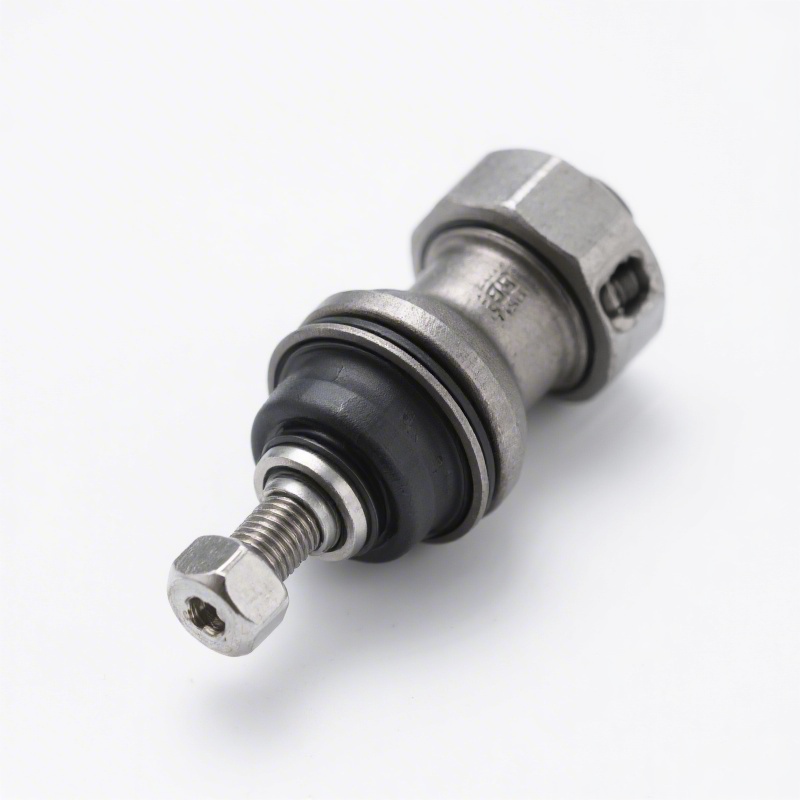
#5: Control Arms — High-Margin Chassis Category
Control arms (also called wishbones or A-arms) connect the vehicle's suspension to its chassis. They wear out due to bushing degradation and ball joint fatigue, typically between 80,000–120,000 km. On rough roads — common in Nigeria, Kenya, and Ghana — failure occurs 20–30% sooner. When a control arm fails, the vehicle is undriveable — making this a non-discretionary purchase.
Why it is a dealer winner:
- FOB Guangzhou: US $12–35 per control arm for passenger car applications; US $25–55 for SUVs.
- Retail: US $35–90 in Africa, US $45–110 in UAE — gross margin 55–65%.
- Higher absolute profit per unit: A US $20 control arm selling for US $50 generates US $30 gross profit — equivalent to selling 10 oil filters.
- Mechanics buy control arms in pairs (left + right), doubling the per-transaction value.
Practical stocking advice: Focus on the top 8 vehicle models in your market. Stock both left and right sides — they wear at similar rates and are almost always replaced together. A US $2,000 order covers approximately 70–120 control arms across 16–20 SKUs.
#6: Fuel Pumps — Mid-Range Volume Driver
Electric fuel pumps (in-tank type) fail between 100,000–150,000 km. Failure symptoms include hard starting, power loss under load, and eventual no-start condition. In markets with inconsistent fuel quality — common in parts of Africa — fuel pump failure rates are higher due to contamination and sediment clogging.
Market data:
- FOB Guangzhou: US $15–40 for in-tank fuel pump assemblies for passenger cars; US $30–70 for SUVs and light trucks.
- Retail: US $45–110 in Africa, US $55–130 in UAE — gross margin 55–65%.
- Fuel pump replacement is a workshop job, not DIY — mechanics are the primary buyer channel.
Practical stocking advice: Stock pumps for the top 6–8 vehicle applications in your market. Focus on Toyota (Corolla, Hilux, Camry) and Nissan (Sunny, Almera) applications as these dominate African roads. A US $1,500 order covers approximately 40–80 pumps across 8–12 SKUs.
#7: Ignition Coils — Reliable All-Season Performer
Modern vehicles use individual coil-on-plug (COP) ignition systems — one coil per cylinder. When an ignition coil fails (typically at 100,000–150,000 km), the engine misfires, fuel economy drops, and the check engine light illuminates. Coil failure is not seasonal — it happens year-round.
Economics:
- FOB Guangzhou: US $6–18 per coil for common Asian vehicle applications.
- Retail: US $18–45 in Africa, US $22–55 in UAE — gross margin 55–70%.
- Mechanics often replace all coils at once when one fails (especially on 4-cylinder engines), increasing per-transaction value.
Practical stocking advice: Stock the 6 most common coil types covering Toyota, Nissan, Honda, Hyundai, and Kia applications. Coils are vehicle-specific — verify compatibility before ordering. A US $600 order covers approximately 40–80 coils across 6–10 SKUs.
#8: Alternators — Big-Ticket Part That Moves
Alternators charge the battery and power the vehicle's electrical system. They fail at 120,000–180,000 km due to bearing wear, diode failure, or voltage regulator malfunction. An alternator failure immobilises the vehicle — this is an emergency purchase, not a discretionary one. Price sensitivity is lower because the alternative (a dead car) is worse.
Why it earns the #8 spot despite higher unit cost:
- FOB Guangzhou: US $35–90 for remanufactured-grade passenger car alternators; US $60–150 for SUVs.
- Retail: US $90–220 in Africa, US $100–250 in UAE — gross margin 50–60%.
- Despite the higher absolute price, alternators sell consistently because the failure is binary (works or does not). Every vehicle eventually needs one.
- Per-unit gross profit of US $45–130 makes this category worth the shelf space even at lower turnover velocity.
Practical stocking advice: Start with alternators for the 5 most common engines in your market. Toyota 1ZZ-FE/2ZR-FE (Corolla), Toyota 1KD-FTV (Hilux diesel), Nissan HR15DE (Sunny), and Hyundai G4FC (Elantra) are high-demand applications. A US $2,000 order covers approximately 20–40 alternators across 6–10 SKUs.
#9: Oxygen Sensors — Emissions-Compliant Essential
Oxygen (O2) sensors monitor exhaust gas composition and feed data to the engine control unit for air-fuel ratio correction. They fail at 80,000–150,000 km. A failed O2 sensor triggers the check engine light, increases fuel consumption by 15–25%, and causes emissions test failure — a growing concern as more African and Middle Eastern countries adopt emissions standards (Kenya NEMA, Nigeria SON, UAE ESMA).
Market data:
- FOB Guangzhou: US $8–22 for upstream O2 sensors; US $10–28 for downstream sensors.
- Retail: US $25–60 in Africa, US $30–75 in UAE — gross margin 55–65%.
- A vehicle has 2–4 O2 sensors. When one fails, mechanics often recommend replacing at least the pair.
Practical stocking advice: Stock upstream (pre-catalytic converter) sensors for the 6 most common engine applications. Upstream sensors fail more frequently than downstream sensors (approximately 3:1 ratio). A US $500 order covers approximately 30–50 sensors across 8–10 SKUs.
#10: Wheel Bearings — Heavy-Duty Demand
Wheel bearings (hub assemblies) support the vehicle's weight and enable smooth wheel rotation. They fail at 120,000–180,000 km under normal conditions, and significantly sooner on rough roads with potholes — a defining characteristic of roads in many African cities. A failed wheel bearing produces a loud humming noise that worsens with speed and, if ignored, can cause wheel lock-up.
Why it closes the top 10:
- FOB Guangzhou: US $15–45 for front wheel hub assemblies; US $18–55 for rear.
- Retail: US $45–120 in Africa, US $55–140 in UAE — gross margin 55–65%.
- Rough-road markets generate disproportionately high demand for wheel bearings relative to vehicle population — a structural advantage for dealers in Africa.
Practical stocking advice: Focus on front wheel bearings for the top 8 vehicle models. Front bearings fail more frequently than rear (approximately 2:1) because they carry more weight and steering load. A US $1,500 order covers approximately 40–80 hub assemblies across 10–16 SKUs.
Inventory Mix Strategy: The 60/25/15 Rule
Based on analysis of small dealer purchase patterns across our buyer network, we recommend the following working capital allocation for a US $10,000 starter inventory:
| Tier | % of Budget | Budget (US$) | Category Examples | Expected Turnover |
|---|---|---|---|---|
| Fast-Mover | 60% | US $6,000 | Oil filters, brake pads, spark plugs, air filters | 30–45 days |
| Mid-Range | 25% | US $2,500 | Control arms, fuel pumps, ignition coils | 45–75 days |
| High-Value | 15% | US $1,500 | Alternators, O2 sensors, wheel bearings | 60–120 days |
The logic: Fast-movers generate the cash flow that pays your rent and keeps the shop open. Mid-range parts deliver higher absolute profit per transaction. High-value parts give you a competitive edge — when a mechanic walks in needing a Toyota Corolla alternator and you have it on the shelf while your competitor orders from the capital city with a 3-day wait, you win the customer. The ratio is not rigid. Adjust based on your local market demand. A dealer in a taxi-heavy area (e.g. Nairobi's Eastlands, Lagos's Agege) may shift to 70/20/10 because high-mileage vehicles consume fast-movers faster. A dealer near an industrial area with many workshops may increase the mid-range allocation.
How to Source These 10 Categories from China
Sourcing from China as a small dealer requires a different approach than the big wholesaler's container-load strategy. Here is the practical workflow:
- Start with consolidated shipments: Do not order a full container of one category. Combine 8–12 SKUs from 3–4 categories in a single shipment. Kingmay Auto Parts supports mixed-category orders from 10 pieces per SKU, which is ideal for small dealers testing market response.
- Verify supplier quality before scaling: Ask for a pre-shipment inspection report with photos for your first order. For critical categories (brake pads, alternators, control arms), request a sample test report — a reputable supplier will provide material composition data and performance test results at no additional cost.
- Use sea freight, not air: Air freight is 4–6x more expensive per kilogram and eliminates your margin advantage. A 1-cubic-metre LCL (less-than-container-load) consolidated shipment of mixed parts from Nansha Port to Mombasa costs approximately US $120–180; to Lagos US $180–250; to Dubai US $80–120. Transit time is 18–35 days depending on destination.
- Understand your landed cost before ordering: FOB price + sea freight + insurance (1% of CIF) + import duty (varies by country, typically 10–25% for auto parts) + clearing agent fee = landed cost. Your retail price should be at minimum 2x landed cost to cover overhead and generate profit.
- Build a reorder system from day one: Track which SKUs sell and at what rate. When a SKU sells 5 units per week and lead time is 5 weeks, the reorder point is 25 units. Do not wait until the shelf is empty — by then you have already lost sales.
FAQ
Q: What is the minimum order quantity for a small dealer ordering from Kingmay?
A: Our standard MOQ is 10 pieces per SKU. For consolidated shipments combining multiple SKUs across categories, the total shipment value typically starts at US $2,000–3,000. This is specifically designed for small dealers entering the import channel for the first time.
Q: How do I know which vehicle models to stock parts for?
A: Spend one week observing your local market. Count the vehicles parked on the main street, at the market, at the petrol station. The models you see most frequently are your stocking priority. In most African cities, Toyota (Corolla, Hilux, Camry) and Nissan (Sunny, Almera) dominate. In the UAE, add Hyundai and Kia to the mix. In Ghana, add Honda and VW to the mix. Your own eyes are more accurate than any market report.
Q: Should I stock genuine OEM parts or aftermarket alternatives?
A: For small dealers serving repair shops and retail customers, aftermarket parts from IATF 16949-certified factories offer the best balance of quality and margin. Genuine OEM parts carry 30–50% higher cost and target a different customer (dealership service centres, insurance repairs). Aftermarket parts at 60–80% of OEM quality and 40–60% of OEM price is the sweet spot for the small dealer's customer base.
Q: How long does shipping from China to Africa actually take?
A: From Nansha Port (Guangzhou) to: Mombasa, Kenya — 18–25 days; Dar es Salaam, Tanzania — 20–28 days; Lagos, Nigeria — 35–40 days (via transshipment); Accra, Ghana — 35–42 days; Dubai, UAE — 14–18 days. Add 5–7 days for customs clearance and inland transport.
Q: What payment terms do you offer for small dealer orders?
A: Standard terms are 30% deposit (T/T) with order confirmation and 70% balance before loading. For repeat buyers with an established payment history, we offer 30% deposit, 40% against scanned Bill of Lading, and 30% net 30 days. All payments via SWIFT bank transfer.
Q: Can I mix auto parts with vehicle orders?
A: Yes. If you are importing vehicles, you can consolidate auto parts into the same container. A 40-foot high-cube container with 3–4 compact vehicles typically has 3–5 cubic metres of remaining space — enough for a starter parts inventory of US $3,000–5,000. This is the most cost-effective way for a vehicle importer to enter the parts business.
Start Your Small Dealer Inventory with Kingmay Auto Parts
Kingmay Auto Parts has been supplying small and mid-sized dealers across Africa, the Middle East, and Southeast Asia since 2013. We understand the small dealer's reality: limited working capital, fast inventory turnover requirements, and the need for reliable quality at competitive prices. Our 100-part catalogue covers all 10 categories in this guide, with FOB Guangzhou pricing, flexible MOQ from 10 pieces per SKU, and complete export documentation for customs clearance at your destination port.
WhatsApp Miss UU for a starter inventory quotation →
Send us your vehicle model list and we will build a custom stocking plan →
Browse our complete parts catalogue by vehicle and system →
Verify Part Numbers in Our OE Library
Every part covered in this guide has a matching OE number in our reference library — grouped by system with cross-references, so you can source the exact fit for Hyundai, Kia, GM Korea and more.
Related Articles


Related Products
From our Auto Parts catalog — 4 export-ready products