Why Private Label Is the Ultimate Margin Lever for Big Wholesalers
If you are buying generic branded auto parts from a Chinese supplier and selling them to dealers in your country, you are leaving significant margin on the table. The generic supplier brand that printed their name on the box is capturing value that could be yours. Private label auto parts — where you own the brand, the packaging, and the customer relationship — is the standard growth path for every major aftermarket distributor globally. UAP/NAPA, AutoZone, Advance Auto Parts, and partspro auto all built their margins on private label before scaling into proprietary product lines.
The opportunity from China is structurally different from 20 years ago. Chinese Tier-1 factories now hold IATF 16949 certification, produce components for Delphi, Bosch, and Denso on the same production lines, and are actively seeking long-term volume buyers who want to build brands rather than just source boxes. The factories have the capacity. The question is whether you have the strategy to use it.
This guide is written for big auto parts wholesalers: country-level and regional distributors moving 1,000+ pieces per SKU who want to understand what private label actually involves, how long it takes, what it costs, and what can go wrong. No shortcuts, no fluff — just the practical framework that moves you from generic buyer to brand owner.
The 5-Step Private Label Framework
Private label launch follows a consistent sequence regardless of which product category you choose. Skip a step and you pay for it later — usually in the form of returned goods, wrong-spec parts, or packaging that does not pass customs inspection in your destination country.
- Category selection: Choose 1–3 product categories based on market fit, margin potential, and existing supplier relationships
- Factory qualification: Audit the factory against IATF 16949 criteria, request samples, and verify production capability
- MOQ and pricing negotiation: Structure the order to manage cash flow while meeting factory minimums
- Brand identity and packaging: Design brand name, logo, box artwork, and label content that meets destination market legal requirements
- First container execution: Pre-shipment inspection, documentation, freight booking, and customs clearance
Each step has a typical time allocation. The entire process from first factory contact to warehouse delivery takes 12–25 weeks for most first-time private label buyers, depending on packaging complexity and factory production schedule.
Step 1: Choose the Right Product Category
Not all auto parts categories are equally suited to private label at the wholesale level. The right category has three characteristics: consistent OE specification (so quality is verifiable), high replacement frequency (so volume is sustainable), and meaningful price gap between generic and branded equivalents (so the margin improvement justifies the investment).
Best-performing private label categories for big wholesalers:
| Category | Typical FOB Price | Generic Wholesale | Private Label Retail | Gross Margin |
|---|---|---|---|---|
| Brake pad sets (ceramic) | USD 6–12 | USD 14–20 | USD 28–42 | 65–72% |
| Oil filters (cartridge type) | USD 1.20–2.50 | USD 3–5 | USD 7–12 | 68–79% |
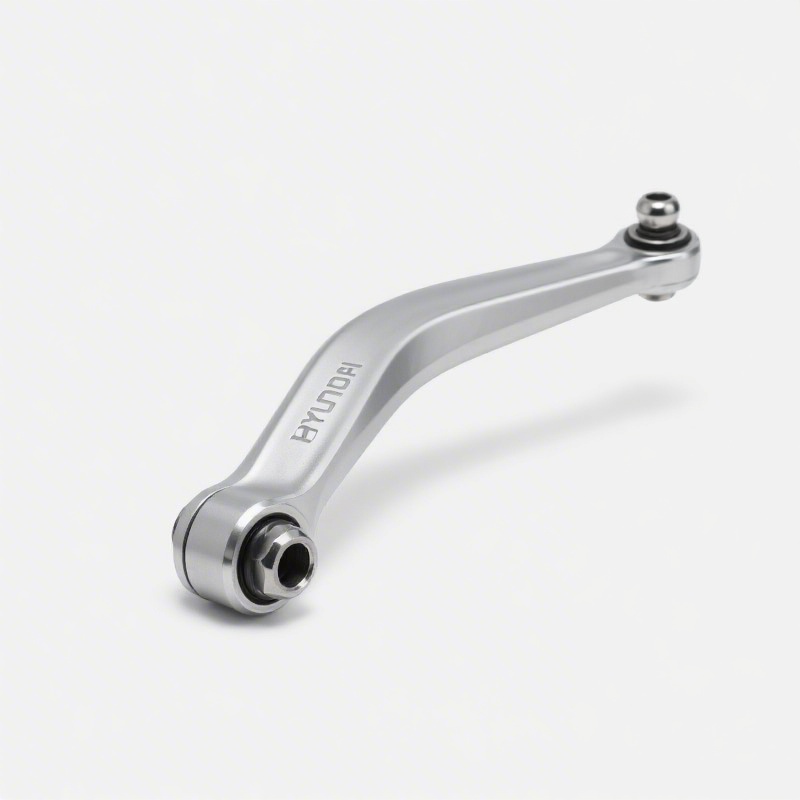
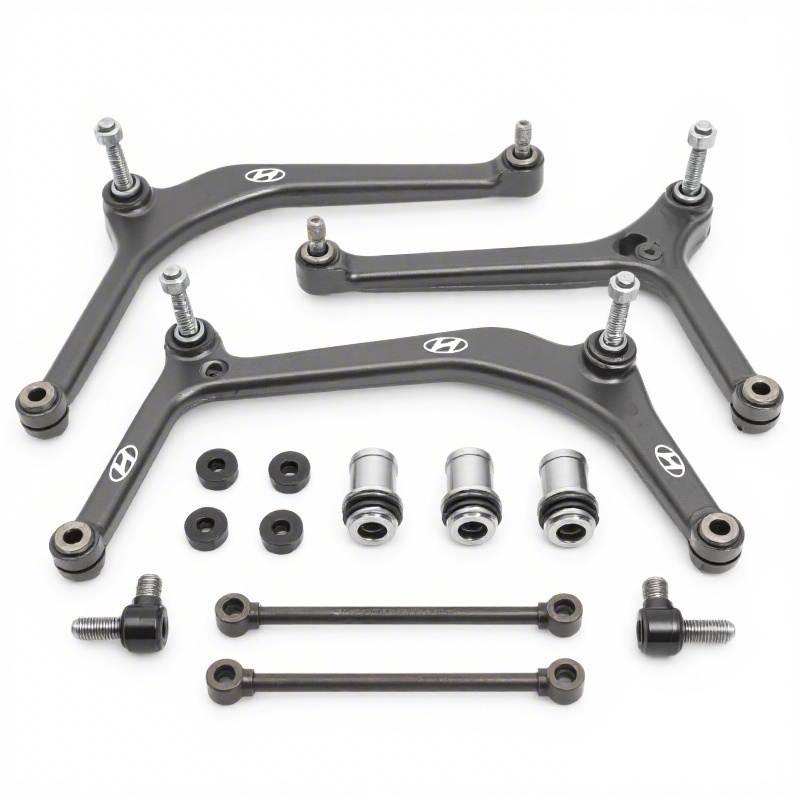
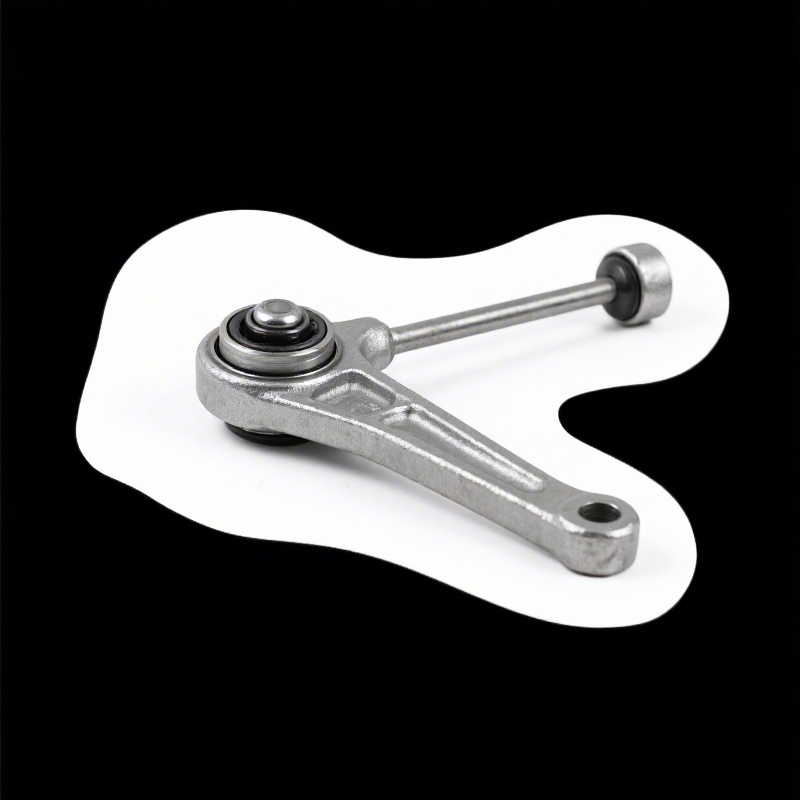
| Suspension control arms | USD 18–35 | USD 38–55 | USD 65–95 | 52–63% |
| Alternators (reman style) | USD 32–55 | USD 65–85 | USD 110–160 | 58–66% |
| Ignition coil sets | USD 4.50–9 | USD 12–18 | USD 22–35 | 59–74% |
Start with one category. Attempting to private-label five categories simultaneously is how projects collapse. Choose the category where you already have the strongest buyer relationships and the deepest understanding of which specification grades sell best in your market.
Step 2: Qualify the Factory — What IATF 16949 Actually Proves
The IATF 16949 certificate is the automotive industry quality management standard, replacing ISO/TS 16949 in 2016. It covers everything from design controls and production process validation to defect prevention and continuous improvement. A factory holding current IATF 16949 certification has been audited by an accredited registrar and has demonstrated the systems required to produce consistent automotive-grade components.
But a certificate alone is not enough. Here is the practical qualification checklist that Kingmay Auto Parts applies to every factory we recommend for private label programs:
- Certificate scope: Does it cover the specific product category you want to private-label? A factory can hold IATF 16949 for brake pad production while having no relevant certification for electrical components.
- Customer-specific requirements: Does the factory have experience with buyers in your destination market? Factory awareness of destination market conditions (road quality, fuel quality, climate) reduces specification errors.
- Tooling ownership: Who owns the moulds or dies used to produce your parts? For private label, tooling should be owned by the buyer or at minimum documented in a tooling agreement that guarantees access.
- Sample production run: Request a 10–20 piece pilot run before committing to full production. Inspect dimensions, weight, packaging quality, and colour consistency against your specification sheet.
- Salt spray test: For underbody and chassis parts, request a 500-hour neutral salt spray test report from an accredited lab. This is the industry standard for corrosion resistance verification.
Step 3: Negotiate MOQ and Pricing Without Getting Overcommitted
The factory's stated MOQ is a starting position, not a final one. Chinese automotive component factories are accustomed to volume buyers and are generally willing to negotiate MOQ structures that work for both parties — particularly if you are bringing multiple SKUs and a commitment to re-order.
MOQ negotiation strategies that work:
- SKU bundling: Rather than accepting a 500-piece MOQ per individual SKU, propose a total volume MOQ across 5–10 SKUs within the same product family. A factory producing brake pads, brake rotors, and brake calipers may accept a combined MOQ of 500 pieces across all three SKUs.
- Phased commitment: Offer a structured commitment: 500 pieces in the first order, 1,000 in the second, 2,000 in the third — with pricing that de-escalates as volume increases. Factories prefer predictable growth over one-time large orders.
- Payment term leverage: T/T 30% deposit / 70% against Bill of Lading is standard. If you offer T/T 50% deposit / 50% against B/L or even LC at sight, some factories will reduce the MOQ by 20–30% as a payment security premium.
- Exclusivity for volume: If your market is specific (e.g., Ghana only, or East Africa only), a factory may grant regional exclusivity in exchange for a higher committed MOQ. This is particularly valuable for brake components and suspension parts where local brands can establish strong market position quickly.
Typical first-order MOQ for suspension and chassis parts ranges from 100–200 pieces per SKU. For engine components like gaskets, sensors, and ignition parts, the range is 50–100 pieces per SKU. Electrical components (alternators, starters, wiring harnesses) typically require 20–50 pieces per SKU due to higher per-unit value.
Step 4: Design Your Brand Identity and Packaging
Your brand name, logo, and packaging are the face of your business in the market. Poor packaging is one of the most common reasons private label products fail to gain traction against established generic suppliers — even when the parts inside are identical in quality.
Brand naming considerations:
- Avoid names that are identical or confusingly similar to existing registered brands in your target market. Search the national trademark registry before committing a name.
- Avoid generic names that describe the product ("Premium Brake Pads" is not a brand — it is a product description).
- Names that evoke quality or origin without making false claims are safest: technical-sounding names, port city references, or abstract words in the local language.
Packaging must-haves by destination market:
- UAE/Gulf: Arabic label panel is legally required. Net weight in kg, country of origin (Made in China), importer details, and HS code must appear on the box. Gulf GSCO conformity mark may be required for specific categories.
- Kenya/Kampala: KEBS import marking is required for regulated categories. English label is standard. Net weight, country of origin, and importer name are mandatory.
- Nigeria: SONCAP certification requires the Standards Organisation of Nigeria mark on packaging. Lagos and Port Harcourt customs enforcement has tightened since 2024 — compliant packaging reduces clearance delays significantly.
- Southeast Asia: Most countries accept English labeling with local language optional. Indonesian SNI marking is mandatory for brakes and safety-critical parts.
Box design costs USD 300–800 for professional artwork from a Guangzhou printing house that specialises in auto parts export packaging. Do not use the factory's generic box — the branding opportunity is lost the moment your box looks like everyone else's.
Step 5: First Container — What to Check Before It Ships
The pre-shipment inspection is your last line of defence before the parts leave China. A USD 200–400 inspection fee paid to a third-party inspection company (SGS, Bureau Veritas, or a specialist like Asia Quality Focus) is the cheapest insurance you will ever buy against a bad container.
First container checklist:
- Quantity verification: Count 100% of boxes, spot-check weight against packing list
- Dimension check on 10% random sample: Does the part physically fit the application? (If you did not provide a vehicle specification sheet to the factory, this step catches errors.)
- Packaging integrity: Are boxes damaged, crushed, or showing signs of moisture ingress?
- Label verification: Does each box carry the correct brand name, part number, quantity, and country of origin?
- Sample installation test: If possible, fit the part to an actual vehicle before the container seals. This is the only test that catches invisible dimensional errors.
Landed Cost Comparison: Generic vs Private Label
The margin argument for private label is straightforward in theory but requires precise calculation in practice. Here is a real worked example using suspension control arms for a Ghana market distributor:
| Cost Component | Generic Import | Private Label (Own Brand) |
|---|---|---|
| FOB Guangzhou per unit | USD 22.00 | USD 22.00 |
| Ocean freight (20ft container, 400 units) | USD 3.50 | USD 3.50 |
| Customs duty Ghana (20% + 17.5% VAT) | USD 7.70 | USD 7.70 |
| Port, handling, inland freight | USD 2.00 | USD 2.00 |
| Brand license / packaging amortisation | USD 0 | USD 1.80 |
| Landed cost per unit | USD 35.20 | USD 37.00 |
| Wholesale sell price | USD 48–52 | USD 68–78 |
| Gross margin | 27–32% | 46–53% |
The landed cost premium for private label packaging is approximately USD 1.80 per unit. The retail price premium — because you own the brand and your customers cannot cross-shop identical parts under a generic name — is USD 20–26 per unit. This is the arithmetic that drives every major aftermarket distributor toward private label.
Brand Registration Checklist by Country
Registering your trademark in your destination country before you import is not optional — it is the legal foundation of your private label program. Without a registered trademark, you have no legal basis to stop a competitor from importing the same parts under your brand name from another buyer.
- Ghana: Register with the Ghana Intellectual Property Office (GHIPO) under Class 12 (vehicle parts). Processing time: 6–12 months. Cost: USD 150–400 via a local IP attorney.
- Kenya: Register with the Kenya Industrial Property Institute (KIPI) under Class 12. ARIPO regional filing is available through the Harare Protocol. Cost: USD 300–800.
- Nigeria: Register with the Trademarks Registry (Commercial Law Department). Class 12 coverage. Processing: 12–18 months. Engage a Nigerian IP attorney — foreign applicants cannot file directly.
- UAE: Register with the UAE Ministry of Economy. Dubai Economic Department handles Dubai-specific registration. Class 12. English and Arabic trademark. Cost: USD 800–2,000 depending on territory coverage.
- Southeast Asia: File through ARIPO (African Regional Intellectual Property Organization) or individually in each country. Singapore IP Office (IPOS) is the fastest and most cost-effective individual filing at USD 300–500 per mark per country.
12-Week Private Label Launch Timeline
From initial factory contact to warehouse-ready inventory, here is the realistic timeline for a first-time private label buyer sourcing through Kingmay Auto Parts:
| Week | Activity | Output |
|---|---|---|
| Week 1–2 | Category selection, market research, preliminary factory shortlist | 1–3 factory candidates, 3–5 target SKUs per category |
| Week 2–3 | Factory outreach, IATF 16949 verification, quotation requests | Quotations with MOQ, pricing, lead time, packaging options |
| Week 3–5 | Sample ordering, sample inspection, specification finalisation | Approved samples, signed specification sheet |
| Week 5–7 | Brand name registration search, packaging design and artwork | Registered brand name, approved box artwork, print-ready files |
| Week 7–9 | Production order confirmation, tooling setup (if applicable), deposit payment | Signed purchase order, deposit receipt, production schedule |
| Week 9–12 | Production, pre-shipment inspection, freight booking, documentation | Inspection report, Bill of Lading, customs documents |
| Week 12+ | Container transit, customs clearance, warehouse receipt | Inventory in destination warehouse, first sales |
Ready to Build Your Auto Parts Private Label Brand?
Kingmay Auto Parts supports big wholesalers through the complete private label process: factory introduction, IATF 16949 qualification, sample management, packaging coordination, pre-shipment inspection, and freight logistics from Nansha Port. We have facilitated private label programs for distributors in the UAE, Ghana, Kenya, Nigeria, and South Africa — and we handle the documentation so you can focus on selling.
Contact our private label team to discuss your program →
Browse our current auto parts catalog →
WhatsApp us with your target categories →
Verify Part Numbers in Our OE Library
Every part covered in this guide has a matching OE number in our reference library — grouped by system with cross-references, so you can source the exact fit for Hyundai, Kia, GM Korea and more.
Related Articles
Related Products
From our Auto Parts catalog — 4 export-ready products