Identifying the Market Gap
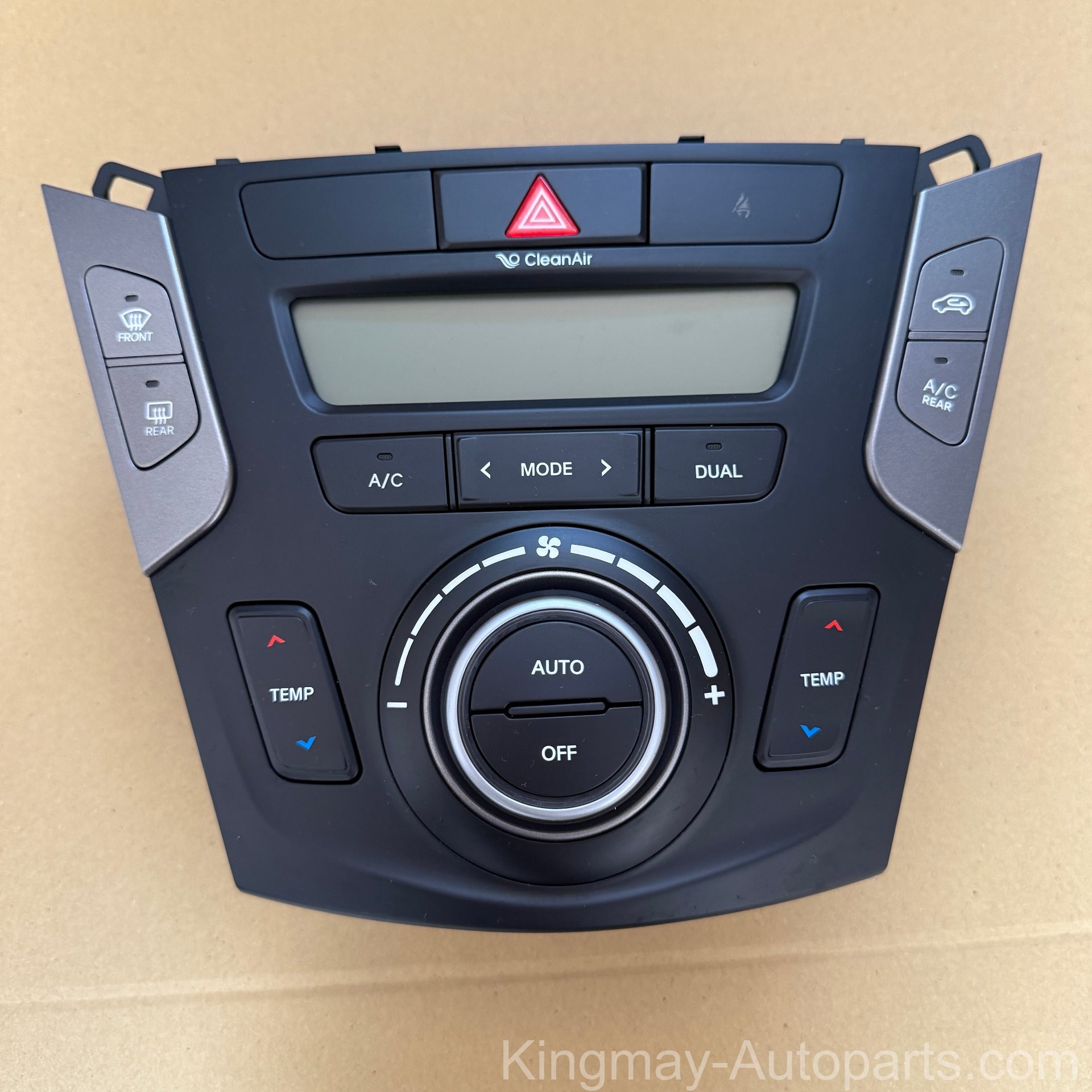
In late 2025, the Kingmay Auto Parts sourcing team noticed an anomaly in Middle East customer enquiries. Multiple distributors from UAE, Saudi Arabia, and Kuwait independently submitted requests for the same part: the Hyundai Santa Fe DM climate control panel, OE reference 97250-2W360. Unlike typical parts enquiries that arrive sporadically across hundreds of SKUs, this specific part generated 11 separate enquiries from 7 different companies in a 60-day window.
Investigation revealed why: Hyundai Mobis had discontinued continuous production of the Santa Fe DM climate control panel. GCC dealer warehouses were empty. Customers with failed panels faced either 60-90 day backorder waits from Korea — with no guaranteed fill rate — or the prospect of sourcing used panels from salvage yards, which carried no quality assurance and a typical lifespan of 6-12 months before the replacement panel itself failed.
Kingmay made the decision to invest in independent mold development for this part. The project was approved in January 2026 with a 5-month development timeline to production-ready status. Here is how the engineering team executed it.
Phase 1: Reverse Engineering the Original Panel
Kingmay procured three genuine Hyundai 97250-2W360 panels from a Hyundai GCC dealer (Juma Al Majid, Dubai) at retail price — a deliberate choice to ensure the reference samples were genuine OEM parts, not salvage or counterfeit units. The reverse engineering process followed a structured methodology:
- External dimensional scanning: The front faceplate, rear housing, and all button caps were digitised using a Keyence 3D laser scanner at 0.02mm resolution. This generated the point cloud data required for CNC mold tooling. Critical reference dimensions: overall panel envelope (178.5 x 118.2 x 58.7mm), button pitch spacing (15.0mm horizontal, 12.5mm vertical), display window aperture (82.3 x 28.6mm), and connector cutout (52.4 x 14.8mm).
- PCB schematic capture: The original PCB was carefully depopulated (all components desoldered) and the bare board was scanned at 2,400 DPI. Netlist extraction identified 142 components across a 4-layer FR4 PCB: microcontroller (Renesas R5F series), CAN-bus transceiver (NXP TJA1040), LED driver IC, rotary encoder, 18 tactile switches, 4 status indicator LEDs, and associated passive components (resistors, capacitors, ferrite beads).
- CAN-bus protocol analysis: Using a Peak PCAN-USB logic analyser and CAN-interrogator software, the team captured and decoded the full CAN-bus communication dataset between the original panel and a Hyundai ECU emulator. Message IDs, data payload structure, PID mapping, and bus speed (500 kbps, standard 11-bit identifier format) were documented. This step was critical: without correct CAN-bus message formatting, a replacement panel would either fail to communicate with the vehicle ECU or trigger a DTC (Diagnostic Trouble Code).
- Bill of materials (BOM) compilation: Every component was identified by manufacturer, part number, and specification. Equivalent or superior alternatives were sourced where original components were obsolete or single-sourced from Hyundai suppliers.
Phase 2: PCB Design and Firmware Development
With the schematic and BOM established, Kingmay's electronics engineering partner designed a functionally equivalent 4-layer PCB in Altium Designer. Key design decisions:
- Microcontroller: Selected an STM32F-series ARM Cortex-M MCU with sufficient flash memory for the climate control firmware, pin-compatible GPIO mapping for all switches and LEDs, and native CAN-bus peripheral with the correct transceiver interface.
- Tactile switches: Specified Omron B3F-series sealed tactile switches rated for 1,000,000 operations — a deliberate upgrade over the original switches, which typically begin exhibiting contact degradation after 300,000-500,000 operations. This directly addresses the most common failure mode (button unresponsiveness) identified in Middle East field data.
- Rotary encoder: Bourns PEC11 series, 24-detent, with push-to-select function. The 24-detent count provides tactile feedback matching the original panel's 5 fan speed positions plus intermediate steps for temperature adjustment.
- LED backlight: Nichia NSSW-series white and amber LEDs with PWM dimming circuit. Selected for 50,000-hour rated lifespan and consistent colour temperature across the display area.
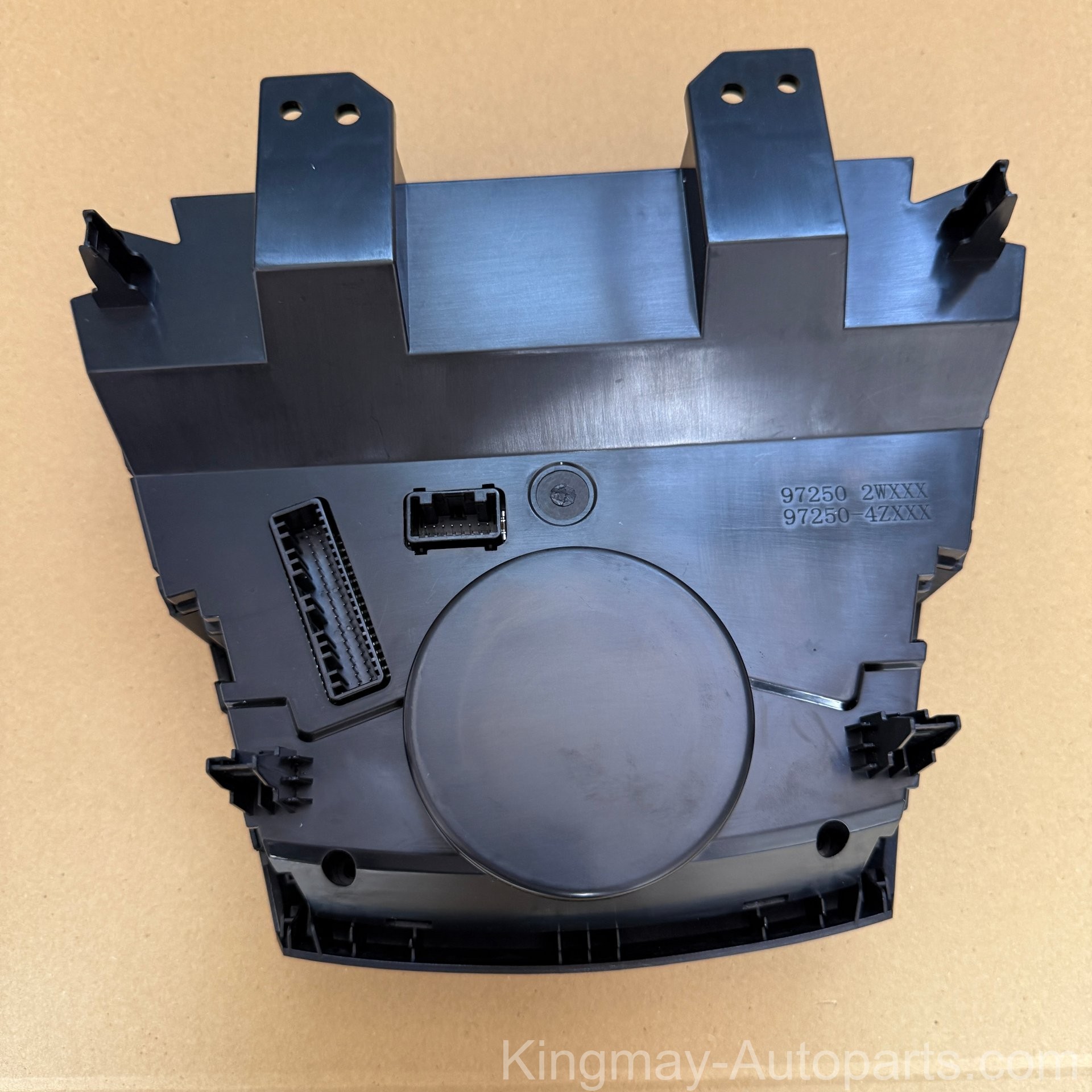
The PCB layout maintained identical connector position and mounting hole locations to the original, ensuring physical drop-in compatibility with the vehicle wiring harness and dashboard mounting points.
Phase 3: Mold Tooling and Plastic Injection
The plastic housing components presented specific manufacturing challenges:
- Front faceplate: Injection-molded ABS (acrylonitrile-butadiene-styrene) with UV-stabilised additives to prevent yellowing under prolonged dashboard sun exposure — essential for Middle East vehicles where dashboard surface temperatures reach 70 degrees C. Mold type: single-cavity, polished A2 tool steel, 3-plate cold runner system.
- Button caps: Injection-molded polycarbonate (PC) with laser-etched icons and clear top coat for wear resistance. Each button cap requires a separate mold cavity insert for the icon etching process. Tolerance: plus-minus 0.05mm on outer dimensions to ensure consistent fit in faceplate apertures.
- Rear housing: Glass-filled nylon (PA6-GF30) for thermal stability and mechanical rigidity. The rear housing incorporates the 24-pin connector alignment channel, which must maintain dimensional accuracy within plus-minus 0.1mm to guarantee reliable harness mating.
- Silicone button membrane: Compression-molded silicone rubber (60 Shore A durometer) with conductive carbon pill contacts. This membrane sits between the button caps and the PCB tactile switches, providing the tactile feel and sealing against dust ingress. This was the most technically challenging component to replicate — achieving the correct actuation force (1.5N plus-minus 0.2N per switch) required three mold iterations.
Phase 4: Validation Testing Protocol
Before releasing the product to the market, Kingmay executed a comprehensive validation testing protocol on pre-production samples:
| Test | Method | Acceptance Criteria | Result |
|---|---|---|---|
| Tactile switch endurance | 10,000 actuations per switch at 1Hz using automated pneumatic actuator | Contact resistance less than 100 milliohms after test; no mechanical failure | PASS — all 18 switches maintained less than 50 milliohms |
| Rotary encoder endurance | 5,000 full rotations (24 detent x 4 edges x 5,000 = 480,000 edge transitions) | All detent positions register correctly; push-to-select function operational | PASS — zero missed detent transitions |
| Thermal cycling | 50 cycles: -20C to +80C, 1 hour dwell at each extreme, 2C/min ramp rate | Full function after cycling; no PCB delamination, no solder joint cracking, no plastic warping | PASS — all functions maintained throughout |
| CAN-bus communication | Continuous 48-hour operation on CAN-bus network with Hyundai ECU emulator; all message IDs monitored for errors | Zero CAN-bus error frames; 100% message delivery rate; all PID values within specification | PASS — zero error frames, 100% delivery |
| Display uniformity | Spectroradiometer measurement at 9 grid points across LCD area; 50% and 100% brightness settings | Luminance uniformity greater than 85% across display area | PASS — 92% uniformity at 100% brightness |
| Temperature sensor calibration | Reference temperature chamber at 15C, 25C, 35C, 45C; compare panel IR sensor reading to calibrated thermocouple | Accuracy within plus-minus 1.5C at all reference points | PASS — max deviation 0.8C at 45C reference point |
All 20 pre-production samples passed the complete test protocol. With validation confirmed, Kingmay authorised the production ramp and released the product for export.
Why Independent Development Matters for Distributors
For Middle East auto parts distributors, independent mold development is not just a supply chain detail — it is a commercial differentiator with concrete benefits:
- Supply continuity: Unlike OEM-sourced parts that depend on Hyundai Mobis production schedules and warehouse restocking cycles, Kingmay controls its own production. When a distributor places an order, production can be scheduled and fulfilled without waiting for a third-party manufacturer.
- Quality improvement: Independent development allows upgrading components that were cost-engineered in the original design. The Omron tactile switches and Bourns rotary encoders specified in the Kingmay panel exceed the original component specifications, directly addressing the failure modes common in the GCC operating environment.
- Private labeling: Distributors with volume commitment can have panels manufactured with their own brand packaging — building brand equity in their local market rather than reselling a no-name generic. This is impossible when sourcing from OEM channels.
- Cost transparency: Independent development eliminates the multi-layer markup of the OEM supply chain (Mobis margin, regional warehousing margin, dealer margin). The cost structure is manufacturing cost plus a single wholesale margin — resulting in the 75-80% price advantage documented earlier.
Available Now: 97250-2W360 and 97250-2W350
The Kingmay Hyundai Santa Fe DM Climate Control Panel is now in production and available for export. Key ordering information:
- OE 97250-2W360: Primary reference number. Fits all 2013-2016 Santa Fe DM trims. Product details and specification
- OE 97250-2W350: Variant for mid-to-high trims in specific GCC markets. Functionally interchangeable with 2W360. Product details and specification
- Sample availability: 1-2 piece samples available for evaluation before bulk order commitment
- Bulk MOQ: 10 pieces per SKU
- Private label MOQ: 50 pieces for custom packaging; 500+ units annually for exclusive territory distribution rights
- Shipping: Express (7-10 days to GCC) or sea freight (25-35 days). Both options include commercial invoice, packing list, and CO for customs clearance.
Contact Kingmay Auto Parts: Miss UU | Email: ku@kingmay-autoparts.com | Phone/WhatsApp: +86 13302408528 | Address: Shop 7#, No.1542 Guangyuan East Road, Yuexiu District, Guangzhou, China
View OE 97250-2W360 Product Page — Specification, Testing, Packaging
Use the Kingmay Parts Finder — Find Parts by Brand, Model and System
Verify Part Numbers in Our OE Library
Every part covered in this guide has a matching OE number in our reference library — grouped by system with cross-references, so you can source the exact fit for Hyundai, Kia, GM Korea and more.
Related Articles
Related Products
From our Engine System catalog — 4 products ready for export