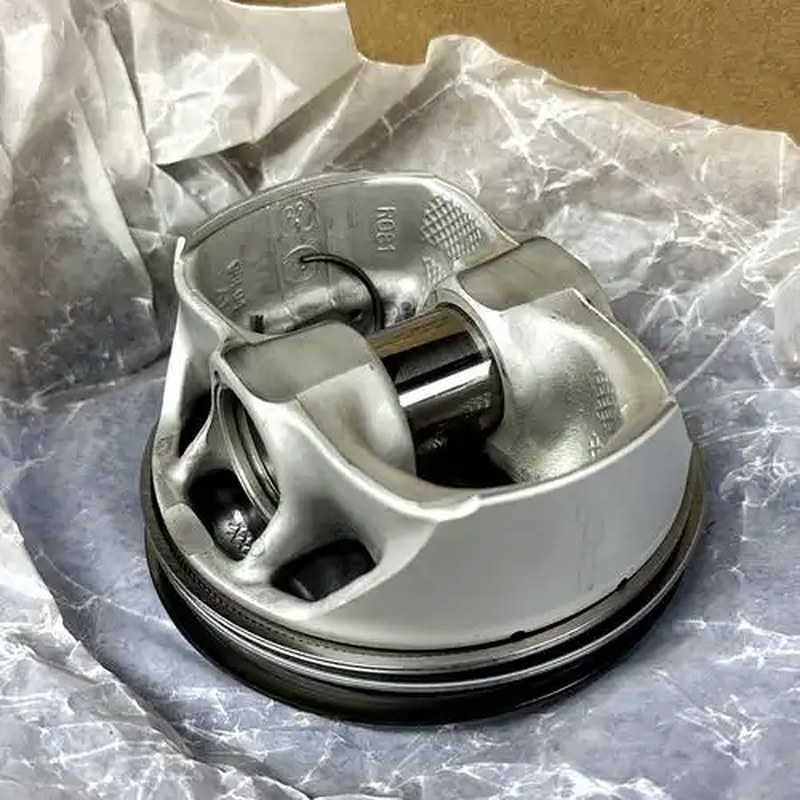
A turbocharger replacement at a Hyundai dealership costs $2,500-4,500. The turbo itself (OEM) retails for $1,800-3,200. Yet the same turbocharger — built in the same IATF 16949-certified Chinese factory that supplies Tier-1 assembly lines — wholesales at $285-420 FOB Guangzhou. That is an 85% price gap that savvy importers in Nigeria, Saudi Arabia, Kenya, and Kazakhstan have been exploiting since 2019.
The global turbocharger aftermarket is projected to reach $19.2 billion by 2028 (Grand View Research, 2025), driven by the proliferation of turbocharged engines across Hyundai Kia's lineup. The 1.6L Gamma T-GDI, 2.0L Theta II T-GDI, and 2.2L R diesel engines power millions of vehicles worldwide — and every one of them will need turbo-related parts within 100,000-150,000 km. This guide covers the 17 highest-demand Hyundai Kia turbocharger parts with verified OE numbers and FOB pricing.
VIP Tip Box — Turbo Parts Are High-Ticket, Low-Volume Gold
The average turbocharger invoice is 5-8x higher than brake pads or filters. A single pallet of 12 turbo assemblies (FOB ~$4,200) generates the same margin as 2,000 cabin air filters — but with 1/20th the warehousing footprint and 1/50th the pick-and-pack labor. For importers entering a new market, turbochargers are the highest profit-per-cubic-meter category in automotive aftermarket parts.
Turbocharger Engines in Hyundai Kia: The Volume Play
| Engine Code | Displacement / Fuel | Key Models | Est. Global Units (Millions) | Turbo Life Expectancy |
|---|---|---|---|---|
| Gamma 1.6 T-GDI | 1.6L Petrol | Elantra Sport, Kona, Veloster, Ceed GT | 3.5M+ | 120K-160K km |
| Theta II 2.0 T-GDI | 2.0L Petrol | Sonata, Optima, Santa Fe, Sorento | 4.2M+ | 130K-180K km |
| R 2.2 CRDi | 2.2L Diesel | Santa Fe, Sorento, Carnival | 2.1M+ | 180K-250K km |
| Smartstream G1.6 T-GDI | 1.6L Petrol (CVVD) | Tucson NX4, Sportage NQ5, Sonata DN8 | 2.8M+ | 140K-180K km |
The combined installed base exceeds 12.6 million turbocharged Hyundai Kia vehicles globally. Even at a conservative 2% annual turbo failure rate, that is 252,000 turbocharger replacements per year — a $75 million aftermarket at wholesale pricing, and far more at retail.
Turbocharger Assembly: OE Numbers and FOB Pricing
ing| OE Part Number | Engine / Application | Turbo Type | FOB Price (USD) | MOQ |
|---|---|---|---|---|
| 28231-2B700 | Elantra Sport 1.6T Gamma (2017-2020) | Twin-scroll, E-actuator | $315-380 | 5 pcs |
| 28231-2F000 | Sonata LF 2.0T Theta II (2015-2019) | Twin-scroll, E-actuator | $345-420 | 5 pcs |
| 28231-4A700 | Santa Fe TM 2.2L Diesel R (2019-2023) | VGT, E-actuator | $365-435 | 5 pcs |
| 28231-2A700 | Tucson TL / Sportage QL 2.0L Diesel (2016-2020) | VGT, E-actuator | $285-355 | 5 pcs |
| 28231-2GTA1 | Tucson NX4 / Sportage NQ5 1.6T Smartstream (2021+) | Twin-scroll, E-actuator (CVVD) | $375-445 | 5 pcs |
Important: Turbocharger assemblies from Kingmay are sold without the electronic actuator pre-calibrated. The actuator must be calibrated to the specific vehicle using a Hyundai GDS or equivalent diagnostic tool after installation. This is the same requirement as OEM Hyundai turbos — the actuator learns its end-stop positions from the ECU during the initial adaptation procedure. Importers should inform their workshop customers of this requirement and consider stocking a Kia/Hyundai-compatible diagnostic interface as a value-add.
Turbo Actuator, Oil Feed Line, and Intercooler Components
ComponentsThe turbocharger is only as reliable as its supporting components. Three parts drive a disproportionate share of turbo replacements and offer excellent margin for importers:
| OE Part Number | Component | Application | FOB Price (USD) |
|---|---|---|---|
| 39400-2F000 | Electronic Actuator | Sonata 2.0T Theta II 2015-2019 | $85-125 |
| 39400-4A700 | Electronic Actuator | Santa Fe 2.2L Diesel R 2019-2023 | $98-140 |
| 28235-2F000 | Wastegate Actuator (Pneumatic) | Sonata 2.0T Theta II (early, 2011-2014) | $45-65 |
| 28240-2F000 | Turbo Oil Feed Line | Sonata 2.0T Theta II 2015-2019 | $22-35 |
| 28241-2F000 | Turbo Oil Return Line | Sonata 2.0T Theta II 2015-2019 | $18.50-28 |
| 28271-4A700 | Turbo Oil Feed Line | Santa Fe 2.2L Diesel R 2019-2023 | $28-42 |
| 28272-4A700 | Turbo Oil Return Line | Santa Fe 2.2L Diesel R 2019-2023 | $22-35 |
| 28290-2F000 | Turbo Intercooler Pipe (Hot Side) | Sonata 2.0T Theta II 2015-2019 | $35-52 |
| 28291-4A700 | Intercooler Assembly | Santa Fe 2.2L Diesel R 2019-2023 | $95-145 |
The Oil Feed Line — Small Part, Catastrophic Failure
The #1 cause of turbocharger failure is oil starvation, and the #1 cause of oil starvation is a clogged or coked turbo oil feed line. The oil feed line is a small-diameter steel or braided hose (typically 4-6mm ID) that carries engine oil to the turbo's journal bearing. At the 700-900°C temperatures near the turbine housing, residual oil in the line can coke (carbonize) into solid deposits when the engine shuts off without a cool-down period. Over time, these deposits narrow the line until oil flow drops below the bearing's minimum requirement. Result: turbo shaft seizure within seconds. Kingmay recommends replacing the oil feed line every time a turbocharger is replaced — a $22 line prevents a $400 turbo failure.
Turbo Failure Diagnosis: What Importers Need to Know to Advise Workshops
to Advise WorkshopsTurbocharger failure falls into three categories, each with distinct root causes:
1. Oil-Related Failure (60% of cases). The turbo shaft spins at 100,000-150,000 RPM on a thin film of engine oil. Any interruption — clogged feed line, low oil level, wrong oil viscosity, extended oil change intervals — destroys the bearing within seconds. Symptoms: blue/white smoke from exhaust (oil burning in the turbine housing), shaft play when manually wiggled (axial or radial play exceeding 0.5mm = dead turbo), metallic scraping sound. Prevention: 5W-30 or 5W-40 full synthetic oil, changed every 5,000-7,500 km (not 15,000 km as some manufacturers claim). This is especially critical in hot climates where oil shears faster.
2. Foreign Object Damage — FOD (25% of cases). A piece of debris — broken spark plug electrode, carbon deposit from the EGR system, silicone sealant bead from a previous repair — enters the compressor or turbine wheel at high speed. The impact bends or chips the blades, destroying the turbo's dynamic balance. Symptoms: high-pitched whistling that changes pitch with RPM (unbalanced wheel), loss of boost pressure, compressor wheel damage visible through the intake pipe. Prevention: Always inspect the intake tract and intercooler for debris before installing a replacement turbo. A $0.05 piece of carbon will destroy a $400 turbo in 5 seconds.
3. Overspeed / Overboost (15% of cases). The turbo spins faster than its design limit, usually due to a stuck-open wastegate actuator (can't bypass exhaust gas) or an incorrectly calibrated electronic actuator. The shaft and bearings exceed their thermal and mechanical limits. Symptoms: sudden loss of power, loud bang or pop from the engine bay (compressor wheel explosion), metal fragments in the intercooler. Prevention: Verify actuator calibration after turbo replacement using GDS or equivalent diagnostic tool. Never drive a vehicle with an overboost condition — s
Diesel vs Petrol Turbochargers: Key Differences Importers Must Know
erences Importers Must Know| Characteristic | Petrol Turbo (Gamma 1.6T / Theta 2.0T) | Diesel Turbo (R 2.2L CRDi) |
|---|---|---|
| Exhaust Gas Temperature (Max) | 950-1,050°C | 750-850°C |
| Boost Pressure (Typical) | 1.0-1.5 bar (14.5-21.8 psi) | 1.8-2.5 bar (26-36 psi) |
| Turbine Housing Material | High-nickel cast iron (Ni-resist D5S) | High-silicon cast iron (SiMo) |
| VGT (Variable Geometry) | Rare (mostly wastegate or twin-scroll) | Standard (VGT vanes adjust A/R ratio) |
| Actuator Type | Electronic (CAN-bus, PWM-controlled) | Electronic (CAN-bus, more calibration steps) |
| Typical Failure Mode | Oil coking + shaft seizure | VGT vane sticking + actuator failure |
| FOB Price Range | $285-445 | $365-435 |
Key takeaway for importers: Diesel turbos are more expensive but last longer (180K-250K km vs 120K-160K km for petrol). However, diesel turbo failures tend to be more complex — VGT vane sticking often masquerades as "turbo failure" when the actual fix is cleaning the VGT mechanism or replacing the actuator alone. If you stock actuators ($85-140 FOB) alongside turbo assemblies, your workshop customers can offer a lower-cost repair option that builds loya
Full-Container Mix: Hyundai Kia Turbo Parts Distributor Package
Kia Turbo Parts Distributor Package| SKU | Quantity | Unit FOB | Line Total |
|---|---|---|---|
| Turbocharger Assembly (petrol) | 30 pcs | $315-420 | ~$10,800 |
| Turbocharger Assembly (diesel) | 20 pcs | $285-435 | ~$7,200 |
| Electronic Actuator | 40 pcs | $85-140 | ~$4,400 |
| Oil Feed + Return Line (sets) | 100 sets | $40-77/set | ~$5,600 |
| Intercooler + Pipes | 30 pcs | $95-145 | ~$3,600 |
| Turbo Gasket Kit (exhaust manifold, oil drain) | 200 sets | $8-15/set | ~$2,200 |
| Turbo Mounting Stud & Nut Kit | 300 sets | $4-8/set | ~$1,800 |
| Estimated Total (20ft Container) | ~$41,500 | ||
Note: Turbo gasket kits and mounting stud/nut kits are consumables that every turbo replacement job requires. At $12 average FOB, a gasket kit retails for $25-40 in local markets — a 100-200% margin on a part that takes zero shelf space. Stocking these small consumables is how the best importers capture the 80% of turbo repair reven
Market Selection: Where Turbo Parts Are Most Profitable
tion: Where Turbo Parts Are Most Profitable| Market | Best-Selling Turbo Parts | Engine Preference | Key Insight |
|---|---|---|---|
| Saudi Arabia / UAE | Santa Fe 2.2 Diesel turbo, intercooler | Diesel dominant (SUV segment) | Diesel Santa Fe and Sorento are #1 family SUVs in GCC |
| Nigeria | Sonata/Optima 2.0T turbo, actuators | Petrol (poor diesel fuel quality) | 2011-2015 Sonata 2.0T is the most common turbo sedan |
| Kenya / Tanzania | Tucson/Sportage diesel turbo, oil lines | Diesel (tax advantages) | 2016-2020 diesel Tucson/Sportage dominate safari and NGO fleets |
| Kazakhstan | Santa Fe 2.2 Diesel turbo, Elantra 1.6T | Mixed diesel/petrol | Extreme cold requires correct oil viscosity (0W-40 in winter) |
| Peru / Colombia | Tucson/Sportage 2.0T petrol turbo | Petrol (high altitude affects turbo spool) | Andean altitudes (3,000m+) increase turbo workloPAA FAQ: Common Hyundai Kia Turbocharger Questions>PAA FAQ: Common Hyundai Kia Turbocharger QuestionsQ: What are the symptoms of a failing turbocharger in a Hyundai or Kia? Five key symptoms: (1) Loss of power / lack of boost — the most common complaint. The engine feels naturally aspirated, especially above 2,500 RPM where the turbo should be building boost. (2) Blue or white smoke from the exhaust — oil leaking past the turbo shaft seals into the exhaust. Blue = burning oil. White = coolant leak (less common, usually head gasket). (3) High-pitched whining or siren sound — changes pitch with RPM. Indicates a damaged compressor or turbine wheel blade, or a boost leak from a split intercooler hose. (4) Check Engine Light with codes P0299 (underboost) or P0234 (overboost) — these are the two most common turbo-related DTCs. (5) Excessive oil consumption — more than 1L per 1,000 km with no external leaks. The oil is being burned through the turbo seals. Q: How much does a Hyundai turbocharger replacement cost? At a Hyundai dealership: $2,500-4,500 total (turbo assembly $1,800-3,200 + 6-8 hours labor at $120-160/hr + gaskets, oil, coolant). At an independent workshop using an aftermarket OEM-grade turbo: $1,200-1,800 total (turbo $600-900 landed wholesale + 4-6 hours labor at $60-80/hr). The turbo assembly itself costs $285-445 FOB China from Kingmay. With sea freight ($15-20 per unit), import duty (varies by country), and a 40-60% wholesale-to-retail margin, the final customer pays $600-900 for the turbo — less than half the dealer part price. The labor cost is irreducible, but the part savings alone make aftermarket turbos a $500-1,500 cheaper option per vehicle. Q: Why do Hyundai Theta II 2.0T turbos fail so frequently? The Theta II 2.0T turbo (28231-2F000) gained a reputation for premature failure, but the root cause is not the turbo itself — it is oil quality and change intervals. The Theta II engine runs hot (the turbocharger sits directly above the exhaust manifold, exposed to 950°C+), and Hyundai's recommended 15,000 km oil change interval (North America) is simply too long for turbocharged engines in real-world driving. Oil shears to lower viscosity grades after 7,500-10,000 km, losing its ability to protect the turbo bearing at extreme temperatures. Combine this with the engine's history of oil consumption issues (piston ring and PCV system) and you have a recipe for turbo oil starvation. The fix: change oil every 5,000-7,500 km with full synthetic 5W-40, use an OEM PCV valve, and replace the oil feed line at every turbo replacement. Turbos on Theta II engines maintained this way routinely last 180,000+ km. Q: Can a Hyundai turbo actuator be replaced without replacing the whole turbo? Yes — and this is the most under-diagnosed cost-saving opportunity. On electronic actuator turbos (2015+ Hyundai Kia), the actuator is a separate bolted-on component. When the Check Engine Light shows P2563 (turbocharger boost control position sensor circuit) or P2564 (turbocharger boost control position sensor circuit low), the actuator position sensor has failed — not the turbocharger itself. Replacing only the actuator ($85-140 FOB) instead of the entire turbo ($285-445 FOB) saves the customer $200-300 in parts and 3-4 hours of labor (actuator replacement does not require removing the turbo from the vehicle on most models). Kingmay stocks electronic actuators separately for the Theta II 2.0T (39400-2F000) and R 2.2L Diesel (39400-4A700). Critical: After actuator replacement, the actuator must be calibrated using Hyundai GDS or an equivalent bidirectional scan tool. This is a 10-minute procedure that sets the actuator's end-stop positions. Skipping calibration results in overboost or underboost codes within 50 km. Q: Can I use a petrol turbocharger on a diesel engine or vice versa? Absolutely not. Petrol and diesel turbochargers are engineered for fundamentally different operating conditions. Diesel turbos run at higher boost pressures (2.5 bar vs 1.5 bar peak) but lower exhaust temperatures (850°C vs 1,050°C). The turbine housing material, turbine wheel alloy, bearing clearance, and compressor wheel trim are all optimized for one fuel type only. Installing a petrol turbo on a diesel engine results in the turbine housing cracking from excessive boost pressure and the compressor wheel operating outside its efficiency map. Installing a diesel turbo on a petrol engine results in the turbine housing melting from the 200°C higher exhaust temperature. Additionally, diesel turbos almost always use VGT (variable geometry) technology, requiring a completely different control strategy than petrol wastegate or twin-scroll setups. The physical mounting flanges may look similar — they are not interchangeable. Q: What is the HS code and import duty for turbocharger parts from China? Turbochargers and superchargers for motor vehicles fall under HS Code 8414.80 (air or gas compressors, including turbochargers). Electronic actuators and pneumatic valves fall under 8481.80 (other valves). Intercoolers fall under 8708.91 (radiators and parts thereof). Metal gaskets for turbochargers fall under 8484.10 (gaskets of metal sheeting combined with other material). Turbo oil feed and return lines fall under 4009.31 or 4009.41 (rubber hoses, with or without fittings). Import duty rates: UAE 5%, Saudi Arabia 5%, Nigeria 20%, Kenya 25%, Tanzania 25%, Kazakhstan 5-10%, Peru 0% (Peru-China FTA). As of 2026, turbochargers from China face no additional anti-dumping duties in any major Hyundai Kia market. Verify current Quality Assurance: Kingmay Turbocharger Inspection ProtocolQuality Assurance: Kingmay Turbocharger Inspection ProtocolTurbochargers are precision components. A 0.01mm imbalance at 120,000 RPM becomes a 12kg lateral force — enough to destroy the bearing within minutes. Kingmay's turbocharger inspection covers:
About Kingmay Auto PartsKingmay Auto Parts is the wholesale auto parts division of Globalucar Group, based in Guangzhou, China. Established in 2013, Kingmay maintains an active catalog of 30,000+ SKUs covering Hyundai, Kia, Toyota, Nissan, and Chinese domestic brands. Our turbocharger inventory includes 150+ SKUs covering turbo assemblies, electronic actuators, wastegate actuators, oil feed and return lines, intercoolers, intercooler pipes, and turbo gasket kits for Hyundai and Kia petrol and diesel engines from 2008 to 2025. All turbocharger assemblies are sourced from IATF 16949-certified factories with VSR balancing to G2.5 grade. Each assembly undergoes shaft play measurement, actuator travel testing, oil passage flow verification, and 10x magnification visual inspection before shipment. Electronic actuators are pre-tested on a dedicated test harness. Kingmay is an independent wholesaler and is not affiliated with or endorsed by Hyundai Motor Company or Kia Corporation. Contact: Miss UU (Wholesale Director, Kingmay Auto Parts) — ku@kingmay-autoparts.com, +86 13302408528. Shop 7#, No.1542 Guangyuan East Road, Yuexiu District, Guangzhou, China. Contact Kingmay — Request Turbocharger Parts FOB Quotation & Stock List → Find Turbocharger Parts for Your Hyundai/Kia → Verify Part Numbers in Our OE LibraryEvery part covered in this guide has a matching OE number in our reference library — grouped by system with cross-references, so you can source the exact fit for Hyundai, Kia, GM Korea and more. Related Articles   Related ProductsFrom our Engine System catalog — 4 products ready for export     |