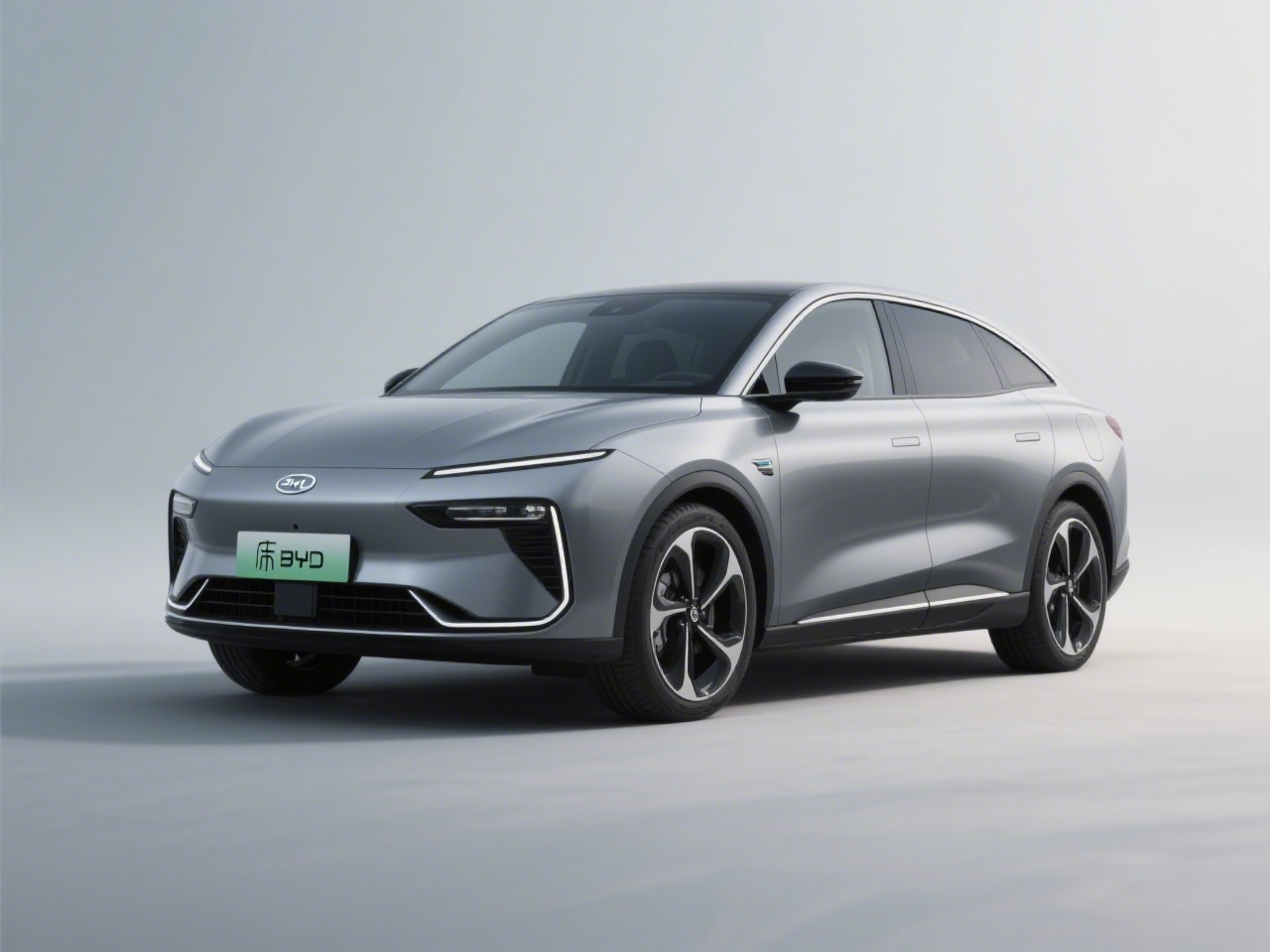
Why UAE & Saudi Arabia Are China's Fastest-Growing EV Export Markets
In 2025, Chinese-brand passenger vehicles captured 14.3% of new car sales in the UAE — up from under 3% in 2022 — according to the UAE Ministry of Economy automotive market report. Saudi Arabia's trajectory is even steeper: Vision 2030's National Transport and Logistics Strategy explicitly targets 30% of new vehicle sales being electric by 2030, and Chinese brands are positioned to supply the majority of those units due to price competitiveness and technology lead over incumbent European and Japanese OEMs.
Two structural factors are driving this acceleration:
- Price gap: A BYD Seal EV delivers Tesla Model 3-class performance at a 35-40% lower price point in the UAE retail market. XPENG G6 undercuts the BMW iX3 by AED 50,000+ with comparable technology.
- No tariff barrier: The UAE has a 5% customs duty on passenger vehicles (GCC Common Customs Tariff), which applies equally to Chinese and European brands. Saudi Arabia recently reduced EV import duties to 0% under a pilot incentive scheme running through 2026.
| Year | Chinese Brand Share (%) | Leading Models |
|---|---|---|
| 2022 | 2.8% | MG ZS, Chery Tiggo 7 Pro |
| 2023 | 6.4% | MG 4 EV, BYD Atto 3 |
| 2024 | 11.1% | BYD Seal, XPENG G6, Chery Tiggo 8 Pro EV |
| 2025 | 14.3% | BYD Seal/Atto 3/Dolphin, XPENG G6/G9 |
| 2026 (forecast) | 18–22% | BYD Han EV, Sea Lion 07, ZEEKR 001 |
Source: UAE Ministry of Economy Motor Vehicles Report 2025; BloombergNEF GCC EV Outlook Q1 2026.
GCC Type-Approval: ECAS, GSO, and UAE/KSA-Specific Requirements
Every vehicle exported to the GCC must pass type-approval certification before it can be registered. There are two parallel schemes importers must navigate:
1. ECAS — Emirates Conformity Assessment Scheme (UAE)
The UAE's Emirates Authority for Standardization and Metrology (ESMA) mandates ECAS certification for all motor vehicles. For electric vehicles, the relevant technical regulations include:
- UAE.S GSO IEC 62196: Charging connector compatibility standard — the GCC has adopted the Type 2 (Mennekes) AC inlet standard and the CCS2 (Combined Charging System) DC inlet standard. Chinese-market EVs using GB/T 20234 connectors must be exported with adapter kits or converted charging ports. Most major brands (BYD, XPENG, NIO) produce GCC-spec variants with CCS2 and Type 2 inlets as standard.
- GSO ECE R100: Covers battery pack safety, crash performance of electric drivetrain, and electric shock protection. Chinese-brand vehicles are required to submit crash test reports from an accredited lab (TÜV Rheinland, SGS, Bureau Veritas).
- GCC Unified Lighting Regulations (GSO ECE R48/R7): Vehicles must use ECE-type lighting, not the newer GB/T Chinese domestic standard. BYD and XPENG export variants shipped via Nansha Port are factory-configured for ECE lighting compliance.
ECAS approval timeline: 8–14 weeks for a new model (first-time import of a specific variant). Existing ECAS-approved models can be registered within 2–3 business days at UAE traffic departments.
2. SASO — Saudi Standards, Metrology and Quality Organization (Saudi Arabia)
Saudi Arabia's SASO operates an IECEE CB Scheme for EV battery systems and a separate vehicle type-approval process aligned with ECE/UNECE regulations. For 2026, SASO has added:
- Mandatory cybersecurity compliance (WP.29 R155/R156) for connected vehicles — a requirement that Chinese OEMs have accelerated to meet, with BYD, XPENG, and NIO all claiming WP.29 compliance for their latest export variants.
- Mandatory in-vehicle Saudi Telecom SIM compatibility for telematics (eSIM required from 2026 model-year vehicles).
Customs Duties, VAT & Total Landed Cost in UAE and Saudi Arabia
| Cost Element | UAE | Saudi Arabia |
|---|---|---|
| Customs Duty (ICE passenger car) | 5% CIF value | 5% CIF value |
| Customs Duty (BEV — Battery Electric) | 5% CIF value | 0% (pilot incentive, through Dec 2026) |
| VAT / GST | 5% (no VAT on EVs if re-exported from JAFZA) | 15% VAT on retail sale |
| Vehicle Registration Fee | AED 420 / year (~US$114) | SAR 400 / year (~US$107) |
| Plate & Inspection | AED 200–500 | SAR 120–280 |
| Insurance (annual, BEV) | AED 3,500–5,500 | SAR 3,200–5,000 |
A practical landed cost example for a BYD Seal EV Standard Range exported to Dubai:
- FOB Nansha Port: US$22,500
- Ocean Freight (20ft container, Nansha → Jebel Ali): US$1,200
- Marine Insurance: US$180
- CIF Jebel Ali: US$23,880
- UAE Customs 5%: US$1,194
- Port Handling, CFS, Transport to Dealer: US$420
- Total Landed Cost (ex-dealer): ~US$25,494
- Retail Price in UAE (2026): AED 109,900 (~US$29,900)
- Gross Dealer Margin (estimate): ~17%
Charging Infrastructure: DEWA, Charge&Go, SEC Qudra Network
Charging infrastructure was the biggest hurdle for EV adoption in the Gulf two years ago. That barrier has largely been resolved by 2026:
UAE — DEWA EV Green Charger Network
Dubai Electricity and Water Authority (DEWA) operates over 1,000 public charging stations across Dubai as of Q1 2026, with Sharjah, Abu Dhabi, and RAK each adding 200–400 stations through their respective utility-operated networks. Key facts for importers:
- The DEWA network uses Type 2 AC (22 kW) and CCS2 DC (up to 150 kW) as standard.
- All Chinese-brand export variants listed below are compatible with the DEWA network without any adapter.
- Home charging: The UAE allows 3-phase 32A (22 kW) home charging points for EV owners — all Abu Dhabi / Dubai villas and newer apartment blocks include EV-ready electrical panels as of 2025 building codes.
Saudi Arabia — SEC Qudra Network
Saudi Electricity Company (SEC) launched the Qudra EV Charging Network in 2023 and has since expanded to 3,200 charging points across 37 cities as of March 2026, with a 2030 target of 10,000 points. The Qudra network uses CCS2 DC fast charging (up to 100 kW) and Type 2 AC (7 kW and 22 kW). Third-party networks including ChargeNow, Zain EV, and CEER's dealer network add several hundred additional units.
Range anxiety assessment for Saudi Arabia: With Riyadh, Jeddah, Dammam, and Makkah each having 200+ public charging points, and all major KSA highways (NEOM–Riyadh, Riyadh–Jeddah, Eastern Province) having fast-charging stops every 80–120 km, the infrastructure is adequate for urban buyers and fleet operators. Long-distance intercity buyers should note that on less-served routes (e.g., Riyadh–Tabuk at 1,350 km), planning ahead using the SEC Qudra app is necessary.
Top Chinese EV Models for the GCC Market in 2026
| Model | Type | Range (WLTP) | Power | FOB Price | Best For |
|---|---|---|---|---|---|
| BYD Seal EV Standard | BEV Fastback Sedan | 510 km | 150 kW / 204 hp | ~US$22,500 | UAE urban fleet, ride-hailing |
| BYD Seal EV Performance | BEV Fastback Sedan | 570 km | 390 kW / 530 hp AWD | ~US$27,800 | KSA premium retail, Riyadh dealerships |
| BYD Atto 3 (Yuan Plus) | BEV Compact SUV | 480 km | 150 kW / 204 hp | ~US$19,800 | UAE retail, family SUV |
| BYD Dolphin Active | BEV Hatchback | 427 km | 70 kW / 95 hp | ~US$13,500 | Budget EV segment, UAE taxi schemes |
| XPENG G6 RWD Standard | BEV Mid-SUV | 570 km | 190 kW / 258 hp | ~US$25,200 | Tech-savvy buyers, KSA Gen-Z market |
| XPENG G9 AWD Performance | BEV Full-Size SUV | 520 km | 405 kW / 551 hp | ~US$38,500 | UAE premium SUV segment |
| Chery Tiggo 8 Pro EV | BEV 7-Seat SUV | 450 km | 218 kW / 296 hp | ~US$24,000 | GCC family market, 7-seat demand |
| Sea Lion 07 EV AWD | BEV Mid-SUV | 520 km | 390 kW / 530 hp | ~US$28,900 | KSA sporty SUV segment, BYD flagship |
Note: FOB prices are indicative based on Q2 2026 factory pricing. Contact our export team for current confirmed quotations.
BYD in the Gulf: Models, Pricing & Distributor Network
BYD is the undisputed leader among Chinese brands in the Gulf. The brand entered the UAE through Al-Futtaim Group's BYD UAE division in 2022 and Saudi Arabia through JUFFALI Automotive in 2023. By 2026, BYD holds 8.1% of total new car sales in the UAE and is on track to exceed 10% by end-2026.
The strategic advantage for exporters sourcing BYD vehicles from Nansha Port:
- Right-hand to left-hand drive confirmation: All GCC BYD variants are left-hand drive (LHD). Confirm LHD specification at order stage — Chinese domestic-market vehicles are also LHD, so all vehicles from our inventory are GCC-compatible on this dimension.
- Blade Battery chemistry advantage: BYD's Lithium Iron Phosphate (LFP) Blade Battery is chemically more stable at high ambient temperatures than NMC batteries used by many European competitors. This is a meaningful selling point for KSA summers where ambient temperatures regularly exceed 45°C.
- Over-the-Air (OTA) update coverage: BYD's DiLink 5.0 infotainment system supports OTA software updates globally. Arabic language interface is factory pre-installed on GCC-spec units.
XPENG in KSA & UAE: G6, G9 and the Mobivia Partnership
XPENG Motors signed a distribution agreement with Mobivia Group (formerly Norauto) for Saudi Arabia in late 2024, with showrooms opening in Riyadh, Jeddah, and Dammam through 2025-2026. XPENG is targeting the technology-forward buyer segment aged 25–40 in KSA's rapidly urbanizing population.
Key XPENG differentiators for the GCC market:
- XNGP Assisted Driving: XPENG's latest highway Navigate on AutoPilot (NGP) has been adapted for GCC road markings and right-of-way rules. The system works on mapped highways in UAE and KSA as of the 2026 OTA update.
- 800V architecture (G6 Performance, G9): Supports 280 kW DC fast charging — capable of adding 300 km range in 15 minutes on compatible chargers. The DEWA 150 kW network provides partial compatibility; future DEWA 350 kW ultra-fast charger rollout (planned 2026-2028) will unlock the full capability.
Shipping from Nansha Port to Jebel Ali & King Abdulaziz Port
| Route | Transit Time | Service Type | Approx. Cost (20ft container) |
|---|---|---|---|
| Nansha → Jebel Ali (Dubai) | 18–22 days | Direct service (COSCO, MSC, Evergreen) | US$1,100–1,400 |
| Nansha → King Abdulaziz Port (Dammam) | 22–28 days | Direct (COSCO) or transship via Colombo | US$1,250–1,550 |
| Nansha → Jeddah Islamic Port | 24–30 days | Via Port Klang or Port Said | US$1,350–1,700 |
| Nansha → Abu Dhabi (Khalifa Port) | 20–24 days | Via Jebel Ali transship | US$1,200–1,500 |
Container loading guide for EVs: A standard 40-foot High Cube (40HC) container accommodates 4 mid-size EVs (e.g., BYD Seal, XPENG G6) in a 2×2 configuration. For smaller hatchbacks (BYD Dolphin), up to 5 units per 40HC is achievable depending on vehicle height. Battery state of charge (SoC) must be set to 30% for IMDG (International Maritime Dangerous Goods) compliance — this is handled at our pre-shipment inspection stage at Nansha Port.
RORO option: For orders of 8+ units, Roll-on/Roll-off (RORO) services from Nansha via Guangzhou RORO Terminal are available at approximately US$580–700 per vehicle to Jebel Ali. RORO transit time is 18–20 days and eliminates container loading costs, but requires the buyer to arrange customs clearance at destination for each individual VIN.
Practical Import Steps for GCC Distributors
- Model selection & ECAS/SASO pre-check: Confirm the specific variant (year, trim, powertrain) is already type-approved in the destination country. Our team maintains an updated ECAS/SASO approval register for all models in inventory.
- Price quotation & payment terms: Request an FOB quotation from Nansha Port. Standard payment terms for first-time buyers: 30% T/T deposit + 70% against copy of B/L. Established distributors can negotiate L/C at sight or 30-day deferred payment.
- Pre-shipment inspection (PSI): Our in-house quality inspection covers: VIN verification, paint inspection (3-point check), interior/exterior completeness, tyre pressure, fluid levels, and SoC setting for EV battery compliance.
- Export customs declaration: We handle all China-side export formalities including customs declaration, export certificate (for warranty purposes), and C/O (Certificate of Origin) — essential for KSA preferential tariff applications.
- Bill of Lading & documentation: Commercial invoice, packing list, B/L, C/O, vehicle inspection certificate, and ECAS-related conformity documents are couriered to the buyer within 3 business days of vessel departure.
- UAE/KSA customs clearance: The buyer or their customs broker submits documents via the UAE Federal Customs Authority (FCA) portal or ZATCA (Saudi Authority for Zakat, Tax and Customs). Clearance time: 1–3 days for pre-approved models.
FAQ: Exporting Chinese EVs to UAE & Saudi Arabia
Do Chinese EVs come with a warranty valid in UAE and Saudi Arabia?
Yes, for official distribution channels (brand-authorized dealers). BYD, XPENG, Chery, and MG all have established authorized distributors in both UAE and KSA who honor the manufacturer warranty. For grey-market imports (direct from China without going through the authorized distributor), the brand warranty may not be honored. However, our team can provide factory-direct warranty documentation, and several independent service networks in Dubai (e.g., Fastlane Auto, AutoPro UAE) provide third-party extended warranty packages for Chinese EV models.
Is Arabic infotainment standard on GCC-spec Chinese EVs?
For BYD: Yes — Arabic is pre-installed as a factory language option on all GCC-spec models since 2024. Navigation defaults to Google Maps with Arabic interface. For XPENG: Arabic UI is available via OTA update (XPENG OS 5.0, deployed 2025). For Chery and MG GCC variants: Arabic is factory-installed. If ordering from Chinese domestic-market inventory, confirm the Arabic language pack is pre-installed or available via OTA before shipping.
What is the minimum order quantity for EV exports to the GCC?
There is no minimum order quantity for new Chinese EVs — single-unit orders are accepted. However, economics improve significantly at 4+ units (container consolidation) and 8+ units (RORO service becomes available). Distributors placing regular monthly orders of 20+ units can negotiate preferred pricing and priority allocation during peak demand periods (typically Q3-Q4 when GCC auto dealers run year-end promotion campaigns).
How does the 0% Saudi Arabia EV duty work in 2026?
The Kingdom of Saudi Arabia implemented a temporary zero-customs-duty rate for battery electric vehicles (BEV) under Royal Decree No. M/41 as part of the Saudi Green Initiative and Vision 2030 transport electrification targets. The 0% rate applies to HS Code 8703.80 (fully electric passenger cars) and is currently in effect through December 31, 2026. Plug-in hybrids (PHEV) remain at 5%. The Council of Ministers is expected to review and potentially extend or make permanent the 0% BEV rate in Q4 2026 — our team monitors Saudi Customs (ZATCA) announcements and will update clients accordingly.
Can I import Chinese EVs to Abu Dhabi through JAFZA (Dubai) duty-free?
Yes, with conditions. Jebel Ali Free Zone (JAFZA) allows vehicles to be imported into the free zone under customs suspension — meaning no UAE import duty is paid as long as the vehicles remain in the free zone or are re-exported. If the vehicles are subsequently cleared into the UAE mainland (Abu Dhabi, Sharjah, RAK etc.), the standard 5% UAE customs duty applies at that point. This JAFZA strategy is commonly used by GCC-wide distributors who consolidate vehicles in Dubai before delivering to distributors in Saudi Arabia, Kuwait, Qatar, Bahrain, and Oman under GCC Customs Union transit procedures.
Ready to source Chinese EVs for the UAE or Saudi Arabia market? Request a current FOB quotation.
Browse our EV inventory — BYD, XPENG, Chery & more →
Contact our GCC export team for volume pricing & ECAS documentation →
Verify Part Numbers in Our OE Library
Every part covered in this guide has a matching OE number in our reference library — grouped by system with cross-references, so you can source the exact fit for Hyundai, Kia, GM Korea and more.
Related Articles
Related Products
From our Vehicle Export catalog — new & used cars ready for international delivery
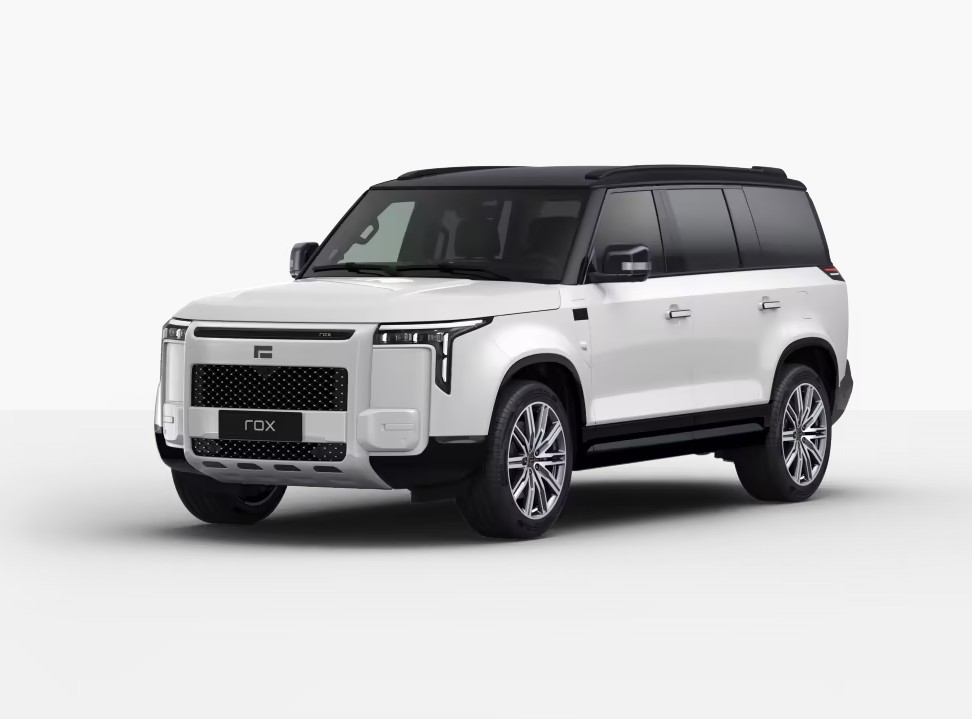
Full-Size EREV SUV
2026 Rox Adamas EREV 215km 6-Seat Executive Edition
USD 53,000 FOB Guangzhou
View Details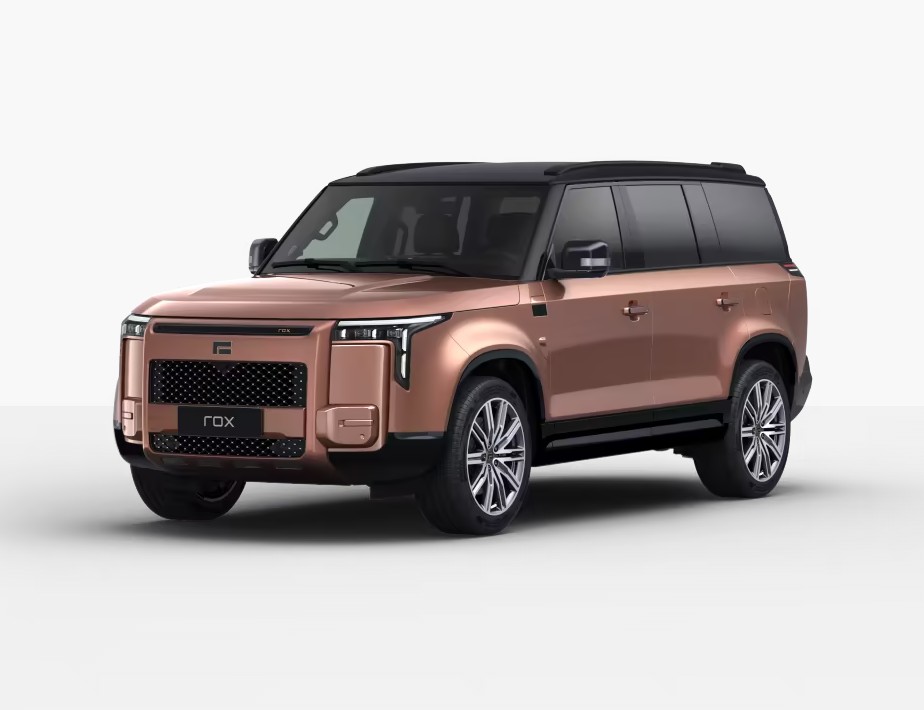
Full-Size EREV SUV
2026 Rox Adamas EREV 215km 7-Seat All-Terrain Edition
USD 51,500 FOB Guangzhou
View Details