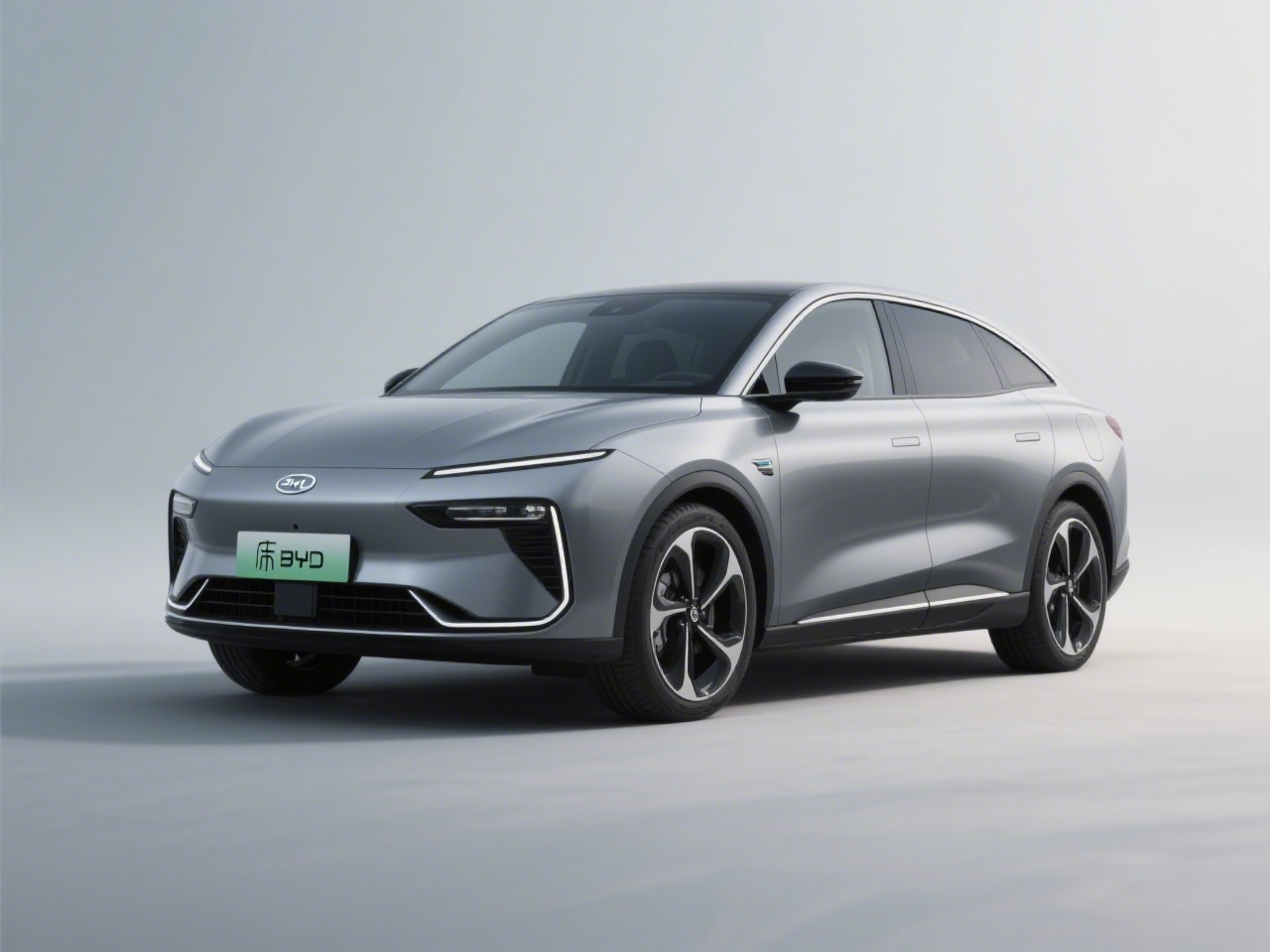
The BYD Dolphin has become the world's most exported Chinese electric vehicle, with over 800,000 units sold globally across 50+ markets since its 2021 launch. Built on BYD's e-Platform 3.0 with the company's proprietary LFP Blade Battery, the Dolphin offers importers a combination of safety, range, and purchase cost that no competitor currently matches at the $12,000 price point. At $12,708 FOB, it is the most affordable full-size electric hatchback available for export from China — a vehicle that costs less per kilometer of range ($31/km) than any European or Japanese EV competitor.
Current export pricing (July 2026): 2026 BYD Dolphin 410km Smart Drive Edition — US $12,708/unit FCA. MOQ: 12 units. LFP Blade Battery, 410km CLTC range, DC fast charge 30-80% in ~30 minutes. Contact Mr Didi: ucars@global-ucars.com for container and RO-RO shipping options from Guangzhou.
Why the BYD Dolphin Dominates Budget EV Export Markets
Three factors make the Dolphin the single most attractive EV export product from China for emerging markets:
- LFP Blade Battery safety and longevity: BYD's lithium iron phosphate (LFP) battery passed the industry-standard nail penetration test without fire or explosion — a safety advantage that directly addresses the thermal management concerns that worry EV buyers in hot-climate markets. The Blade Battery is rated for 3,000+ charge cycles (versus 1,000-1,500 for NMC cells), translating to 500,000+ km of service life before reaching 70% capacity. In countries with limited EV service infrastructure, battery longevity is the single most important purchasing criterion.
- True vehicle architecture vs conversion: Unlike older budget EVs that converted ICE platforms, the Dolphin's e-Platform 3.0 is purpose-built for electric propulsion. The 8-in-1 electric drive unit integrates motor, controller, reducer, DC-DC converter, on-board charger, battery management, vehicle controller, and PDU into a single compact module. This integration reduces component count, simplifies maintenance, and frees interior space — the 2,700mm wheelbase on a 4,290mm body is a class-leading packaging achievement.
- Pricing at scale: BYD's vertical integration — the company manufactures its own batteries, motors, controllers, semiconductors, and vehicle platforms — enables cost structures that no other EV manufacturer can replicate. The Dolphin is exported at $12,708 FOB, a price point that makes EV adoption economically viable in markets where EV incentives are limited or non-existent.
2026 BYD Dolphin Technical Specifications
| Specification | |
|---|---|
| Body Style | 5-Door Compact Hatchback |
| Drive Type | Front-Wheel Drive (FWD) |
| Energy Type | Pure Electric (BEV) |
| Motor Power | 70 kW / 95 hp — Permanent Magnet Synchronous |
| Max Torque | 180 Nm |
| 0-100 km/h | 10.9 seconds |
| Top Speed | 150 km/h |
| Battery Type | LFP Blade Battery — 44.9 kWh |
| CLTC Range | 410 km (WLTP equivalent: ~340 km) |
| DC Fast Charge (30-80%) | ~30 minutes (60 kW peak) |
| AC Charge (0-100%) | ~7 hours (7 kW onboard charger) |
| Dimensions (L x W x H) | 4,290 x 1,770 x 1,570 mm |
| Wheelbase | 2,700 mm |
| Curb Weight | 1,285 kg |
| Ground Clearance | 130 mm (unladen) |
| Seating | 5 |
| Boot Capacity | 345 L (seats up) / 1,310 L (seats folded) |
| Turning Radius | 5.25 m |
| Front Suspension | MacPherson Strut Independent |
| Rear Suspension | Torsion Beam |
| Brakes (Front/Rear) | Ventilated Disc / Solid Disc |
| Tyre Size | 195/60 R16 |
| Airbags | 6 (dual front + side + curtain) |
| Safety Systems | ABS + EBD + BA + ESC + TCS + HAC + TPMS |
| ADAS Features | AEB, LKA, ACC, BSD, FCW, TSR (Smart Drive Edition) |
| Platform | e-Platform 3.0 (BYD proprietary) |
| Export Port | Guangzhou / Shanghai (BYD factory allocation) |
Blade Battery Technology: The Competitive Moat
The LFP Blade Battery is not just a marketing term — it is the single most important technology decision that determines the Dolphin's suitability for export markets. Here is why importers should care:
| Characteristic | LFP Blade (BYD Dolphin) | NMC (Typical European/Japanese EV) |
|---|---|---|
| Thermal Runaway Temperature | ~500°C | ~200°C |
| Nail Penetration Test | Pass — no fire | Fail — thermal runaway |
| Cycle Life (to 70% capacity) | 3,000+ cycles | 1,000-1,500 cycles |
| Service Life (km estimate) | 500,000+ km | 200,000-300,000 km |
| Cobalt Content | 0% — cobalt-free | 10-20% — subject to supply chain risk |
| Energy Density (pack level) | 140 Wh/kg | 180-200 Wh/kg |
| Cold Weather Performance | Range loss ~15% at -10°C | Range loss ~20-25% at -10°C |
LFP = lithium iron phosphate. NMC = nickel manganese cobalt. LFP disadvantages: lower energy density means slightly heavier battery for the same range, and slightly slower maximum fast-charge speed (60 kW vs 100-150 kW for NMC packs). LFP advantages: dramatically better safety, much longer cycle life, no cobalt supply chain risk, and better tolerance for high ambient temperatures.
Why this matters for importers: In markets like Saudi Arabia, the UAE, Nigeria, and India, where ambient temperatures exceed 45°C for months, LFP batteries maintain safer operating temperatures and degrade more slowly than NMC batteries. A Dolphin driven 40,000 km/year in Dubai will retain above 80% battery capacity after 8 years — the same usage pattern in an NMC-equipped EV would reach 80% capacity in 5-6 years. This directly affects resale value and total cost of ownership.
FOB Pricing & Export Package
| Trim Level | Battery / Range | FOB China | MOQ |
|---|---|---|---|
| Smart Drive Edition | 44.9 kWh LFP / 410 km CLTC | $12,708 | 12 units |
All prices FOB China port (Guangzhou or Shanghai depending on factory allocation). Brand new 0 km, 2025-2026 production. Color options: White, Gray, Blue, Pink, Green. The Smart Drive Edition includes ADAS features: AEB (autonomous emergency braking), LKA (lane keep assist), ACC (adaptive cruise control), BSD (blind spot detection), FCW (forward collision warning), and TSR (traffic sign recognition). Bulk order (24+ units) discount: 2-3% per unit. Export documentation, pre-shipment inspection, and factory PDI included in FOB price.
Competitor Comparison: Dolphin vs Rival Budget EVs
| Specification | BYD Dolphin | MG4 | Wuling Binguo | Ora Good Cat (03) |
|---|---|---|---|---|
| FOB Price (China) | $12,708 | $17,500* | $9,800* | $16,200* |
| Battery Type | LFP Blade 44.9 kWh | LFP 51 kWh | LFP 31.9 kWh | LFP 47.8 kWh |
| Range (CLTC) | 410 km | 425 km | 333 km | 401 km |
| Motor Power | 70 kW / 95 hp | 125 kW / 170 hp | 50 kW / 68 hp | 105 kW / 143 hp |
| Length (mm) | 4,290 | 4,287 | 3,950 | 4,235 |
| Wheelbase (mm) | 2,700 | 2,705 | 2,560 | 2,650 |
| Airbags | 6 | 7 | 2 | 6 |
| ADAS | Yes (Smart Drive) | Yes (MG Pilot) | No | Yes |
| Platform | e-Platform 3.0 | MSP (Nebula) | GSEV | LEMON |
| Cost per km range | $31/km | $41/km | $29/km | $40/km |
*Estimated FOB China export prices based on available market intelligence. These vehicles are primarily produced for domestic and specific export markets — exact FOB quotes vary by destination and volume.
Dolphin advantage summary: The BYD Dolphin sits in a unique position — it offers 410km WLTP-equivalent range with full ADAS at a price point ($12,708) that rivals the Wuling Binguo (333km range, no ADAS, 2 airbags) while undercutting the MG4 by $4,800. The MG4 is faster (170 hp) and has a slightly larger battery (51 kWh), but at $17,500 FOB, it competes in a different price bracket. The Wuling Binguo is cheaper at $9,800 but sacrifices range, safety, and cabin space — it is a city-only vehicle rather than a true multi-purpose EV. For importers, the Dolphin's combination of range, safety, and purchase cost makes it the strongest value proposition in the budget EV segment.
Landed Cost by Destination Market
| Destination | FOB | Freight | Insurance | Duty | Landed Cost |
|---|---|---|---|---|---|
| Jebel Ali, UAE | $12,708 | $650 | $135 | $0 (5% EV) | $13,493 |
| Jeddah, Saudi Arabia | $12,708 | $700 | $135 | $0 (5%) | $13,543 |
| Lagos, Nigeria | $12,708 | $1,200 | $140 | $1,405 (10%) | $15,453 |
| Mombasa, Kenya | $12,708 | $980 | $137 | $1,382 (10%) | $15,207 |
| Manila, Philippines | $12,708 | $350 | $130 | $0 (EV) | $13,188 |
| Bangkok, Thailand | $12,708 | $400 | $130 | $0 (FTA) | $13,238 |
| Chennai, India | $12,708 | $450 | $132 | $2,658 (20%) | $15,948 |
| Santos, Brazil | $12,708 | $1,150 | $140 | $4,900 (35%) | $18,898 |
Landed cost = FOB + sea freight + marine insurance + import duty (CIF basis). Excludes local VAT, registration fees, customs broker fees, and port handling. Several countries offer reduced or zero import duty for electric vehicles: UAE 5% standard (potential 0% for EVs under green mobility policy), Philippines 0% (EO 12 EV tariff reduction), Thailand 0% (EV 3.5 package FTA). July 2026 estimates.
Market opportunity: The Dolphin lands in markets with favorable EV import policies — the Philippines at $13,188 and Thailand at $13,238 — at prices that undercut locally assembled ICE equivalents. In the UAE, a $13,493 landed Dolphin enables retail pricing of $18,000-20,000 with a 33-48% gross margin, positioning it as a premium-but-affordable EV option. In Kenya and Nigeria, where electricity costs are lower than fuel ($0.15/kWh vs $1.20/litre gasoline), the Dolphin's running cost advantage becomes a core sales pitch: $2.20 per 100 km vs $9.60 per 100 km for a comparable petrol hatchback.
Charging Infrastructure Strategy for Emerging Markets
The most common objection to EV imports in emerging markets is charging infrastructure — or rather the perceived lack of it. For importers, addressing this objection with data and practical solutions is the difference between making and losing a sale.
- Home charging is the primary model: The Dolphin's 7 kW onboard AC charger fills the battery from 0-100% in ~7 hours using a standard 32A wall box. In markets where most target buyers live in detached houses or compounds with dedicated parking (GCC, suburban Africa), 90% of charging happens at home overnight. The public fast-charging network is supplementary, not essential.
- DC fast charging for inter-city travel: With 60 kW peak DC charging rate, the Dolphin adds ~200 km of range in 20 minutes. For markets building out public charging networks — UAE (200+ stations), Saudi Arabia (500+ planned by 2030), Kenya (50+ stations planned) — this covers the rare long-distance trip.
- Solar charging synergy: In sun-rich markets (Africa, Middle East, South Asia), pairing the Dolphin with a 5-7 kW rooftop solar system creates near-zero running cost. A 7 kW solar array generates 28-35 kWh/day in equatorial regions — enough for 5-6 Dolphin charges per week. This solar+EV bundle is a powerful sales proposition for commercial fleet operators (ride-hailing, delivery, government fleets).
- V2L (Vehicle-to-Load) capability: The Dolphin supports 3.3 kW V2L output — the vehicle can power external devices through its charging port. In markets with unreliable grid electricity, this transforms the car into a mobile power bank capable of running a household refrigerator (150W), lights (100W), fans (75W), and phone/laptop charging for 30+ hours.
Target Market Analysis
UAE & Saudi Arabia (GCC)
The GCC is the most EV-ready market for Dolphin imports. UAE has 200+ DC fast chargers and offers free public charging at DEWA stations through 2026. Saudi Arabia's NEOM and Red Sea projects are driving EV infrastructure investment. The Dolphin's LFP battery tolerates GCC summer heat better than NMC alternatives, and the car's air conditioning system (heat pump) only draws 1-2 kW — negligible impact on range. Buyers in Dubai and Abu Dhabi who pay $1,200-1,500/year in petrol for their daily commute can save $800-1,000/year in fuel costs with a Dolphin.
Philippines & Thailand (Southeast Asia)
Both countries offer zero import duty on EVs — the Philippines through EO 12 and Thailand through the EV 3.5 package. The Dolphin's compact dimensions (4,290mm) suit congested Asian cities, and the 2,700mm wheelbase provides surprising rear-seat space. In Manila, where daily driving rarely exceeds 40-60 km, 410 km of range means charging once per week. Thailand's electricity rate of $0.10/kWh gives the Dolphin a running cost of $1.10 per 100 km — versus $6.50/100 km for a Toyota Vios (petrol at $1.30/litre).
Nigeria & Kenya (Africa)
Africa is the most price-sensitive but also the most electrification-ready market. Kenya generates 90% of its electricity from renewables (geothermal, hydro, wind), and the government exempts EVs from the 25% import duty on ICE vehicles. Nigeria's 10% duty on EVs (vs 35% on used ICE vehicles) creates a regulatory incentive. The Dolphin's 500,000+ km battery life means African buyers making 5-7 year purchase decisions can amortize the higher upfront cost over lower running costs. Fleet buyers — ride-hailing, logistics, government — are the primary early adopters.
Shipping & Documentation for EV Export
Exporting electric vehicles involves additional requirements beyond ICE vehicle shipping. Globalucar Vehicle manages the full process:
- Battery shipping compliance: LFP batteries are classified as UN 3480 (lithium ion batteries). The Dolphin ships with battery SOC between 30-50% per international maritime dangerous goods regulations. MSDS (Material Safety Data Sheet) and UN 38.3 test certification provided with every shipment.
- Shipping method: RO-RO vessels are the standard method. LFP batteries are considered safer (lower fire risk) than NMC batteries, which reduces shipping insurance premiums by approximately 15-20% compared to NMC-equipped EVs.
- Export documentation package: Commercial Invoice, Packing List, Bill of Lading, Certificate of Origin (Form E for ASEAN, GCC Certificate for Gulf states), MSDS for lithium battery, UN 38.3 test report, Vehicle Conformity Certificate, and charging cable specifications.
- Charging compatibility: Dolphin uses the Chinese GB/T charging standard for AC and DC. Globalucar provides GB/T to CCS2 adapters for markets using CCS2 (Europe, GCC, Southeast Asia) as an optional accessory ($350/unit). The onboard charger accepts 220-240V AC single-phase input, compatible with most global residential electrical systems.
- Transit times: Manila 5-7 days, Jebel Ali 14-18 days, Mombasa 25-30 days, Lagos 28-35 days, Santos 35-40 days, Chennai 10-14 days.
Procurement & Export Process
- Inquiry: Contact Globalucar Vehicle (Mr Didi, ucars@global-ucars.com) with destination port, quantity, and color preferences. Specify if charging adapter (GB/T to CCS2) is required.
- Proforma Invoice: Receive PI with FOB price, estimated freight, battery compliance documentation availability, and delivery timeline within 24 hours.
- Deposit: 50% T/T deposit confirms production allocation. Balance due before vessel departure.
- Production & PDI: 20-30 days lead time. Factory PDI includes battery SOC check (30-50% for shipping), 120-point mechanical and electrical inspection, VIN recording, and photo documentation of each vehicle.
- Pre-Shipment: Optional third-party inspection (SGS, Bureau Veritas). Battery compliance documentation verified. Final vehicle count and VIN list confirmed.
- Shipping: RO-RO loading at designated port. Bill of Lading issued within 3 days of vessel departure.
- Documentation Package: Full set of original documents — including MSDS and UN 38.3 test report — sent by DHL/courier. Electronic copies provided by email.
PAA FAQ: BYD Dolphin Export Answers
Q: What is the FOB export price of the BYD Dolphin from China?
The 2026 BYD Dolphin 410km Smart Drive Edition is US $12,708/unit FOB China through Globalucar Vehicle. This is a factory-allocated export price with MOQ of 12 units. The price includes factory PDI, export documentation, UN 38.3 battery compliance certification, and loading onto vessel. Bulk orders (24+ units) qualify for 2-3% volume discount. The Dolphin is exported from BYD's production base via Guangzhou or Shanghai port depending on allocation.
Q: How safe is the BYD Dolphin's LFP Blade Battery for hot climates?
The LFP Blade Battery is the safest EV battery technology currently in mass production. In the industry-standard nail penetration test, the Blade Battery reached approximately 60°C with no fire, no smoke, and no thermal runaway — while an NMC battery undergoing the same test reached 500°C+ with violent thermal runaway. LFP cathodes are chemically stable at temperatures where NMC cathodes decompose and release oxygen. For hot-climate markets (45°C+ ambient), LFP batteries degrade approximately 30-40% slower than NMC batteries over the same usage period. The Dolphin's battery thermal management system actively cools the pack during DC fast charging and high-speed driving.
Q: What is the real-world range of the BYD Dolphin in tropical conditions?
The Dolphin's CLTC-rated 410 km translates to approximately 340 km WLTP or 280-320 km real-world city driving with air conditioning running. Air conditioning (A/C) typically reduces range by 8-12% in tropical conditions (35°C+). At highway speeds (100-110 km/h), range drops to approximately 240-270 km due to increased aerodynamic drag. For typical daily driving in emerging market cities (40-60 km/day), this means the Dolphin needs charging every 5-7 days. The LFP battery's flat voltage curve provides consistent range throughout the charge cycle — unlike NMC batteries where range anxiety increases below 20% SOC.
Q: What is the difference between the BYD Dolphin and the BYD Seagull for export?
The BYD Dolphin and Seagull target different market segments. The Dolphin (4,290mm, 410km range, 95 hp, $12,708 FOB) is a full-size B-segment hatchback with full safety features (6 airbags, ADAS). The Seagull (3,780mm, 305-405km range, 74 hp, ~$9,500 FOB estimated) is an A-segment city car — smaller, lighter, and designed for short-distance urban use with 2-4 airbags. For importers, the Dolphin appeals to private buyers and fleet operators who need a versatile vehicle for mixed driving conditions. The Seagull appeals to pure city-car buyers on a tighter budget. The Dolphin's 2,700mm wheelbase and larger boot (345L vs 210L) make it the more practical choice for export markets where vehicles serve multiple family and commercial roles.
Q: Does the BYD Dolphin come with a warranty for export markets?
BYD provides a 6-year / 150,000 km vehicle warranty and an 8-year / 150,000 km battery warranty for the Dolphin in markets where BYD has an official distributor network. In markets without official BYD presence (most emerging markets), the factory warranty does not extend. Globalucar recommends importers budget 1.5-2.5% of vehicle sale price for local warranty claims during the first 24 months. LFP battery warranty claims are extremely rare (industry data shows less than 0.1% failure rate for Blade Battery packs in the first 5 years), so battery warranty exposure is lower than with NMC-equipped EVs.
Q: What is the HS code for BYD Dolphin EV export from China?
The BYD Dolphin as a pure battery electric vehicle is classified under HS 8703.80 (motor vehicles principally designed for the transport of persons, with only electric motor for propulsion). Some customs authorities may classify it under HS 8703.90 (other vehicles). EV-specific HS classification matters because many countries apply different (and often lower) import duty rates for electric vehicles compared to ICE vehicles under separate tariff lines. Always verify the exact classification with the destination customs broker, as HS classification determines the applicable duty rate, which can range from 0% (Philippines, Thailand under FTA) to 35% (Brazil).
View BYD Dolphin Product Details →
Request BYD Dolphin Export Quote →
Globalucar Vehicle — factory-direct BYD Dolphin export from China. Serving 50+ countries with EV procurement and shipping solutions. Contact Mr Didi: ucars@global-ucars.com, 28F Guangzhou Jianhua Center, Baiyun District.
Verify Part Numbers in Our OE Library
Every part covered in this guide has a matching OE number in our reference library — grouped by system with cross-references, so you can source the exact fit for Hyundai, Kia, GM Korea and more.
Related Articles
Related Products
From our Vehicle Export catalog — new & used cars ready for international delivery
Full-Size EREV SUV
2026 Rox Adamas EREV 215km 6-Seat Executive Edition
USD 53,000 FOB Guangzhou
View Details
Full-Size EREV SUV
2026 Rox Adamas EREV 215km 7-Seat All-Terrain Edition
USD 51,500 FOB Guangzhou
View Details