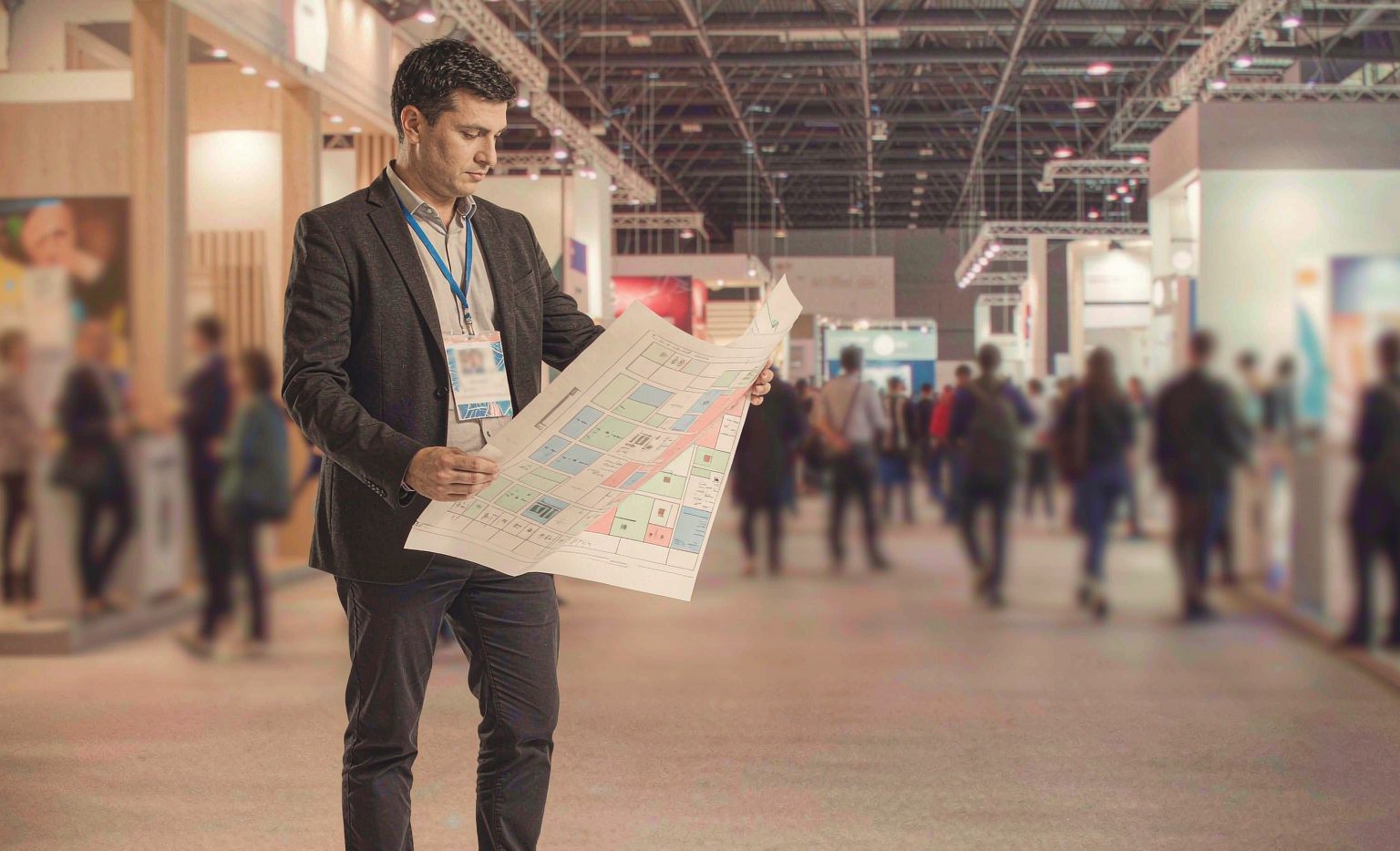
Every buyer arrives at Pazhou with the same twenty or thirty questions, and most of them get answered badly at a hotel lobby or a WeChat group. This page collects the thirty that come up most often from auto parts importers, answered with the operational detail that actually changes a decision: which phase has your category, what the badge costs, how long a quotation stays valid, when to pay, and what happens to a shipment after the halls close. Dates and rules are for the 140th session, 15 October to 4 November 2026.
The 2026 Calendar, in One Table
The fair runs in three phases with two switch-over gaps. Auto parts sit in Phase 1 only, which is the single most expensive misunderstanding in this category: a buyer who books flights for late October will walk into furniture and then clothing.
| Period | Dates (2026) | What is exhibited | Relevance to an auto parts buyer |
|---|---|---|---|
| Phase 1 | 15–19 October | Vehicles and two wheels, auto parts, hardware and tools, machinery, electronics, new energy | The only phase with parts, tools and workshop equipment |
| Switch-over | 20–22 October | Halls closed and rebuilt | Factory visits, sample review, supplier meetings outside the venue |
| Phase 2 | 23–27 October | Houseware, gifts and decorations, building and furniture | Useful only for packaging, display and shop-fitting suppliers |
| Switch-over | 28–30 October | Halls closed | Second window for plant audits in Guangdong |
| Phase 3 | 31 October – 4 November | Textiles, garments, shoes, bags, food, medical, stationery, toys | No auto parts; sourcing continues in the city, not on the show floor |
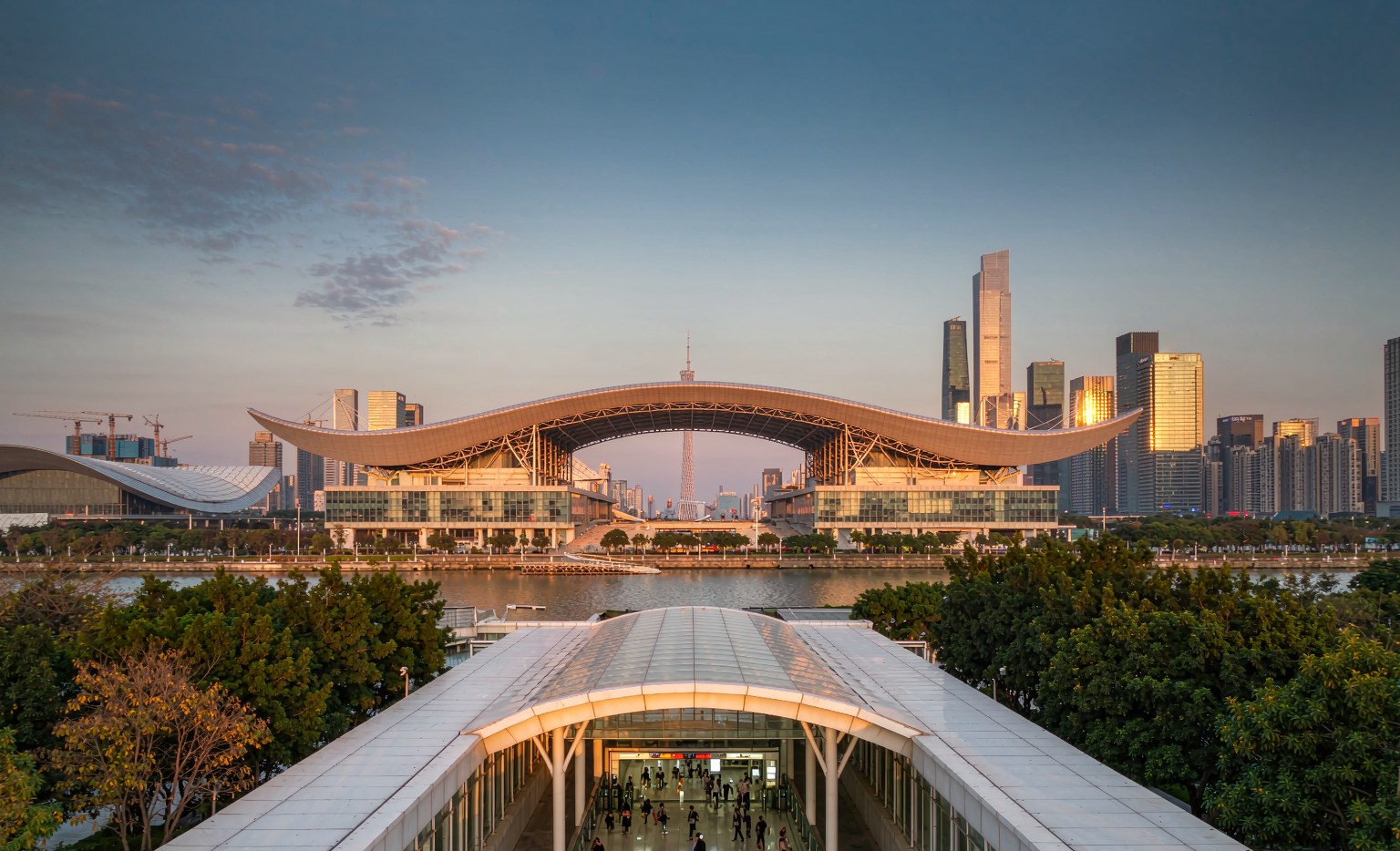
Opening hours are 9:30 to 18:00 daily. The venue is the Canton Fair Complex in Pazhou, Haizhu District, across roughly 1.55 million square metres with about 75,000 booths and more than 32,000 exhibitors. The 139th session drew around 314,000 overseas buyers from 220 countries, which is the number to keep in mind when you plan walking routes: this is a city, not a hall.
Before You Book the Flight
1. Is the buyer badge free?
Pre-registration online is free and the badge is issued against your passport at the registration counters and appointed hotels. On-site registration without pre-registration is commonly reported to carry a service fee in the region of RMB 100–150, plus a queue. Pre-register at least two weeks before you travel.
2. Do I need a visa, and how do I get the invitation letter?
Most nationalities need a business (M) visa. The buyer registration system issues an invitation letter once your registration is approved, and that letter supports the visa application. Several countries currently hold visa-free or trial visa-free entry, but the lists change; confirm with the Chinese embassy in your country before paying for flights.
3. How many days do I need for auto parts?
Three full days in Phase 1 is the practical minimum for a first visit, four if you are covering both parts and workshop equipment. The complex is measured in kilometres, and a bad route can cost half a day. Shortlist exhibitors in the official app before you land and walk with a plan by hall number.
4. Where should I stay?
Walking distance to Pazhou is convenient and expensive; fair-week hotel rates commonly run two to three times the normal level, and walkable rooms sell out weeks ahead. Metro Line 8 serves the complex directly, so a hotel two or three stops away often beats paying for proximity. Our Guangzhou travel guide covers the trade-offs zone by zone.
5. Will my phone and my money work?
Google services and WhatsApp are not reachable on local networks, so install a working VPN before departure. Alipay and WeChat Pay linked to an international card cover almost every payment, including metro and convenience stores. Carry a few hundred yuan in cash for the exceptions.
At the Venue
6. Which hall has auto parts?
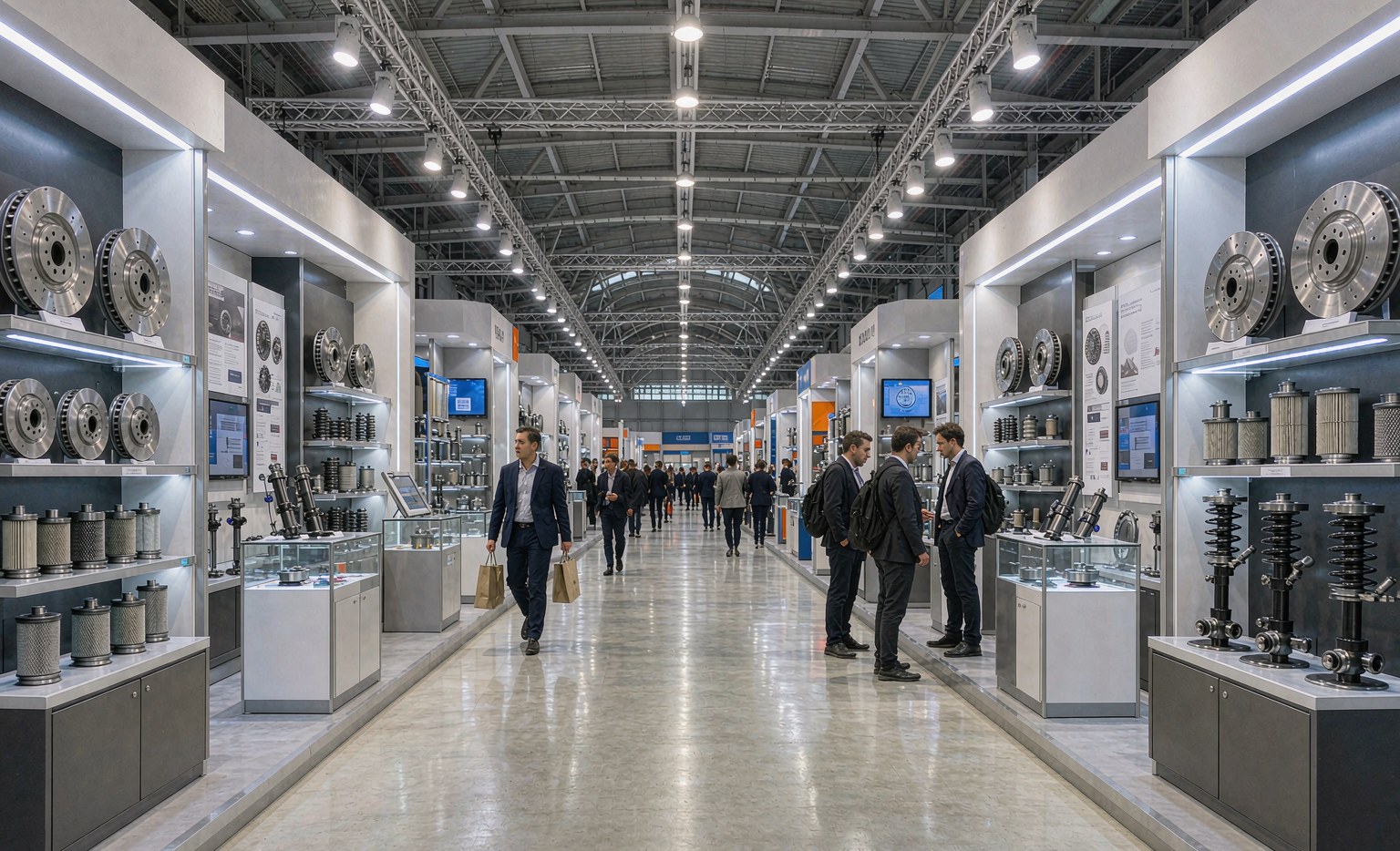
Parts are grouped in the vehicles and two wheels section of Phase 1, alongside motorcycles, bicycles and vehicle accessories. Hall numbering changes between sessions, so use the official floor plan for the 140th session rather than a map from last year, and confirm the hall with the exhibitor before you walk.
7. Can I attend more than one phase on the same badge?
Yes. One badge covers the whole session, so a buyer sourcing parts in Phase 1 and packaging in Phase 2 does not pay twice. The badge is personal and checked at every entrance.
8. Can I buy samples or small quantities at the booth?
This is a wholesale fair and MOQs commonly start in the hundreds per reference. Samples are usually available, sometimes free and sometimes at a stated charge, and exhibitors are most willing to sell display stock on the final afternoon of their phase. Agree the sample price and the courier cost in writing before the item leaves the booth.
9. Is there an official interpreter service?
The fair runs an official interpretation service, and most booths have English-speaking sales staff. For technical negotiation on materials, tolerances or tooling, a bilingual colleague or a local sourcing partner is worth more than booth-level translation, because the vocabulary that matters is engineering vocabulary.
10. How do I find a specific exhibitor inside the complex?
The 140th session extends the ASK ME assistant introduced in April, with booth-level indoor navigation across the venue and photo-to-product matching. Treat it as a routing tool, not a verification tool: it tells you where a booth is, not whether the company behind it is a factory.
11. What should I bring on the day?
Passport, badge, business cards in English and Chinese, a power bank, a notebook, and a phone with the exhibitor list already shortlisted. Comfortable shoes matter more than a suit. Bring your own measuring tools if you are qualifying parts on the floor; a caliper settles arguments that a brochure cannot.
Talking to Suppliers
12. Factory or trading company — how do I tell at the booth?
Ask which plant makes the part, in which city, and how many production lines it runs. A trader will answer with a product range; a factory will answer with a location and a capacity. Then check the business licence, whose registered scope and address either match the story or do not.
13. Is the quoted price final?
No. Booth prices are opening positions and a negotiation round after the fair is normal. What you should not do is negotiate a discount without changing anything else: volume, packaging, payment terms and delivery window are the four levers that move a price honestly.
14. What does a proper quotation contain?
Reference, description, material or grade, quantity, unit price, currency, Incoterm with a named port, lead time, MOQ, packaging, validity date and payment terms. If any of those is missing, the quote cannot be compared with another one, and the lowest-looking number usually turns out to be EXW with no export clearance included.
15. What MOQ should I expect on parts?
Stocked catalogue references can start in the tens of pieces. Made-to-order references run into the hundreds, and private-label packaging commonly starts around 500 pieces per reference. Because minimums apply per reference, a mixed container is negotiated line by line rather than as one number.
16. Should I pay a deposit at the booth?
No. A deposit belongs after a written contract, a verified bank account and, for anything beyond a trial order, a factory audit or at least a documented plant visit. Paying at the booth removes every lever you have.
17. How do I keep track of forty conversations?
Photograph the booth number and the business card together, and write three lines on the spot: what they make, what they quoted, and what you still need. Suppliers receive hundreds of cards; the buyers who win are the ones whose notes are still readable in week three.
Verification, Before Money Moves
18. What does the business licence prove?
That the company exists, its registered capital, its scope and its address. It does not prove that it manufactures, and it does not prove that it can export. Cross-check the registered address against the plant address on the quotation.
19. Does IATF 16949 certification mean the parts are good?
It means the plant runs a documented automotive quality system within a stated scope. Check the certificate number in the public database, read the scope, and check the expiry date. It says nothing about the specific lot you are buying; that is what material certificates and inspection are for.

20. How do I check an OE number?
Take the number off the part being replaced, confirm it against the VIN and production date, then compare the supplier's cross-reference. Treat every cross-reference as a claim to be verified, not as an equivalence. Our OE parts lookup and the OE reference library are starting points, not final authority.
21. When is a factory audit worth the money?
Before any order that would hurt to lose. A third-party audit of a parts plant typically costs a few hundred US dollars and takes a few days to schedule, which is small against a container. For trial orders, a documented visit and a production-line sample are a reasonable substitute.
Orders, Payment and Paperwork
| Term you will hear | What it means in practice | When it is reasonable |
|---|---|---|
| 30 / 70 | Deposit with the order, balance against the B/L copy | Repeat supplier with a delivery record |
| 30 / 70 after inspection | Balance released once the pre-shipment report passes | First order from a new supplier |
| 100% before production | You carry all the risk from day one | Sample orders under a few thousand dollars |
| L/C at sight | Bank pays against compliant documents | Larger orders, unfamiliar counterparty |
22. What payment terms are normal?
Thirty per cent deposit with the order, seventy per cent against the bill of lading copy or after pre-shipment inspection, is the common structure. Anything demanding full payment upfront from a new supplier is a reason to slow down, not to negotiate harder.
23. T/T or L/C?
T/T is normal below roughly USD 50,000 and cheaper for both sides. Above that, or with a new supplier in a new market, an L/C shifts risk but adds bank charges and document strictness: one mismatched description can hold payment for weeks.
24. Who arranges shipping under FOB?
You do. Under FOB the supplier delivers to the named port and clears export; you nominate the forwarder, pay ocean freight and insurance, and handle import. Name the port precisely — "FOB Nansha" or "FOB Shenzhen (Yantian)", never "FOB China" — because inland trucking differs by port.
25. Which documents should arrive with the container?
Commercial invoice, packing list, bill of lading, certificate of origin where a preferential rate applies, and the export declaration on request. Check the HS code on the invoice before the vessel sails; correcting a classification after arrival is far more expensive than correcting it in Guangzhou.
After the Halls Close
26. How fast should I follow up?
Within 72 hours, while the booth conversation is still identifiable. Reference the booth number, the part discussed and the price quoted, attach your specification, and ask two or three specific questions. A generic "please send your best price" gets a generic reply, if any.
27. How long does a quotation stay valid?
Ask for a stated validity, commonly 15 to 30 days. Steel, rubber and freight move, and a quote without a validity date is an invitation to renegotiate at the worst moment — after you have promised your own customer a price.
28. When should I order samples?
Immediately after shortlisting, and from the production line rather than from display stock. Test the sample against the old part: dimensions, material, finish, markings. Approve it in writing with photographs, because the approved sample becomes the reference for the pre-shipment inspection.
29. Can I still source after 4 November?
Yes, and most of the year happens outside the fair. Guangzhou suppliers quote year-round, and a buyer with a shortlist can run sampling, inspection and shipping on a normal schedule. The fair compresses discovery; it does not replace follow-up.
Frequently Asked Questions
Can anyone attend the Canton Fair?
It is a trade fair for buyers, not a public exhibition. Register as an overseas buyer with your passport and business details, and you will be issued a badge. Consumers looking for single items are usually turned away at registration rather than at the door.
Is the Canton Fair cheaper than Alibaba?
Not automatically. Many exhibitors sell on both channels. The advantage of the fair is physical verification: real samples, real staff, and a face to hold to a delivery date. The disadvantage is that booth rent is priced into the quotation.
Can I bring a colleague or my family?
Additional staff can be registered as buyer representatives, usually against a fee and a company letter. Children are admitted under the fair's visitor rules but the halls are not a family venue: distances are long, aisles are crowded and there is nothing to do for a child in a parts hall.
What if I lose my badge?
Report it at a registration counter and apply for a replacement; a fee in the region of RMB 200 is commonly reported. Keep a photograph of the badge number on your phone so the replacement is quick.
Do I need to speak Chinese?
No for the booth, yes for the factory. Sales staff speak working English, but once you move to a plant, the people who know why a batch failed often do not. Budget for interpretation on factory days, not on show days.
What is the one thing buyers regret most?
Arriving in the wrong phase, or arriving in the right phase without a shortlist. Both are avoidable with a calendar check and two hours of preparation, and both cost a week of travel that cannot be recovered.
A One-Page Checklist
If you keep nothing else from this page, keep the sequence. The order matters more than the detail.
| When | Do this | Output you should hold |
|---|---|---|
| 8 weeks out | Register, apply for the invitation letter, book a refundable hotel near Line 8 | Badge approval, visa application lodged |
| 4 weeks out | Build the shortlist from the exhibitor list; write your specification and target price | 15–25 exhibitors with hall numbers |
| Phase 1 | Walk the shortlist, collect quotations on a single template, photograph booths | 10 comparable quotes, 10 named plants |
| Switch-over | Visit two or three plants; order production samples | Audit notes, sample tracking numbers |
| 72 hours after | Send structured follow-ups with specifications attached | Written replies with validity dates |
| Week 3–6 | Approve samples, place a trial order, agree inspection protocol | Signed PO, approved sample record |
The fair is a discovery mechanism with a very short memory. Everything that determines whether the trip pays for itself happens in the five weeks after the badge is clipped back onto your bag.
Related Articles
Related Products
From our export catalog — parts and vehicles ready for international delivery

Suspension Kit
Complete Suspension Rebuild Kit – Hyundai Tucson / Kia Sportage (Front Axle)
$65.00 - $130.00
View Details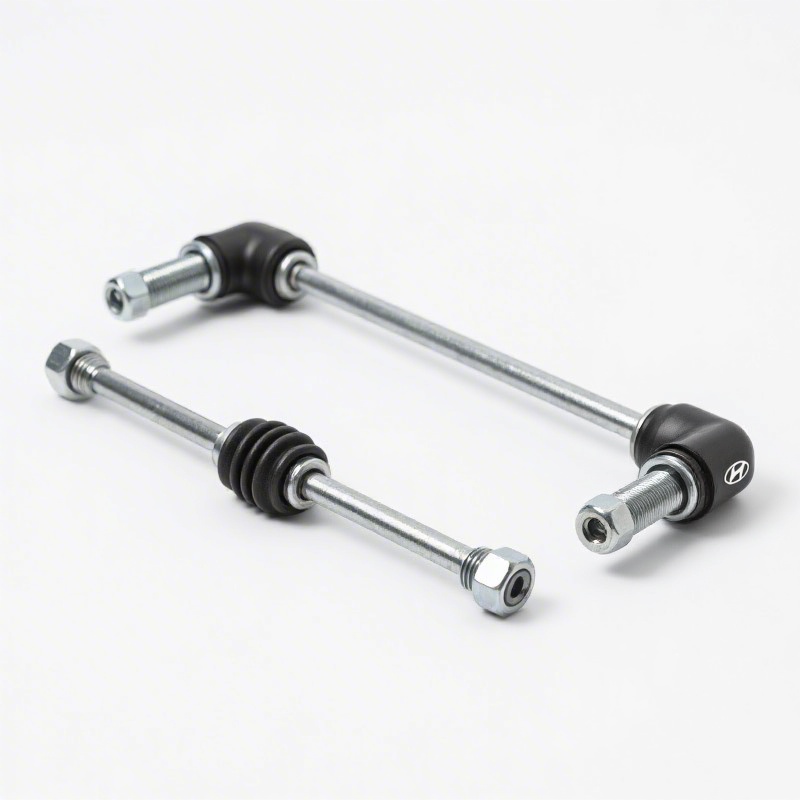
Tie Rod Kit
Steering Rack Inner & Outer Tie Rod Kit – Hyundai Tucson / Kia Sportage
$22.00 - $45.00
View Details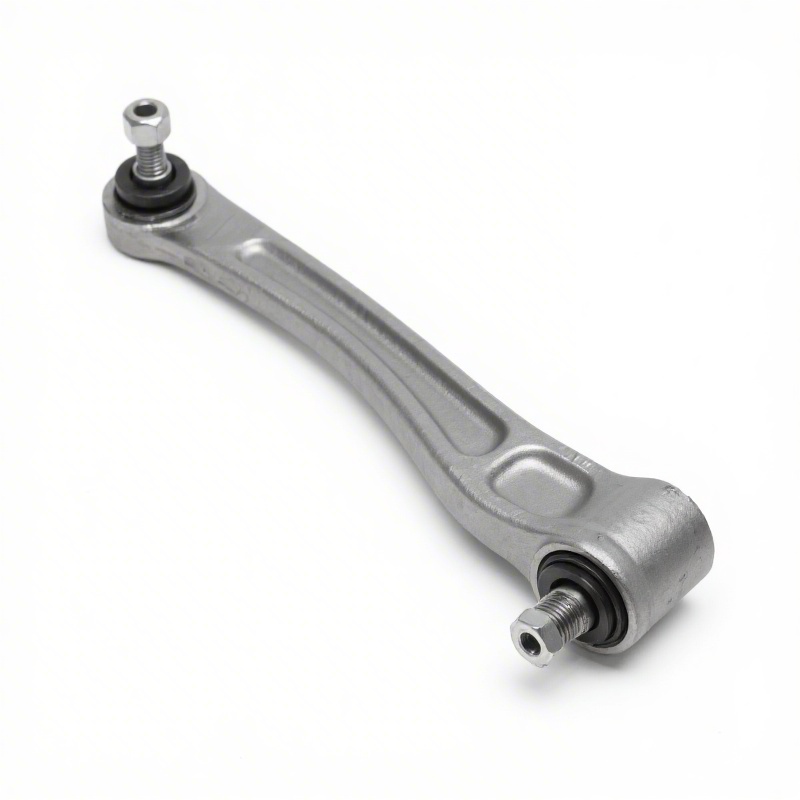
Control Arm
Front Lower Control Arm Complete Assembly – Hyundai Santa Fe / Kia Sorento (4WD)
$22.00 - $50.00
View Details