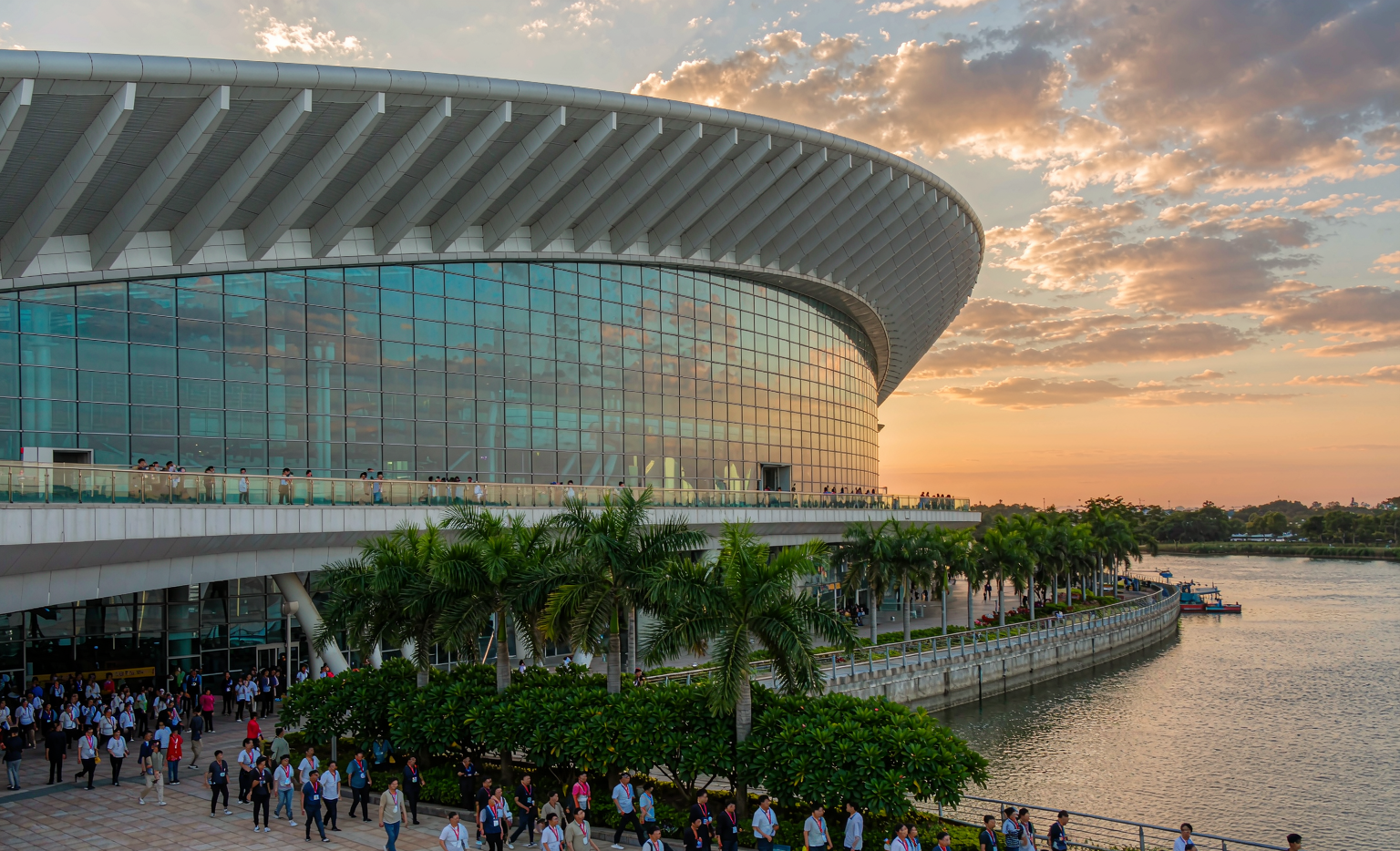
Every October, the centre of gravity of the world's physical goods trade moves to a bend in the Pearl River. The Canton Fair — the China Import and Export Fair, running since 1957 — is still the largest procurement event on earth by floor area, and for auto parts buyers it is the one week of the year when thousands of Chinese parts manufacturers, export desks and trading houses are standing in the same halls, with samples on the table and decision-makers on the booths.
This guide is written for parts distributors, workshop-chain buyers and fleet procurement teams planning to source auto parts at the autumn 2026 session. It covers the facts that determine your travel dates, the registration process, how the vehicle-and-parts halls are organised, a realistic five-day sourcing plan, the questions that separate real suppliers from booth decorators, and how a Guangzhou-based sourcing partner fits into the picture. We publish application-specific sourcing guides alongside this one — for example, our Toyota brake pads and rotors wholesale guide — so you arrive with an application list rather than a blank notebook.
Why Phase 1 Matters for Auto Parts Buyers
The Canton Fair splits its roughly 1.55 million square metres into three five-day phases, and product categories do not repeat between them. Auto parts, vehicles, new-energy vehicles and smart mobility, motorcycles and bicycles all sit in Phase 1 — which makes the third week of October the highest-density five days of the year for vehicle-sector sourcing in China. Electronics, machinery, hardware and tools share the same phase, which matters if your program extends to workshop equipment, diagnostics tools or hardware alongside the parts themselves.
The draw is not just exhibitor count. It is comparison density: for a fast-moving category like brake components, filters or suspension parts, you can walk a dozen candidate factories in a single morning, collect samples in the afternoon, and have price and capability spreadsheets that would take three separate sourcing trips to build any other week. Buyers who arrive with a structured plan routinely compress a quarter of supplier-development work into five days.
The scale numbers explain the effort. The most recent spring session drew roughly 314,000 overseas buyers from 220 countries and regions, and the vehicle-and-parts category consistently ranks among the most internationally attended sections of Phase 1. Hotels near the Pazhou complex sell out for these dates months ahead — which is the first practical reason to start planning early.
Canton Fair 2026 Dates: The Full Phase Schedule
The autumn 2026 session of the fair (the 140th) runs from October 15 to November 4 across three phases, with three-day changeover breaks between them. For auto parts buyers, the entire trip revolves around Phase 1; the table below shows how the phases map to product categories and what each means for a vehicle-sector visitor.
| Phase | Dates (2026) | Product Categories | Relevance for Auto Parts Buyers |
|---|---|---|---|
| Phase 1 | Oct 15–19 | Auto parts, vehicles, NEV & smart mobility, motorcycles, bicycles, electronics, machinery, hardware, tools, lighting, new energy | Core phase — plan your trip around these five days |
| Changeover | Oct 20–22 | Halls closed for booth changeover | Window for factory visits in the Pearl River Delta and Guangzhou supplier meetings |
| Phase 2 | Oct 23–27 | Home goods, gifts, decorations, furniture, building materials | Not relevant for parts; some buyers use it for packaging suppliers |
| Changeover | Oct 28–30 | Halls closed | Second window for factory visits and follow-up meetings |
| Phase 3 | Oct 31 – Nov 4 | Textiles, shoes, toys, office supplies, health, food | Not relevant for auto parts |
Daily opening hours are 9:30 to 18:00. A practical rhythm for Phase 1: halls are fullest and energy highest on days one and two; by day four, booth staff have time for longer technical conversations, which is when the serious negotiation happens. Plan your must-meet list for days one to three and keep days four and five for second visits and deeper discussions with shortlisted suppliers.
Where Auto Parts Sit Inside the Pazhou Complex
The fair occupies the China Import and Export Fair Complex at 382 Yuejiang Middle Road, Haizhu District — the Pazhou complex, four linked exhibition districts (A, B, C and D) stretched along the riverfront. Vehicle and parts exhibits concentrate in specific halls within these districts, with the exact hall allocation published in the official floor plan in the weeks before opening; the official Canton Fair website and app carry the hall map, exhibitor search and booth-level navigation. Two consequences follow from the physical layout.
First, the complex is genuinely vast — the walking distance between opposite ends is measured in kilometres, not metres. Buyers who try to "browse everything" exhaust themselves by midday of day one. The winning approach is to shortlist exhibitors through the official exhibitor search before arrival, mark booths on the app's floor plan, and route each day around one or two hall clusters.
Second, because vehicles, parts, new-energy mobility and motorcycles are co-located in the same phase, adjacent halls frequently hold the complete supply chain for one product family — for example, brake component factories, friction-material specialists and testing-equipment suppliers within walking distance of each other. Ask each good booth one extra question: "who else in this hall should I meet for this product family?" — the answer is often the most valuable intelligence of the day.
Buyer Registration: Badge, Invitation Letter and Visa
Overseas buyers enter the fair with a buyer badge (a QR-code card issued after registration). The process is fully online through the official Buyer Service System, and pre-registering is strongly recommended — it speeds up badge collection and keeps you out of the on-site queue on opening morning. The practical steps:
- Create a buyer account on the official Canton Fair Buyer E-service Tool with your company details and business credentials.
- Apply for the buyer badge and wait for verification; returning buyers can often reuse their existing badge or re-register in minutes.
- Arrange your China entry documents: check visa requirements for your nationality, or use an invitation letter from a Chinese supplier or trade partner where that simplifies the application. China's visa-free transit and entry policies have expanded considerably — verify the current policy for your passport before booking, as rules continue to evolve.
- Collect the badge at a designated collection point in Guangzhou (including at the complex), carrying the original identity document you registered with.
Buyer registration itself is handled through the official system at no charge for verified overseas buyers; be wary of any third-party site charging for "Canton Fair registration" — the official channel is the only one that matters. Once registered, the same account gives you access to the year-round online Canton Fair platform, which mirrors the offline exhibitor catalogue — useful both before the fair (shortlisting) and after it (follow-up).
A Five-Day Sourcing Plan for Auto Parts Buyers
Five days is enough to build a serious supplier shortlist — if each day has a job. The plan below reflects how experienced parts buyers structure Phase 1; adjust the weighting to your category mix.
| Day | Focus | What You Should Walk Out With |
|---|---|---|
| Day 1 (Oct 15) | Orientation + top-priority booths | Pre-shortlisted 8–12 booths visited; samples requested; first price indications |
| Day 2 (Oct 16) | Systematic category sweep | Coverage of your core categories (brakes, filters, suspension, electrical); comparison sheet started |
| Day 3 (Oct 17) | Second visits + technical deep dives | Certification documents (IATF 16949, ECE R90 where applicable); MOQ and pricing tiers discussed |
| Day 4 (Oct 18) | Negotiation day | Shortlist of 5–8 real candidates; sample orders agreed; payment and QC terms outlined |
| Day 5 (Oct 19) | Closing + Guangzhou meetings | Confirmed follow-up actions; meetings booked with Guangzhou-based export partners for the changeover days |
One discipline separates professional buyers from tourists: record every conversation the same day. Photograph business cards against booth numbers, note prices and claims in one spreadsheet each evening, and mark each contact A/B/C by priority. By day four you will have spoken to more suppliers than memory can hold — the spreadsheet is the asset you fly home with.
The Ten Questions to Ask at Every Booth
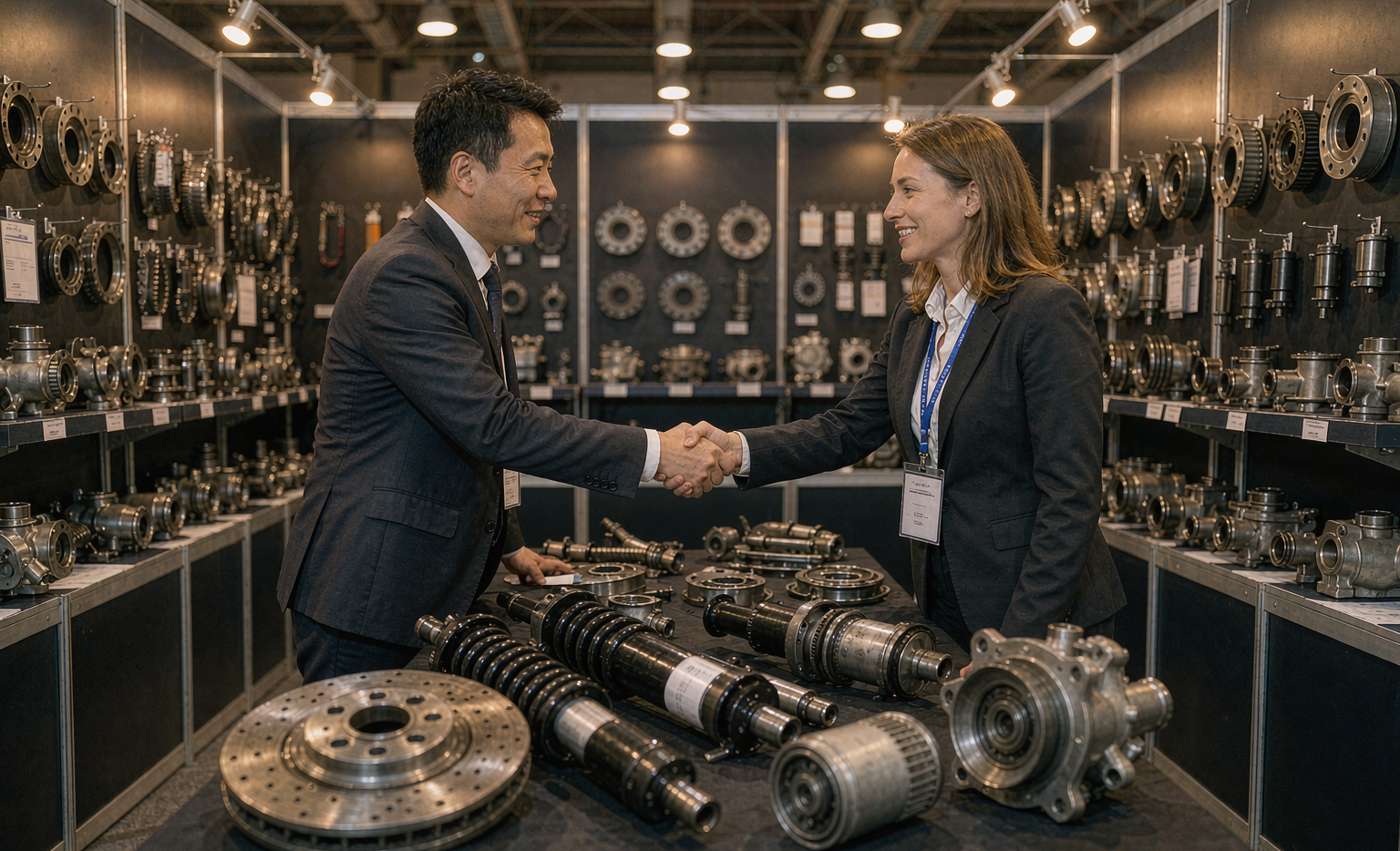
Booth displays are marketing; your questions are due diligence. Ten questions that consistently surface the truth about a parts supplier:
- Are you the manufacturer or a trading company — and can I visit the factory this week or next?
- Which certifications do you hold, and can you show the certificate numbers (IATF 16949, ECE R90 for brake parts, EMARK for lighting)?
- What is your main export market, and what share is aftermarket versus OE channel?
- Which OE references does this product cover, and do you supply the cross-reference list?
- What are your MOQ per reference and your price tiers by volume?
- What is the production lead time for a first order, and for a repeat order?
- How is the product packed for ocean freight, and can I see the export carton?
- Do you accept third-party pre-shipment inspection, and which agencies have visited you?
- What are your payment terms for a first order?
- Who in your team handles English communication after the fair — can I meet them now?
The answers you want to avoid are as informative as the ones you want to hear: vague certification answers, "our factory is far away, no visits", or no named post-fair contact person are each reliable disqualifiers. Suppliers who pass these ten questions on the booth can usually survive a real audit; suppliers who flinch on two or more rarely improve after you wire a deposit.
Getting to Pazhou: Flights, Metro and Hotels
Guangzhou Baiyun International Airport connects to the fair complex by metro (roughly 60–75 minutes with one transfer) or by taxi (45–90 minutes depending on traffic). Guangzhou South railway station — the high-speed rail hub for the Pearl River Delta, including the 30-minute connection from Shenzhen and Hong Kong links — is on Metro Line 2 with a direct connection toward the complex.
For the complex itself, the practical access points are Metro Line 8 (Xingangdong and Pazhou stations) and Line 11 (Pazhou). During the fair, trains and stations are busy from 8:30; arriving at the halls by 9:15 makes the difference between a calm first hour and a queue. Hotels in the Pazhou and Haizhu district command premium prices during Phase 1 and sell out early; many experienced buyers stay along Line 8 or Line 11 one or two stops out, or in the Zhujiang New Town business district, trading a 20-minute commute for materially better rates and dining.
Payment and connectivity are easier than they used to be: international cards work in an increasing number of venues, mobile payment apps accept overseas card binding, and eSIM or airport SIM options cover data. Still, carry some cash-equivalent backup and your bank's cards — a fair week is a bad week to debug payment problems.
Canton Fair vs Year-Round Sourcing: How They Fit Together
A fair is a compression event, not a complete sourcing system. The Canton Fair's organisers run the official online platform and app year-round, with the exhibitor catalogue, product search and messaging available 365 days a year — so the contacts you make in October remain reachable through official channels in February. Professional buyers therefore treat the fair as one leg of an annual rhythm: discover and compare at the fair, verify and sample in the weeks after, order at volume once inspection results land, and use year-round communication for replenishment.
For repeat orders and program management, a fair-only relationship has a structural weakness: the booth staff you negotiated with are salespeople, not order managers. This is where a Guangzhou-based export partner earns its fee — consolidating SKUs from multiple factories into single containers, running pre-shipment inspections with your checklist, handling export documentation, and being reachable in your working hours. Before ordering through any partner, the same due diligence applies: certifications, references, and third-party verification. Our own OE-parts library and OE number lookup tool exist precisely to make program buying verifiable — every application you source should be pinned to a checkable part number, not to a photo on a booth wall.
Sourcing from Guangzhou During Fair Season: The Local Advantage
Guangzhou is not only the fair's host city — it is one of the largest auto parts trading hubs in southern China, with wholesale markets, export warehouses and a dense cluster of parts factories across the wider Pearl River Delta. The changeover days between phases (October 20–22 and 28–30) are the natural window to use that geography: factory visits in the Delta parts belt, sample collection from suppliers met on the booths, and consolidation planning for the orders you intend to place.
Globalucar operates its vehicle and parts export program from Guangzhou's Baiyun district through fair season and all year. For buyers attending the 140th session, we offer the local counterpart role: meet in Guangzhou during or after Phase 1 to review application lists and OE references face to face, visit our export warehouse, and coordinate factory visits and quality inspection for the parts program you assemble at the fair. Bring your shortlist; we will tell you what we can supply directly from our catalog, what we can source faster, and where our cross-referenced OE number library already covers your applications.
What to Pack and What to Budget
The packing list for a parts buyer is short but specific, and the budget lines are dominated by the fair-week hotel premium. The table below is the checklist we send to first-time buyers joining our program.
| Item | Why It Matters | Notes / Budget Guide |
|---|---|---|
| Comfortable shoes | You will walk 15–20 km a day on concrete halls | Broken-in, not new — blisters end sourcing days early |
| Business cards (200+) | Still outperform app exchanges at booths | Print name, WhatsApp, company and market focus |
| Portable charger + spare cable | App-based navigation, badges and photos drain batteries fast | Power banks are also sold at the complex, at a premium |
| Foldable extra bag | Catalogs and samples accumulate quickly | Or budget excess checked baggage on the return flight |
| Printed application list with OE numbers | Your reference for every booth conversation | See our OE number lookup tool to prepare it |
| Hotel near Pazhou / on Lines 8 or 11 | Commute determines your effective hall hours | Phase 1 rates roughly double; book months ahead |
| Flights | Prices climb as October 15 approaches | Book as soon as your dates are fixed |
| Taxis, meals, daily allowance | Guangzhou costs are moderate but fair week adds up | Plan a per-day figure and track receipts for accounts |
| Factory-visit window (optional) | Changeover days Oct 20–22 are the natural window | Buyers combining fair + factories typically spend 9–12 days in China |
One final packing decision worth making deliberately: travel light on the way in. The buyers who struggle at security on the way home are the ones who left with a full suitcase and then collected a booth's worth of catalogs and samples anyway.
Frequently Asked Questions
When is the Canton Fair 2026?
The 140th Canton Fair (autumn 2026) runs October 15 to November 4, 2026, in three phases: October 15–19, October 23–27, and October 31 – November 4, with changeover breaks on October 20–22 and October 28–30. Auto parts are in Phase 1, October 15–19.
Which phase of the Canton Fair has auto parts?
Auto parts, vehicles, new-energy vehicles and smart mobility, motorcycles and bicycles are all in Phase 1 (October 15–19, 2026). Electronics, machinery, hardware and tools share the same phase, which is convenient for buyers sourcing workshop equipment alongside parts.
How do overseas buyers register for the Canton Fair?
Register through the official Canton Fair Buyer E-service Tool online: create a buyer account, apply for the buyer badge, and collect the QR-code badge at a designated collection point in Guangzhou with your original identity document. Pre-registration avoids the on-site queue on opening day.
Is buyer registration for the Canton Fair free?
Buyer badge registration for verified overseas buyers is handled through the official system at no charge. Be wary of third-party websites charging fees for "Canton Fair registration" — use the official channel only.
How many days should an auto parts buyer spend at the fair?
Plan on at least four of the five Phase 1 days: two for coverage of your core categories, one for technical deep dives and second visits, and one for negotiation and closing. Buyers adding factory visits in the Pearl River Delta typically stay 9–12 days in total, using the October 20–22 changeover window.
Can I visit the Canton Fair as an individual buyer?
The fair is a trade event open to business visitors with a registered buyer badge — company details and business credentials are part of the registration. It is not a consumer exhibition, but individual purchasing agents, traders and consultants with a business affiliation register and attend routinely.
Attending the 140th Canton Fair this October? Globalucar's export desk operates from Guangzhou's Baiyun district all fair season — meet us during or after Phase 1 to review your parts shortlist, verify OE references, plan factory visits in the Pearl River Delta, and consolidate your fair orders into inspected, documented shipments. Contact Mr Didi: ucars@global-ucars.com, WhatsApp +86 133 0240 8528, or send your application list through the contact page. 28F Guangzhou Jianhua Center, Baiyun District, Guangzhou.
Verify Part Numbers in Our OE Library
Every part you source at the fair should be pinned to a checkable OE number — our reference library groups numbers by system with cross-references for Toyota, Hyundai, Kia and more.
Related Articles
Related Products
From our export catalog — parts and vehicles ready for international delivery

Full-Size EREV SUV
2026 Rox Adamas EREV 215km 6-Seat Executive Edition
USD 53,000 FOB Guangzhou
View Details
Full-Size EREV SUV
2026 Rox Adamas EREV 215km 7-Seat All-Terrain Edition
USD 51,500 FOB Guangzhou
View Details
