Why the GCC Is Now the Hottest EV Market for Chinese Brands
The six Gulf Cooperation Council states — Saudi Arabia, the UAE, Qatar, Kuwait, Oman, and Bahrain — collectively imported approximately 1.4 million new vehicles in 2025. That number masks a dramatic structural shift: petrol-head traditionalists are being joined by government-backed EV adoption programmes, with Saudi Arabia alone pledging to have 30% of government fleet vehicles running on electricity by 2030.
When sourcing auto parts from China, understanding the difference between OEM and aftermarket options is critical for your business success.Three forces are converging to make the GCC the most compelling EV export destination for Chinese manufacturers:
- Government subsidies: The UAE offers up to AED 10,000 ($2,700) purchase subsidy for new EVs, plus free registration and waived toll charges in Dubai. Saudi Arabia’s NEV infrastructure fund has allocated SAR 20 billion ($5.3 billion) through 2030.
- Fuel price arbitrage: Petrol in Saudi Arabia retails at approximately SAR 1.85/litre (≈$0.49). For a family driving 20,000 km/year, switching from a 10L/100km petrol SUV to a BYD Seal U DM-i saves roughly $1,200 annually in fuel alone — a powerful economic argument independent of environmental motivation.
- Climate conditions favour battery technology: Air-conditioning load is the GCC’s biggest energy cost for any vehicle. EVs provide stationary cooling via battery power without idling the engine, making them more practical than in many temperate markets.
Source: GCC Automotive Market Report, BMI Research, Q1 2026.
BYD in the GCC — Where Does It Stand Today
BYD entered the GCC market with an official distributor structure in 2024. As of April 2026, the company holds formal type approval and distribution agreements in three of the six GCC states:
| Country | BYD Status (Apr 2026) | Official Distributor | Models Available |
|---|---|---|---|
| UAE | Active — full sales & service | Al-Futtaim Toyota subsidiary | Seal U DM-i, Dolphin, Han EV |
| Saudi Arabia | Active — growing network | Local JV with Al Rajhi Partners | Seal U DM-i, Dolphin |
| Qatar | Active — limited network | Alijarah Trading | Seal U DM-i |
| Kuwait | Approval in progress | TBD | — |
| Oman | Early-stage discussions | TBD | — |
| Bahrain | No confirmed entry | — | — |
For independent importers targeting Kuwait, Oman, or Bahrain — markets where BYD has no official distributor — there is a clear window of opportunity. The vehicles meet international safety standards (Euro NCAP 5-star on all three models) and will clear customs in all six GCC states with the right documentation. But you will need to handle your own warranty and service parts supply chain.
Model Comparison: Seal U vs Han vs Dolphin for Middle East Buyers
Three BYD models dominate enquiries from GCC buyers. Here is how they compare for Middle East operating conditions:
BYD Seal U DM-i — The volume seller
The Seal U is BYD’s D-segment SUV built on the DM-i hybrid platform. It combines a 1.5L petrol engine with a large battery pack (18.3 kWh usable in the base model, 26.6 kWh in the top variant), delivering 80–120 km of pure EV range on a typical charge cycle.
Why it works in the Gulf: The DM-i hybrid architecture eliminates range anxiety entirely — the petrol engine acts as a generator for longer journeys. With AC charging at 6.6 kW (full charge in 3–4 hours on a home wallbox), the Seal U covers most daily commuting on electricity while the engine handles highway trips to other cities without requiring charge infrastructure. Starting FOB Guangzhou: $22,000–$26,000 depending on specification.
BYD Han EV — The flagship sedan
The Han is BYD’s full-size electric sedan — positioned as a direct competitor to the Tesla Model 3 and BMW i5. The 2026 facelift features BYD’s Blade Battery (LFP chemistry), 715 km CLTC range in the extended-range variant, and DiSus-C intelligent chassis.
Why it works in the Gulf: High-income markets like the UAE and Saudi Arabia have strong demand for premium-feeling EVs. The Han delivers the technology and refinement expected by customers spending $35,000–$45,000 on a vehicle. Fast charging at 120 kW DC means a 10–80% charge takes approximately 35 minutes — practical for intercity routes. Starting FOB Guangzhou: $32,000–$38,000.
BYD Dolphin — The entry point
The Dolphin is BYD’s compact hatchback built on the e-Platform 3.0. At 4.1 metres long, it is the most affordable BYD EV globally and is rapidly becoming the best-selling Chinese EV in Thailand, Brazil, and Australia.
Why it works in the Gulf: For families seeking a reliable second vehicle or young professionals buying their first car, the Dolphin offers genuine BEV capability at a price point that makes economic sense given fuel costs. The smaller battery (44.9 kWh or 60.48 kWh) charges fully overnight on a standard home charger. Starting FOB Guangzhou: $14,000–$18,000.
Import Duty Structure Across Key GCC States
GCC states apply a unified 5% customs duty on passenger vehicles as of the current GCC Customs Union. However, EVs currently receive preferential treatment in two markets:
| Country | Customs Duty | EV Incentive | Notes |
|---|---|---|---|
| UAE | 5% | Waived for EVs until Dec 2026 | Dubai EV subsidy: AED 10,000 |
| Saudi Arabia | 5% | Reduced to 0% for EVs until 2030 | Requires Saudi Standard approval |
| Qatar | 5% | No EV-specific exemption | Under review per QMDA |
| Kuwait | 5% | No EV exemption | Customs processing can be slow |
| Oman | 5% | Proposed EV exemption (pending) | Authority reviewing policy |
Saudi Arabia’s 0% EV duty is the most significant policy signal in the region. For a $25,000 vehicle, this saves $1,250 per unit in customs — a meaningful margin for fleet buyers.
Source: GCC Customs Authority, UAE Ministry of Finance, Saudi ZADKI — as of April 2026.
Charging Infrastructure: The Elephant in the Room
No honest analysis of EV adoption in the Gulf can sidestep the charging challenge. The GCC has invested significantly in EV charging networks since 2023, but the infrastructure remains uneven:
- UAE (Dubai & Abu Dhabi): The most developed charging network in the region. DEWA (Dubai Electricity and Water Authority) operates over 700 public charging points, with most being DC fast chargers (50–150 kW). PlugShare lists 1,200+ points across the UAE. BYD’s CCS2-compatible vehicles can use all major public networks.
- Saudi Arabia: The Saudi Electricity Company and NEOM-adjacent projects are expanding charging rapidly, but outside Riyadh and Jeddah, public charging access remains limited. Most EV owners in Saudi currently rely on home wallbox charging (AC Level 2, 7–11 kW).
- Qatar: Qatar General Electricity & Water Corporation (Kahramaa) has deployed 350+ charging points as part of the Tarsheed programme. Adequate for Doha urban use but limited outside the capital.
For importers, this infrastructure reality shapes the product recommendation:
- If your customers are primarily city drivers with home parking: Any BYD model works. Home AC charging overnight solves 95% of use cases.
- If customers drive long distances regularly: The Seal U DM-i hybrid eliminates range anxiety entirely. The Han EV with its 715 km range handles most intercity routes but requires route planning around fast chargers.
- Fleet operators: Consider including a wallbox charger as part of the vehicle package — it is a strong differentiator and reduces the infrastructure burden on the customer.
What Saudi Arabia’s NEV Strategy Means for Importers
In 2022, Saudi Arabia’s Public Investment Fund (PIF) acquired a 16.9% stake in Lucid Group and announced the formation of Ceer, a domestic EV brand. This is the visible headline — but the strategic direction matters more than the headline for Chinese EV exporters:
Saudi Arabia wants EVs, but building domestic manufacturing capacity takes a decade. In the interim, it needs to stimulate consumer adoption to justify the infrastructure investment. This creates a policy window where import EVs face minimal barriers:
- 0% customs duty until 2030 (confirmed)
- No excise tax on EVs (Saudi removed excise on EVs in 2023)
- VAT is 15% but applies equally to all vehicles
- Registration fee waiver for EVs — saving SAR 800–2,000 depending on vehicle value
For importers, the message is clear: Saudi Arabia is actively subsidising EV adoption through 2030. Buyers who act now capture the maximum policy benefit. This is the moment to build stock and relationships in the market.
Source: Saudi General Authority for Zakat and Tax (GAZT), Saudi Vision 2030 NEV Policy documents — 2025.
Practical Steps to Import BYD into Your GCC Market
Whether you are importing for a retail dealership, a fleet operator, or direct consumer delivery, the process follows a consistent structure:
- Confirm type approval for your destination: BYD holds GCC Conformity mark for models sold through official distributors. If importing independently, you may need to obtain individual vehicle approval (IVA) from your national standards body. This typically costs $800–$2,500 per model variant and takes 4–8 weeks in Saudi Arabia and UAE.
- Select your model and specification: Confirm right-hand drive (RHD) availability. BYD currently exports the Seal U and Dolphin in RHD configuration for GCC markets. The Han EV is currently LHD only — important if your market is Saudi Arabia or a RHD market.
- Request FOB or CIF quotation: Standard export is FOB Guangzhou Nansha Port. CIF quotations include marine insurance and freight to your destination port — useful for landed cost budgeting. Transit time from Nansha to Dubai (Jebel Ali): 16–20 days by RoRo.
- Place order and arrange pre-shipment inspection: Globalucar performs a full PDI (Pre-Delivery Inspection) at our Nansha bonded warehouse, including OBD diagnostic scan, exterior/interior photography (200+ images), battery health assessment, and SoC verification for EVs.
- Receive documentation: We provide Commercial Invoice, Packing List, Bill of Lading, Certificate of Origin (FORM E for FTA-eligible shipments), Vehicle Inspection Certificate (CIQ), and battery safety declaration for EVs.
- Customs clearance at destination: Work with a local customs broker to declare the vehicles. Ensure your documentation includes the Arabic-language invoice and certificate of conformity (if required by your national standards authority).
Landed Cost Reference: FOB Guangzhou to Dubai, Riyadh and Doha
Here are indicative landed costs for the three most-requested BYD models to major GCC ports, including shipping and insurance but excluding import duty and local registration:
| Model | FOB Guangzhou | RoRo Freight + Insurance | CIF Dubai (Jebel Ali) | CIF Riyadh | CIF Doha |
|---|---|---|---|---|---|
| BYD Dolphin 60 kWh | $16,500 | $1,200 | $17,700 | $18,300 | $18,500 |
| BYD Seal U DM-i 18.3 kWh | $23,500 | $1,400 | $24,900 | $25,600 | $25,900 |
| BYD Han EV 85 kWh (LHD) | $35,000 | $1,500 | $36,500 | $37,200 | $37,500 |
Notes: Prices are indicative for standard specification, single units to 10-unit shipments as of April 2026. FOB price varies with exchange rate and factory pricing. Saudi Arabia 0% import duty and UAE EV exemption will reduce effective landed costs further. Contact us for firm quotation based on your specific order quantity and destination port.
Saudi Arabia’s 0% EV import duty, combined with BYD’s aggressive pricing, creates a landed cost advantage of approximately 15–20% compared to European EV brands in the same segment. For fleet buyers and dealership groups, this margin is the difference between a viable business case and an uncompetitive proposition.
View our current new car export inventory → Request a CIF quotation to your GCC port →
Verify Part Numbers in Our OE Library
Every part covered in this guide has a matching OE number in our reference library — grouped by system with cross-references, so you can source the exact fit for Hyundai, Kia, GM Korea and more.
Related Articles
Related Products
From our Vehicle Export catalog — new & used cars ready for international delivery
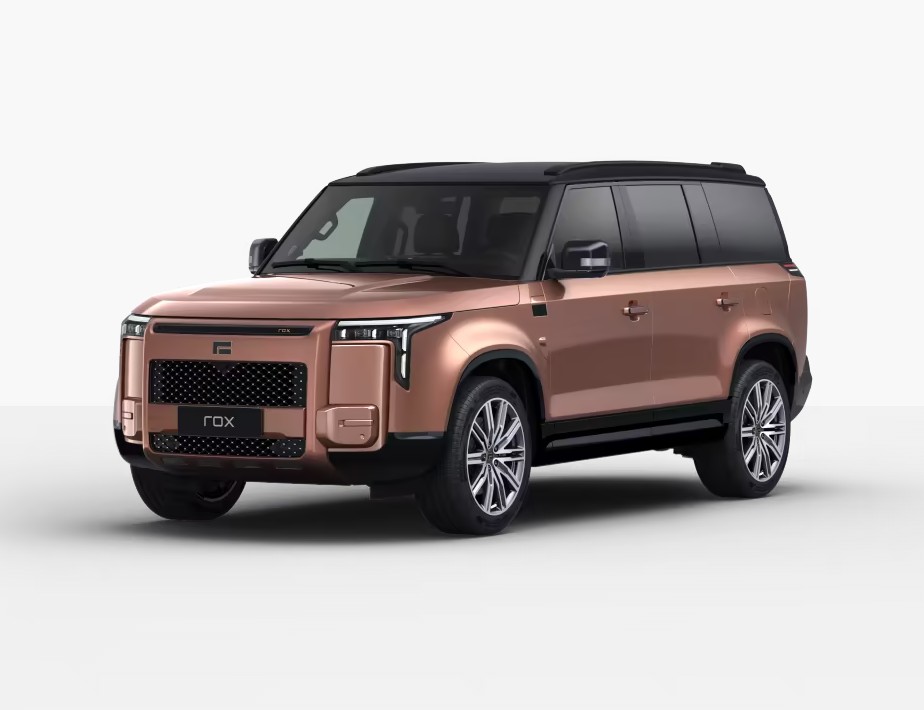
Full-Size EREV SUV
2026 Rox Adamas EREV 215km 6-Seat Executive Edition
USD 53,000 FOB Guangzhou
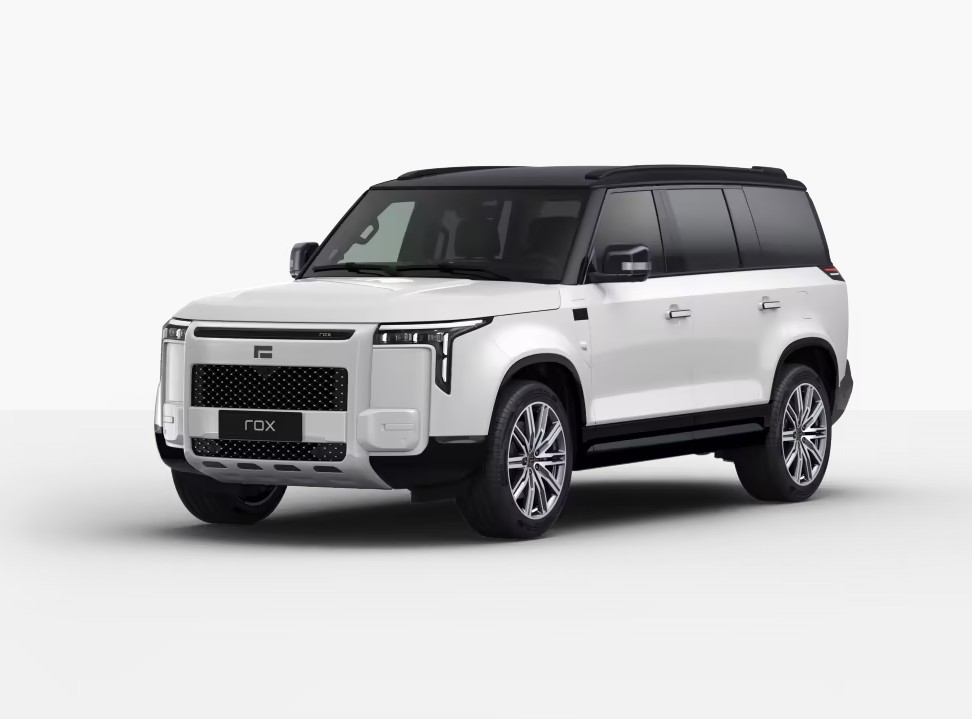
View DetailsFull-Size EREV SUV
2026 Rox Adamas EREV 215km 7-Seat All-Terrain Edition
USD 51,500 FOB Guangzhou
View Details